

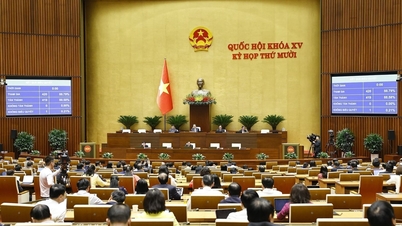
The Law on State of Emergency was passed by the National Assembly on the afternoon of December 3 with 419/420 delegates present in favor (accounting for 88.58% of the total number of National Assembly delegates). The law consists of 6 chapters and 36 articles, and will take effect from July 1, 2026.
The Law defines a state of emergency as a social state in one or more localities or nationwide when a disaster, risk of disaster or situation seriously threatens life, property, national defense, security, and social order and safety occurs.
There are three groups of emergencies due to disasters; national security, public order and safety emergencies; and national defense emergencies. The proclamation or abolition of this state of emergency is decided by the National Assembly Standing Committee, and the President orders its proclamation or abolition according to the corresponding resolution.
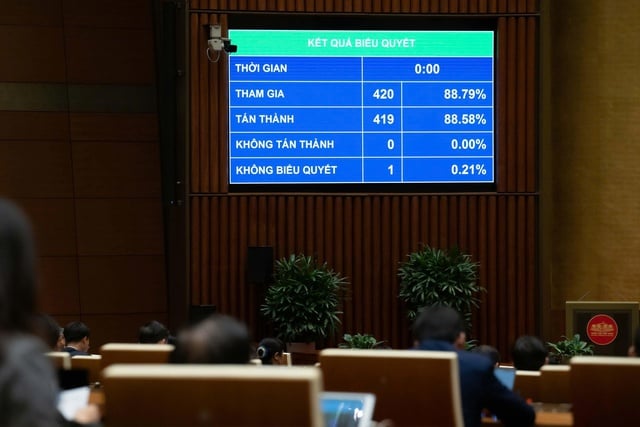
The State of Emergency Law was just passed by the National Assembly on the afternoon of December 3 with 419/420 delegates present in favor (accounting for 88.58% of the total number of National Assembly delegates).
The state of emergency is lifted when there is no longer a risk of disaster or the disaster has been prevented or overcome; the national defense and security situation, social order and safety have stabilized.
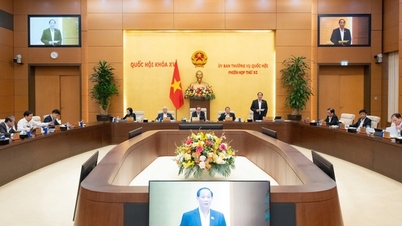
Regarding authority, the law clearly states that the National Assembly Standing Committee decides to declare or lift a state of emergency. Based on the resolution of the National Assembly Standing Committee, the President orders the declaration or lift of a state of emergency. In case the National Assembly Standing Committee cannot meet, the President orders the declaration or lift of a state of emergency.
With the Prime Minister 's authority in emergency situations, the law clearly stipulates that if absolutely necessary, for the national interest, the people's lives and health, after receiving the consent of competent authorities, the Prime Minister has the right to decide to apply measures not yet prescribed by law to respond to and overcome the emergency situation, or apply measures prescribed in this law when a state of emergency has not yet been declared or announced.
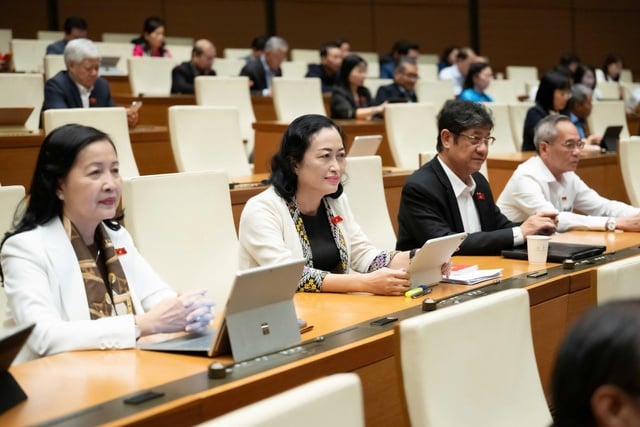
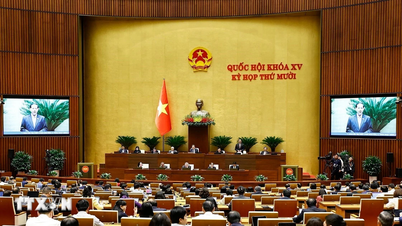
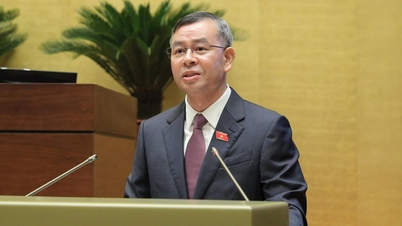
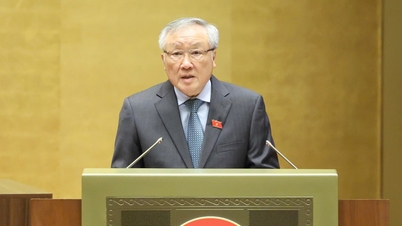
National Assembly delegates attending the session
The Prime Minister will report on the application of these measures to the competent authorities of the Party, the National Assembly, and the National Assembly Standing Committee in the nearest future.
The Prime Minister has the right to establish a Special Propaganda Task Force and a Special Patrol Force; set up guard stations and check documents, items, and luggage of passersby. The Prime Minister also decides on the use of force, weapons, and support tools in accordance with the law to prevent cases of crossing checkpoints or resisting the task force; temporarily detain or freeze related assets when there is a risk of harming security and order.
The report on the acceptance of the National Assembly Standing Committee before the law was passed showed that there were opinions that the state of emergency would give rise to many unexpected and unpredictable situations and require competent people to make quick decisions to respond promptly, so it was proposed to regulate in the direction of protecting cadres and civil servants in certain cases.
Regarding this issue, the National Assembly Standing Committee stated that in a state of emergency, many unexpected and unpredictable situations will arise, even beyond the planned scenarios and plans, requiring competent authorities to make quick decisions to respond promptly.
On the other hand, a state of emergency is a special state of society, requiring the immediate application of special measures, including the temporary suspension of the positions of heads of agencies, organizations, and local authorities who do not perform or do not properly perform their duties during the implementation of the Order declaring a state of emergency.
Therefore, the draft law stipulates that "The decision maker shall not be responsible for deciding on measures to respond to and remedy the consequences of an emergency that causes damage when the decision is based on information at the time of making the decision, has a legitimate purpose, is within authority and has no profit motive".
Source: https://phunuvietnam.vn/thu-tuong-duoc-lap-doi-tuan-tra-dac-biet-trong-tinh-trang-khan-cap-238251203160334492.htm


![[Photo] Cat Ba - Green island paradise](/_next/image?url=https%3A%2F%2Fvphoto.vietnam.vn%2Fthumb%2F1200x675%2Fvietnam%2Fresource%2FIMAGE%2F2025%2F12%2F04%2F1764821844074_ndo_br_1-dcbthienduongxanh638-jpg.webp&w=3840&q=75)







































![[VIMC 40 days of lightning speed] Hai Phong Port determined to break through, reaching the target of 2 million TEUs by 2025](https://vphoto.vietnam.vn/thumb/402x226/vietnam/resource/IMAGE/2025/12/04/1764816441820_chp_4-12-25.jpeg)










































Comment (0)