

The period 2026-2030 is the final five years of implementing the 10-year Socio -Economic Development Strategy 2021-2030. The global situation is projected to continue to change rapidly, becoming more complex and increasingly unpredictable; difficulties, challenges, and opportunities are intertwined, but challenges outweigh them. This necessitates a new vision, new thinking, new development perspectives, and breakthrough solutions, along with strong determination to achieve faster and more sustainable growth, realizing the Strategy's goals of becoming a developing country with modern industry and high middle income by 2030, and a developed country with high income by 2045, ushering Vietnam into a new era – an era of national development, prosperity, and strength.
The Prime Minister requested that ministries, central and local agencies, economic groups, and state-owned corporations focus on developing the 5-year plan for the period 2026-2030, with a spirit of decisive, synchronized, feasible, and effective action, striving for an average GDP growth rate of 10% or more per year during the period 2026-2030.
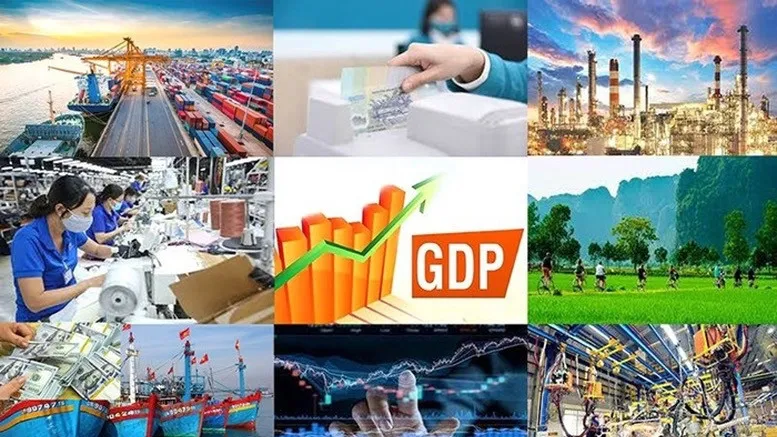
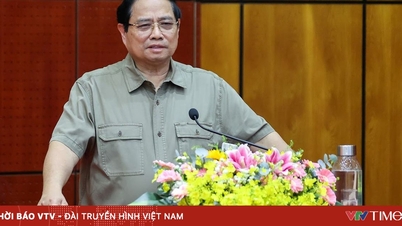
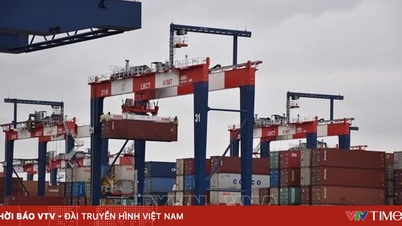
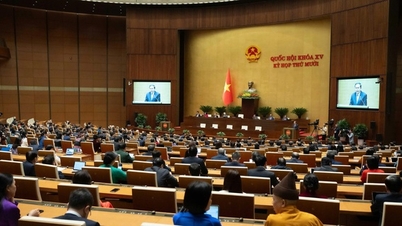
(Illustrative image - Photo: VGP)
The assessment of the implementation of the 5-year socio-economic development plan 2021-2025 must be complete, objective, and honest.
In principle, regarding the evaluation of the implementation of the 5-year Socio-Economic Development Plan 2021-2025, the Prime Minister requires a full, accurate, objective, and honest assessment, with comparisons to the 2016-2020 period and the world and the region (if applicable), including: achievements, especially the targets and objectives set for the 2021-2025 period, compared with similar targets and objectives in the 2016-2020 period; difficulties, limitations, and weaknesses; analysis of objective and subjective causes to draw lessons learned and identify effective solutions for the 2026-2030 period.
The content of the assessment of the implementation of the 5-year socio-economic development plan 2021-2025 includes:
Assessing the implementation of the overall goals, key indicators, and major balances set forth in the Resolution of the 13th National Congress of the Communist Party of Vietnam, Resolution No. 16/2021/QH15 dated July 27, 2021, of the National Assembly, and the Resolutions of People's Councils at all levels on socio-economic development for the 5-year period 2021-2025; including an in-depth analysis of the speed and quality of economic growth, macroeconomic stability, and ensuring major balances of the economy... Localities assess the promulgation and implementation of specific mechanisms and policies for socio-economic development in their areas, clearly stating the achievements and existing limitations.
Results of achieving the dual goals of COVID-19 prevention and control and socio-economic recovery and development, including the results of implementing the Socio-Economic Recovery and Development Program.
The results of economic restructuring are linked to innovation in the growth model, improving productivity, quality, efficiency, and competitiveness. This includes focusing on evaluating: the restructuring of production and service sectors, especially the development of processing and manufacturing industries linked to smart technologies; the development of efficient, green, clean, ecological, organic, high-tech rural and agricultural economies, adapting to climate change, linked to the construction of new rural areas; the development of tourism and e-commerce; the contribution of the digital economy to growth and the ability to achieve the target of the digital economy's share in GDP; assessing the effectiveness of restructuring in several key areas (public investment, credit institutions, state-owned enterprises); the effective implementation of Resolution No. 68-NQ/TW of the Politburo on the development of the private economy and the situation of private enterprise development; and promoting the green economy and circular economy.
Assessing the situation regarding the mobilization, allocation, and utilization of resources (state-owned economy, non-state economy, foreign-invested sector, etc.); resolving and removing difficulties and obstacles for long-standing stalled projects; mechanisms and policies to encourage and incentivize large and important projects, attracting strategic investors and multinational corporations; and developing various types of markets.
Progress and completion results of strategic infrastructure systems, focusing on evaluating: key national projects (such as: the North-South East Expressway; Long Thanh International Airport Phase 1; high-speed railway on the North-South axis and international connecting routes, connecting gateway seaports; several ring roads and urban railways in Hanoi and Ho Chi Minh City); several essential coastal roads; important inter-regional inland waterways…; development of energy infrastructure (electricity, renewable energy, clean energy, nuclear power…), science and technology infrastructure, innovation infrastructure, telecommunications infrastructure, digital infrastructure, irrigation infrastructure, rural and urban infrastructure…
Evaluating efforts to improve the quality of human resources in conjunction with promoting innovation, application, and strong development of science and technology, and national digital transformation.
The report covers the results of implementing sectoral, provincial, regional, and national plans; regional development and linkages; the development of economic zones, urban areas, smart cities, and marine economy; the development of mechanisms and policies for smart cities; the construction of new rural areas; piloting some specific mechanisms and policies in some localities; and the development of a financial center that is competitive and connected internationally and regionally.
Assessing the progress in achieving cultural, social, and health goals; evaluating the results of resource management and utilization, environmental protection; proactive disaster prevention and control, and adaptation to climate change...
Evaluating efforts to improve the effectiveness and efficiency of state management and the capacity for development (such as building e-government, digital government, administrative reform, streamlining personnel while improving the quality of the workforce; salary reform, etc.); reorganizing and streamlining the political system's organizational structure, reorganizing administrative units at all levels and building a two-tiered local government model; tightening administrative discipline and order while encouraging and protecting officials who are innovative, creative, and willing to think, act, and take responsibility for the common good; preventing and combating corruption and negative practices, practicing thrift and combating waste; receiving citizens, resolving complaints and denunciations...
Developing the 5-year socio-economic development plan for 2026-2030 requires a visionary, innovative, and breakthrough development mindset.
Regarding the development of the 5-year Socio-Economic Development Plan for 2026-2030, the Directive requires the Plan to closely adhere to the guidelines, policies, resolutions, and conclusions of the Central Party Committee, the Politburo, the Secretariat, the National Assembly, and the Government; the content of Party Congress documents at all levels; and the directives of the General Secretary, the Prime Minister, and key leaders.
The development orientation must ensure the following: rapid but sustainable economic growth with the goal of double-digit growth; maintaining macroeconomic stability; controlling inflation; ensuring major balances; establishing a new growth model; restructuring the economy; promoting industrialization and modernization; using science and technology, innovation, and digital transformation as the main driving forces; developing high-quality human resources; and effectively exploiting the advantages of deep international integration; improving the material and spiritual lives of the people and ensuring social security; and not sacrificing progress, social equity, and the environment for the sake of mere economic growth. The goal is to achieve rapid, sustainable, inclusive, comprehensive growth that benefits all citizens.
The 2026-2030 Five-Year Plan should be developed based on a comprehensive and accurate assessment of the results of the 2021-2025 Five-Year Plan; a full forecast of the global, regional, and domestic context and situation in the coming period; it must have a new, breakthrough vision and development mindset to seize and utilize opportunities, overcome challenges, and address the limitations and weaknesses of the 2021-2025 period; combining strengthening and promoting domestic resources with exploiting, mobilizing, and effectively utilizing external resources, in which domestic resources are fundamental and play a decisive role, while external resources are important and serve as breakthroughs.
The key indicators of the 2026-2030 Five-Year Plan must ensure feasibility, clarity, relevance to reality, and adherence to the 2021-2030 Ten-Year Strategy. Indicators by sector and field of responsibility must ensure accuracy, consistency, and uniformity of information and statistical data nationwide, effectively supporting monitoring, evaluation, and planning.
The proposed tasks and solutions must: (1) be groundbreaking, innovative, strong, decisive, feasible, effective, appropriate to the implementation capacity and specific, actionable for sectors, levels, and localities with the spirit: "The Party has directed, the Government has agreed, the National Assembly has consented, the People have supported, the Fatherland has expected, so we should only discuss doing, not retreating"; (2) ensure "clear people, clear tasks, clear responsibilities, clear progress, clear results, clear authority" and be quantifiable; (3) mobilize, allocate and use resources effectively, in which the goals of the socio-economic development plan, the financial plan and the medium-term public investment plan for the period 2026 - 2030 are closely linked; (4) promote proactiveness, creativity, flexibility, innovation, daring to think, daring to do, daring to take responsibility for the common good; (5) Mobilize the participation of the entire political system, all economic sectors, all businesses and people in the socio-economic development process.
The projected five-year socio-economic development plan for 2026-2030 includes the following contents:
The context for developing the 5-year socio-economic development plan 2026-2030; the overall objectives of the 5-year socio-economic development plan for the period 2026-2030; the main indicators and some major balances, including striving to achieve several key national indicators such as: an average GDP growth rate of 10% or more per year during the period 2026-2030; GDP per capita; social labor productivity growth rate; the proportion of manufacturing industry/GDP…
Main directions and tasks:
Prioritize the allocation of resources to perfect the legal system with a streamlined, rational, and scientific structure. Ensure that the drafting and implementation of laws closely follow reality, seize every opportunity, and unlock all resources, representing a "breakthrough of breakthroughs" in perfecting the institutional framework for national development. Promote the improvement of the investment and business environment, encourage innovation, entrepreneurship, and the development of the science and technology market, attracting all resources for development; focus on reviewing and reducing administrative procedures, shifting from "pre-approval" to "post-approval," and reducing compliance costs for citizens and businesses. Ensure administrative discipline and order in the performance of public duties. Continue to improve the mechanism for identifying, attracting, recruiting, valuing, and rewarding talented individuals to work in state agencies and public service units.
Establishing a new growth model, restructuring the economy, promoting industrialization and modernization with science and technology, innovation, and digital transformation as the main driving forces, creating a strong breakthrough; rapid but sustainable growth linked to inflation control, maintaining macroeconomic stability, and strengthening the mobilization of resources for development. Focusing on removing barriers, difficulties, and obstacles in various markets. Strongly consolidating the state-owned enterprise sector, especially state-owned economic groups; continuing to restructure weak credit institutions under special control and public investment. Implementing breakthrough, focused, and highly feasible solutions to accelerate the removal of difficulties and obstacles in investment and free up resources in the 2026-2030 period. Promoting the green economy and circular economy.
Developing the private sector is the leading driver of growth and innovation; priority should be given to building private economic groups of regional and global stature; actively supporting small and medium-sized enterprises, while also fostering household and cooperative economic sectors.
Continue to vigorously promote breakthroughs in science and technology development, innovation, and national digital transformation in accordance with Resolution No. 57-NQ/TW of the Politburo. Develop and implement breakthrough mechanisms and policies, prioritize resources for science and technology development, focusing on 11 strategic technology sectors. Promote the development of the digital economy, artificial intelligence, creative industries, strategic technologies, the sharing economy, the data economy, smart manufacturing, e-commerce, and the consumption of products and services in the digital environment.
Focus on developing high-quality human resources according to international standards, meeting the requirements of developing strategic industries and technologies; continue to improve the quality of education and training, comprehensively developing the abilities, qualities, and physical fitness of learners, linked to building and promoting the cultural values and human values of Vietnam, meeting the requirements of the new situation. The education system must be profoundly reformed, focusing on developing creative skills, entrepreneurial skills, STEM (Science, Technology, Engineering, Mathematics), foreign languages (making English the second language in schools), digital skills, and modern technology.
Developing a synchronous and modern infrastructure, effectively exploiting new development spaces, developing urban areas, and promoting the construction of new rural areas. The focus includes: Concentrating investment on completing the basic framework of national infrastructure (such as: the North-South East Expressway, gateway seaports combined with international transshipment, major airports, the high-speed railway line on the North-South axis, international connecting railway lines; the national 500 kV power transmission system…), developing the Hanoi and Ho Chi Minh City urban railway systems, connecting Tan Son Nhat and Long Thanh airports and expressways to ensure the target of 5,000 km of expressways; restarting the construction of two nuclear power plants in Ninh Thuan, with the goal of completing investment and construction before December 31, 2030; Promoting the development of energy infrastructure to meet the demands of high economic growth in the new era, ensuring energy security...
Developing culture and society, achieving social progress and equity; improving the material, spiritual, and health well-being of the people. Fully and promptly implementing, with innovation, social security and welfare policies, especially for war veterans, the elderly, children, gender equality, and people in remote, border, ethnic minority, and mountainous areas...
Effectively and sustainably manage and utilize important resources and minerals; strengthen environmental protection; proactively respond to climate change, and prevent, mitigate, and reduce natural disasters.
To consolidate and strengthen national defense, ensure national security, maintain social order and safety, and create a peaceful and stable environment for national development; to build a truly clean, strong, regular, elite, and modern People's Army and People's Public Security Force; to develop a self-reliant, self-sufficient, dual-use, modern defense and security industry that is closely integrated and becomes a spearhead of the national industry, with international competitiveness and deep participation in the global value chain; and to firmly protect the socialist Fatherland of Vietnam.
Enhancing the effectiveness of foreign affairs and international integration, with a focus on economic diplomacy and technological diplomacy; maintaining a peaceful and stable environment; promoting the role, position, and prestige of the country; and creating favorable conditions to attract resources for national development.
The directive requires that, based on the above-mentioned main objectives, orientations, and tasks, ministries, central and local agencies concretize solutions and policies to build the 5-year socio-economic development plan for 2026-2030, ensuring uniformity in principles and general objectives, in accordance with practical conditions and the level of development of each sector, field, and locality; and closely adhering to the list of key national projects proposed in the draft documents of the 14th National Congress of the Communist Party of Vietnam.
Source: https://vtv.vn/thu-tuong-phan-dau-tang-truong-gdp-binh-quan-giai-doan-2026-2030-dat-tu-10-nam-tro-len-100251020070117012.htm



![[Photo] Closing Ceremony of the 10th Session of the 15th National Assembly](/_next/image?url=https%3A%2F%2Fvphoto.vietnam.vn%2Fthumb%2F1200x675%2Fvietnam%2Fresource%2FIMAGE%2F2025%2F12%2F11%2F1765448959967_image-1437-jpg.webp&w=3840&q=75)



































![[OFFICIAL] MISA GROUP ANNOUNCES ITS PIONEERING BRAND POSITIONING IN BUILDING AGENTIC AI FOR BUSINESSES, HOUSEHOLDS, AND THE GOVERNMENT](https://vphoto.vietnam.vn/thumb/402x226/vietnam/resource/IMAGE/2025/12/11/1765444754256_agentic-ai_postfb-scaled.png)






































Comment (0)