

Focus on three main pillars.
With over 3,400 recognized products, accounting for more than one-fifth of the total number of OCOP products nationwide, Hanoi is leading the way in building brands, developing products, and enhancing the value of distinctive local products.
According to the Hanoi Department of Agriculture and Environment, in the coming period, to create a unique identity for OCOP products, the city aims to develop products in the direction of high quality, high added value, and deeply rooted in the cultural identity of Thang Long - Hanoi.
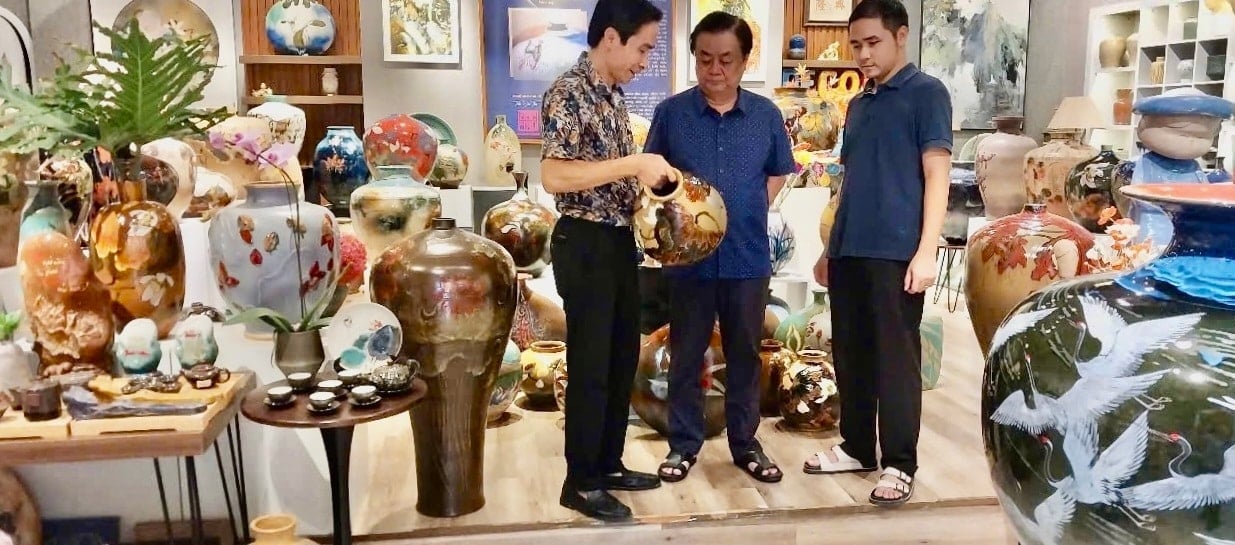
Deputy Speaker of the National Assembly Le Minh Hoan visits Bat Trang pottery village. Photo: CTV
Based on that orientation, Hanoi will focus on three main pillars. Regarding the preservation and promotion of traditional cultural values, currently, the entire city has 1,350 craft villages, accounting for 40% of the country's craft villages, including 337 typical traditional crafts and villages that have been recognized. The city will utilize traditional craft villages and villages with crafts in Hanoi to develop products that are rich in local cultural identity, linked to unique product stories, and reflecting the history and cultural values of the capital.
In addition, Hanoi is strengthening its connection with tourism and e-commerce. It is developing OCOP products linked to tourism-oriented craft villages and creative design centers, while also promoting e-commerce to increase consumer accessibility. Hanoi will focus on distinctive products, such as handicrafts, processed foods, and clean agricultural products, to build a prominent and highly competitive Hanoi OCOP brand.
The final pillar is implementing innovation and standardizing quality. The city encourages OCOP (One Commune One Product) entities to apply science and technology, improve designs, packaging, and traceability to meet the needs of domestic and international markets, especially demanding markets.
Elevating the brand to an international level.
Currently, there are 68 craft villages in 28 countries recognized as members of the World Creative Cities Network. Vietnam has two recognized craft villages: Bat Trang and Van Phuc.
The inclusion of Bat Trang and Van Phuc craft villages into the World Creative Crafts Network is a golden opportunity to elevate and expand the market for Hanoi's OCOP products. This is a significant milestone, opening up great opportunities for OCOP products.
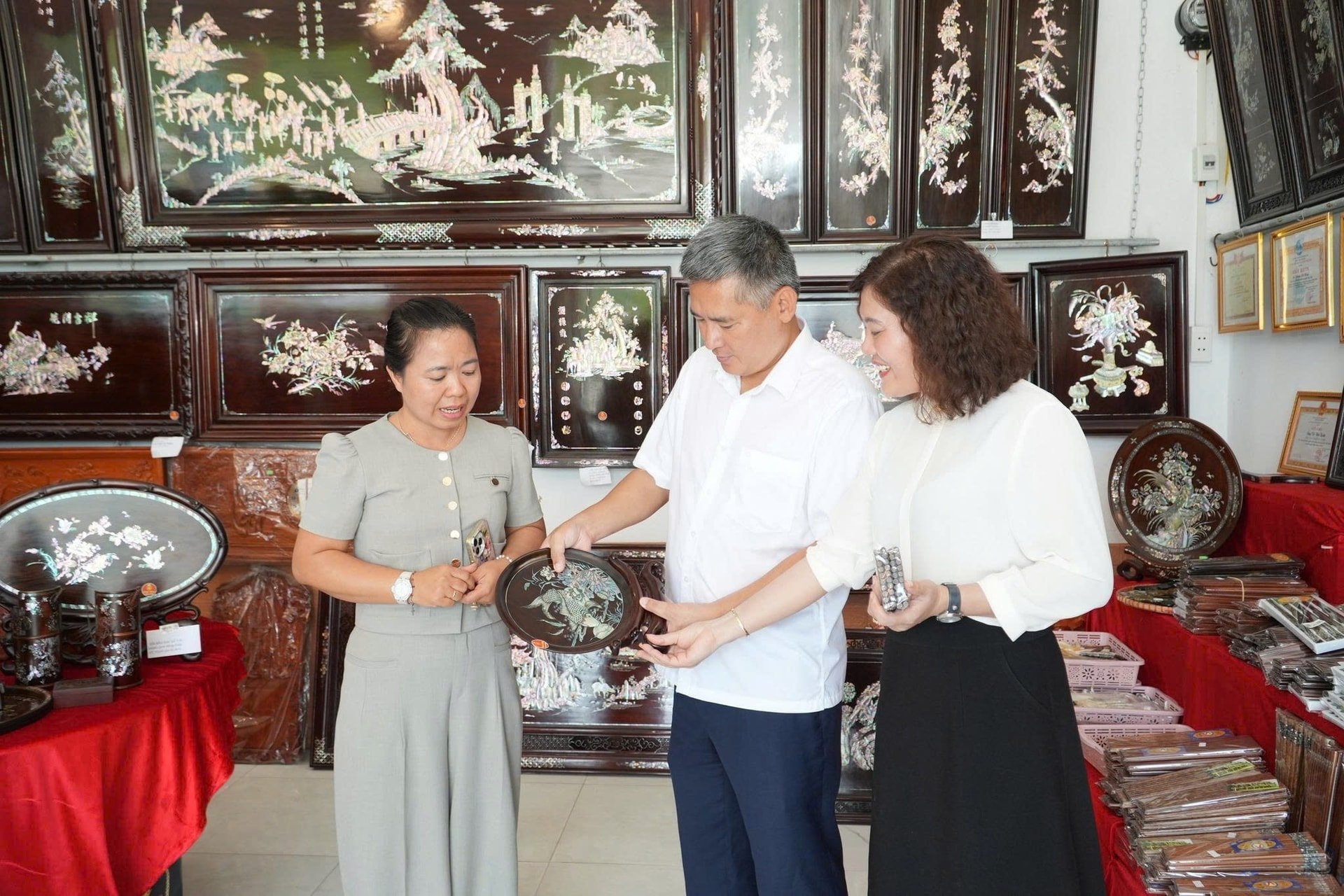
Hanoi's craft villages are focusing on developing brands to enhance the value of their OCOP (One Commune One Product) products. Photo: Dinh Loc
Based on that, Hanoi will focus on enhancing the international brand image of its products. Traditional craft villages like Bat Trang and Van Phuc can leverage their international reputation to promote OCOP products, especially handicrafts, to the global market.
In addition, Hanoi will also develop innovative products. Specifically, it will encourage OCOP (One Commune One Product) entities in these craft villages to innovate designs and apply modern technology to create unique products that meet international consumer trends; and promote the connection between OCOP products and traditional craft villages to create unique, highly artistic products.
During this process, connecting tourism and trade is also a regular and important activity to build the brand and image of products. Hanoi will promote the development of craft villages into cultural tourism destinations, combining craft village tourism with creative design centers and OCOP product sales, creating unique experiences for domestic and international tourists. At the same time, it will promote international cooperation to learn from experience, transfer technology, and expand export markets. This event will not only enhance the value of OCOP products but also contribute to promoting Hanoi's culture and people to the world.
Strengthen post-inspection quality control.
Hanoi currently leads the country with 3,463 OCOP products, including: 9 five-star products, 19 potential five-star products, 1,576 four-star products, and 1,859 three-star products. To ensure the development of OCOP products towards high quality, high added value, and a strong Thang Long - Hanoi cultural identity, post-inspection of product quality is also a crucial step that the city is focusing on.
Accordingly, Hanoi will establish inter-agency inspection teams to assess the quality of products after classification, and will also conduct random sampling for quality testing and analysis. The results will ensure that the product samples comply with standards for food hygiene and safety, traceability, and product quality.

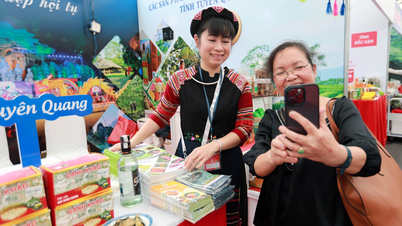
Ngo Van Ngon, Deputy Head of the Office in charge of the Hanoi New Rural Development Program Coordination Office, visits a booth displaying OCOP products in Tuong Mai ward. Photo: Minh Phu.
In addition, a system for managing and monitoring OCOP product quality will be built through information technology, including product codes, barcodes, and traceability labels. Products that fail to maintain quality or meet criteria will have their OCOP certification revoked, ensuring brand reputation.
Hanoi will also strengthen training and organize workshops on production management, quality management, and international standards for OCOP (One Commune One Product) businesses. We are committed to maintaining the prestige of the OCOP program by combining strict management with support to enhance the capacity of businesses.
( This information page is a collaboration with the Hanoi City Office for Coordinating the New Rural Development Program)
Source: https://daibieunhandan.vn/thuc-hien-chuong-trinh-ocop-o-ha-noi-huong-den-san-pham-chat-luong-cao-mang-dam-ban-sac-van-hoa-10392952.html


![[Photo] Closing Ceremony of the 10th Session of the 15th National Assembly](/_next/image?url=https%3A%2F%2Fvphoto.vietnam.vn%2Fthumb%2F1200x675%2Fvietnam%2Fresource%2FIMAGE%2F2025%2F12%2F11%2F1765448959967_image-1437-jpg.webp&w=3840&q=75)


![[Photo] Prime Minister Pham Minh Chinh holds a phone call with the CEO of Russia's Rosatom Corporation.](/_next/image?url=https%3A%2F%2Fvphoto.vietnam.vn%2Fthumb%2F1200x675%2Fvietnam%2Fresource%2FIMAGE%2F2025%2F12%2F11%2F1765464552365_dsc-5295-jpg.webp&w=3840&q=75)









































































Comment (0)