Uncontrolled weight gain due to stress
In just one year, AT (23 years old, Da Lat) gained 35 kg due to prolonged stress, chronic insomnia, and turning to food as a way to relieve emotions, even though she felt no hunger at all. T. said she fell into a state of severe stress due to events in her personal and family life.
|
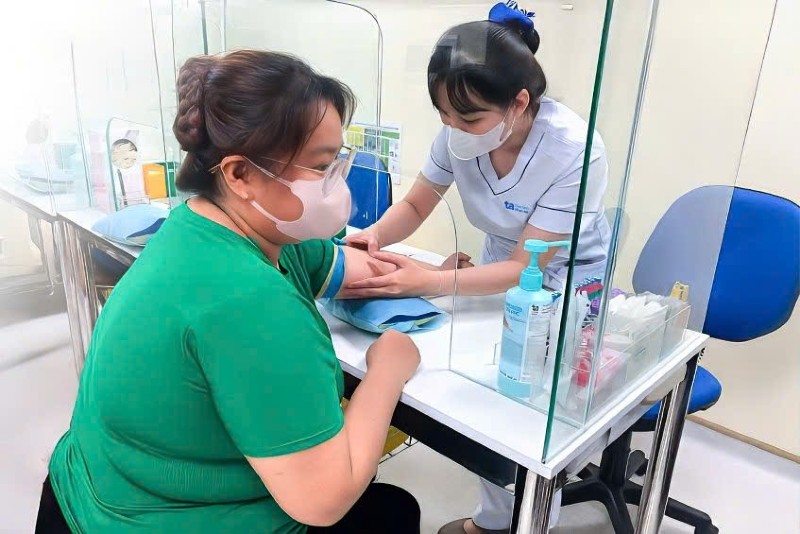
The doctors are advising the patient. |
She couldn't sleep at night, often staying awake all night or, at best, only managing to get 1-2 hours of sleep. This prolonged sleep deprivation left T. exhausted, constantly tired and lethargic during the day.
Unable to sleep and constantly stressed, T. began turning to food as an escape. She shared that there were weeks when she went to buffets up to four times, eating uncontrollably, only stopping when her body couldn't take in any more food. "I ate not because I was hungry, but just to satisfy my cravings. At that time, eating was the only way I felt better," T. said.
T.'s meals could be double or triple the amount a normal person would eat. In just 12 months, T.'s weight increased from 60 kg to 95 kg, leading to numerous physical and mental health consequences.
The changes in her appearance forced T. to constantly change her clothes from size M to XXL, making it impossible for her to wear her favorite outfits again. She frequently experienced shortness of breath and loud snoring whenever she dozed off; even walking a few hundred meters would leave her breathless and exhausted. Furthermore, T.'s immune system significantly weakened.
Previously, mild colds would pass quickly within a few days, but now they have become prolonged illnesses, and on one occasion, T. had to be hospitalized for the flu. On average, she has to go to the hospital once every 1-2 months due to illness.
T. had previously tried to lose weight on her own by cutting out carbohydrates and swimming once a week. However, she admitted that cutting out rice while increasing her intake of meat and fish meant her weight remained unchanged. Unable to control her condition, T. sought help from the Weight Loss Center at Tam Anh General Hospital.
Here, Dr. Tran Huu Thanh Tung examined T. and determined that he was severely obese, with a BMI of 37.6 (kg/m²), visceral fat exceeding 230 cm², grade 3 fatty liver, and pre-diabetes. The total amount of fat in T.'s body reached 50 kg, an extremely alarming level.
According to Dr. Tung, T.'s case is typical of rapid weight gain due to stress. When stressed, the body produces more cortisol, a hormone that helps the body cope with pressure. However, when cortisol levels remain consistently high, it promotes fat storage, especially in the abdominal area, and also causes constant hunger, leading to uncontrolled eating.
In addition, stress increases the hormone ghrelin – the "hunger hormone" – causing patients to crave more food, especially sugary and fatty foods. These types of foods provide a large amount of calories, easily leading to fat accumulation and rapid weight gain.
Rapid and sudden weight gain not only affects aesthetics but is also a warning sign of dangerous diseases such as cardiovascular disease, hypertension, diabetes, endocrine disorders, liver disease, kidney disease, and bone and joint problems.
It can also lead to sleep disorders, causing insomnia, disrupting metabolism, and further contributing to weight gain. When the body is fatigued and overweight persists, patients are more likely to fall into depression, experience psychological instability, and suffer a serious decline in quality of life.
Faced with this situation, Dr. Tung developed a comprehensive weight loss plan for T., including medication combined with nutritional counseling and exercise tailored to her abilities.
She was guided in choosing foods, adjusting her diet to suit her habits and preferences, and increasing physical activity through activities such as swimming, walking, or cycling. After the first two weeks of consistently applying this method, T. lost 3.5 kg. This is a very positive initial result, providing great motivation for her to continue pursuing her goal.
“I hope to get back to my previous weight of 60 kg. That’s my wish, and also the goal I set for myself to strive for every day,” T. shared. With the support of her doctor, family, and her own willpower, T. is gradually regaining balance, not only in terms of her physique but also in her physical and mental health.
Non-adherence to treatment puts the patient in critical condition due to myocardial infarction.
Mr. Canh, 63 years old, was admitted to the emergency room with severe angina and was diagnosed with severe stenosis of a branch of the right coronary artery, posing a life-threatening risk of acute myocardial infarction.
Previously, he had a history of multiple cardiovascular diseases such as hypertension, dyslipidemia, and had undergone interventricular artery stenting 8 years ago. However, after the intervention, he only continued taking medication for the first few months before stopping treatment on his own and neglecting regular follow-up appointments because he believed his health was stable.
Long-term non-adherence to treatment increased the risk of disease recurrence and led to serious complications. Worryingly, Mr. Canh continued his daily smoking habit, a high-risk factor that can accelerate the process of atherosclerosis, causing coronary artery narrowing and increasing the risk of serious cardiovascular events.
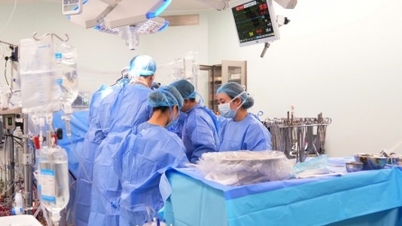
Upon admission, the patient underwent a coronary angiography, which revealed a 95-99% narrowing of the right coronary artery. Recognizing the risk of acute myocardial infarction, the doctors promptly performed coronary intervention to restore blood flow to the heart. Thanks to the timely intervention, the patient's condition stabilized, and he was eligible for discharge the following day.
According to Associate Professor Pham Nguyen Vinh, Director of the Cardiovascular Center, dyslipidemia is a key factor promoting the formation of atherosclerotic plaques, thereby causing narrowing of blood vessels, hypertension, myocardial infarction, and stroke. In fact, nearly 50% of adults in Vietnam currently suffer from dyslipidemia but it is not effectively controlled.
High blood pressure, often called the "silent killer," is also a significant risk factor. One in five adults suffers from the condition without any apparent signs or symptoms.
According to the World Health Organization (WHO), approximately 1.28 billion people aged 30 to 79 worldwide are currently living with hypertension, and 9.4 million people die each year from causes related to this disease.
Associate Professor Vinh emphasized that, in addition to underlying diseases, unhealthy lifestyles such as smoking, non-adherence to medication, poor diet, and lack of physical activity are all major risk factors leading to serious cardiovascular diseases. If not detected early and treated promptly, complications such as myocardial infarction, heart failure, and stroke can lead to serious consequences, even death.
Cancer signs in women should not be ignored.
Ms. CTH (41 years old, Dong Thap province ) had been experiencing persistent chest pain for three months. Thinking it was normal, she didn't seek medical attention and only went to the hospital after her daughter repeatedly urged her to. At the hospital, doctors discovered a small, hard lump, about the size of a green pea, located near her right armpit. After examination, Master's degree holder and Specialist Doctor Huynh Ba Tan suspected signs of breast cancer.
A mammogram revealed a tumor approximately 1cm in size with irregular borders and numerous blood vessels – a sign of suspected malignancy. A core needle biopsy confirmed that Ms. H. had stage 0 breast cancer.
This is a very early stage of breast cancer, when malignant cells are confined to the lining of the milk ducts and have not invaded the surrounding breast tissue or metastasized to the lymph nodes. With proper and timely treatment, the chances of a cure can be as high as 100%.
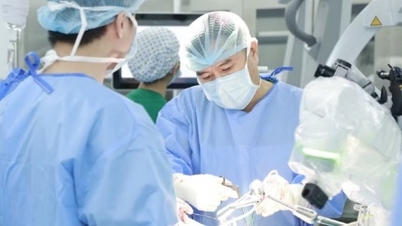
Immediately after receiving the results, Ms. H. underwent surgery to remove the tumor and surrounding tissue, with a margin of approximately 2cm. Doctors also took lymph nodes in her armpit for biopsy, and the results showed no signs of metastasis. After the surgery, a 3cm defect in the breast was filled with a breast tissue flap to ensure aesthetics and prevent the breast from becoming sunken. Ms. H. recovered well, experienced no pain, and was discharged from the hospital after only 12 hours.
Even though surgery completely removed the tumor and suspicious tissue, doctors still prescribed post-operative radiation therapy to minimize the risk of recurrence. This combined treatment is essential, even in stage 0, to ensure long-term effectiveness and protect remaining glandular tissue.
According to Dr. Tan, stage 0 breast cancer often has no obvious symptoms and is mostly discovered incidentally during screening. However, a small number of cases may present with signs such as breast pain, a palpable small lump, nipple discharge, etc.
For women, especially those 40 years and older, regular screening with annual mammograms is recommended. Even in younger women without clear risk factors or a family history, regular breast examinations are crucial for early detection of abnormalities.
Breast-conserving surgery, as in Ms. H.'s case, is a common treatment for early-stage breast cancer. Instead of removing the entire breast, the doctor only removes the tumor and surrounding tissue, about 1-2 cm, and then combines it with radiation therapy to destroy any remaining cells. According to research, the prognosis for patients after breast-conserving surgery combined with radiation therapy is comparable to that of patients who have undergone a total mastectomy.
Women also need to clearly distinguish the causes of breast pain. Besides cancer, breast pain can stem from hormonal changes before menstruation, breast trauma, wearing a bra that is too tight, or inflammation and infection of the breast, especially while breastfeeding.
Typically, breast pain caused by hormonal imbalances will subside after menstruation. However, if the pain persists or is accompanied by unusual symptoms such as a palpable lump, sharp pain, nipple discharge, etc., it is necessary to see a doctor immediately for examination and timely treatment.
Breast cancer has a good prognosis if detected early. Thanks to timely examination, Ms. H. discovered the disease at stage 0 and received effective treatment. Her story is a reminder to all women: don't be complacent about any unusual signs, no matter how small. Regular screenings and paying attention to your body are the best ways to protect your health, preserve your life, and maintain a high quality of life in the long term.
Source: https://baodautu.vn/tin-moi-y-te-ngay-216-tang-can-mat-kiem-soat-vi-stress-d309422.html






![[Photo] General Secretary and President To Lam presides over a meeting on preparations for the review of one year of operation of the three-tiered government system.](https://vphoto.vietnam.vn/thumb/1200x675/vietnam/resource/IMAGE/2026/06/02/1780391821195_a1-bnd-4595-9717-jpg.webp)
























































































Comment (0)