

Sharing at the first Southern Dynamic Real Estate Forum recently organized by the Vietnam Real Estate Research Institute (VIRES), Mr. Duong Long Thanh, founder and Chairman of the Board of Directors of Thang Loi Group, said that more than ten years ago, the company sold a house in Ben Cat (formerly Binh Duong ) for about 300 million VND. At that time, the average income of workers and civil servants was around 7 million VND per month, meaning they could save up for 5-6 years to buy a house.
To date, according to him, real housing demand still accounts for 70-80% of the entire market, but the rate of increase in housing prices far exceeds the growth in workers' income. This is creating a large gap in the ability of many people to access housing.
"Over the past decade, average income has increased by 6-8% per year, while house prices have climbed by 12-20% per year, making buyers increasingly exhausted," he said.
One of the main reasons, according to Mr. Thanh, is that the supply is mainly in the high-end segment, with large apartments and expensive construction materials. The pressure on housing prices also comes from high input costs (legal, tax, land price, construction costs and loan interest rates).
"This is not an individual problem, but a problem of the whole market. If it is not resolved, the dream of settling down for many workers will be even further away," Mr. Thanh acknowledged.
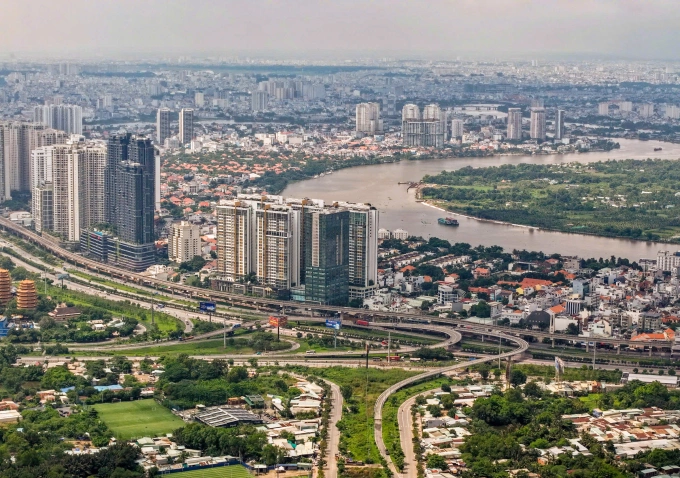
The high housing prices are also reflected in the recently released report of the Ministry of Construction . Accordingly, in the third quarter, the Ministry recorded the average price per square meter of the market reaching 78 million VND, more than 30% of new supply was over 100 million VND. In Ho Chi Minh City, the average price is about 91 million VND per square meter, many central projects reached 120 - 150 million VND/square meter.
Similarly, CBRE and Knight Frank said that 60% of new apartments in Ho Chi Minh City are priced above VND100 million per square meter; the supply of affordable housing has almost disappeared as the remaining inventory is mostly above VND60 million per square meter.
Meanwhile, according to the General Statistics Office, the average income of workers in the first 9 months of the year reached 8.3 million VND per month, up 10% over the same period. Urban workers earned about 10 million VND per month, equivalent to 120 million VND per year. This means that each worker working for a year can only buy about 1 square meter of house (not including living expenses, savings or other finances). After 5 years, the average income increased by only 2 million VND, while house prices increased by an average of 10 - 15 million VND per square meter.
One Mount Group’s research also suggests that a family with an annual income of VND200 million needs to save for more than 36 years to buy a two-bedroom commercial apartment, not including additional fees. Currently, 54% of households in Hanoi and Ho Chi Minh City have an annual income of less than VND200 million, meaning that most of them are almost unable to buy a house in the inner city.
Mr. Le Nhu Thach, Chairman of the Board of Directors of Bcons Group, assessed that Vietnam currently has more than 53 million people of working age, an urbanization rate of more than 41%, and the influx of people to large cities has sharply increased the demand for housing. Today's buyers prioritize transparent legal status, real use value, reasonable operating costs, and good liquidity. However, the market reality shows an increasing gap between demand and ownership capacity.
According to Mr. Thach, when the supply approaches 40 million units, the market may enter a saturation cycle, so improving housing accessibility from now on becomes a key task.
To balance the problem of cost and profit to guide the market to develop housing suitable for income, Mr. Thach said that the solution lies in product development. He cited international experience showing that to reduce housing prices to an accessible threshold, businesses must optimize area and function.
According to him, buyers are more concerned with the total cost of ownership than the price per square meter. Therefore, developing small, fully functional apartments helps reduce initial financial pressure. To keep prices within an accessible range, businesses can self-implement synchronously from design, construction to project management and operation, reducing intermediary costs. However, this also faces risks in terms of machinery and operating costs if the project is not continuous.
Mr. Duong Long Thanh said that in addition to the efforts of businesses, the government needs to have policies to stimulate affordable supply, reform procedures and reduce costs, and have mechanisms to support first-time home buyers. When legal procedures are shortened, costs and risks are reduced, there will be more room for home price reduction.
He also emphasized that the market needs to return to its core value - housing for living, not just for investment. This requires synchronization from planning, policy to product development. Locally, the compact urban model - 15-minute travel radius - is considered a direction to help increase access to housing, in the context of high-rise apartments gradually replacing low-rise houses in large cities.
According to vnexpress.net
Source: https://baodongthap.vn/toc-do-tang-gia-nha-ngay-cang-vuot-xa-thu-nhap-a233619.html


![[Photo] Cat Ba - Green island paradise](/_next/image?url=https%3A%2F%2Fvphoto.vietnam.vn%2Fthumb%2F1200x675%2Fvietnam%2Fresource%2FIMAGE%2F2025%2F12%2F04%2F1764821844074_ndo_br_1-dcbthienduongxanh638-jpg.webp&w=3840&q=75)














![[Infographic] Over 25,390 billion VND to support people affected by storm No. 9 and storm No. 10](https://vphoto.vietnam.vn/thumb/402x226/vietnam/resource/IMAGE/2025/12/04/1764835050634_infographic-tren-25390-ty-dong-ung-ho-dong-bao-bi-anh-huong-cua-con-bao-so-9-con-bao-so-1020251204024937.webp)




























![[VIMC 40 days of lightning speed] Da Nang Port: Unity - Lightning speed - Breakthrough to the finish line](https://vphoto.vietnam.vn/thumb/402x226/vietnam/resource/IMAGE/2025/12/04/1764833540882_cdn_4-12-25.jpeg)













































Comment (0)