

Lesson 2: The Coastal Energy Pillar is Taking Shape
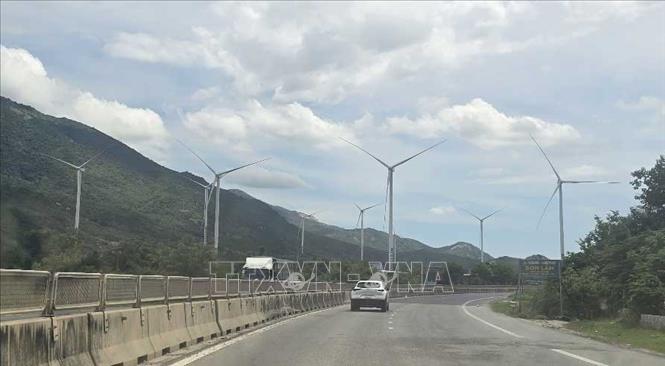
Along its nearly 400-kilometer-long coastline, Khanh Hoa is emerging as a "coastal energy hub," thanks to its central geographical location, the Van Phong deep-water port complex, and its leading wind and solar potential nationwide. The province has early identified energy as one of its four pillars of growth, shaping its role as a "locomotive" in ensuring energy security for the Central and Central Highlands regions.
Resolution to pave the way
Just two weeks after the provincial consolidation, on July 14, 2025, the Khanh Hoa Provincial Party Committee issued Resolution 01-NQ/TU on economic growth for the period 2025–2030, paving the way for an energy strategy. This strategic document clearly affirms that energy is one of the four pillars driving the province's development, along with tourism, high-tech industry, and marine economy.
Few localities are as specific and detailed as Khanh Hoa in setting goals for clean energy development in its socio-economic development resolution. Resolution 01-NQ/TU of the province sets a target of putting 14,000 MW of power generation capacity into operation by 2030; of which, 8,200 MW will be achieved in the 2025-2030 period with a clear structure: 2,300 MW of concentrated solar power, 1,800 MW of onshore wind power, 1,500 MW of LNG gas power, 2,400 MW of pumped-storage hydropower, and other sources.
This direction is consistent with the local natural and technical conditions, while also creating a systematic step in the structure of clean energy sources. Simultaneously, Khanh Hoa aims for an average annual growth rate of 20% in the energy sector during the 2026-2030 period, transforming energy into a key sector and creating momentum to drive many other economic sectors.
The space for development and investment opportunities is wide open.
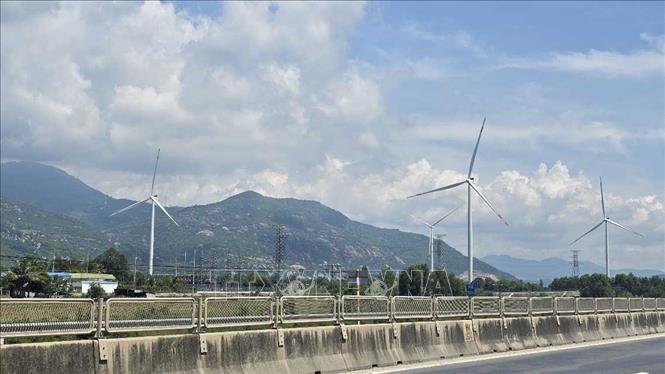
Resolution 01-NQ/TU and accompanying planning documents have clearly identified the province's priority energy development areas. Accordingly, Vinh Hai – Phuoc Dinh is designated for nuclear power in the distant future; Thuan Nam – Thuan Bac for onshore solar and wind power, combined with LNG (liquefied natural gas); Bac Ai – Ninh Son for pumped-storage hydropower; and the Van Phong Economic Zone will form a national-scale LNG center, serving as a hub for energy import and distribution.
Along with the significant offshore wind potential (especially in the coastal areas of Ninh Hai and Thuan Nam), this provides a clear "spatial map" that makes it easier for investors to access opportunities.
The First Congress of the Khanh Hoa Provincial Party Committee, for the 2025-2030 term, identified the development of clean energy as one of the strategic breakthroughs, along with infrastructure, high-tech industries, and the marine economy. From there, Khanh Hoa aims to become the "clean energy and LNG center of the country," playing a leading role in the development of the Central coastal region.
At the recent Khanh Hoa Provincial Party Congress, National Assembly Chairman Tran Thanh Man emphasized that Khanh Hoa needs to maximize its advantages in terms of its strategic geographical location, the Van Phong deep-water seaport, and its wind and solar potential to become a major clean energy hub and transit center for the South Central and Central Highlands regions. This is an important task identified in the Congress's Political Report.
In 2025, the province issued a bidding plan to select investors for many large projects, including coastal and offshore wind power clusters, and large-scale solar power projects. The Van Phong LNG port has also attracted international energy corporations to participate in researching the import-regasification-LNG power generation chain.
Coastal poles in the regional energy axis
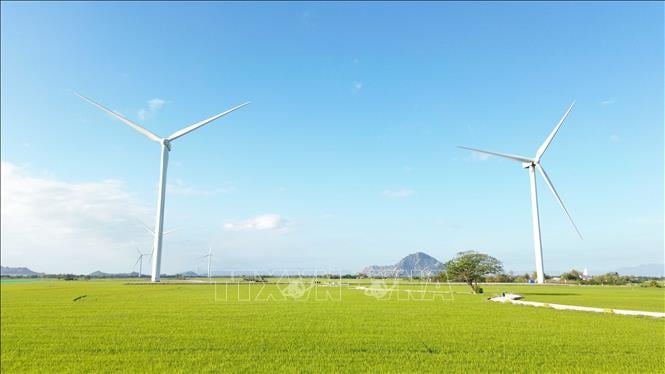
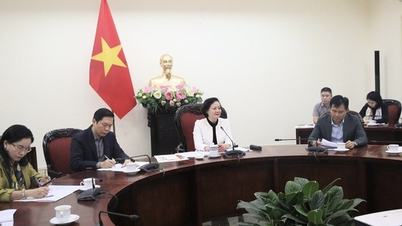
According to Mr. Nghiem Xuan Thanh, Secretary of the Khanh Hoa Provincial Party Committee, immediately after the merger, the Provincial Party Committee issued Resolution 01-NQ/TU identifying energy as one of the four pillars driving growth in the 2025-2030 period, along with industry, tourism and services, and urban development and construction. After the merger, Khanh Hoa possesses favorable conditions – especially geographical advantages, as the province has a long coastline, a system of seaports, and vast space for developing clean energy.
Located in the heart of the South Central coastal region, Khanh Hoa serves as a natural link between the Central Highlands and the sea. The rapid development of the energy sector here has implications beyond the province and is identified as a major source of electricity for the Central Highlands, reducing the burden on the national transmission grid. When Van Phong becomes a regional power balancing point in Central Vietnam, it will facilitate the formation of a Van Phong energy-logistics-LNG-technical services industrial cluster, attracting supporting industries.
According to the National Power Development Plan VIII, Vietnam prioritizes the strong development of wind, solar, and LNG power sources, forming renewable energy centers connected to large-scale inter-regional transmission grids. The South Central and Central Highlands regions fully meet these criteria, thanks to their natural advantages in wind and sunshine, their geographical location as a transit hub, and their deep-water port system. In the new energy structure, Khanh Hoa plays a central role in receiving, regulating, and transmitting energy – a "strategic node" for the entire region – and will become a leading renewable energy and LNG center in the country, capable of supplying tens of thousands of megawatts to the national power grid.
The People's Committee of Khanh Hoa province has directed relevant departments and agencies to expedite land clearance, grid connection, and provide guidance on licensing procedures through a one-stop mechanism; coordinating and ensuring that transmission infrastructure is ready to receive large power flows from ongoing projects. Khanh Hoa is also currently coordinating with the Ministry of Industry and Trade and the Vietnam Electricity Group to complete the 500 kV and 220 kV transmission lines connecting the Van Phong - Thuan Bac area with the national transmission system, opening up the possibility of exporting renewable energy outside the region in the future.
Synchronizing power source, grid, and development space planning will help the locality become the coastal hub of the Central-Central Highlands energy axis, alongside the Lam Dong plateau hub, creating a sustainable energy corridor from the Central Highlands to the sea.
In the near future, when strategic transmission lines are completed, Khanh Hoa will not only be a power supplier for the Central and Central Highlands regions but could also play a gateway role in exporting offshore wind power, LNG, and energy services. (To be continued)
Final article: Connecting clean energy
Source: https://baotintuc.vn/kinh-te/truc-nang-luong-xanh-vuon-ra-bien-lon-bai-2-20251008193550750.htm





































































Comment (0)