

As a favorite fruit among its people, China has spent nearly $6.7 billion importing durian. In particular, Chinese businesses have been placing large orders for Vietnamese durian, due to its lower price compared to Thai durian.
According to data from Chinese customs authorities, in the first 10 months of 2024, the country spent nearly $6.7 billion to import approximately 1.5 million tons of durian. Compared to the same period last year, the volume of durian imports increased by 10.1% and the value increased by 4.4%.
The amount of durian consumed by Chinese people accounts for 91% of the total global consumption, demonstrating the enormous potential of this market.
Notably, although Thailand held the position of the largest durian supplier to the Chinese market for the first 10 months of 2024, it is facing intense competition from Southeast Asian countries, particularly Vietnam.
Specifically, China spent nearly $3.87 billion to import approximately 785,000 tons of durian from Thailand at an average price of $4,927 per ton. However, the volume of durian imported from Thailand decreased by 13.2% and the value decreased by 12.7% compared to the same period last year.
Meanwhile, the average export price of Vietnamese durian is only $3,964 per ton, $963 per ton lower than that of Thailand. Consequently, Chinese businesses have been placing massive orders to purchase nearly 702,000 tons of durian from Vietnam, worth approximately $2.78 billion. Compared to the same period last year, durian imports from Vietnam have increased sharply by 55% in volume and 42.5% in value.
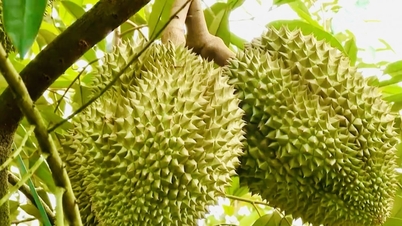
Over the past 10 months, Vietnam's "king of fruits" accounted for 46.9% of China's durian imports, ranking second only to Thailand with 52.4%.
Statistics from the General Department of Vietnam Customs show that China's increased purchases of Vietnamese durian helped this fruit achieve a historical export record of over $3 billion in just 10 months, a 45.7% increase compared to the same period in 2023. Simultaneously, it contributed significantly to the overall growth rate of the entire fruit and vegetable industry in the first 10 months of 2024, accounting for 49.11% of the total export value.
According to the Ministry of Agriculture and Rural Development, durian harvests decreased significantly in November because durian in the Central Highlands was at the end of its peak season, while durian in the Mekong Delta and Southeastern provinces was in its off-season.
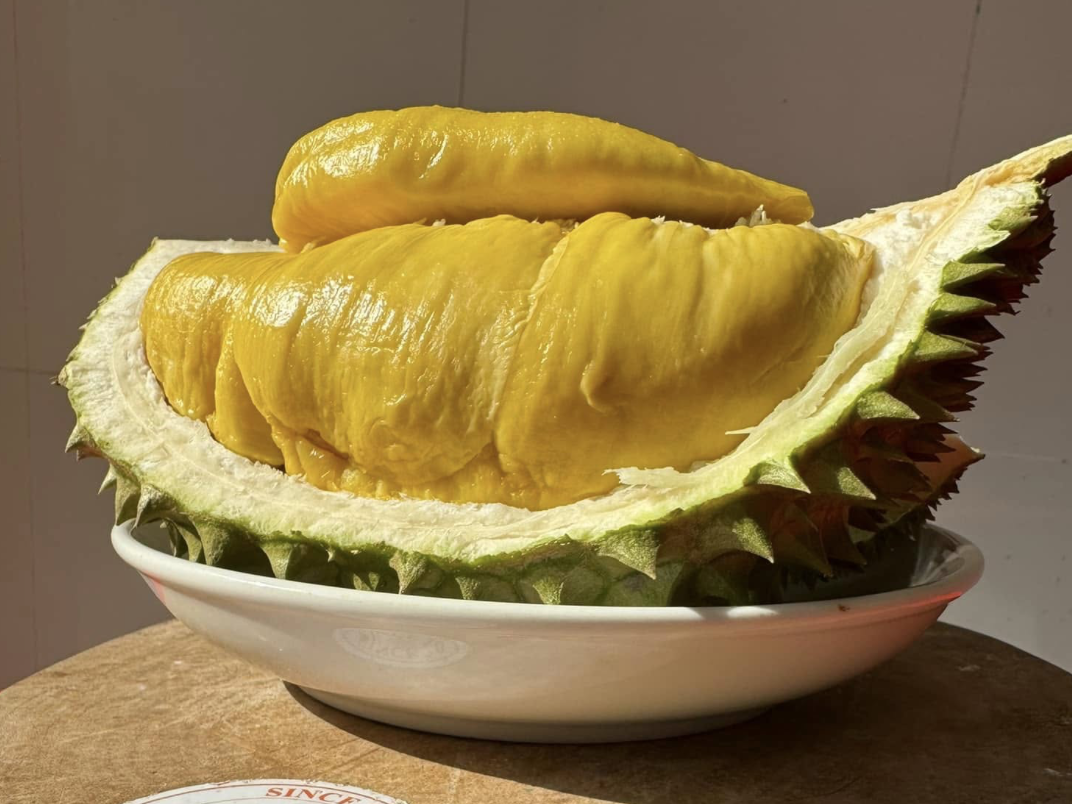
Currently, durian harvesting has shifted to the off-season in the Mekong Delta. This is also the time when almost only Vietnam in the world still has durian to harvest, while Thailand's main harvest season falls in the middle months of the year.
Therefore, from October this year until February next year, Vietnam has almost a monopoly on exporting this fruit to the Chinese market. Consequently, the purchase price of durian at orchards remains very high.
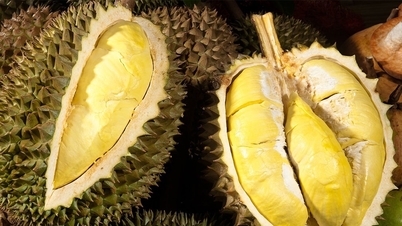
In the southern provinces of Vietnam, farmers are selling Ri6 and Monthong durians of grades A and B at prices ranging from 100,000 to 165,000 VND/kg.
Amidst the accelerating export of Vietnamese durian to China, Thailand is urging farmers and businesses to focus on strengthening quality control and standards, addressing issues such as soft durian and pest infestations, in order to protect its market share in the billion-person market.
In addition, Thailand is also promoting innovation in durian varieties to suit consumer tastes, giving it a competitive advantage in the Chinese market.
Furthermore, leveraging the advantages of the China-Laos railway line will significantly reduce transportation costs and time for Thai durian, enhancing the product's competitiveness.

Source: https://vietnamnet.vn/trung-quoc-chi-6-7-ty-usd-mua-sau-rieng-o-at-chot-don-hang-gia-re-tu-viet-nam-2350323.html


































































Comment (0)