

China is seeking to include provisions to ease export controls on high-bandwidth memory (HBM) – a key component in the production of artificial intelligence (AI) chips – in a new trade agreement with the United States, ahead of a possible summit between President Donald Trump and President Xi Jinping.
According to multiple sources familiar with the matter, Chinese officials have informed experts in Washington that they want the Trump administration to lift some export restrictions on HBMs. HBMs are high-speed memory chips that play a key role in the manufacture of advanced AI chips.
Over the past three months, US Treasury Secretary Scott Bessent and Vietnamese Vice Premier He Lifeng have led three rounds of US-China trade negotiations.
Some sources indicate that the issue of HBMs was raised by China in the talks. However, the content of the negotiations was not made public, and the US Treasury Department declined to comment on the information.
The deadline for both sides to reach an agreement and avoid the re-imposition of high tariffs is August 12th. However, US Commerce Secretary Howard Lutnick said last week that the White House might extend the "truce" for another 90 days.
China has long expressed opposition to the export controls announced by former President Joe Biden in 2022, aimed at hindering the country from purchasing or manufacturing advanced AI chips.
In 2024, the White House further tightened restrictions by banning the export of HBMs to China. The purpose of this ban was reportedly to curb the development of AI chips by Huawei and China's Semiconductor Manufacturing International Corporation (SMIC).
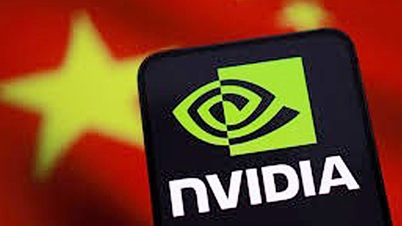
Recently, public attention has begun to focus on Nvidia's H20 chip – a product designed specifically for the Chinese market after the US banned the export of more advanced chips.
According to the Financial Times, the US government granted export permission for H2O after Nvidia CEO Jensen Huang met with President Trump. However, many experts believe that what worries Chinese officials most is the control over HBM, as it directly limits the ability of Chinese companies – including Huawei – to develop their own AI chips.
In addition to HBM, the White House is also keeping an eye on Chinese companies exploiting Nvidia's gaming graphics chips – which are not subject to regulation – for AI purposes.
Some 4090D and 5090D GPU models are currently being advertised in China as being suitable for training AI models. The Financial Times previously reported that in the second quarter of 2025, $1 billion worth of Nvidia's advanced AI chips were smuggled into China.
Congressman John Moolenaar, chairman of the House Committee on China, called on Nvidia and the U.S. Bureau of Industry & Security (BIS) to increase oversight. However, Nvidia maintains that its gaming GPUs sold in China do not require licenses, are designed for individual consumers, and are “not a viable solution” for building large-scale AI server clusters.
Source: https://www.vietnamplus.vn/trung-quoc-muon-my-noi-long-kiem-soat-chip-ai-de-doi-lay-thoa-thuan-thuong-mai-post1054863.vnp

![[Photo] Closing Ceremony of the 10th Session of the 15th National Assembly](/_next/image?url=https%3A%2F%2Fvphoto.vietnam.vn%2Fthumb%2F1200x675%2Fvietnam%2Fresource%2FIMAGE%2F2025%2F12%2F11%2F1765448959967_image-1437-jpg.webp&w=3840&q=75)


![[Photo] Prime Minister Pham Minh Chinh holds a phone call with the CEO of Russia's Rosatom Corporation.](/_next/image?url=https%3A%2F%2Fvphoto.vietnam.vn%2Fthumb%2F1200x675%2Fvietnam%2Fresource%2FIMAGE%2F2025%2F12%2F11%2F1765464552365_dsc-5295-jpg.webp&w=3840&q=75)



































![[OFFICIAL] MISA GROUP ANNOUNCES ITS PIONEERING BRAND POSITIONING IN BUILDING AGENTIC AI FOR BUSINESSES, HOUSEHOLDS, AND THE GOVERNMENT](https://vphoto.vietnam.vn/thumb/402x226/vietnam/resource/IMAGE/2025/12/11/1765444754256_agentic-ai_postfb-scaled.png)








































Comment (0)