

Amidst the influx of cheap goods from the Temu platform, Mr. Tran Van Hien believes that domestic businesses must research niche products and leverage their inherent strengths.
Mr. Tran Van Hien, Deputy Head of the Training and Membership Department of the Vietnam Association of Small and Medium Enterprises (VINASME), shared with the Industry and Trade Newspaper about the current situation and solutions for domestic businesses facing the "storm" of cheap goods from foreign e-commerce platforms flooding the Vietnamese market.
 |
| Mr. Tran Van Hien - Deputy Head of Training and Membership Department, Vietnam Association of Small and Medium Enterprises |
Currently, many e-commerce platforms such as Shopee, Lazada, Temu, etc., offer low-priced goods and have entered the Vietnamese market, capturing a large market share. Could you please tell us how this affects domestic businesses, especially small and medium-sized enterprises?
It must be said that e-commerce platforms have brought many advantages to both businesses and consumers, such as: access to a large market, reduced costs, convenience, product diversification, flexible payment options, enhanced customer experience, increased competition among sellers, and easy and efficient management of customer data. They have gradually become a preferred choice for both businesses and consumers in modern society.
Therefore, traditional businesses have been severely affected, creating many challenges and consequences, especially with the outbreak of the Covid-19 pandemic in late December 2019.
Currently, e-commerce platforms in Vietnam mainly originate from the Chinese market, possessing strengths that have directly impacted the production and business activities of domestic enterprises, especially small and medium-sized enterprises that are recovering after three years of severe impact from the pandemic.
The influencing factors manifest in various aspects: E-commerce platforms often offer competitively priced products because they sell directly from manufacturers to consumers. Meanwhile, small and medium-sized enterprises (SMEs), especially those operating under traditional models with limited capital, high production and marketing costs, and outdated technology, find it difficult to offer competitive prices.
Consumer habits have changed significantly, with consumers increasingly favoring imported goods due to their lower prices. This has led to a decrease in the popularity of domestic goods and is one of the factors directly impacting the difficulties faced by small and medium-sized enterprises in the country.
Another problem is that small and medium-sized enterprises (SMEs) face significant difficulties in finding effective distribution and marketing channels, while the market is dominated by large-scale and powerful e-commerce platforms.
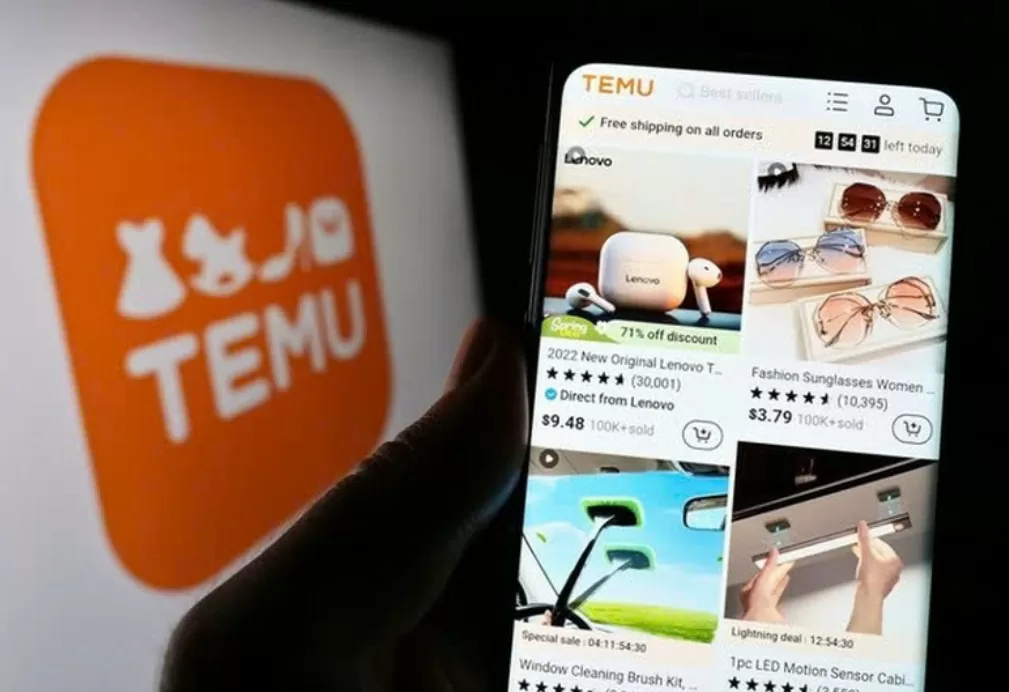 |
| Temu is a multinational e-commerce platform. Photo: baochinhphu.vn |
Many argue that consumers paying on e-commerce platforms like Temu or other foreign platforms have to go through international intermediaries, making it difficult to control the flow of money and potentially leading to tax revenue losses. What are your thoughts on this issue?
First, we need to understand that it is impossible to prohibit cross-border e-commerce platforms in general, and Chinese ones in particular, from selling goods in Vietnam because this is a trend in the modern world and Vietnam is integrating deeply into the global economy .
The key here is that the State needs to have comprehensive regulations and control measures for e-commerce platforms to ensure that activities on these platforms are safe, efficient, transparent, and in accordance with the law.
When domestic buyers make purchases on international e-commerce platforms, including some from China, the payment for these orders flows outside of Vietnam. Therefore, it is necessary to control these transactions and manage taxes effectively and efficiently.
Given this situation, what, in your opinion, should government agencies do to minimize risks for domestic businesses?
In my view, to minimize risks for domestic businesses, especially small and medium-sized enterprises (SMEs), in the context of foreign e-commerce platforms dominating the market, state management agencies need to implement measures with broad and timely impact, helping domestic businesses feel secure in their production and business activities, and promoting sustainable development.
This includes the widespread implementation of programs initiated by the Party, the Fatherland Front , the Government, ministries, and agencies, thereby promoting and honoring high-quality Vietnamese goods. Examples include the "Vietnamese People Prioritize Using Vietnamese Goods" campaign and trade promotion programs between regions to bring products directly from producers to consumers.
Implement various mechanisms, policies, and programs to support businesses, especially small and medium-sized enterprises (SMEs), in accessing capital, capacity building training, digital transformation processes, encouraging innovation, and helping businesses participate in global value chains. In addition, a legal framework is needed to regulate e-commerce platforms and policies related to consumer protection and the rights of domestic businesses.
At the same time, it is necessary to strengthen management and supervision to prevent e-commerce platforms from selling counterfeit goods, copyright infringements, and products that directly affect consumers and evade taxes. In the past, some e-commerce platforms have implemented policies to penalize suppliers selling counterfeit goods and copyright infringements, but these policies are still not optimal, as fraud still occurs on some e-commerce platforms.
It is necessary to build e-commerce infrastructure, complete a synchronized institutional framework, and create a healthy, transparent, and stable business environment to build trust among consumers and businesses.
With cheap goods entering the Vietnamese market through increasingly advanced and convenient e-commerce platforms, what improvements do domestic businesses need to make to compete with cheap foreign goods?
Generally speaking, domestic small and medium-sized enterprises (SMEs) currently face many limitations, such as the application of technology in production processes, marketing, and product promotion. Given the current situation in the Vietnamese market, which is flooded with cheap, diverse foreign goods, domestic businesses must assess their own capabilities, strengths, and weaknesses, and then improve their processes and production according to planned roadmaps and stages.
The key is to apply technology to optimize production and business processes, improve products, and diversify product designs to meet consumer needs. Research and develop niche products to create a competitive advantage for the business.
Strengthen trade promotion and investment cooperation; utilize and exploit social media applications, multimedia communication channels, and e-commerce platforms to promote products, thereby reaching and attracting customers.
At the same time, it is necessary to develop pre- and post-sales customer service. This is crucial for regaining consumer trust.
Thank you, sir!
Source: https://congthuong.vn/truoc-suc-ep-hang-gia-re-tu-temu-doanh-nghiep-viet-lam-gi-de-giu-san-nha-355689.html
![[Photo] Closing Ceremony of the 10th Session of the 15th National Assembly](/_next/image?url=https%3A%2F%2Fvphoto.vietnam.vn%2Fthumb%2F1200x675%2Fvietnam%2Fresource%2FIMAGE%2F2025%2F12%2F11%2F1765448959967_image-1437-jpg.webp&w=3840&q=75)


![[Photo] Prime Minister Pham Minh Chinh holds a phone call with the CEO of Russia's Rosatom Corporation.](/_next/image?url=https%3A%2F%2Fvphoto.vietnam.vn%2Fthumb%2F1200x675%2Fvietnam%2Fresource%2FIMAGE%2F2025%2F12%2F11%2F1765464552365_dsc-5295-jpg.webp&w=3840&q=75)

















































![[OFFICIAL] MISA GROUP ANNOUNCES ITS PIONEERING BRAND POSITIONING IN BUILDING AGENTIC AI FOR BUSINESSES, HOUSEHOLDS, AND THE GOVERNMENT](https://vphoto.vietnam.vn/thumb/402x226/vietnam/resource/IMAGE/2025/12/11/1765444754256_agentic-ai_postfb-scaled.png)











































Comment (0)