

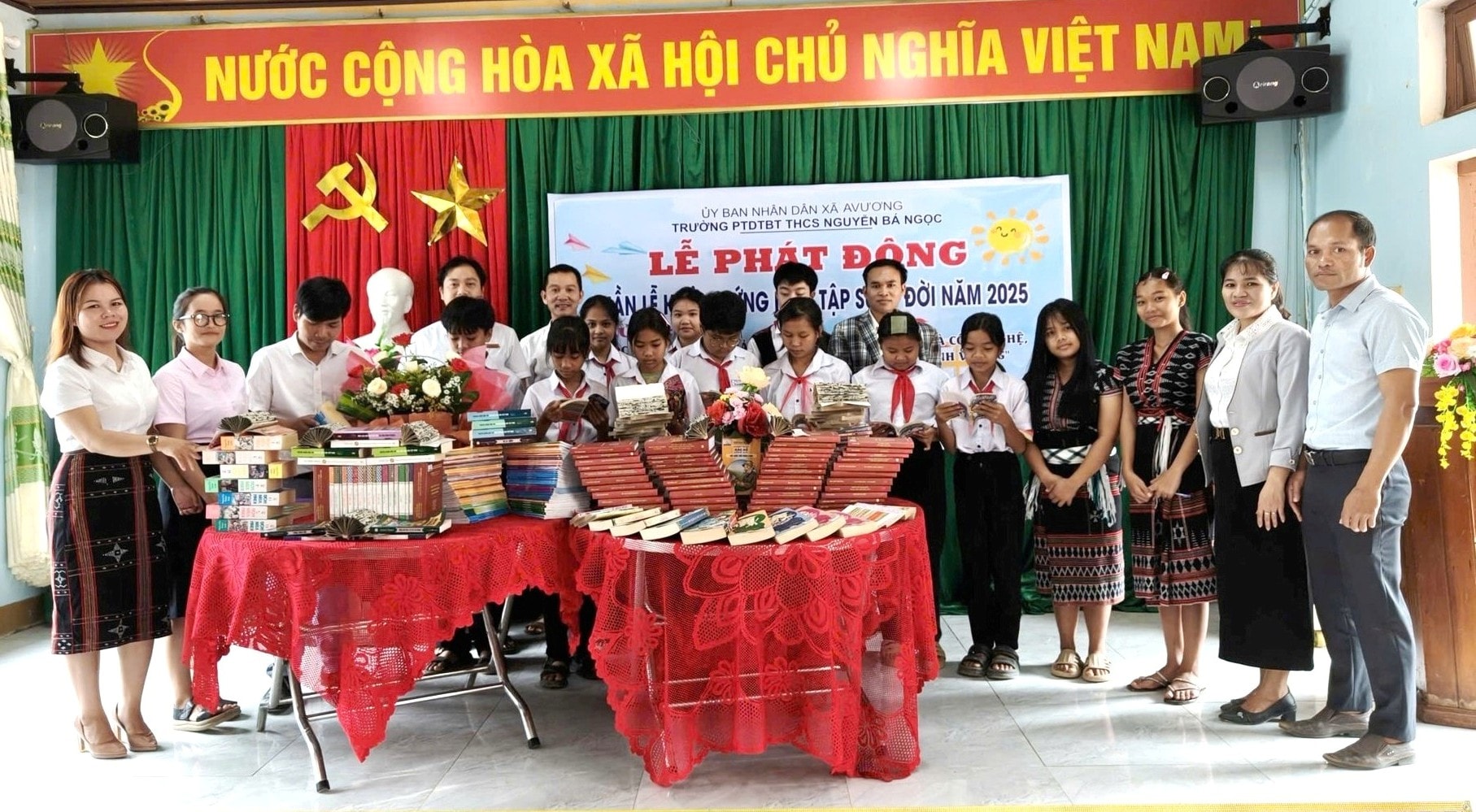
At Nguyen Ba Ngoc Ethnic Boarding Junior High School (Avuong commune), this school year the school has 314 students, mostly children of ethnic minorities, many of whom live tens of kilometers away from the school. In the initial phase of implementing a two-session-per-day teaching schedule, the school faced many difficulties regarding classrooms, teaching equipment, and teaching staff.
Ms. Nguyen Thi Mai Que, the school principal, said that to ensure the requirement of teaching two sessions per day, the school has taken advantage of various sources of support and surveyed the opinions of parents, students, and teachers to agree on a suitable teaching plan. "Initially, we are arranging to teach two 9th-grade classes, harmoniously combining theoretical learning with extracurricular activities to avoid overloading both students and teachers," Ms. Que said.
At Bhalêê Primary Boarding School for Ethnic Minorities (Avương Commune), Mr. Tran Huu Nhat, Principal of the school, said that studying in two sessions helps students have more time to consolidate knowledge, practice life skills and participate in experiential and physical activities, contributing to comprehensive development.
The school also flexibly classifies students according to their abilities so that teachers can have appropriate teaching plans. In the afternoon, teachers strengthen Vietnamese language teaching and tutor weak students, while creating a close and friendly communication environment to help Co Tu ethnic students become more confident in their studies.
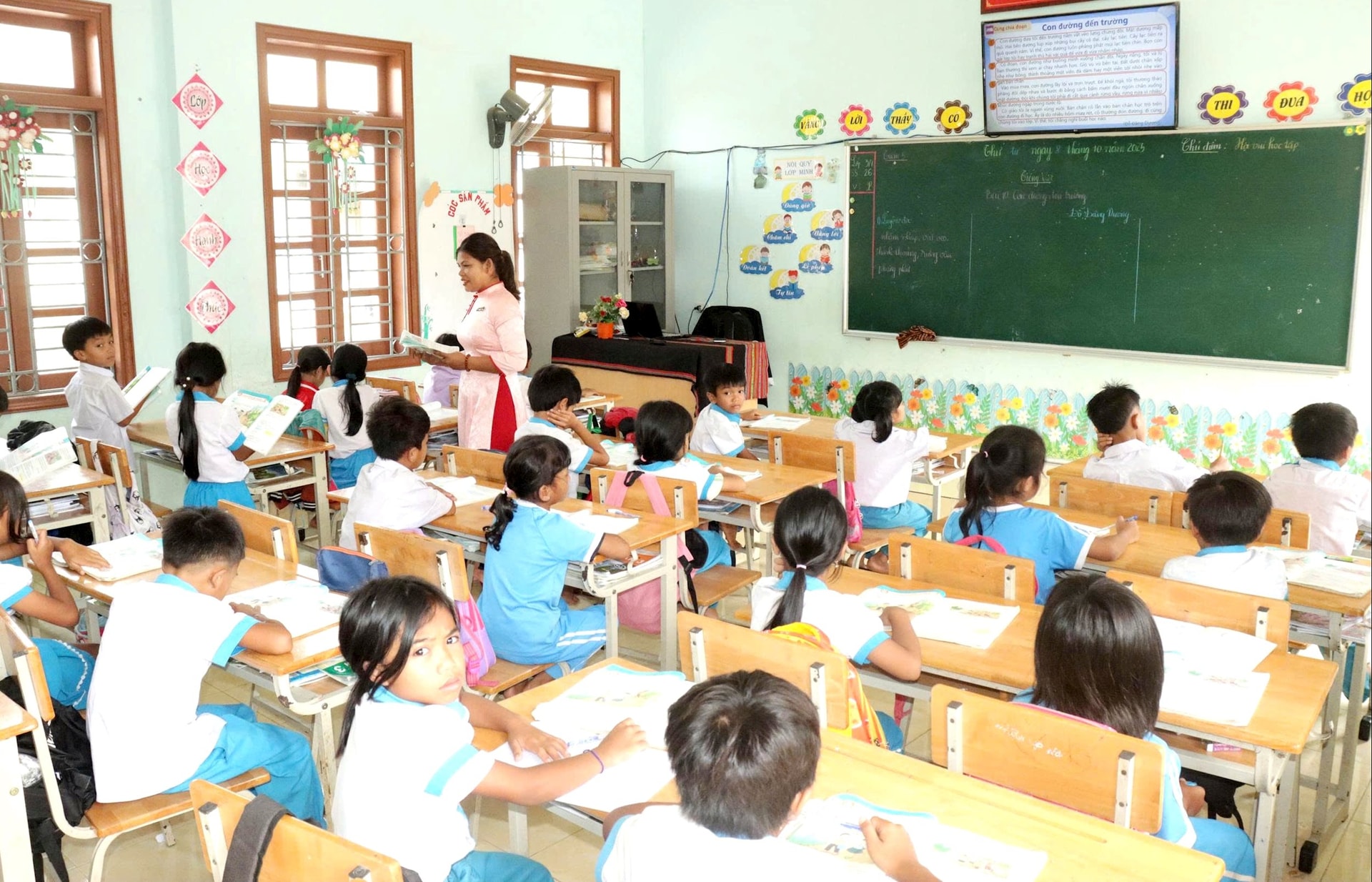
However, the implementation process in mountainous areas still faces many difficulties. The teacher-to-class ratio is low, while the number of teaching hours increases, making the pressure of paying for the regime and socializing education work become heavy.
We have to mobilize parents and local resources to maintain English classes, but difficult economic conditions make this not easy, Mr. Nhat shared.
According to Mr. Alang Aray, Head of the Department of Culture and Society of Avuong commune, the commune currently has 5 schools with nearly 1,250 students. The commune government always pays attention to supporting, repairing facilities, supplementing teaching equipment and promptly recruiting 8 more contract teachers to overcome the shortage of human resources.
As a result, the quality of education has gradually improved, students are more diligent, and the percentage of weak students has decreased significantly. Maintaining a two-session-per-day teaching schedule not only helps students master knowledge but also develops comprehensive qualities and abilities, meeting the requirements of fundamental and comprehensive educational reform today.
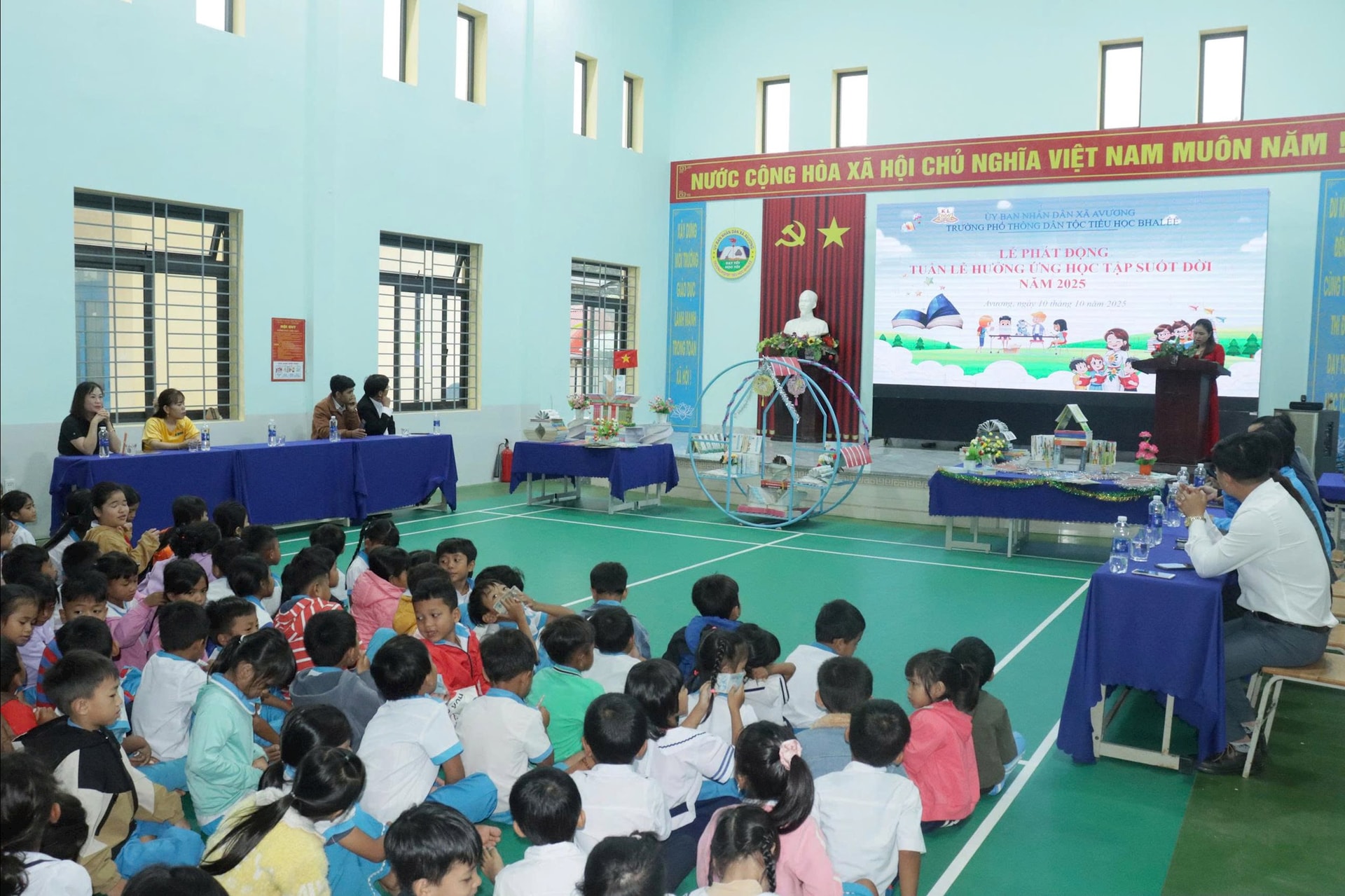
In Hung Son border commune, Ly Tu Trong Ethnic Boarding Junior High School is also striving to overcome difficulties to maintain its two-session-per-day learning program. According to Principal Huynh Phuoc Tai, the school is making maximum use of classrooms to arrange two sessions for 9th-grade students in order to reinforce knowledge and provide remedial instruction for weaker students.
Thanks to the local support in recruiting more teachers, the school has partly overcome the shortage of human resources. Currently, Hung Son commune has 7 schools with 41 campuses, 82 classrooms and nearly 1,700 students.
Although travel conditions are still difficult, the spirit of overcoming difficulties of teachers and students here is spreading strongly, demonstrating the determination to bring knowledge closer to students in the mountainous border areas.
The policy of teaching two sessions a day is gradually becoming an important step in the journey to improve the quality of education in disadvantaged areas of Da Nang, affirming the efforts of the government, the education sector and the teaching staff in bringing an equal and comprehensive learning environment for all students.
Source: https://baodanang.vn/truong-hoc-vung-cao-no-luc-to-chuc-hoc-2-buoi-ngay-3308240.html


![[Photo] Closing Ceremony of the 10th Session of the 15th National Assembly](/_next/image?url=https%3A%2F%2Fvphoto.vietnam.vn%2Fthumb%2F1200x675%2Fvietnam%2Fresource%2FIMAGE%2F2025%2F12%2F11%2F1765448959967_image-1437-jpg.webp&w=3840&q=75)

![[Photo] Prime Minister Pham Minh Chinh holds a phone call with the CEO of Russia's Rosatom Corporation.](/_next/image?url=https%3A%2F%2Fvphoto.vietnam.vn%2Fthumb%2F1200x675%2Fvietnam%2Fresource%2FIMAGE%2F2025%2F12%2F11%2F1765464552365_dsc-5295-jpg.webp&w=3840&q=75)









![[Infographic] Preventing students from making their own firecrackers: 7 things parents need to know](https://vphoto.vietnam.vn/thumb/402x226/vietnam/resource/IMAGE/2025/12/11/1765466656703_img_0320_20251211183542.jpeg)
































![[OFFICIAL] MISA GROUP ANNOUNCES ITS PIONEERING BRAND POSITIONING IN BUILDING AGENTIC AI FOR BUSINESSES, HOUSEHOLDS, AND THE GOVERNMENT](https://vphoto.vietnam.vn/thumb/402x226/vietnam/resource/IMAGE/2025/12/11/1765444754256_agentic-ai_postfb-scaled.png)












































Comment (0)