

Dr. Nguyen Thanh Nga, Deputy Director of the Institute of Financial Strategy and Policy, Ministry of Finance , said that carbon tax is an indirect tax that has been implemented in many countries, playing an important role in reducing greenhouse gas emissions.
However, Vietnam already has various taxes such as environmental protection taxes and fees, and excise taxes... targeting activities that generate greenhouse gas emissions, so there is no intention to impose a carbon tax. Careful consideration is needed before issuing a tax decree to avoid the impact of double taxation.”
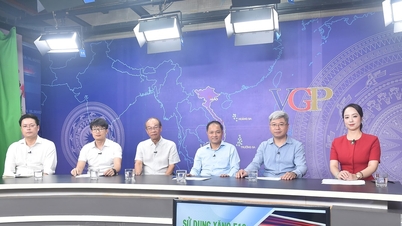
This opinion was shared by Ms. Nga at the forum "Realizing the National Strategy on Green Growth in Vietnam: Promoting Green Capital Flows," which recently took place in Hanoi .
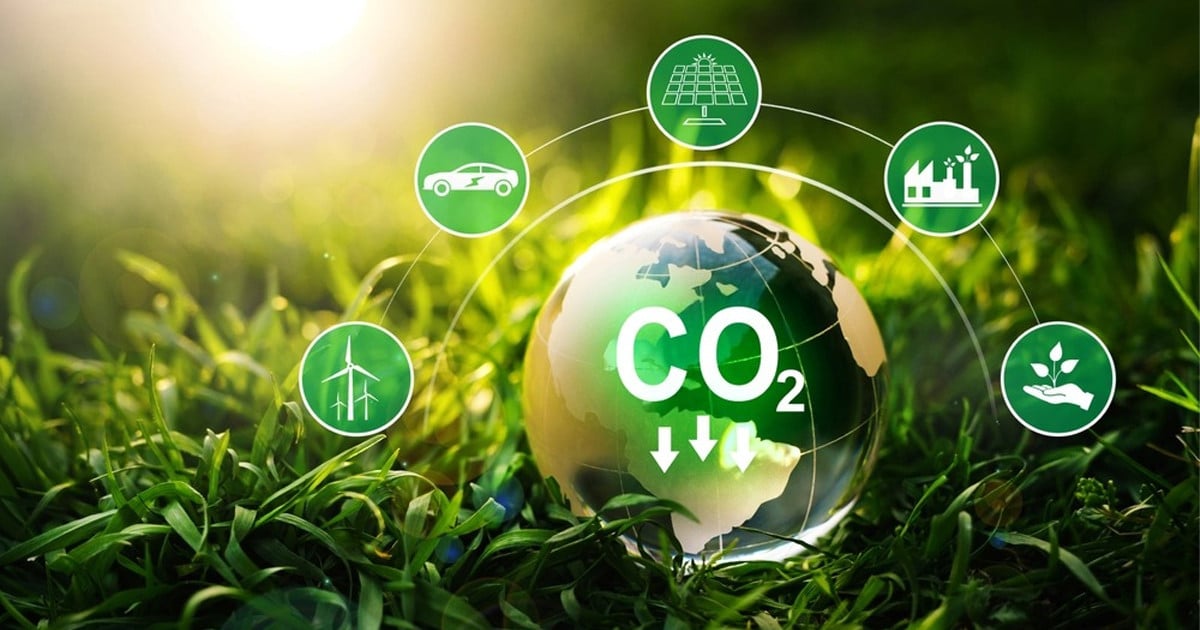
Many countries have imposed carbon taxes at varying rates.
In France, the carbon tax rate from April 2014 was 7 EUR/ton of CO2 (8 USD/ton of CO2). In July 2015, the Energy Law aimed at green growth was passed, setting the carbon tax rates for 2020 and 2030 at 56 EUR/ton of CO2 (62 USD/ton of CO2) and 100 EUR/ton of CO2 (110 USD/ton of CO2), respectively.
In the UK, a tax of £4.94/tonne of CO2 (US$7/tonne of CO2) has been in effect since 2013, increasing to £18.08/tonne of CO2 (US$26/tonne of CO2) from January 2015, further increasing to £21.2 (US$30) in 2016-2017, and £24.62 (US$35) in 2017-2018.
In Australia, since July 1, 2012, a carbon tax has been applied at a rate of US$26 per ton of CO2.
Citing the opinion of a World Bank expert who suggested that "at an appropriate time, Vietnam should impose a carbon tax," Dr. Vo Tri Thanh, Director of the Institute for Brand and Competition Strategy Research, analyzed: From an economic perspective, for the market mechanism to function effectively, a carbon tax is a good solution to limit emissions.
However, Mr. Thanh also noted that, according to the "Laffer curve" in economics, a 100% tax would result in zero total tax revenue. It's not true that the higher the tax, the more revenue is collected. An excessively high tax rate will lead to a decline in production and business, resulting in low total tax revenue.
Disagreeing with the carbon tax proposal, Mr. Quan Duc Hoang, a member of the Board of Directors of Amber Fund Management Company, stated: “Instead of taxing carbon, we could reward those who perform well. Taxes are obligations, and many people will try to avoid them, easily leading to fraud. Rewards, on the other hand, will create motivation for people to do better in clean production and business, thereby limiting greenhouse gas emissions.”
Source: https://vietnamnet.vn/viet-nam-co-nen-danh-thue-carbon-2321300.html



![[Photo] General Secretary and President To Lam presides over a meeting on preparations for the review of one year of operation of the three-tiered government system.](https://vphoto.vietnam.vn/thumb/1200x675/vietnam/resource/IMAGE/2026/06/02/1780391821195_a1-bnd-4595-9717-jpg.webp)




















































































Comment (0)