

Lobster exports surge 70-fold.
According to the Vietnam Association of Seafood Processing and Export (VASEP), in the first five months of 2024, shrimp exports reached US$1.3 billion, a 7% increase compared to the same period in 2023. Of this, whiteleg shrimp accounted for 72% with a value of nearly US$935 million, a 21% increase; tiger shrimp accounted for 12% at US$155 million, a slight 1% increase compared to the same period in 2023. Lobster also accounted for a significant share, over 8% at more than US$106 million, a breakthrough increase of nearly 70 times compared to the same period in 2023. In addition, exports of tiger shrimp, freshwater prawns, and striped shrimp also showed positive growth trends recently.
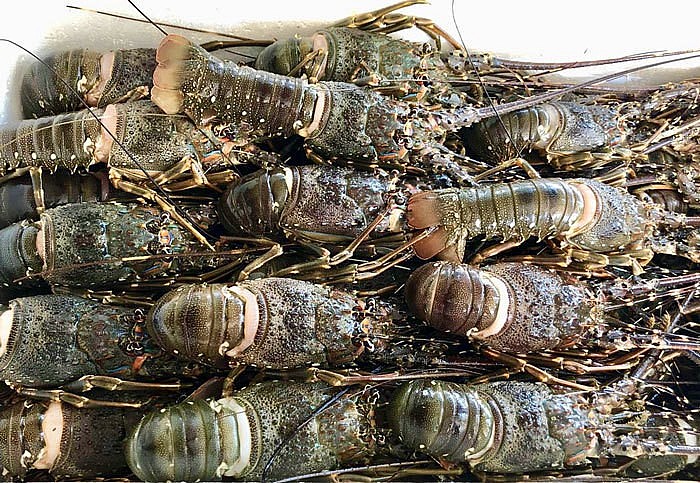 |
| In the first five months of 2024, China increased its imports of blue lobsters from Vietnam by 112 times. |
In the first five months of this year, exports of processed shrimp products showed a downward trend. Specifically, exports of processed whiteleg shrimp (HS code 16) decreased by 31%, processed tiger shrimp by 72%, and processed dried and other shrimp by 41% and 99% respectively. Meanwhile, exports of live/fresh/chilled/frozen shrimp products increased, with whiteleg shrimp rising by 12% and tiger shrimp increasing dramatically by 158 times…
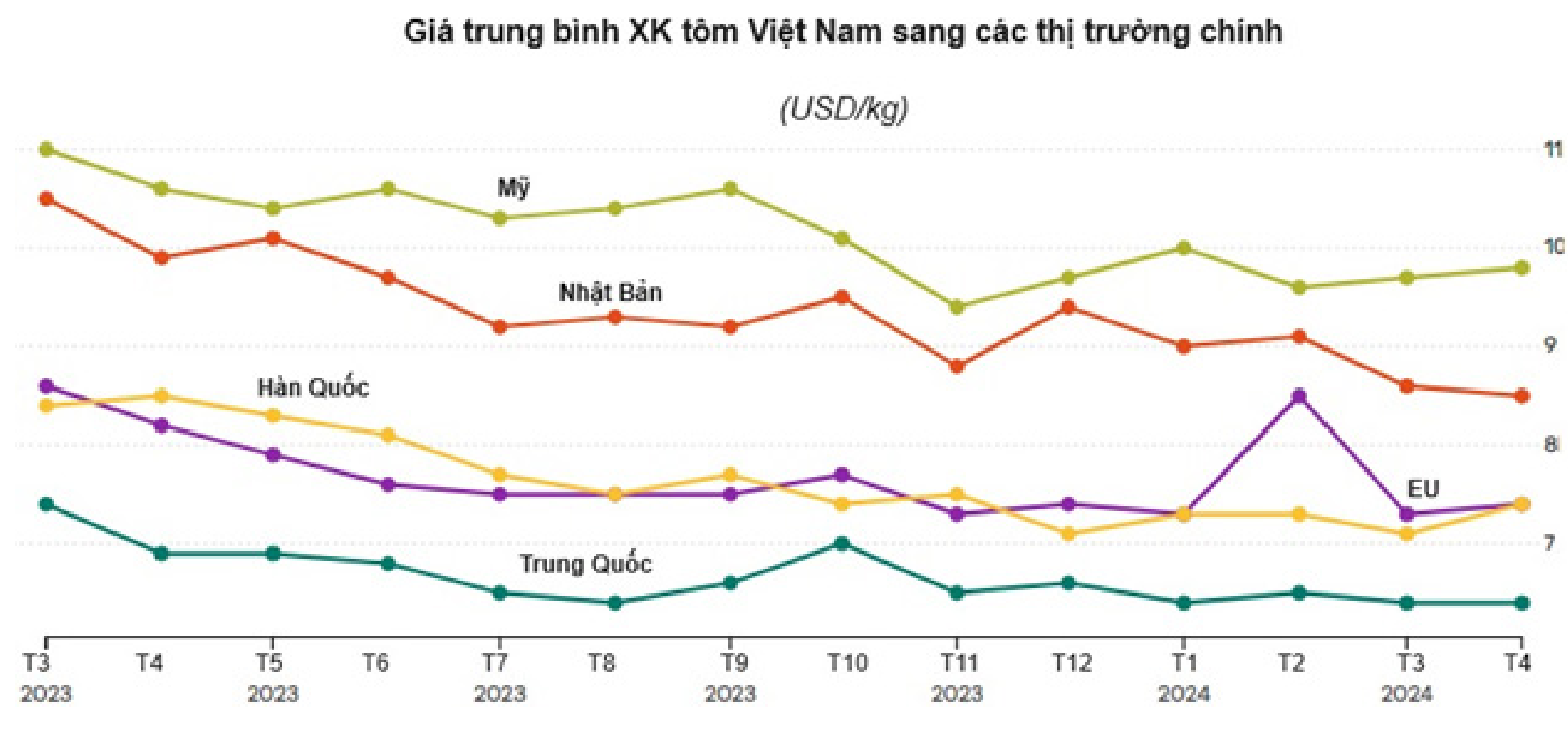
Notably, China has overtaken the United States to become Vietnam's number one shrimp import market, accounting for 20% of the total, mainly due to a sharp increase in imports of blue lobster (112 times higher) and whiteleg shrimp (+30%). Shrimp exports to the United States accounted for 17.4% of the total and only increased slightly by 4%. Although imports are gradually recovering, export prices to the US market remain low compared to the same period in 2023. Exports to Japan decreased slightly by 3%, while exports to the EU increased slightly by 1%. Shrimp exports to some markets showed more positive trends, including Canada (+51%), the UK (+15%), and Russia (+332%).
According to Mr. Do Ngoc Tai, General Director of Tai Kim Anh Seafood Processing Joint Stock Company and Chairman of the VASEP Shrimp Committee, Vietnamese businesses currently export shrimp to more than 100 markets, including five key export markets: the United States, the EU, Japan, South Korea, and China.
Opportunities and challenges go hand in hand.
On March 25, 2024, the U.S. Department of Commerce (DOC) issued its preliminary conclusion in the U.S. anti-subsidy investigation into frozen warmwater shrimp (HS codes: 0306.17, 1605.21, and 1605.29) originating from Vietnam. This case was initiated on November 14, 2023, and investigated by the DOC at the request of the American Shrimp Processors Association, covering the period from January 1 to December 31, 2022.
 |
The DOC has determined preliminary countervailing duties for Vietnamese businesses. Specifically, 2.84% for the single mandatory respondent and for all other respondents; and 196.41% for the single respondent not involved in the case. The 196.41% duty rate was determined based on available adverse facts that resulted in a higher duty rate compared to other businesses.
After the preliminary findings are published in the Federal Register, the U.S. Customs and Border Protection (CBP) will proceed with requiring deposits on shipments exported to the United States at the aforementioned preliminary countervailing duty rates. Although no final conclusion has been reached, the preliminary findings will have some impact on exports and importers' choices regarding shrimp from various countries.
According to Mr. Truong Dinh Hoe, General Secretary of VASEP, the anti-subsidy tax on Vietnamese shrimp was initially thought to be lower than that of India and Ecuador, but at the last minute, the DOC adjusted and recognized Ecuador's tax rate at 2.89%, equivalent to that of Vietnam. In addition, the anti-dumping case is currently in the POR19 review phase, with extremely complex developments.
According to Mr. Truong Dinh Hoe, the Vietnamese shrimp industry has to compete on price with shrimp from Ecuador, which currently accounts for 65% of Ecuadorian shrimp exports to China. Currently, there are two potential markets for Vietnamese shrimp: the United States and China, both of which face competition from shrimp from Ecuador and India. Meanwhile, the EU market is stagnant due to issues with sustainability certifications such as ASC, and upcoming regulations on greenhouse gas emissions. Indian shrimp exports are facing difficulties in the US market, so they will focus on other markets, including the EU; therefore, shrimp exports to the EU are unlikely to grow in the near future.
In terms of production costs, the price of raw shrimp in Vietnam remains significantly higher than in other countries such as India, Ecuador, and Thailand. For example, medium-sized whiteleg shrimp (70 shrimp/kg) from Vietnamese ponds this year are still about 15,000-20,000 VND/kg higher than the same size shrimp from Thailand, 20,000-30,000 VND/kg higher than Indian shrimp, and 30,000-35,000 VND/kg higher than Ecuadorian shrimp. Therefore, in terms of export prices, Vietnam still struggles to compete with other countries when exporting raw shrimp such as whole shrimp, PTO shrimp, PDTO shrimp, and PD shrimp meat.
Although Vietnam is currently exporting the most shrimp to the Chinese market, according to Mr. Do Ngoc Tai, this growth is mainly due to China's sharp increase in imports of blue lobster (112 times) and whiteleg shrimp (+30%). Mr. Tai believes that in the coming months until the end of the year, Vietnamese shrimp exports to China may not increase. The reason is that some countries such as Ecuador, India, and Indonesia will focus their exports to this market due to high US tariffs, so Vietnamese shrimp exports to China will face significant price challenges, especially whole tiger shrimp and whole whiteleg shrimp.
Despite the challenges, Vietnamese shrimp also has many opportunities to increase its market share in China and the United States. According to VASEP, the Ecuadorian shrimp industry faces significant challenges, including increased inspections and refusal of sulfite labeling by Chinese customs, new anti-subsidy duties in the United States, and a decline in global shrimp consumption.
"In March 2024, China announced that a total of 43 shipments of Ecuadorian shrimp had been rejected in the first two months of the year, mainly due to excessively high sulfite levels. Since February, China has tightened inspections of shrimp imported from Ecuador, causing a disruption in the supply of shrimp to this market," VASEP reported.
In the Indian market, a large shrimp processing and exporting plant recently became the focus of a series of allegations related to falsified documents, intentionally shipping antibiotic-positive shrimp to the United States, and mistreating workers. Following these allegations, there have been a series of reactions from US importers and markets regarding Indian shrimp.
Sysco – the largest food service company in the United States – immediately stopped buying shrimp from India. The American Shrimp Processors Association (ASPA) filed a request with the U.S. Customs and Border Protection (CBP) to ban imports of shrimp from India allegedly produced using “forced labor,” as required by Section 307 of the Tariff Act of 1930. The ASPA also filed a complaint with the U.S. government arguing that the Indian government’s failure to enforce its most basic labor laws has resulted in subsidies for Indian shrimp producers.
India exported 296,400 tons of shrimp worth $2.47 billion to the US market in 2023, a 215% increase in value and a 125% increase in volume over the past 10 years. The setbacks experienced by the shrimp industries in Ecuador and India in the early months of this year may also serve as an important message for Vietnamese shrimp producers and exporters to be cautious about labor, environmental, and food safety issues in the farming, processing, and export stages. However, these impacts on the two shrimp-producing countries also present opportunities for Vietnamese shrimp supply.
Source: https://congthuong.vn/viet-nam-dang-ban-tom-nhieu-nhat-sang-thi-truong-trung-quoc-325483.html








































































Comment (0)