

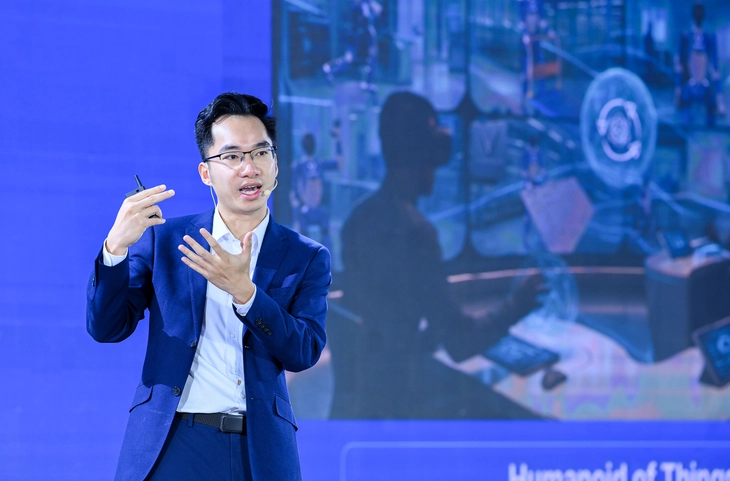
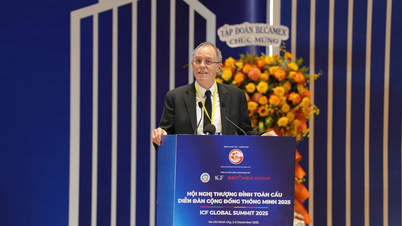
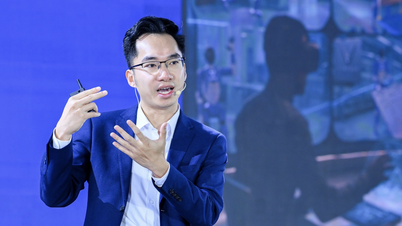
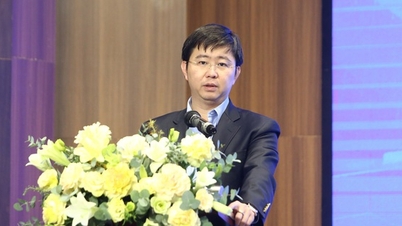
Dr. Nguyen Trung Quan - Scientific Director of VinMotion (Vietnam) - shared at the seminar - Photo: Organizing Committee
The sharing was given by Dr. Nguyen Trung Quan - Scientific Director of VinMotion (Vietnam) - at the discussion on Robots and Intelligent Automation, which took place on the morning of December 4, within the framework of VinFuture 2025 Science and Technology Week.
VinMotion is a pioneering company in multi-purpose robots founded by VinGroup - one of the largest corporations in Southeast Asia and the leading private enterprise in Vietnam. In less than 7 months since its establishment, VinMotion has introduced 5 versions of humanoid robots.
Golden time to develop humanoid robots in Vietnam
Sharing at the discussion, Dr. Nguyen Trung Quan - University of Southern California (USA), Scientific Director of VinMotion (Vietnam), said that by the end of this decade, the world will lack at least 50 million workers. Perhaps people will have to pay robots 50,000 USD, equivalent to more than 1.3 billion VND per year for robots to come to work.
The challenge of labor shortage is global and AI/robotics is an essential solution. Dr. Quan believes that Vietnam possesses many advantages in all three important aspects of humanoid robots: good hardware, strong software and the ability to operate safely and reliably.
“The opportunities are huge and exciting, the challenges are huge, just keep working and hope for a bright future,” he said.
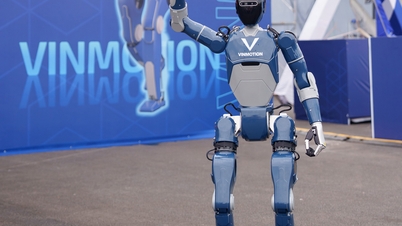
According to Dr. Quan, after 7 months since its establishment, VinMotion has introduced 5 versions of humanoid robots. Within the framework of the A80 exhibition event alone, the VinMotion team has performed more than 150 consecutive performances to serve the people, bringing Vietnamese robots closer to the community.
After the event, the VinMotion team continued to improve the humanoid robot versions. Compared to 3 months ago, the humanoid robots now move more flexibly and faster. The AI part is also integrated with flexible multilingual communication, especially Vietnamese and English.
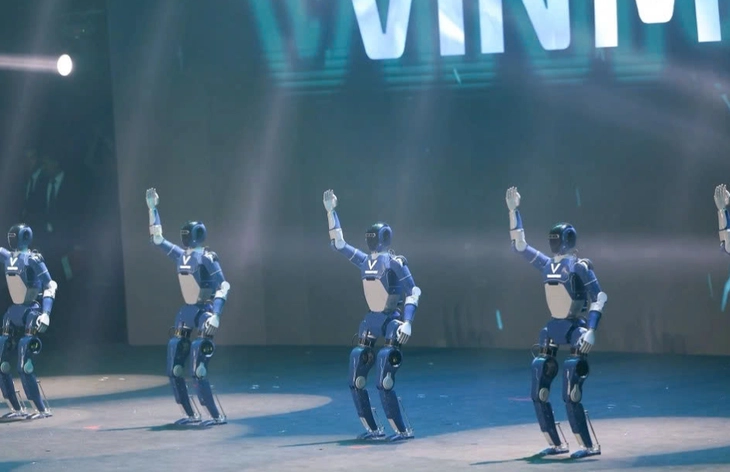
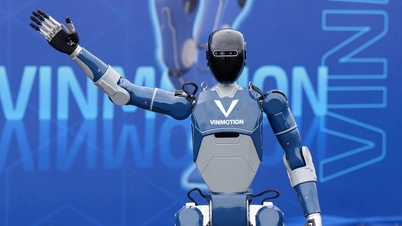
VinMotion's robot performs on stage, within the framework of the A80 exhibition - Photo: VinMotion
According to Mr. Quan, VinMotion Joint Stock Company is currently developing the Motion 2 robot model. This is considered a much more breakthrough robot model than Motion 1. The Motion 2 robot model is oriented towards superior movement capabilities that are superior to that of normal people.
Specifically, during the design process, the company set three important criteria to ensure the robot can operate continuously 24/7, including: self-standing up (if the robot falls, it must stand up by itself); self-replacement of batteries or self-charging of batteries when necessary; hardware as well as the entire system must be guaranteed to be in a stable, continuous operating state without stopping for many hours.
"Our goal is to develop humanoid robots that are increasingly flexible, intelligent and versatile so that they can gradually enter life in many different areas, from services, industry, to household help.
I know this is a very big goal, but I believe that this is the golden time for us to dream of it. With the support of Vingroup Corporation and the inner strength and desire to prove ourselves of the VinMotion engineering team, I believe that this goal is not too far away," Mr. Quan shared.
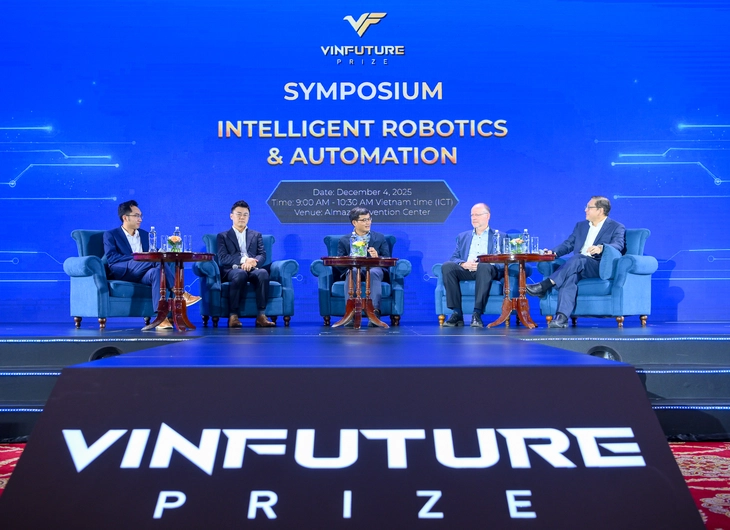
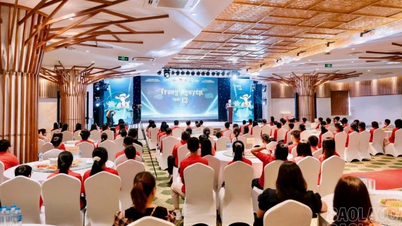
Speakers shared at the Robots and Intelligent Automation seminar, taking place on the morning of December 4 - Photo: Organizing Committee
Shift from 'specialized' robots to 'general-purpose' robots
According to Professor Tan Yap Peng - Principal of VinUni University, robots are now used in many industries (for example, Amazon has used millions of robots to load and unload warehouses). It is predicted that by 2050, there will be about 1 billion robots living with humans.
According to him, the robotics industry is on the verge of becoming the next big industry after AI, but at the same time there are many challenges, because robots are only programmed to solve one simple task (doing laundry, wiping tables, lifting things, folding clothes, etc.). Robots are still limited in handling many tasks, understanding complex commands and executing commands accurately.
To solve the above problem, Professor Tan Yap Peng believes that it is necessary to move towards a model with a larger purpose, helping to refine the robot's actions, helping the robot understand images, instructional videos, and understand human natural language to take action.
Currently, there are many models used to equip, train and have the ability to handle many different tasks such as large language models (Gemini, AI, LLav), visual-language models (Open AI), visual-language-action models (VLA, Pi, VLA-2).
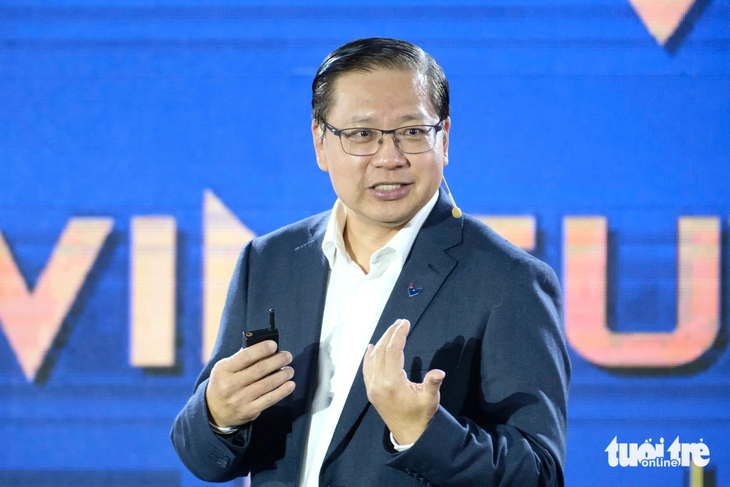
Professor Tan Yap Peng shares at the seminar - Photo: NGUYEN BAO
"The future of robotics, when fully refined and developed, will move from 'specialized' to 'general-purpose' with a higher level of intelligence. Robots will become more dexterous, easier to maintain thanks to the ability to self-diagnose and troubleshoot, and can proactively perform operations that humans desire.
In particular, future robots will use energy more efficiently, operate more economically and ensure safety and stability when coexisting in human living environments," said Professor Tan Yap Peng.
Professor Ho-Young Kim of Seoul National University (Korea) said that robots can create concerns such as affecting employment. Humanoid robots are also a controversial topic, requiring us to find suitable solutions and continue to discuss further.
For physical robots operating in real life - such as caring for patients, the elderly or assisting with housework - he said the design and use need to be carefully calculated to minimize risks when interacting directly with humans.
How to recycle robots at the end of their life cycle to protect the environment?
According to Professor Kurt Kremer - Max Planck Institute for Polymer Research (Germany), with polymer materials, recycling is still a big challenge. However, compared to consumer products, the amount of polymer used in this field is still insignificant.
"We can move towards materials that are more biodegradable, although it should be noted that they may not be as aesthetically pleasing as traditional materials. Our goal is to minimize the use of polymers in production," said Professor Kurt Kremer.
Professor Ho-Young Kim said that electric batteries are also a challenge. According to him, batteries for robots need to have a large energy storage capacity but at the same time must be miniaturized to reduce the impact on the environment. This is a direction that scientists need to continue to research and optimize in the future.
Source: https://tuoitre.vn/viet-nam-dang-phat-trien-robot-hinh-nguoi-linh-hoat-hon-ca-nguoi-20251204143218267.htm


![[Photo] Cat Ba - Green island paradise](/_next/image?url=https%3A%2F%2Fvphoto.vietnam.vn%2Fthumb%2F1200x675%2Fvietnam%2Fresource%2FIMAGE%2F2025%2F12%2F04%2F1764821844074_ndo_br_1-dcbthienduongxanh638-jpg.webp&w=3840&q=75)












































![[VIMC 40 days of lightning speed] Da Nang Port: Unity - Lightning speed - Breakthrough to the finish line](https://vphoto.vietnam.vn/thumb/402x226/vietnam/resource/IMAGE/2025/12/04/1764833540882_cdn_4-12-25.jpeg)



































Comment (0)