

The hardships behind the spotlight
In just over three years (from 2022 to 2025), the Vietnam Circus Federation has won nine international medals, affirming the position of Vietnamese circus art on the international stage. But behind that glory are countless difficulties, injuries, short career lifespans, and the constant worry of making ends meet.
To perform for just a few minutes on stage, circus artists must undergo extremely arduous and rigorous training. A circus artist must study for 7 to 12 years, and some disciplines even require 15-16 years, starting around the age of 10. This is a job that demands exceptional talent and enduring endurance, because even a small mistake can cause lifelong injury or even be life-threatening.
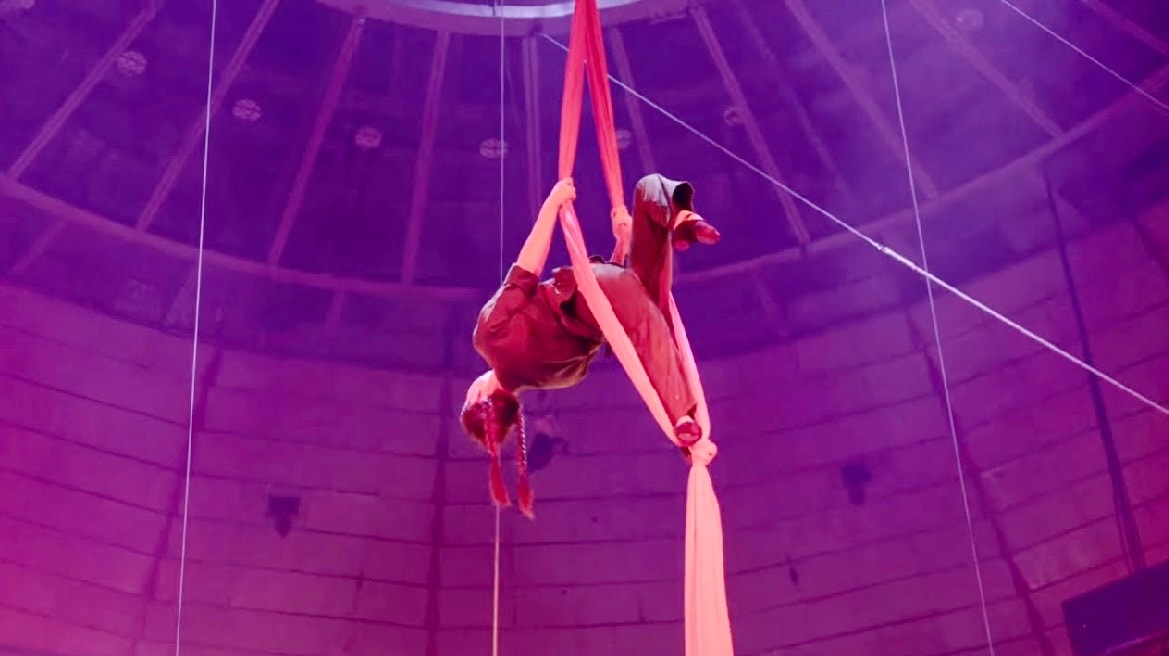
According to Tran Manh Cuong, Deputy Director of the Vietnam Circus Federation, occupational injuries are something circus artists face every day. Sprains, twists of the wrists, ankles... are "normal" occurrences in the industry.
As for performer Ngoc Thuy (Central Circus), when she joined the Circus Federation, it took her more than a year to practice her pole acrobatics act. "In the mornings, I train my physical strength and endurance. In the afternoons, I focus on aerial acrobatics," Thuy shared.
A circus performer's day begins early in the morning with intense warm-up exercises and ends late at night. On average, they train 6-8 hours a day. During holidays and Children's Day, training and performance schedules overlap, but no one dares to slack off because even a slight break in training will immediately reduce their performance. They also have to maintain a strict diet, eating less and lighter meals to ensure stamina and flexibility.
“There was a time when I performed a sword balancing act high in the air, having to keep my eyes open and not blink to follow the movement of the sword. If the sword fell, it would certainly hit my face. Even practicing and performing so much caused me to develop keratitis,” recalled People's Artist Tong Toan Thang, Director of the Vietnam Circus Federation.
This isn't just one individual's story. Almost every artist carries the scars of falls. They face daily fears like the fear of slipping, the fear of missing a beat, the fear of not being able to catch their teammates in time. A perfect mid-air spin lasts only a few seconds, but it's the result of thousands of painful falls. The audience only sees the moment they soar, while the artist remembers every fall. But the greatest fear isn't the fall itself, but the feeling of being forgotten. With the rise of new entertainment trends, with social media and game shows everywhere, circus arts seem to be a secondary option.
The lives of circus artists are also quite precarious. The average career lifespan is only 15-20 years. Female artists' performance declines by the age of 35-40, while male artists only last until around 45. Meanwhile, the long training process results in low investment in human resources. When they are no longer able to perform, many find it difficult to transition to other positions because they only have vocational diplomas, which do not meet the standards for civil servant or public employee recruitment exams.
Many circus performers share that their income is significantly lower than in other art forms, while working conditions are harsher. Specifically, the training allowance for a new show is only 80,000 VND per day, and the performance allowance does not exceed 200,000 VND per show. Although the basic salary has increased sixfold since 2015, this allowance remains unchanged.
Many people have to take on extra shows or side jobs to make ends meet. The disparity between effort, risk, and income is causing many young talents to lose interest in the profession, leading to a dwindling pool of successors. Circus – a form of entertainment once a cherished part of childhood for generations – is gradually fading into the realm of memories.
Finding a path to revival in the new era.
But the circus didn't choose silence. Amidst countless difficulties, the artists quietly sought ways to innovate to preserve their craft and bring audiences back to the theater. Under the stage lights, they still gave their all, using their passion and creativity to inspire viewers.
According to Tran Manh Cuong, Deputy Director of the Vietnam Circus Federation, performances at the Central Circus Theater now focus more on content and message, rather than just showcasing technical skills. Modern circus is combining traditional music, contemporary dance, and storytelling elements to create a more complete artistic experience.
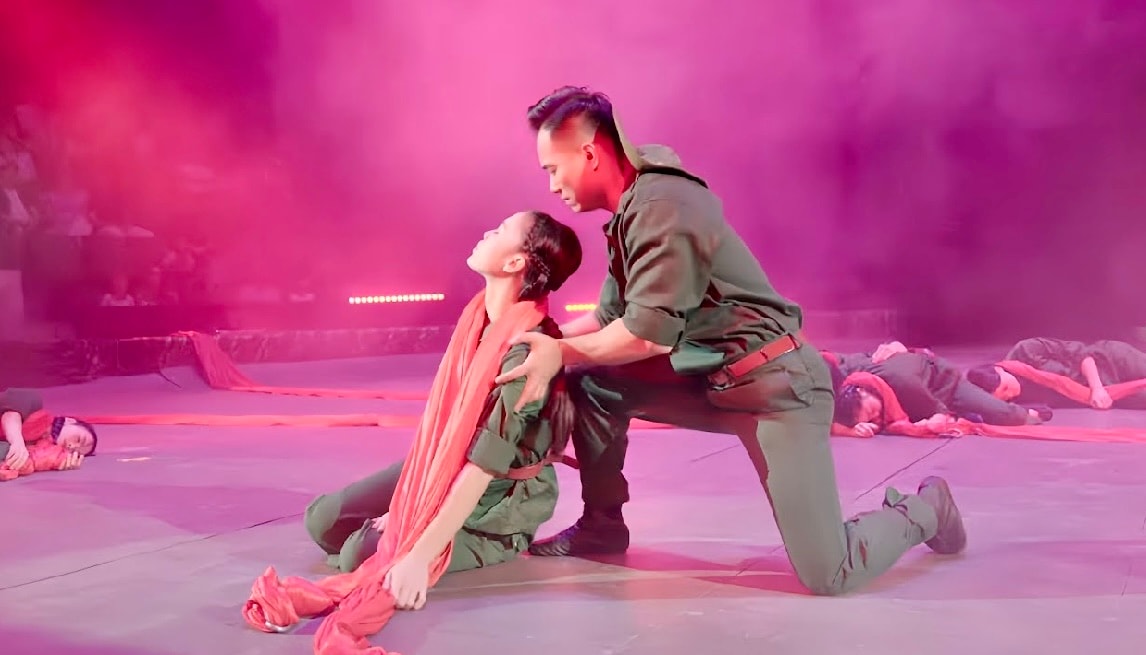
Recent performances such as "Ten Girls of Dong Loc Crossroads" in the play "National Festival" or the Mid-Autumn Festival circus show "The Boy from the Green Forest" at the Central Circus have become new highlights, showcasing both top-notch technique and deeply moving the audience.
The historical narrative, told through body language, music, and light, has helped Vietnamese circus rediscover its emotional connection with the public. “I liked the act ‘Ten Girls of Dong Loc Crossroads’ the most. It touched my emotions, both visually and aurally,” shared Ms. Vu Mai Huong, an audience member at the Central Circus, emotionally.
Innovations in both content and presentation have brought Vietnamese circuses back to theaters, attracting large audiences, especially young families. Circus performances are no longer a series of disjointed acts but are staged as complete shows with themes, scripts, and emotions. This direction helps Vietnamese circuses maintain their identity, being both modern and deeply rooted in tradition.
However, for this revival to be sustainable, it requires not only the efforts of the artists but also a synchronized mechanism and policies. Many opinions suggest that salaries, allowances, and insurance should be reviewed to ensure a decent standard of living and social security for those working in the profession. Furthermore, opportunities for retraining and career chuyển đổi should be expanded for those who are no longer able to perform, avoiding the waste of valuable experience and human resources.
In addition, investing in safe training facilities and equipment, along with international cooperation programs, is also a necessary direction. Models combining circus with tourism , school theater, or cultural festivals could be ways to bring the circus closer to young audiences, creating a more open, vibrant, and attractive performance space.
Vietnamese circus is on a slow but steady journey to reclaim its former glory. Despite their short careers and the hardships they face, these artists remain passionate about soaring and contributing. In today's turbulent modern world , they are living proof of the vibrant energy of art – where faith, passion, and determination continue to shine brightly, ensuring that the lights of the Vietnamese circus stage never go out.
Source: https://hanoimoi.vn/xiec-viet-nhoc-nhan-va-khat-vong-721278.html










































































Comment (0)