

(CLO) Newsrooms are shrinking due to tighter budgets, and the rapid pace of digital publishing has reduced editorial oversight. The trend of journalists self-editing and publishing their articles is clear. So what basic editorial knowledge and considerations do journalists need to grasp?
It's important to note that even a minor typo can alienate readers. More serious errors can erode trust in the accuracy of news and trigger a wave of public criticism.
Writing is already difficult, but for journalists, self-editing is equally crucial. After the cycle of reporting and drafting, editing might seem like a trivial task. But in this age of instantaneous information dissemination, a small mistake can explode into thousands of errors in an instant. Skipping this step means you're essentially destroying your article, damaging your reputation, and ruining your career.
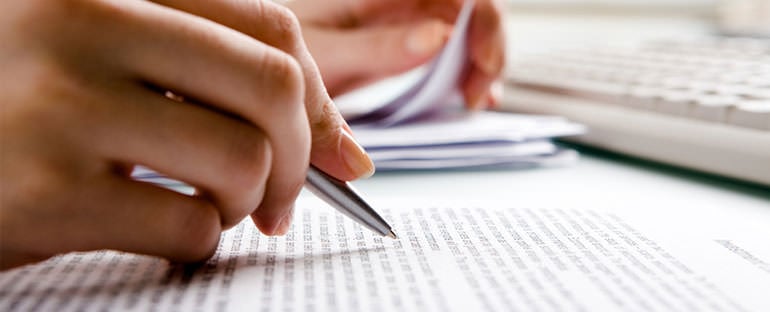
A well-edited manuscript shows respect for your readers. It also demonstrates professionalism in your work.
Jennifer Cox, a professor at Salisbury University and author of "Article and Narrative: Journalism in the Digital Age," said: "If you're inaccurate in your article, if it's sloppy or full of errors, you lose all credibility."
"It's like squeezing toothpaste out of a tube. You can't pour it back in," Cox explained. Even a small typo can turn readers away. More serious errors can erode trust in your reporting and draw public criticism.
A well-edited manuscript shows respect for your readers. It also demonstrates professionalism. Whether you're a freelancer or a full-time reporter, submitting a flawed piece can cost you opportunities for collaboration or reduce the number of assignments you receive.
She warned: "If a newsroom has to cut staff, the person who takes up the most of their editing time will likely be the first to be fired."
Thorough self-editing honors the effort you've put in, sharpens your message, improves clarity, and ensures your writing has the strongest impact. Here are some practical tips from Cox and Gerri Berendzen, a copy editor with over 35 years of experience and a lecturer at the University of Kansas' William Allen White School of Journalism and Mass Communication, to help make the review process more manageable and effective:
Take a break before you start editing.
Sometimes, the best way to improve your writing is to pause and take a break. Cox advises, "Unless you're under a tight deadline, take a break from writing."
When we become too familiar with a document, it's easy to overlook mistakes or assume readers will understand what we want to convey. Berendzen explains: "After research and interviews, the writer already has a clear understanding of their story and intentions."
This familiarity often leads to the omission of words, repeated phrases, or confusing sentence structures being overlooked.
"The brain reads the text as the writer thinks, not as it was actually written." Even a 5-10 minute break can help you view the manuscript with a fresh perspective.
Read the work aloud.
Reading your work aloud is one of the best ways to identify long sentences, disjointed paragraphs, or unclear expressions.
"When we're only editing in our brains, we tend to fill in words that we think are there or should be, but aren't," Cox says. This technique forces you to slow down and focus on how your writing sounds.
Understand your weaknesses.
Every writer faces unique challenges with grammar and word usage. "You need to honestly assess yourself and recognize your weaknesses." This helps you revise your writing more effectively and purposefully.

Understand and strive to improve your weaknesses in order to produce higher-quality writing.
Change the appearance of the manuscript.
Try changing how your draft is displayed on the screen or printed page to make it easier to spot errors.
"Try changing a few details in the text. For example, increase the font size, change the color, or the font," Berendzen suggests. "This will 'trick' your brain, making you feel like you're reading a new text."
Making the text "unfamiliar" will help you easily spot typos, awkward sentences, or other mistakes you might have overlooked.
Edit each line one by one.
To ensure you don't miss any errors, Cox recommends using a blank sheet of paper to cover the written text, only revealing individual lines as you edit.
"When reading a passage, we tend to absorb the entire content at once," she explained. " This method forces us to focus on each part, each line at a time. As a result, you won't miss any small but important details."
Carefully check the names, figures, and events.
Berendzen emphasized the importance of verifying information. " Don't assume you know how to spell people's names or place names correctly. Double-check them ," she advised.
Readers always expect accuracy, and mistakes in basic details can diminish the value of even the most meticulously crafted articles. Take the time to thoroughly check the facts and verify all data in your article before submitting it.
Focus on the beginning and the end.
The introduction and conclusion of an essay play a crucial role in introducing the main idea, establishing the tone, and linking the different sections together. Therefore, they require special attention.
"Pay close attention to the introduction and conclusion. Mistakes often occur in these two sections," Berendzen emphasized. Ensure your essay has an impressive beginning and a coherent conclusion by focusing on these parts.
Seek opinions from others.
While self-editing is essential, an objective perspective from an outsider can help you spot issues you might have overlooked. "Ask a friend, preferably someone outside of journalism, to proofread the article," Cox suggests.
Someone unfamiliar with the subject can quickly point out sections that are difficult to understand, lack context, or contain too much jargon. Their feedback will help you adjust the writing to appeal to a wider audience.
Use assistive tools, but don't become overly reliant on them.
Spell checkers, grammar checkers, and other support software can be helpful, but they are not magic wands.
"Use them cautiously. Grammar checkers sometimes make mistakes ," Berendzen emphasized. Always carefully consider their suggestions to ensure they align with your intentions and don't alter the meaning or style of your writing.
Hoang Anh (according to journalism.co.uk)
Source: https://www.congluan.vn/xu-huong-nha-bao-phai-tu-bien-tap-va-nhung-bai-hoc-la-gi-post334803.html


![[Photo] Prime Minister Pham Minh Chinh attends the Conference summarizing and implementing tasks of the judicial sector.](/_next/image?url=https%3A%2F%2Fvphoto.vietnam.vn%2Fthumb%2F1200x675%2Fvietnam%2Fresource%2FIMAGE%2F2025%2F12%2F13%2F1765616082148_dsc-5565-jpg.webp&w=3840&q=75)
































































































Comment (0)