

However, recently many quality-related issues have arisen, requiring immediate rectification.
These phenomena are causing concern.
As the durian harvest season ended in the Mekong Delta while the season in the East was yet to begin, traders began buying unripe durians to avoid supply disruptions. In mid-June, authorities in many localities in the Southeast region had to issue warnings about harvesting unripe durians.
Specifically, Mr. Nguyen Van Tu, Head of the Agriculture and Rural Development Department of Da Huoai District ( Lam Dong province ), advised farmers and small traders not to harvest durian that is not yet fully ripe for export to the Chinese market. This would affect the reputation of local durian.
Not only in Lam Dong, but also in Binh Phuoc province, leaders of the Department of Agriculture and Rural Development have reported a situation of competitive buying and selling of durian, including the harvesting of unripe fruit. Harvesting unripe durian will affect the reputation and brand of Vietnamese durian, and durian growers need to be vigilant and not be swayed by short-term gains.
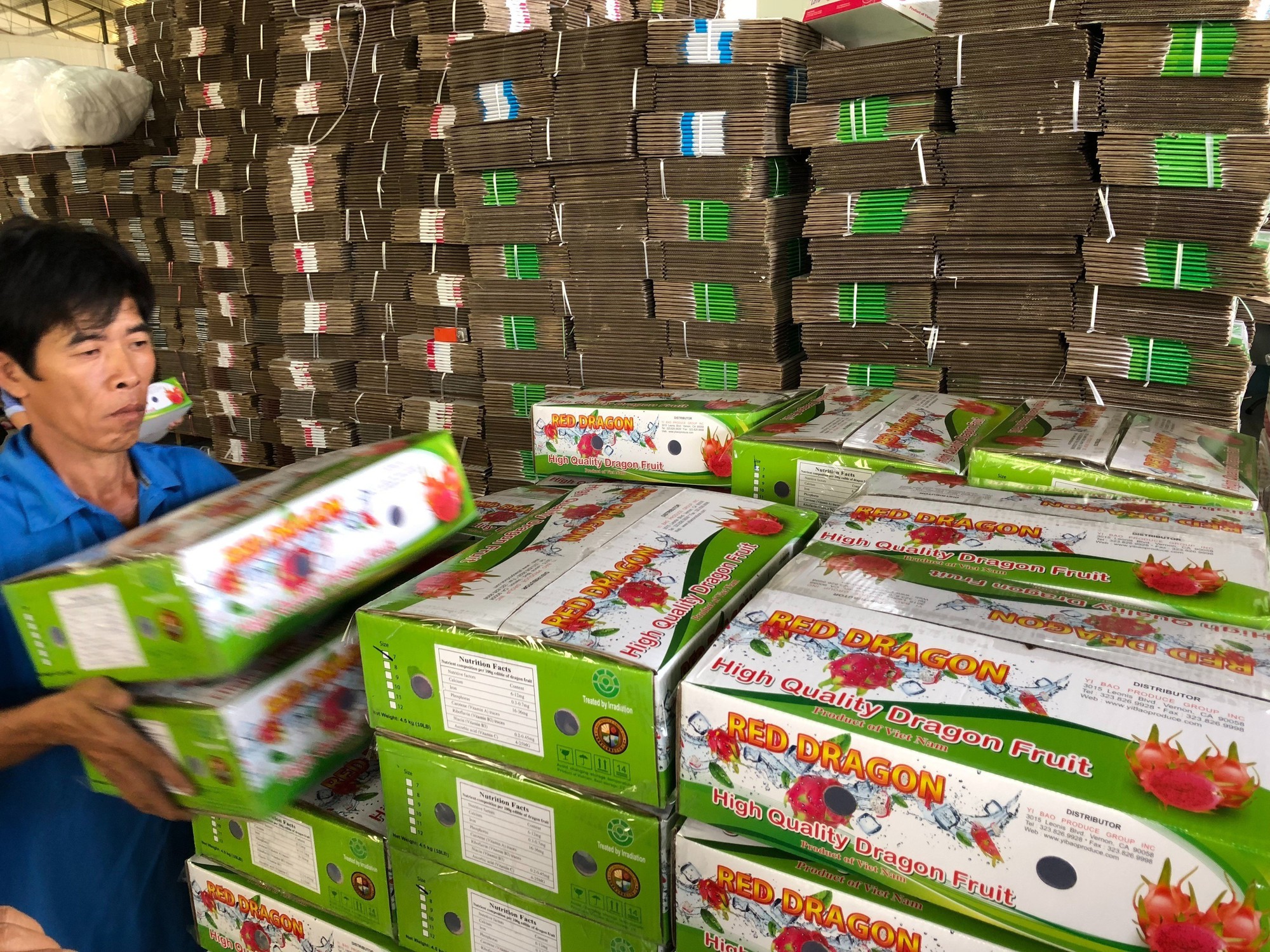
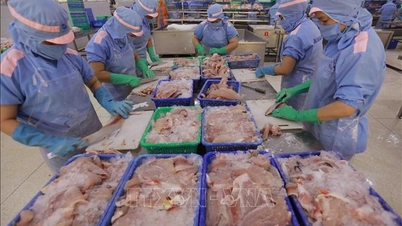
Dragon fruit processing facility for export in Tien Giang
According to Mr. Nguyen Van Tu, the district has been approved for 7 durian growing areas with a total area of 325 hectares. Adherence to regulations on codes and quality will contribute to protecting the Da Huoai durian brand, increasing the value of exported agricultural products, improving people's lives, and increasing local budget revenue. It will also facilitate the approval process for the 39 growing areas (1,625 hectares) currently awaiting approval. Therefore, controlling durian quality must be carried out seriously and decisively to protect the reputation of this multi-billion dollar commodity.
Similarly, a more recent news item (June 27th) is that the Vietnam National Notification and Inquiry Point on Sanitary and Phytosanitary Measures (SPS Vietnam ) announced that the Korean Ministry of Food and Drug Safety reported that dried red chili peppers from Vietnam violated food safety regulations.
Specifically, a shipment of dried chili peppers produced in 2022 by Long Thanh Co., Ltd. (Hai Duong) contained tricyclazone residue levels ranging from 0.02 to 0.04 mg/kg, exceeding South Korea's permitted limit of 0.01 mg/kg. According to the head of the Plant Protection Department (Ministry of Agriculture and Rural Development), this is an isolated case and does not affect Vietnam 's chili exports to South Korea. However, exporting businesses must strictly comply with the requirements of importing markets to avoid damaging the reputation of Vietnamese agricultural products in general.
Meanwhile, in the EU market, according to the Ministry of Industry and Trade, products such as bell peppers, okra, and dragon fruit have remained under quality monitoring for many years, undergoing quality checks at border crossings with a frequency of 20-50%. This means that the aforementioned agricultural products have not changed compared to EU regulations, while instant noodles have been removed from the quality monitoring list.
It can be said that the quality and safety of Vietnamese agricultural products in general have continuously improved over the years. However, the stories mentioned above show that a significant number of farmers, traders, and businesses still have a predatory mentality, which could affect the reputation of Vietnamese agricultural products when exported.
Improving quality with the goal of earning tens of billions of USD.
Returning from a study tour to learn about durian export practices in Thailand, Mr. Nguyen Van Muoi, Deputy Head of the Southern Office of the Vietnam Horticultural Association, stated: Thailand also faced many problems related to durian quality, similar to Vietnam's current situation, especially harvesting unripe durians and producing low-quality fruit. However, in the past, they had almost a monopoly in the market, so they weren't overly concerned.
With the emergence of new competitors, Thailand has focused more on quality rather than competing on quantity and price. For example, previously they only used sweetness meters to monitor the quality of durian, but now they have devised a method of measuring the dry matter content (powder content) to determine if the durian is mature enough for harvesting. Previously, this dry matter content was 32%, but now it has been raised to 35%.
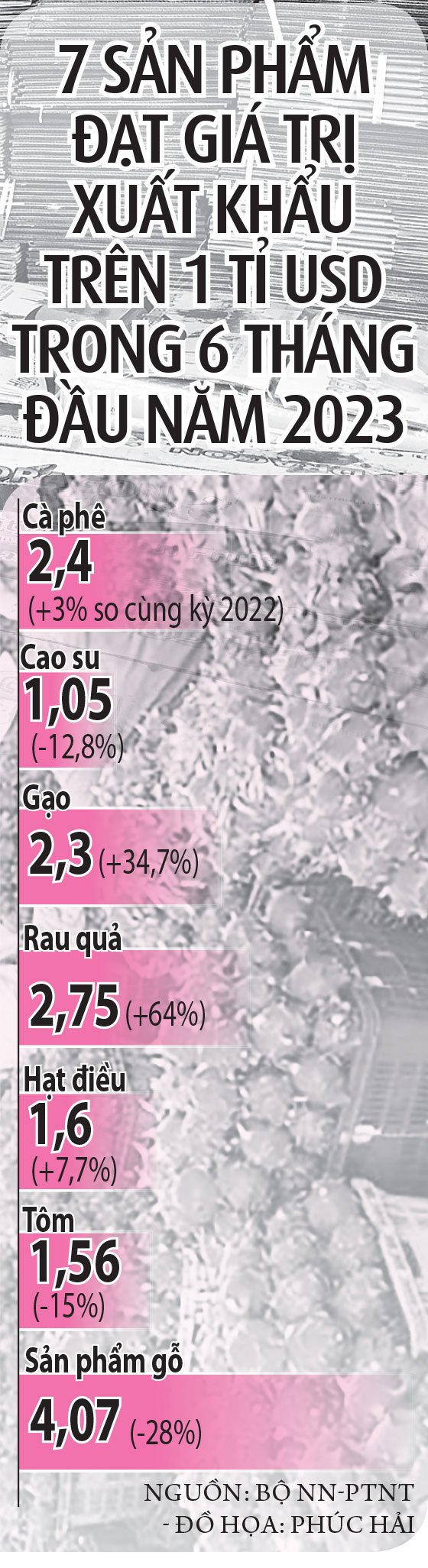
"Thailand has implemented a series of measures to limit the harvesting of unripe durians, such as enacting laws that criminally prosecute violators, not just imposing administrative fines. To effectively enforce these laws, specialized agencies monitor durian-growing regions. These agencies are responsible for inspecting quality before harvesting. This is why the quality of Thai durians is constantly improving. Furthermore, they are continuously developing new varieties with superior quality to capture higher-end market segments. In Vietnam , the area under durian cultivation has recently increased significantly, exceeding 110,000 hectares. However, the issue isn't about the size of the area, but rather the quality of our products. The Chinese market is vast, but we must continuously improve quality and meet market standards. We have not only the Chinese market but also a very large market of people of Asian descent around the world," Mr. Mười said.
Mr. Dang Phuc Nguyen, Secretary General of the Vietnam Fruit and Vegetable Association, commented: Vietnam has a particularly favorable geographical location with a large consumer market in China, but we have not yet fully exploited the potential of this market. Vietnam still lags behind Thailand and Ecuador in terms of fruit and vegetable exports to China. We should aim to maximize our advantages and set a goal of gradually surpassing both of these countries to become the largest supplier of goods to China. If we can do that, the value of fruit and vegetable exports could reach tens of billions of USD. This is something we have the potential and ability to achieve.
According to Mr. Hoang Trung, Deputy Minister of Agriculture and Rural Development: For chili peppers alone, the South Korean market imports over $10 million worth annually. Regarding current chili pepper export markets, including South Korea, the Plant Protection Department has repeatedly instructed businesses to strictly adhere to the requirements of the partner country. Specifically, one of the prerequisites for chili pepper shipments before export is that samples must be sent to laboratories for testing to eliminate any chemical residues prohibited by South Korea.
Besides South Korea, we are also negotiating to sign a protocol for the official export of chili peppers to China. Once the protocol with China is signed, Vietnam 's chili pepper exports will increase significantly in the coming years. "Improving the quality and safety of agricultural products is an issue that the agricultural sector has been actively pursuing for many years. This is a long-term and continuous effort to enhance the quality, brand, and reputation of Vietnamese agricultural products, not only for export but also for the domestic market. This is one of the key tasks of the agricultural sector," Mr. Trung said.
Source link


































































Comment (0)