

1. Bamboo leaves, 'natural collagen source' for the body
- 1. Bamboo leaves, 'natural collagen source' for the body
- 2. Gotu kola
- 3. Aloe vera
- 4. Spinach
- 5. Horsetail
Bamboo leaves are a medicinal herb that is not only commonly used in folk medicine but is also trusted by Eastern medicine practitioners in many remedies, including many remedies for treating skin diseases.
According to Oriental medicine, bamboo leaves have a sweet taste and cool properties, go into the heart, lung, and stomach meridians, have the effect of clearing heat, detoxifying, diuretic, anti-inflammatory, reducing cough, expectorant, clearing lungs, sedating, helping to improve skin health and support natural collagen production.
According to modern research, bamboo leaves contain a number of organic silicon compounds and flavonoids, these active ingredients have the effect of increasing endogenous collagen synthesis in the body, supporting skin elasticity, strengthening blood vessels, supporting healthy hair and nails. Therefore, bamboo leaves are also considered by many people as a "natural source of collagen" for the body.
How to use: Use 3-5g of dried bamboo leaves, steep in water and drink daily.
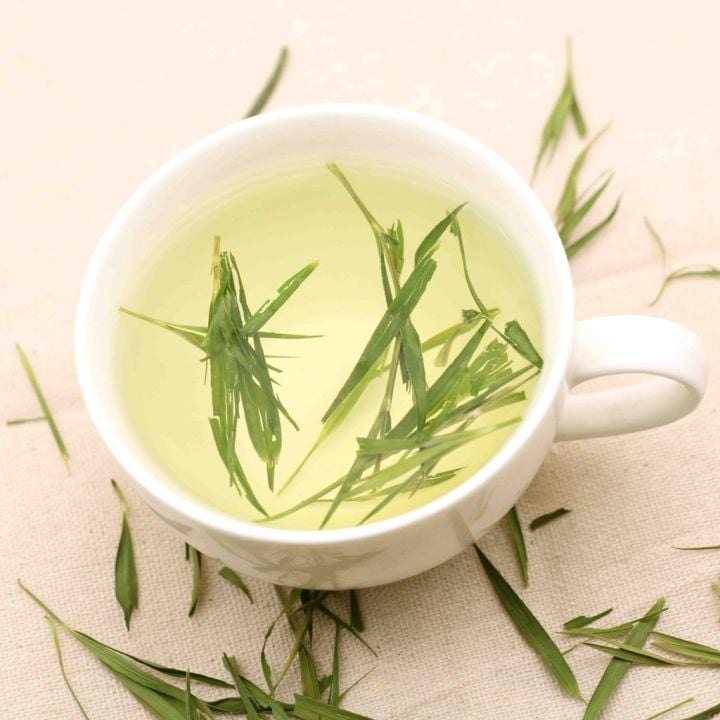
Dried bamboo leaves steeped in water and drunk daily helps the body increase collagen production.
2. Gotu kola
Gotu kola is often used as a natural medicine for health care. Oriental medicine believes that gotu kola has a sweet, bitter taste, cool properties, goes into the liver, spleen, and lung meridians, has the effect of clearing heat and detoxifying, activating blood circulation, promoting urination, strengthening the liver and spleen, strengthening tendons and bones; can be used in the treatment of rheumatism causing bone and joint pain, blood stasis damage, cramped limbs, irregular menstruation, urinary retention, digestive disorders, fever, boils, ulcers...
According to modern medical research, gotu kola contains many important active ingredients that are beneficial to health such as saponins, vitamin C, vitamin A, flavonoids, alkaloids, minerals, essential oils, fatty acids, plant sterols, etc.
The main ingredient in gotu kola is the triterpenoid saponin (asiaticoside, madecassoside, asiatic acid, madecassic acid), along with polyphenols that stimulate fibroblasts to reproduce and synthesize collagen (especially collagen type I and III), while inhibiting collagen-degrading enzymes, reducing inflammation - thereby promoting tissue regeneration and wound healing.
How to use: Use 20-30g fresh pennywort, squeeze the juice to drink.
3. Aloe vera
Aloe vera has long been widely used in beauty and health care. It is also a medicinal herb used in many traditional oriental medicine prescriptions with the effects of clearing heat and detoxifying, laxative, cooling blood, reducing inflammation, disinfecting, regenerating tissue, healing scars, and healing wounds; many of which have effects similar to the effect of stimulating collagen production according to modern science .
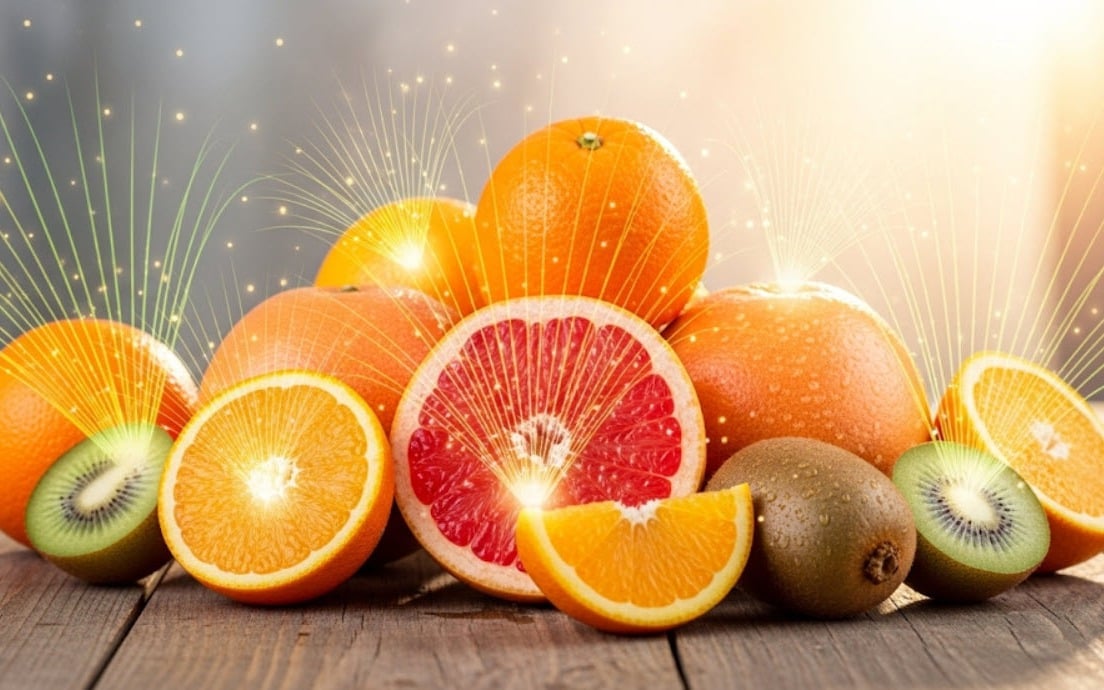
A 2009 human study showed that after taking aloe vera gel, facial wrinkles were significantly improved, facial skin elasticity was also increased, and measurements also showed evidence of increased collagen production in the skin after aloe vera use.
Pharmacological analysis also shows that aloe vera gel contains many active ingredients such as vitamins, minerals, polysaccharides, glycoproteins, sterols... which help support fibroblasts, promote the creation of new connective tissue (collagen and extracellular matrix), especially when used externally for wounds, burns, and scratches.
How to use: Use fresh aloe vera gel to apply on skin every day or prepare into dishes.
4. Spinach
Spinach is a food with high nutritional value, increasingly popular in daily meals. According to Oriental medicine, spinach has a sweet taste, cool properties, has the effect of nourishing blood, stopping bleeding, astringing yin, and moistening dryness.
Studies have also shown many beneficial effects of spinach on health such as anti-oxidation, anti-inflammation, anti-obesity, hypoglycemia, hypolipidemia, anti-cancer... Spinach is a rich source of nutrients and active ingredients such as vitamin C, carotenoids, polyphenols, polysaccharides, minerals and nitrates that help stimulate fibroblasts, while providing copper - an essential element for collagen synthesis enzymes.
In addition, spinach also inhibits MMPs to help reduce collagen breakdown. Thereby, this vegetable has the effect of stimulating collagen synthesis, accelerating wound healing and increasing collagen density.
How to use: Eat boiled or lightly stir-fried spinach, can also be used in salads and smoothies.
5. Horsetail
Horsetail in Eastern medicine is often used as an astringent to stop bleeding and stimulate healing of wounds and burns, effects that are very similar to its ability to stimulate collagen production.
According to modern research, similar to bamboo leaves, horsetail has a high silica content, which helps support enzyme activity related to collagen biosynthesis and stabilization. In addition, horsetail also has the effect of stimulating fibroblast proliferation while also being anti-inflammatory and anti-oxidant, thereby reducing collagen breakdown.
How to use: Steep 1-2g of dried horsetail with boiling water to make tea, drink 1-2 cups/day.
Please see more:
Source: https://suckhoedoisong.vn/5-thao-duoc-kich-thich-co-the-tang-san-sinh-collagen-169251203162738393.htm


![[Photo] 60th Anniversary of the Founding of the Vietnam Association of Photographic Artists](/_next/image?url=https%3A%2F%2Fvphoto.vietnam.vn%2Fthumb%2F1200x675%2Fvietnam%2Fresource%2FIMAGE%2F2025%2F12%2F05%2F1764935864512_a1-bnd-0841-9740-jpg.webp&w=3840&q=75)
![[Photo] National Assembly Chairman Tran Thanh Man attends the VinFuture 2025 Award Ceremony](/_next/image?url=https%3A%2F%2Fvphoto.vietnam.vn%2Fthumb%2F1200x675%2Fvietnam%2Fresource%2FIMAGE%2F2025%2F12%2F05%2F1764951162416_2628509768338816493-6995-jpg.webp&w=3840&q=75)



























































































Comment (0)