

The announcement of major selections for resident doctors at Hanoi Medical University has been causing a sensation on social media in recent days.
According to assessments, this is one of the most difficult and rigorous training levels in the medical field. Candidates must pass an entrance exam with a wide range of knowledge, and simultaneously undergo continuous learning and practical training at hospitals.
"There's no time to spend money while doing a residency."
That's the opinion of Dr. Hong Chien (working at Hoai Nhai General Hospital), who completed his residency 10 years ago.
According to Doctor Chien, that year his cohort had about 70-80 resident doctors, and the enrollment quota wasn't as high as it is now, so the exam was quite stressful because it wasn't a multiple-choice test.

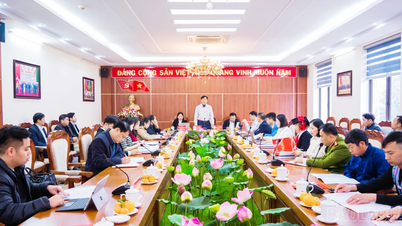
The top scorer in the 2025 residency exam at Hanoi Medical University is choosing a major (Photo: My Ha).
"A resident doctor's day is a whirlwind. Around 6 a.m., we're at the hospital."
"Resident doctors would go around the wards checking on patients with the lead doctor, monitoring their condition, and prescribing medication; surgical doctors might perform surgeries, then return to examine patients, and if there was an emergency, they would perform another surgery...", Dr. Chien recalled.
According to Mr. Chien, back then, resident doctors would receive a salary while studying, and those who participated in surgeries would be compensated. "I remember when I finished my residency, I received about 80 million VND in salary because I was constantly busy with work, running from one hospital to another, with no time to spend the money."
"I have a girlfriend, but I rarely have time to take her out; we occasionally go on dates. For me, those simple outings are as precious as traveling ," Dr. Chien confided.
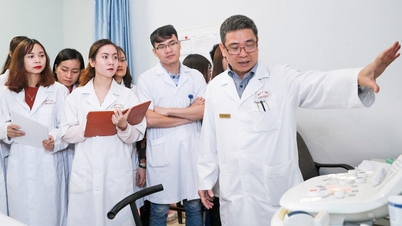
For Dr. Chien, residency training offers many clear benefits. First and foremost, it provides an in-depth training environment, allowing young doctors to hone their clinical skills systematically within the hospital.
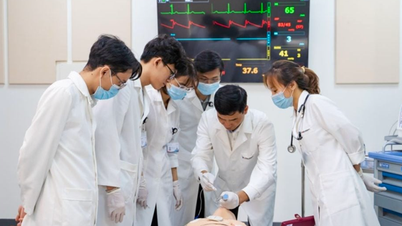
Secondly, residency provides direct access to many complex cases, thereby accumulating practical experience that is difficult to obtain from textbooks.
Resident doctors are typically mentored directly by professors and leading experts in their fields, providing them with opportunities to enhance their professional skills.
Upon completion, a residency qualification is also a significant advantage in one's career path, expanding opportunities for further education, research, or advancement within the field.
However, Dr. Chien believes that not all resident doctors are good, and not all good doctors become residents.
Resident doctors have a heavy workload and often work night shifts, leaving little time for reading and research to strengthen their expertise and update their knowledge.
Meanwhile, a good doctor cannot rely solely on practical experience; they need continuous learning, supplementing their theoretical foundation and keeping up with modern medical advancements.
The hottest battle of wits in the medical field.
It is known that residency programs are specialized training programs that select the best medical students. This model originated in France and then spread to other European countries, the United States, and around the world . Vietnam currently has 13 schools that offer residency programs.
Resident doctors are selected through a rigorous entrance examination that requires candidates to be under 27 years old, have no prior disciplinary action, and can only take the exam once in their lifetime. The exam consists of four subjects: two specialized subjects, one foundational subject, and one foreign language (English, French, or Chinese), each lasting 90 minutes.
In 2025, the residency training program will recruit 426 students, including 402 for Hanoi Medical University; 13 for the Thanh Hoa branch; 6 for the Lao Cai Department of Health; and 5 for Thai Nguyen Central Hospital.
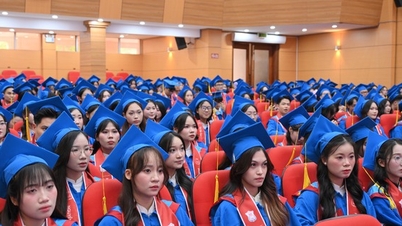
Speaking at the "major selection ceremony" that has been causing a stir on social media these past few days, Professor Nguyen Huu Tu, Rector of Hanoi Medical University, said that while people choose their profession, sometimes the profession chooses them.
"In the past, only the top-scoring candidates got to choose their major. From the second-highest ranking onwards, they had to accept a specific major as assigned. No resident doctor had an easy life; to become a skilled expert, every resident had to work hard, struggle, and persevere equally," Professor Tú said.
Commenting on this, Dr. Chien believes that the current choice of specialization among resident doctors is quite skewed, driven by personal preferences. Specifically, fields with the potential for high future income attract top-tier doctors.
"This is different from before because students had to choose from scratch, and even before that, only the top-scoring students could choose their majors, while the rest had to follow the assignments," Dr. Chien commented.
Speaking to a reporter from Dan Tri newspaper as a former resident doctor from the 14th cohort, Professor Ta Thanh Van, former Rector and former Chairman of the University Council of Hanoi Medical University, said that resident doctor training aims to cultivate skilled professionals and talented individuals for the medical field. Due to different training objectives, each stage will have changes.
Specifically, in the past, the training of resident doctors aimed for excellence. For example, the 14th cohort only had 15 resident doctors.
"Although the quotas may be higher later on, it's undeniable that this is a very prestigious exam for the medical field."
I believe the current training targets are perfectly appropriate because if the quotas are too low, it will be unfair, and people in remote areas will not benefit from the skilled medical staff.
"Abroad, residency training is mandatory so that many people can benefit, which helps create social equity," Professor Van said.
The residency program is divided into three main groups.
Internal medicine, surgery and surgical procedures; basic and preventive medicine. Each resident is assigned to directly participate in the examination and treatment process, having the same responsibilities as a full-fledged doctor; therefore, the workload, pressure, and intensity for this team are very high.
Source: https://dantri.com.vn/giao-duc/bac-si-noi-tru-la-cuoc-dau-tri-hot-nhat-nganh-y-ai-hoc-cung-gioi-nghe-20250911123821449.htm










































































Comment (0)