

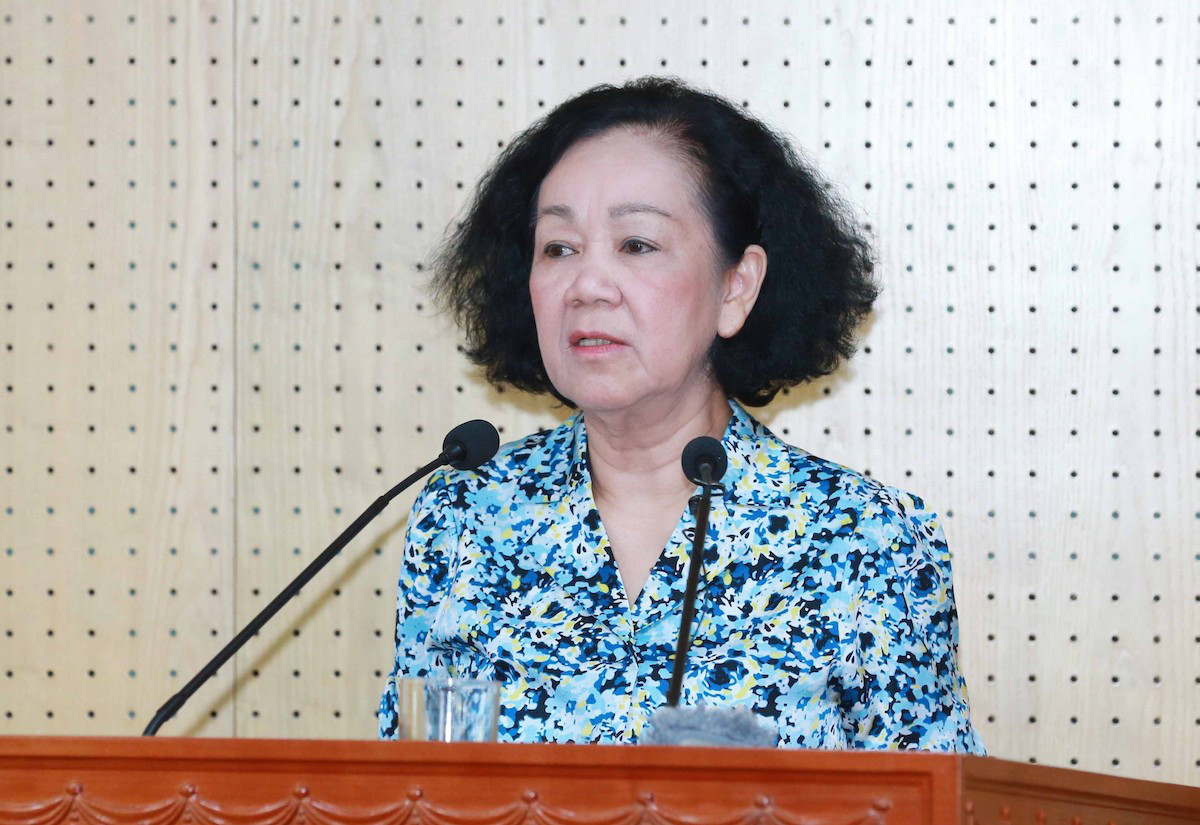
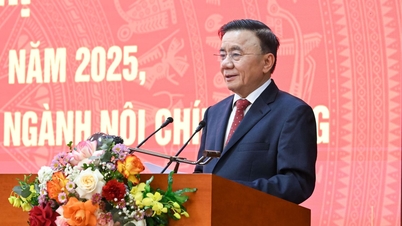
On behalf of the Politburo , the Standing Committee of the Party Central Committee, and the Head of the Central Organization Department, Truong Thi Mai, has just signed and issued Regulation No. 142, which stipulates the pilot program of delegating authority and responsibility to heads of departments in personnel work.
This regulation specifies the scope, subjects, principles, authority, and responsibilities of the head of the organization in implementing the pilot program on personnel management.
This includes introducing candidates for election, appointing deputies to the leadership, electing additional members to the standing committee of the Party committee at the same level, and appointing and dismissing heads and subordinates under their direct management authority.
The pilot program of delegating authority and responsibility to heads of departments in personnel work is being implemented at Party committees, Party organizations, agencies, and units from the district level upwards. The Central Military Commission and the Central Public Security Party Committee have separate regulations.
The pilot program will be implemented for 5 years from the date the regulation is issued.
The head of the organization introduces candidates to be appointed as his or her deputy.
According to Regulation 142, based on the policies of the competent authority and the regulations of the Politburo , the head of an organization may nominate candidates for election and appointment of deputies.
Specifically, for personnel from within the organization, the head of the organization, based on the number, structure, standards, conditions, job requirements, and the list of personnel in the planning, will select and recommend one person for each position for the Party committee, Party organization, and the leadership team of the agency or unit to consider and include in the list, and proceed with the next steps.
In cases where personnel are sourced from elsewhere, the head of the organization shall, based on the number, structure, standards, conditions, and job requirements, nominate one person for each position for the Party committee, Party organization, or collective leadership of the agency or unit to consider and proceed with the personnel process.
When there is a vacancy in the number of standing committee members, the head of the organization shall, based on the standards, conditions, the congress's personnel work plan, and the planning list, select and nominate personnel for the standing committee to consider, and then submit them to the executive committee for nomination as additional standing committee members.
If the candidate is unanimously nominated by the executive committee, the standing committee will submit the nomination to the competent authority for approval before proceeding with the election.
The head of an organization, agency, or unit has the right to consider appointing and dismissing its leaders in accordance with regulations.
Accordingly, based on the standards, conditions, requirements, and tasks, after discussing and reaching a consensus with the Party committee, Party organization, and the collective leadership of the competent agency or unit, the head of the agency or unit decides on the appointment of the official.
When there are grounds to consider dismissing an official according to regulations, within 15 working days, the head of the agency or unit shall issue a decision to dismiss the official and send the document to the Party committee, Party organization, and the collective leadership of the agency or unit directly managing the official.
Responsible even after transferring to another job or retiring.
Regulation 142 of the Politburo also clearly stipulates the responsibilities of the head of an organization in personnel matters.
Accordingly, the head of an organization is responsible for ensuring that the personnel they recommend meet the standards, conditions, political qualities, ethics, lifestyle, and work capacity.
Strictly enforce regulations on personnel management, regulations on power control, and regulations on preventing and combating corruption and negative practices in personnel work.
The head of the organization is responsible for their decisions even after transferring to another position or retiring in both cases.
Specifically, the nomination of officials for election and appointment lacks impartiality and objectivity, failing to ensure they meet the required standards, conditions, political and moral qualities, lifestyle, and work capacity.
Dismissing officials without following the prescribed grounds and procedures.
The consideration of disciplinary action against the head of an organization in cases of violation of this regulation shall be carried out in accordance with the Party's regulations on inspection, supervision, and discipline and other relevant regulations.
TH (according to Tuoi Tre newspaper)Source





































































Comment (0)