

There is a careful plan and approach.
According to Distinguished Educator Nguyen Van Ngai, former Deputy Director of the Ho Chi Minh City Department of Education and Training, in recent years, the education sector has seriously implemented the policies and resolutions of the National Assembly.
Of particular note is the shift from the "single set of textbooks" model compiled by the Ministry of Education and Training to a model of educational socialization with the orientation of "one curriculum, multiple sets of textbooks".
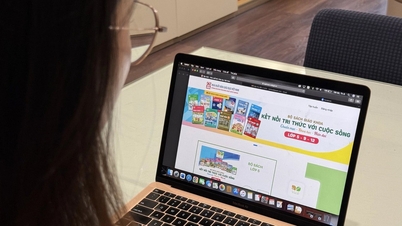
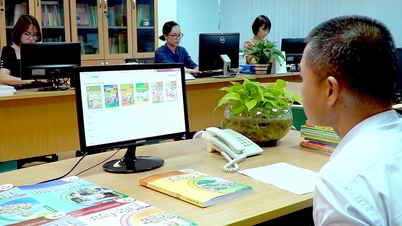
Currently, there are three sets of textbooks in circulation and use in educational institutions: "Creative Horizons," "Kite Wings," and "Connecting Knowledge with Life." Overall, the author groups and editorial boards have made considerable efforts, initially meeting basic learning needs and contributing to the educational reform process. Practical implementation shows that the policy of "one curriculum, multiple sets of textbooks" is feasible.
However, this model also reveals many limitations. For example, the fact that each school or locality is allowed to choose its own set of textbooks has created difficulties for students when transferring schools, especially between provinces and cities, as they have to get used to a new set of textbooks.
"Based on that practical experience, the Politburo issued Resolution No. 71-NQ/TW on breakthroughs in education and training development, which addresses many important issues, demonstrating the profound concern of the Party and the State for the education sector."
"One of the key points is the policy of unifying a single set of textbooks for the entire country. Personally, I completely agree with this policy, as it will overcome current shortcomings and aim towards the fundamental and comprehensive development of the education sector, as outlined in the Resolution," Mr. Nguyen Van Ngai emphasized.
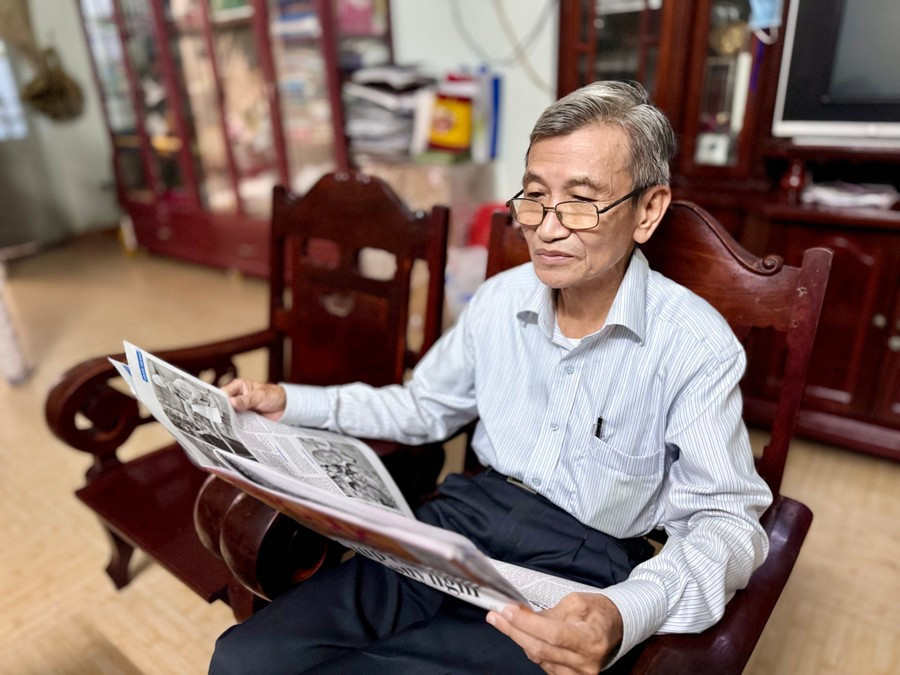
He argued that, in order to implement this policy effectively, it is first necessary to establish a Steering Committee comprised of highly qualified, competent, and responsible individuals with sufficient authority to coordinate the entire process of developing a unified set of textbooks.
In addition, a textbook compilation and evaluation council should be established. Although the current evaluation council is functioning quite well, there are still concerns about the objectivity of the evaluation process.
Therefore, the new council needs to be carefully selected, ensuring strong expertise, good character, and high independence, so that the new textbooks are truly high-quality and worthy of being the standard teaching materials for the whole country.
In addition, specialized technical support departments should be established to ensure the progress and quality of each stage of the compilation process.
Careful planning is needed regarding timing and implementation methods.
According to Distinguished Teacher Nguyen Van Ngai, the development of new textbooks should stem from a spirit of inheritance and development.
The three current sets of textbooks all have certain advantages, so it is not necessary to revise them from scratch. A comprehensive evaluation of these sets is needed to identify content that can be inherited and areas that need adjustment, thereby forming a new set of high-quality, innovative, and more appropriate textbooks.
The compilation of a unified set of textbooks needs to be implemented according to an overall plan, including: clearly defining specific work contents, dividing it into stages, and setting clear timelines from compilation, evaluation, testing to mass implementation.
"While urgency is necessary, caution is also needed, and sufficient time should be given to ensure genuine quality. It's unlikely we'll be able to meet the deadline for the current school year, so we should set goals for the next school year. After finalizing the draft, a pilot phase in several localities is necessary to allow for timely additions and adjustments before officially implementing it in teaching," emphasized educator Nguyen Van Ngai.
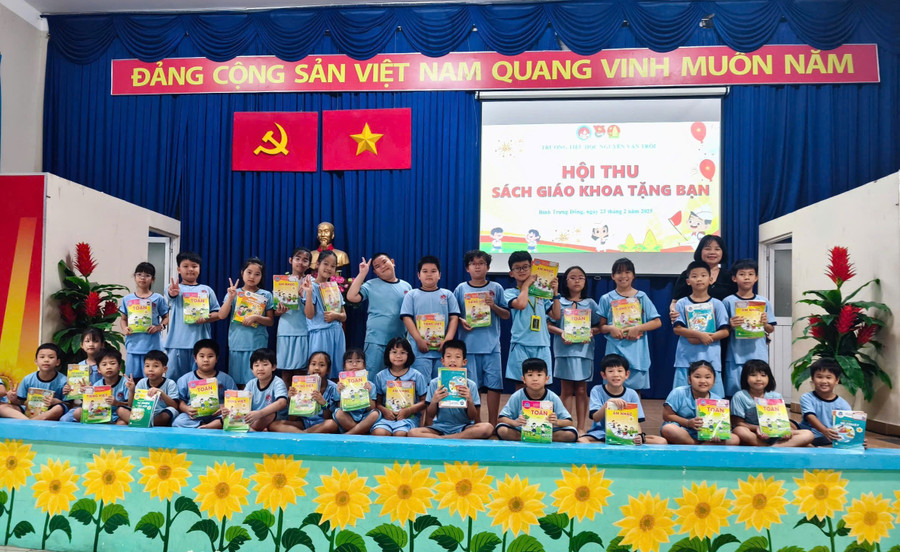
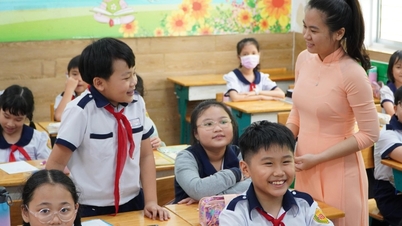
Elementary school students donate their old books to the school to be given to underprivileged students.
He also argued that a unified set of textbooks must ensure a balance between general knowledge and practical application, and be appropriate to the characteristics of each region.
Our education system is very diverse, encompassing urban, rural, remote, lowland, and mountainous areas, each with its own unique characteristics. Therefore, the curriculum needs to be tailored to each target group, avoiding overly academic, overloaded, and impractical programs.
Furthermore, it is necessary to continue reforming examination methods, avoiding the situation where students are tested on what they have learned. Exam questions should be open-ended, relevant to real life, and promote students' qualities, abilities, and independent thinking, instead of simply testing rote memorization.
"The new textbooks need to continue to uphold the spirit of 'learner-centered learning,' and teachers need to be trained and developed in new teaching methods. No longer just one-way knowledge transmitters, teachers need to become facilitators, companions, and guides, helping students develop critical thinking skills, soft skills, and lifelong learning abilities," Mr. Nguyen Van Ngai added.
He emphasized: "Developing a unified set of textbooks is a major task with long-term strategic significance, and it cannot be undertaken solely by the education sector. It requires coordinated efforts from many sectors and levels, from the central government to local authorities. Implementation needs careful planning to ensure timely progress and tangible results."
Source: https://giaoducthoidai.vn/bo-sach-giao-khoa-thong-nhat-toan-quoc-lay-nguoi-hoc-lam-trung-tam-post748183.html































































Comment (0)