

These innovative proposals demonstrate a significant shift in direction: a mindset from normative to developmental, an approach from administrative to competency-based, and an assessment model that moves from static to nurturing and promoting the academic growth of faculty members.
Fix the rating system.
Currently, when discussing the "standards" for university lecturers, most institutions still refer to the professional title standards stipulated in Circular 40/2020/TT-BGDĐT and amended in Circular 04/2022/TT-BGDĐT.
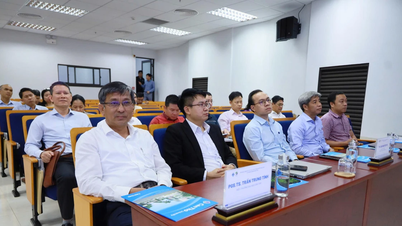
Associate Professor Tran Thanh Nam - Vice Rector of the University of Education (Vietnam National University, Hanoi) - commented that current regulations mainly focus on administrative requirements such as diplomas, certificates, and job titles, while failing to assess the actual effectiveness in teaching and research.
Some criteria are merely formal and do not accurately reflect pedagogical competence or the extent to which they impact student learning quality. For example, requiring lecturers to have a "professional development certificate" sometimes leads to a situation where they simply go through the motions to meet the requirements, instead of focusing on genuinely improving their teaching abilities.
Current regulations also lack a mechanism for evaluating the impact and quality of teaching and research. Specifically, there is a lack of quantitative or qualitative criteria reflecting actual effectiveness, such as the level of student progress, student feedback, innovation in pedagogical methods, or the impact of research activities on practice and the community.
Faculty evaluation is currently based primarily on the number of assignments and outputs (articles, research projects, etc.), while there are no clear measures of quality and impact. This easily leads to a "achievement-oriented" mentality, where faculty members focus heavily on meeting targets rather than genuinely improving the quality of education.
Another limitation, according to Associate Professor Tran Thanh Nam, is that the current professional standards have not fully updated to meet the requirements of digital transformation. The draft of the new Circular has added the criterion of "competence in applying information technology and scientific and technical advancements," considering this a mandatory requirement.
However, the content still needs to be more specific, such as the ability to design online classes, use AI in teaching support, or analyze student learning data. Currently, the new standard only requires "knowing how to use information technology," without clearly defining digital transformation in teaching and research activities, and without updating the requirement for lecturers to master AI.
In the context of increasing artificial intelligence, digital competence has become a vital factor for lecturers to master technology, innovate methods, and improve the quality of training; therefore, professional standards need to place greater emphasis on this competence.
Furthermore, according to Associate Professor Tran Thanh Nam, current regulations do not strongly encourage the role of lecturers in international integration and social contribution. The draft Circular has added the task of "serving the community" to all positions, but the evaluation criteria remain general and lack specific quantitative mechanisms such as participation in community projects, policy consulting, and knowledge transfer to businesses…
Regarding international cooperation, besides the requirement for foreign language proficiency, there are currently no criteria for measuring the level of faculty participation in global academic networks, joint research with foreign partners, or faculty exchange programs. This is not commensurate with the orientation towards integration and improving the quality of higher education in the new era.
"Professional standards need to be adjusted to encourage lecturers to proactively integrate, thereby learning from international experience and contributing to raising the profile of Vietnamese higher education," proposed Associate Professor Tran Thanh Nam.
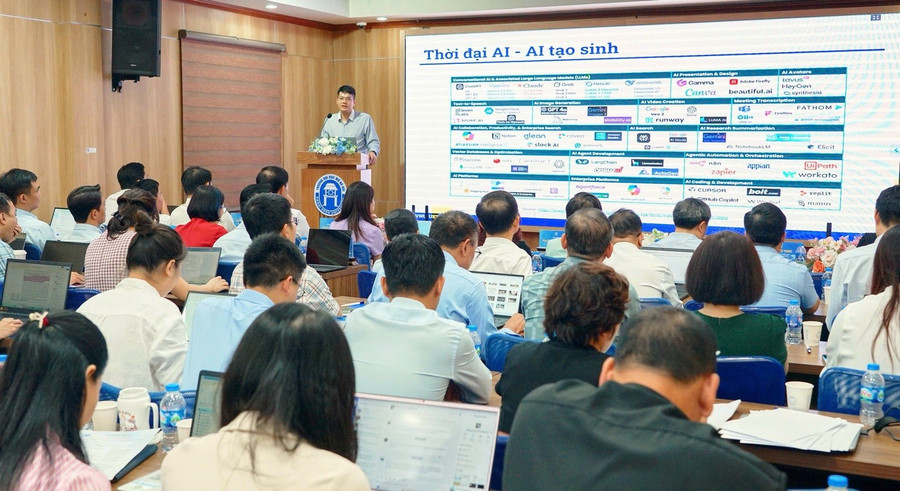
Establishing professional standards
In proposing the development of professional standards for lecturers, Dr. Cu Ngoc Phuong - Head of the Department of Political Theory, Nguyen Tat Thanh University - emphasized six key areas: restructuring professional standards based on a core competency framework; establishing standards based on an academic development roadmap; linking professional standards with a humanistic and liberal education philosophy; considering digital competence as an important component of the lecturer profession in the current context; strengthening criteria for international integration and business connections; and creating a culture of evaluation based on professional competence and qualities.
According to Dr. Cu Ngoc Phuong, building professional standards in higher education requires a strategic shift from an administrative management mindset to a practical competency-based approach. Instead of simply listing tasks, competency-based standards will highlight the academic identity of lecturers – subjects connected to the mission of creating knowledge, innovating, and serving society.
In the spirit of liberal education and modern educational trends, the professional standards structure should be designed around five key competencies: university pedagogical competence, scientific research competence, community service competence, international integration competence, and digital transformation competence. When systematized, the standards will not only be a tool for evaluating and verifying quality but also a guiding principle for sustainable professional development for faculty members.
Emphasizing the importance of establishing professional standards based on an academic development roadmap, Dr. Cu Ngoc Phuong argued that the standards system should be built as a continuous development reference framework, reflecting the professional growth of lecturers at each stage of their careers. Instead of merely describing competencies at a fixed point in time, the standards should demonstrate flexibility and dynamism, helping lecturers identify their current position while guiding them towards the next steps in their career journey.
This approach allows for the recognition of diverse roles and contributions at each level, while motivating faculty to build long-term goals, cultivate academic identity, and develop in-depth competencies. This roadmap reflects the dialectical nature of professional development, transforming professional standards from mere assessment tools into a guiding principle for lifelong learning, consistent with the ever-changing nature of knowledge, science, and the new demands of higher education.
Regarding the requirement to align professional standards with a humanistic and liberal education philosophy, Dr. Cu Ngoc Phuong believes that professional standards for university lecturers will become more comprehensive and profound when placed in relation to the core values of modern education. Values such as respect for human dignity, academic freedom, critical thinking, dialogue, and cooperation are not only ethical requirements but also the foundation for forming a healthy academic culture.
Therefore, in addition to professional criteria, professional standards need to integrate requirements related to academic ethics, social responsibility, and the spirit of enlightenment – manifested in the ability to promote independent thinking, foster a lifelong learning spirit, and encourage the expansion of knowledge. These criteria contribute to affirming the role of lecturers not only as transmitters of knowledge, but also as cultural subjects, leaders of intellectual life, and important factors in creating a humane and liberating educational environment.
“Establishing standards in the current period requires a harmonious combination of professional expertise, humanistic and liberal values, integration requirements, and the ability to adapt to technological innovation. A set of standards designed on this foundation will not reduce the role of lecturers to technical tasks, but affirm them as subjects of knowledge creation, creators of academic culture, and important agents of social development.”
At the same time, when professional standards are coupled with scientific, humanistic evaluation mechanisms that encourage innovation, they can become a driving force for lecturers to continuously improve the quality of teaching, expand their research capabilities, and increase their impact on the community. This contributes to fostering a university ecosystem based on knowledge, academic integrity, and social responsibility,” emphasized Dr. Cu Ngoc Phuong.
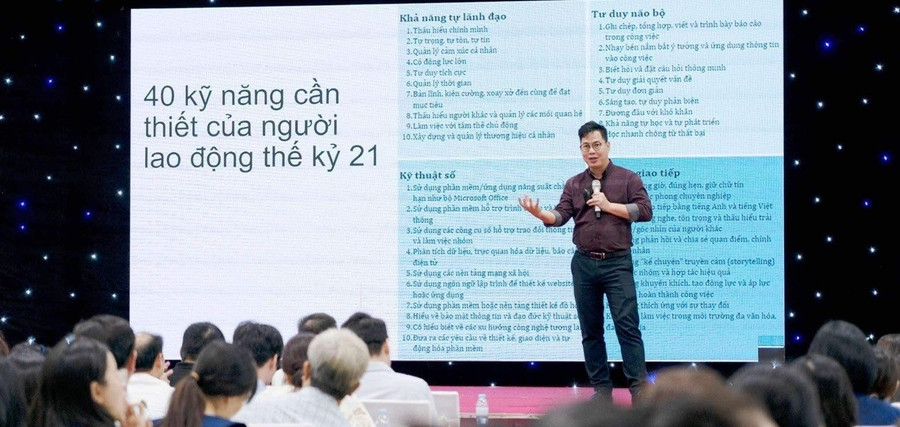
Multidimensional - Flexible - Substantive
Ms. Do Ngoc Anh, a lecturer in Information Technology at Hanoi Open University, believes that Circular 40/2020/TT-BGDĐT (amended by Circular 04/2022/TT-BGDĐT) has essentially fulfilled its "mission" in the previous period. However, in the new context and in light of the demands of modern higher education, the development of the Professional Standards for Lecturers needs to follow a "multidimensional - flexible - substantive" approach.
According to Ms. Do Ngoc Anh, instead of applying a rigid set of standards, lecturers should be allowed to choose their development direction in stages of 3-5 years, for example: increasing the proportion of requirements for international publications and reducing teaching hours; focusing on improving the quality of lectures, innovating methods, and compiling textbooks instead of focusing on the quantity of scientific publications; or prioritizing technology transfer activities, business consulting, and implementing practical projects.
In addition, the digital competency framework needs to be incorporated into a standardized system with a hierarchical structure, for example: knowing how to use basic LMS/E-learning tools; being able to produce digital learning materials and video lectures; having the ability to apply AI and Big Data to personalize learning for students.
"As a lecturer, I hope that the professional standards will function as a guiding roadmap, flexible enough for each lecturer to develop their strengths and contribute effectively to the development of national education," shared Ms. Do Ngoc Anh.
Also emphasizing the element of flexibility, Associate Professor Tran Thanh Nam suggested that instead of applying a rigid set of standards to all cases, the professional standards should be designed as an open framework with key criteria groups, allowing for various pathways for lecturers to achieve the standards. The framework could encompass core competencies including: teaching and student support competencies; research and knowledge creation competencies; professional activity and community service competencies; and digital and international integration competencies.
Accordingly, each lecturer can meet professional standards through different combinations of achievements in various competency areas, as long as the overall quality objectives are ensured. This approach not only helps to provide a more comprehensive assessment but also accurately recognizes the strengths of each individual, suitable for the specific characteristics of elite research universities or practical-application universities.
In addition to quantitative criteria, experts suggest supplementing qualitative evaluation methods based on evidence of practical impact. One suggestion is to build faculty competency profiles, in which faculty members self-report on the results of professional innovation with evidence such as student feedback, applied research products, or letters of recommendation from partners.
At the same time, it is necessary to establish a mechanism for gathering feedback from students and colleagues to evaluate teaching effectiveness. A multi-source evaluation model—self-assessment, evaluation from students, colleagues, and management—will objectively reflect actual competence and reduce the pressure to chase after formal criteria.
In addition, Associate Professor Tran Thanh Nam also made several other suggestions such as: promoting the application of AI and technology in monitoring and evaluating work performance; supplementing the system with micro-credentials to replace the requirement for formal training certificates; building a competency framework categorized by professional development levels and specialization orientations; and raising the requirements for research quality to limit the pursuit of quantity in publications.
Reforming the professional standards for lecturers is not simply a matter of adjusting a regulatory document, but a strategic step to rebalance governance and academia; aiming to build a team of educators with comprehensive competence, academic vision, and the ability to contribute to the development of higher education in the new context. This is also the foundation for the sustainable development of higher education institutions, enhanced international integration, and effective contribution to national development. - Dr. Cu Ngoc Phuong
Source: https://giaoducthoidai.vn/chuan-nghe-nghiep-giang-vien-chuyen-tu-duy-tu-quy-pham-sang-phat-trien-post760300.html












































































Comment (0)