

Unified development of teaching staff
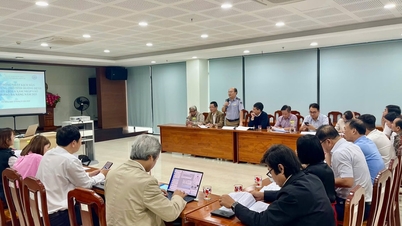
MSc. Le Hoang Trung - Deputy Head of the Faculty of Social Sciences and Humanities (Cuu Long University), said: The draft Circular regulating professional standards for lecturers teaching in higher education institutions is being consulted to ensure consistency and synchronization with current legal documents.
In particular, to ensure consistency and synchronization with current legal documents related to teachers in educational institutions, including lecturers teaching in higher education institutions, and in accordance with the Party's guidelines and policies and the State's laws, the development of professional standards for lecturers teaching in higher education institutions is necessary.
From there, the teaching staff proactively equips themselves with skills according to the requirements of the job position. Enhance the responsibility of the head of the higher education institution. The promulgation of professional standards for lecturers teaching in higher education institutions according to the provisions of the Law on Teachers and related current laws will contribute to improving the quality of education and training. In addition, professional standards for lecturers teaching in higher education institutions are the legal basis for building, managing and developing the teaching staff in higher education institutions.
This draft Circular is suitable for the context of a rapidly developing university system, especially private institutions. Therefore, the quality of lecturers needs to be unified and improved.
This also meets the requirements of innovation in higher education. Changing the perception of lecturers not only in teaching but also in research, technology application, guiding students in starting a business, innovation and participating in digital transformation...
In addition, when there are professional standards, it will create a basis for schools to self-evaluate their staff, classify lecturers, and lecturers will also know where they need to improve. When the Circular comes into effect, it will contribute to improving the quality of university teaching; creating a fair competitive environment between public and private schools. In addition, it will also encourage lecturers to invest in scientific research and support educational quality assessment.
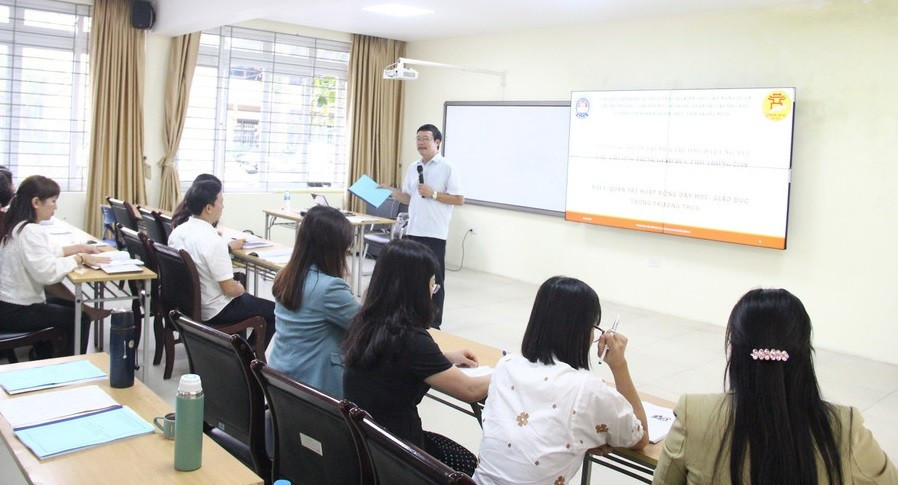
Raising standards, increasing requirements for scientific research
According to MSc. Le Hoang Trung, the general standards on qualifications, professional competence, and scientific research capacity for lecturers of public and private universities in Vietnam must meet the following standards on training and development: Having a master's degree or higher appropriate to the job position, industry or teaching major; Having a training certificate according to the professional title standards of university lecturers.
Standards for professional competence and expertise require: Mastering basic knowledge of the assigned subject; having general knowledge of a number of related subjects in the assigned training major. Understanding and correctly implementing the objectives, plans, contents, and programs of the assigned subjects in the training major.
Identify the practice and development trends of training and research in the major at home and abroad. Use teaching aids and equipment effectively and safely, have effective teaching methods, appropriate to the subject content; teach at least satisfactory level. Have the ability to apply scientific and technological advances in teaching and assigned tasks. Have the ability to apply information technology and use foreign languages in performing the tasks of a lecturer.
In particular, standards for scientific research: Ability to participate in conducting scientific research projects at all levels. Participate in compiling textbooks and teaching materials. Write articles for publication in specialized journals and scientific journals at home and abroad.
According to the draft, occupational standards are designed on the basis of a competency approach, including a group of standards on professional qualities; professional qualifications and competencies; scientific research and knowledge transfer competencies; career development and community service competencies. Dr. Do Viet Tuan - Head of the Faculty of Information Technology and Communications (Academy of Educational Management), agrees with the requirement that training qualifications are clearly defined, in line with international practices.
Specifically, according to the draft Circular, university lecturers must have a master's degree or higher, and lecturers teaching research-oriented programs or specialized fields must have a doctorate degree. These requirements create a common ground, contributing to improving the quality of the team and the competitiveness of the university education system.
A notable point in the draft is the emphasis on the role of scientific research activities in assessing lecturers' capacity. Lecturers not only perform teaching tasks, but also have the ability to implement research topics, publish scientific results, participate in technology transfer, and at the same time connect research activities with lecture content. This is in line with the trend of advanced education systems, where lecturers' standards are always linked to their ability to create new knowledge.
In addition, the draft also mentions criteria for university pedagogical capacity, including the ability to design modern teaching activities, apply digital technology , build a positive learning environment and evaluate learners in the direction of capacity development. In the context of strong innovation in university education, this criterion is important, encouraging lecturers to shift from traditional teaching methods to interactive teaching methods, linked to professional practice.
According to Dr. Do Viet Tuan, the development of professional standards for lecturers is considered necessary and timely. In recent years, the Vietnamese higher education system has developed rapidly in terms of scale, number of training facilities and training professions. However, the quality of the teaching staff among facilities is still uneven; scientific research activities are not strong; the evaluation and use mechanism of lecturers in some places is not really based on capacity. The new professional standards will create a legal basis and at the same time be a tool to help schools organize training and fostering activities more effectively.
In addition, the draft also provides levels of career development, helping each lecturer identify their position in the career path, thereby building a suitable learning and training plan. Dr. Do Viet Tuan said that this is a progressive point, aiming to develop a team of lecturers according to a continuous career approach, encouraging self-study, self-improvement of capacity and personal responsibility.
Ensuring equal public-private competition
Reiterating the spirit of Resolution No. 71-NQ/TW dated August 22, 2025 of the Politburo on breakthroughs in education and training development, Mr. Le Viet Khuyen - Vice President of the Association of Vietnamese Universities and Colleges emphasized that learners are the center and subject of the education process; the teaching staff is the force that determines the quality of training.
On that basis, the promulgation of professional standards for lecturers teaching in higher education institutions, according to the provisions of the Law on Teachers and related laws, is considered an important step to improve the quality of higher education in the context of comprehensive innovation.
According to Mr. Khuyen, the professional standards for lecturers not only serve as a legal basis for building, managing and developing the team, but also create a unified reference framework for higher education institutions in recruiting, arranging, evaluating, training and fostering lecturers. These standards are also a tool for each lecturer to self-reflect, determine their study and career development plans, and equip themselves with essential competencies to meet the requirements of job positions and the rapid changes of the current higher education environment.
The establishment of unified professional standards also aims to meet practical requirements, avoid overlapping in management, and at the same time create conditions for educational institutions to proactively develop their teaching staff in the direction of professionalism, standardization and international integration. However, according to Mr. Khuyen, private schools may encounter some difficulties and also pose certain challenges.
Currently, public and private schools still have differences in many aspects such as: investment resources, financial mechanisms and autonomy levels. Mr. Khuyen said that high requirements for scientific research can be a pressure for private schools, especially "young" schools. Therefore, for this policy to come into life, there needs to be a reasonable implementation roadmap. At the same time, there needs to be accompanying support policies to create conditions for non-public schools to be able to meet the requirements of the new standards.
According to the representative of the Department of Teachers and Educational Managers (Ministry of Education and Training), if the draft Circular regulating professional standards for lecturers in higher education institutions is issued, it will replace the provisions in Articles 3, 5, 6 and 7 of Circular No. 40/2020/TT-BGDDT of the Minister of Education and Training regulating codes, professional title standards, appointment and salary arrangement for teaching staff in public higher education institutions, when it comes into effect.
The draft Circular inherits the contents stipulated in Circular No. 40 on tasks, standards of professional ethics, standards of training and fostering qualifications and standards of expertise and professionalism of lecturers teaching in higher education institutions, ensuring consistency with relevant current legal documents; in accordance with the Party's guidelines, policies and laws of the State.
In addition to the duties of lecturers prescribed in Circular No. 40, according to the provisions of the new draft Circular, university lecturers, senior university lecturers are also required to perform other duties assigned by the head or head of a unit under or directly under a university education institution as decentralized according to the authority assigned in accordance with the standards on professional competence and expertise of university lecturers and other provisions of relevant laws.
Article 13 of the Law on Teachers stipulates the professional standards for teachers and assigns the Minister of Education and Training to promulgate these standards. To ensure consistency and synchronization with the legal system related to the teaching staff, including university lecturers, and in accordance with the Party and State's guidelines and policies, it is necessary to develop professional standards for lecturers in higher education institutions.
Source: https://giaoducthoidai.vn/chuan-nghe-nghiep-giang-vien-dai-hoc-nen-tang-nang-cao-chat-luong-dao-tao-post759139.html




















![[Photo] Parade to celebrate the 50th anniversary of Laos' National Day](/_next/image?url=https%3A%2F%2Fvphoto.vietnam.vn%2Fthumb%2F1200x675%2Fvietnam%2Fresource%2FIMAGE%2F2025%2F12%2F02%2F1764691918289_ndo_br_0-jpg.webp&w=3840&q=75)


















































Comment (0)