

Vietnamese Pride
On January 18th, Samsung ushered in a new era in mobile devices by equipping the Galaxy S24 series with a range of features from Galaxy AI. Applause erupted in the Unpacked 2024 auditorium as Drew Blackard, Head of Product Management at Samsung Electronics America, demonstrated the live translation feature on the device. Halfway around the world, in Hanoi , Tran Tuan Minh, Head of the AI Language Research Team, and his team of engineers at Samsung Vietnam Research and Development Center (SRV) anxiously followed every development of the event. Dinh Thang and his colleagues were eagerly awaiting the announcement of a proud milestone.
"Everyone was overwhelmed when Drew Blackard introduced the first languages supported by the GenAI translation feature on the Galaxy S24. Vietnamese appeared on stage with the first 12 languages supported by this feature. An atmosphere of pride enveloped the entire center," Tuan Minh said.
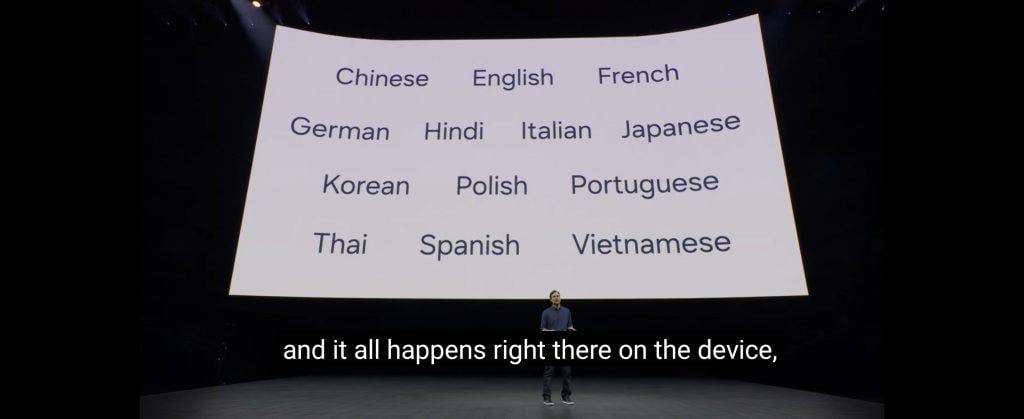
Drew Blackard announces the world's first languages powered by Galaxy AI at Unpacked 2024, including Vietnamese
According to a Samsung R&D engineer, this is not only a source of personal pride that the contributions of Vietnamese people are recognized, but also a matter of national pride when Vietnamese becomes a priority language group for development on a flagship Samsung product. "This means that Vietnamese users will be among the first to experience the latest technologies, in their mother tongue, and will receive significant support for tasks in daily life and work," Tuan Minh said.
Four months of racing
According to Mr. Tran Tuan Minh, previously, when a new feature was developed at research centers, Vietnamese was often not prioritized. But since the Hanoi R&D Center became operational, the role of Vietnamese engineers has changed significantly. The project of integrating Vietnamese into GenAI features right from the launch is both a source of pride and a challenge for the Vietnamese engineering team. Typically, engineers need at least 6 months to a year to develop large-scale language AI, but the SRV engineering team accomplished this in just 4 months before Galaxy Unpacked 2024.
"It was an extremely big challenge. For 4 months, we continuously flew back and forth between Vietnam and R&D centers in Korea and India to work with engineers to build a Vietnamese data set with corresponding text to 'teach AI' to speak and understand Vietnamese," Tuan Minh shared.
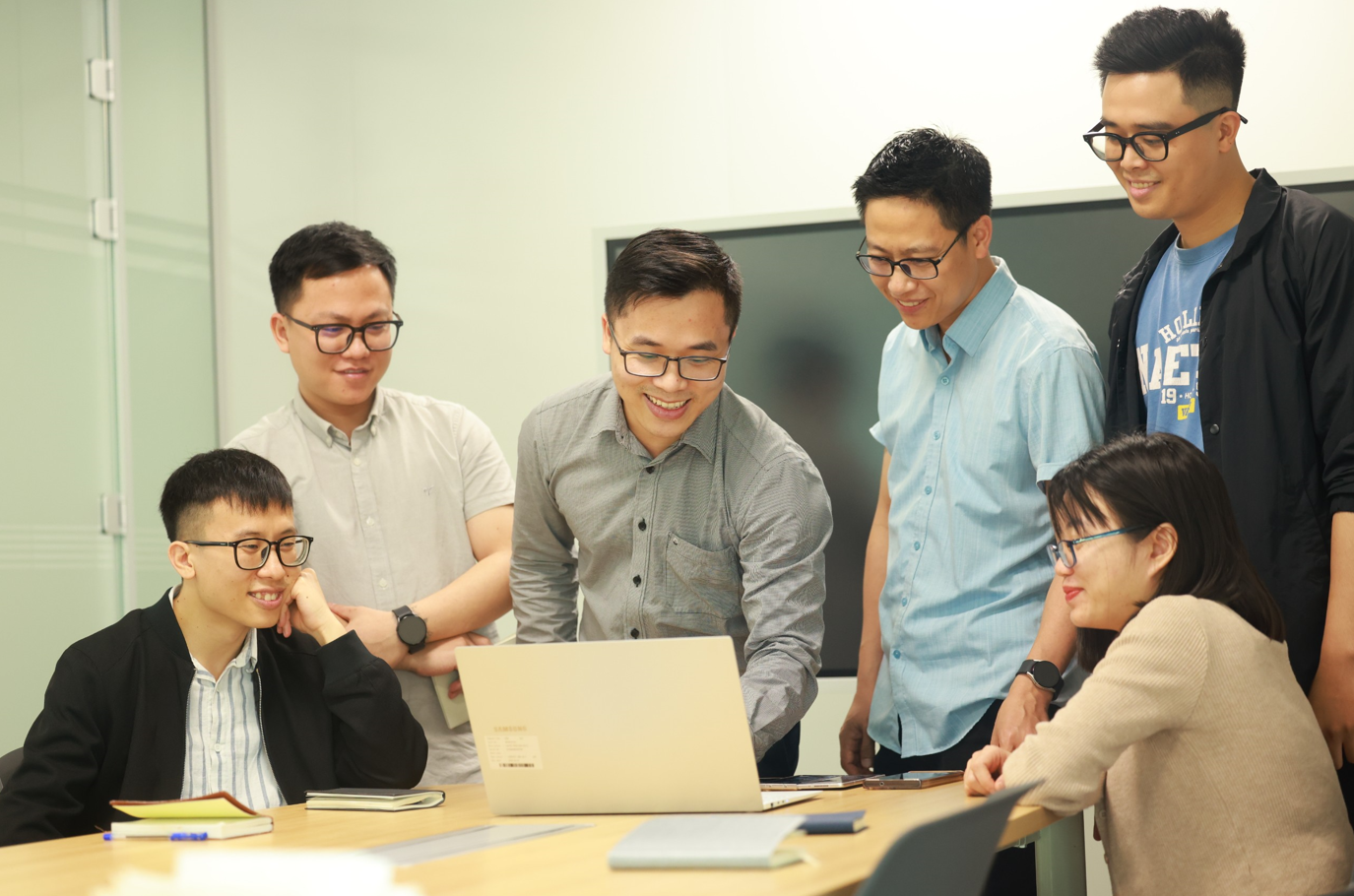
Engineer Tran Tuan Minh and his team of engineers implemented the AI project.
Those working in AI understand that the biggest challenge for engineers is the limited amount of data available for training AI in Vietnamese compared to English or other common languages. The quality of input is also limited because AI is still a relatively new field in Vietnam. The scarcity of raw data and its low quality directly impact the accuracy of the AI output. Therefore, before starting to "teach AI to speak Vietnamese," Tuan Minh and his colleagues sat down to analyze the existing data, identifying areas for improvement. For example, low-quality English translations were reprocessed to ensure the best possible quality.
Having solved the input problem for the translation module, we discovered another challenge with the Vietnamese language: dialects, which vary greatly from region to region. Furthermore, the AI training process and collaboration with language experts led SRV engineers to realize another major issue: the Vietnamese language in everyday life is constantly changing compared to the previously updated data. In other words, slang used by Gen Z, internet users, movie titles, celebrity names, and international events are updated daily by young people. Therefore, the R&D team also needs to update this data for the AI.
At the same time, test engineers also had to go into real-world environments to test the AI's performance under various conditions. SRV engineers sometimes went to Ho Giam Lake, sometimes on buses, sometimes in cafes… to conduct tests in real-world environments, ensuring GenAI could operate as accurately as possible under all conditions.
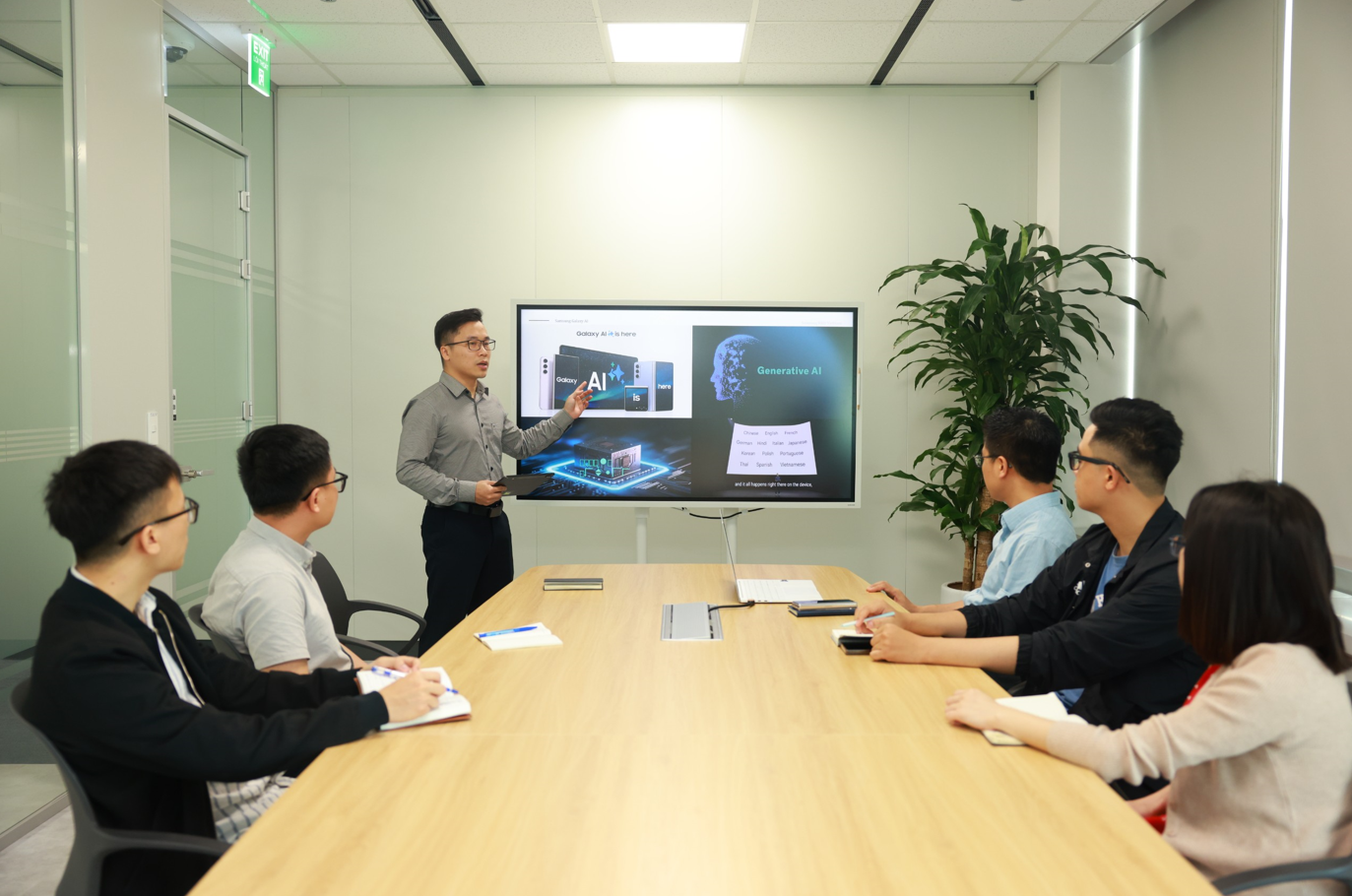
Engineer Tran Tuan Minh and the engineering team regularly met to discuss during the project implementation process.
The process of a new product going from the research lab to the end user always involves a crucial testing stage. "Even though SRV was the largest testing center outside of Korea responsible for network devices, we faced a major challenge: SRV's test engineers at the time didn't know much about AI," Tuan Minh recalled. Within four months, SRV received technology and experience in AI testing from Korean engineers. Everyone learned as they went, racing against time to get Vietnamese language support on Galaxy AI ready for the Unpacked event. According to Tuan Minh, starting from scratch in AI testing, Vietnamese engineers now not only test all the features on Galaxy AI but also transfer technology, testing processes, and experience to engineers in Southeast Asia.
Samsung's business philosophy and long-term commitment in Vietnam
These stories demonstrate Samsung's commitment and practical actions in Vietnam. Not only is Samsung striving to make Vietnamese one of the first 13 languages supported on Galaxy AI, but it is also committed to transferring the latest and most advanced technologies to Vietnamese engineers. This fulfills its promise to the Vietnamese government to transform Vietnam from a manufacturing hub into a strategic R&D center for Samsung globally.
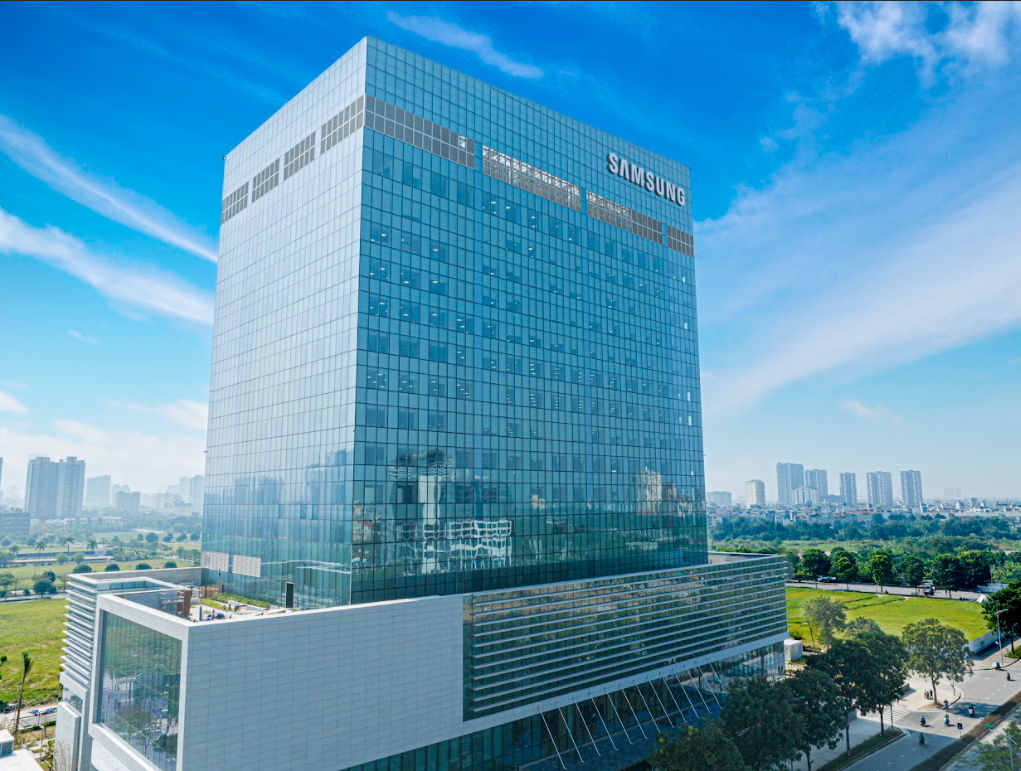
Overview of Samsung Vietnam R&D Center
From its inception to the present day, the Research and Development Center (SRV) has maintained Samsung's business philosophy: the company's development always goes hand in hand with the overall development of society. SRV places particular emphasis on collaborating with universities to attract domestic talent and support the development of information technology in Vietnam. From collaborations in the software field, Samsung Vietnam has expanded its partnerships to include hardware and courses related to new technologies such as AI, Big Data, and IoT.
Mr. Choi Joo Ho, General Director of Samsung Vietnam Complex, stated that the new features on Samsung's Galaxy AI are largely thanks to the contributions of Vietnamese engineers. From the effort to make Vietnamese one of the first languages supported by GenAI to Vietnamese engineers researching and transferring the latest technologies to engineers in the region, SRV is demonstrating the fruits of nurturing talent over more than 20 years of Samsung's presence in Vietnam. This is not only Samsung's commitment to Vietnamese users but also a significant contribution to technology transfer, talent development, and making Vietnam one of the important hubs in the region and the world.
Source link


































































Comment (0)