

Pregnant women often worry when they contract the flu but tend to refuse treatment for fear of harming the fetus, leading to the mistake of self-treating at home, which can result in the illness not being detected early and easily progressing to a more serious condition.
Don't be complacent if you get the flu during pregnancy.
Ms. Huong, 35 years old and 29 weeks pregnant, had been coughing and having a fever for about 5 days. She was admitted to the hospital with a high fever and difficulty breathing.
 |
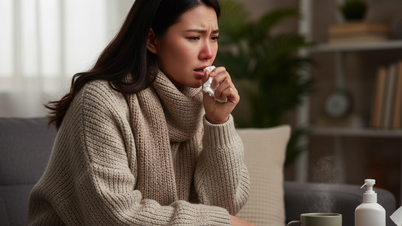
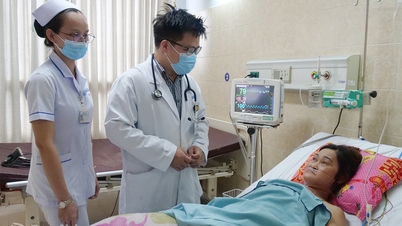
| Illustrative image |
According to her account, Ms. Huong experienced symptoms of coughing and a runny nose for about 5 days. A home Covid-19 test came back negative, so she didn't go to the doctor. Afterward, the pregnant woman used medication purchased from a pharmacy, but her condition worsened.
Emergency physicians quickly assessed the situation, consulted with obstetricians, and administered medication to help the pregnant woman reduce uterine contractions.
After the contractions and fetal heart rate stabilized, Ms. Huong was transferred to the respiratory department, where tests revealed a positive result for influenza A. X-ray images showed bilateral lung parenchyma with pneumonia in the left lung.
According to doctors here, pregnant women often worry when they contract the flu but tend to refuse treatment for fear of affecting the fetus, leading to the mistake of self-treating at home, which means the illness is not detected early and can easily progress to a more serious condition.
Many pregnant women who have passed the first trimester often assume that the fetus is stable and that the flu will not have much impact, so they don't even go for checkups and may not even find out they have the flu.
For example, Ms. Vi (27 years old), who was 18 weeks pregnant, had symptoms of fever, nasal congestion, and fatigue for about a week.
She suspected she had the flu but only used ginger lozenges to cough up phlegm at home, combined with gargling with salt water to clean her respiratory tract. Afterward, she developed a high fever of 39°C, chills, sometimes expectorated thick yellow phlegm, and chest tightness after coughing. Significantly, when she noticed the baby wasn't moving like in her two previous pregnancies, she became worried and went for a check-up.
At Tam Anh General Hospital in Hanoi , after a clinical examination, Ms. Vi tested positive for influenza A in a rapid test, and had tests for infection markers such as elevated white blood cell count and CRP levels. She was diagnosed with influenza A – superimposed bronchitis.
At the same time, there was fetal heart failure requiring long-term hospitalization for monitoring. According to her account, Ms. Vi has a history of ventricular septal defect and had not received the seasonal flu vaccine before pregnancy.
According to Doctor Huong, pregnant women have weakened immune systems and are more susceptible to respiratory illnesses in general, especially seasonal influenza. This illness is usually benign; however, when pregnant women contract the flu, the illness often lasts longer and carries many health risks for both mother and baby, such as pneumonia, damage to the heart, or other organs.
Because pregnant women have a greater-than-normal oxygen requirement while their immune systems are weakened, pneumonia in pregnant women is more dangerous.
In addition, the fetus is at a higher risk of birth defects, stillbirth, premature birth, etc., when the mother contracts the flu.
Most cases of influenza can be monitored at home; however, if symptoms such as high fever, body aches, worsening symptoms, or a cough with phlegm occur, it is advisable to seek medical attention and treatment according to the specialist's protocol at the hospital.
Especially for pregnant women, in addition to the risk of worsening the disease, the use of medications requires caution to avoid affecting both the mother and the fetus. Pregnant women should absolutely not self-medicate without a doctor's prescription because these drugs can affect fetal development and cause birth defects.
Dr. Huong further advised that after patients have recovered from influenza, they should continue to monitor their pregnancy and undergo prenatal screening at the Obstetrics and Gynecology department.
Getting a flu vaccine is essential for pregnant women, reducing the risk of getting sick and the risk of severe illness. Before getting the flu shot, pregnant women should consult with their obstetrician.
Currently, respiratory inflammatory diseases such as influenza and the common cold are on the rise due to climate change, environmental pollution, and the impact of unhealthy lifestyles.
The northern region recently experienced typhoon number 3, and environmental pollution, lack of clean water, and poor food hygiene have increased the risk of respiratory illnesses, making outbreaks more likely in areas affected by the storm.
Acute respiratory infections can progress to bronchitis and pneumonia due to limited access to healthcare services among the population.
Several chronic lung diseases, such as chronic obstructive pulmonary disease (COPD) and asthma, affect nearly 10% of the population. These conditions tend to progressively worsen over time, severely impacting patients' ability to work and their social activities.
Critical condition due to self-treating illness with tobacco poultices at home.
Patient GXS, a 59-year-old male of the Hmong ethnic group residing in Ha Giang , experienced severe complications of Fournier's syndrome (genital and anal necrosis).
This is a classic example of the dangers of improper treatment and the rapid progression of the disease.
Upon taking the patient's medical history, he stated that 13 days prior to admission, he had experienced symptoms of swelling, redness, and pain in the scrotal area. Trusting in traditional treatments, the patient sought out a local traditional healer for examination and applied herbal remedies at home.
However, after applying this method, the patient's condition not only did not improve but also worsened, with necrosis of the entire scrotal and perineal skin spreading to the abdominal wall.
The patient was admitted with a fever, necrotic tissue in the scrotal, perineal, and abdominal areas emitting a foul odor, containing pus and pseudomembranes, and causing severe pain. After two days of treatment at the initial medical facility without improvement, the patient was transferred to the National Hospital for Tropical Diseases.
The patient was immediately admitted to the Intensive Care Unit. The patient was diagnosed with Fournier's syndrome, suspected sepsis with clear manifestations: purulent necrosis of the scrotal and perineal areas spreading to the abdominal wall. This syndrome is a condition of soft tissue necrosis in the genital and anal region, a very dangerous complication that can lead to death.
Dr. Ha Viet Huy, from the Intensive Care Unit, stated: “The genital and anal regions have very few blood vessels supplying them, so medical treatment is often ineffective. In this case, only surgical intervention can save the patient's life.”
The patient was then transferred to the Department of General Surgery – Urology & Andrology for surgery. According to Dr. Tran Thuong Viet, Head of the Department and the surgeon who performed the operation, they removed all necrotic tissue from the scrotum, perineum, and abdominal wall. However, the necrosis could continue to progress, and the patient may have to undergo one or more additional surgeries.
After surgical debridement of the necrotic tissue, the patient was transferred back to the Intensive Care Unit for continued treatment. According to Dr. Huy, Fournier's syndrome is common in patients with weakened immune systems. If not detected and treated promptly, the disease can lead to dangerous complications such as blood loss and septic shock, with a very high risk of death.
In this case, the patient's self-treatment with herbal remedies of unknown ingredients created ideal conditions for bacteria to thrive, causing the disease to progress rapidly and become more complicated.
According to Dr. Huy, if the patient had received proper and timely treatment from the beginning, the necrosis might not have progressed to such a severe level.
Fournier's syndrome, although rare, is completely curable if detected and treated early. Patients and the community should avoid self-treating with anecdotal methods, especially using tobacco or folk remedies of unknown origin.
"When experiencing unusual symptoms such as swelling, heat, redness, or pain in the genital or anal area, patients should promptly go to reputable medical facilities for examination and timely treatment," Dr. Huy advised.
Critical anaphylactic shock due to medication.
Recently, the Emergency Department of Military Central Hospital 108 successfully treated a 27-year-old pregnant woman, 40 weeks into her pregnancy, who suffered a critical anaphylactic reaction due to medication.
According to the patient's medical history, on September 10th, the patient experienced a sore throat and self-medicated with amoxicillin, alphachoay, codepil, and lactation-enhancing drugs. Approximately 30 minutes after taking the medication, the patient developed generalized urticaria, shortness of breath, wheezing, chest pain, and dizziness.
The patient was admitted to the Emergency Department of Military Central Hospital 108 in the following condition: alert, able to communicate, generalized allergic-type erythema, severe itching, mild laryngeal edema, hoarseness, wheezing, rapid breathing at 30 breaths/minute, wheezing in both lungs, SpO2 92%, regular, rapid heart rate at 132 beats/minute, blood pressure 96/54 mmHg.
The patient received emergency treatment according to the anaphylaxis protocol grade III, including adrenaline, corticosteroids, antihistamines, oxygen therapy, intravenous fluids, bedside fetal ultrasound, obstetric specialist consultation, fetal heart rate monitoring, and uterine contraction monitoring.
After 10 minutes of intensive resuscitation, the patient's shortness of breath improved, the rash subsided, blood pressure was within normal limits, and pulse gradually stabilized. She was then transferred to the Internal Medicine and Toxicology Intensive Care Unit at the Central Military Hospital for further monitoring. At 2:00 PM on September 12th, the patient was discharged in a conscious state, with stable respiratory and circulatory systems, the allergic rash had disappeared, and the fetus was stable.
According to Dr. Le Kieu Trang, Emergency Department, Central Military Hospital 108, anaphylactic shock is the most dangerous immediate allergic reaction that can lead to sudden death within minutes of exposure to an allergen.
There are many possible causes of anaphylactic shock (medications, food, chemicals, insect venom, etc.), and medications are a very common cause. All types of medications can cause anaphylactic shock, but the most common are beta-lactam antibiotics, anti-inflammatory and analgesic drugs, muscle relaxants, anticonvulsants, contrast agents, anesthetics, and sedatives.
Anaphylaxis in pregnant women is a special case with a high risk of death, oxygen deprivation for both mother and fetus, leading to fetal distress and stillbirth. Medication use in this group requires extreme caution and a prescription from a specialist. If you experience any suspected allergic reactions such as rash, itching, facial swelling, difficulty breathing, or dizziness, seek immediate medical attention at the nearest healthcare facility.
Source: https://baodautu.vn/tin-moi-y-te-ngay-199-can-trong-khi-nhiem-cum-trong-thai-ky-d225282.html























![[Photo] Prime Minister Pham Minh Chinh holds a phone call with the CEO of Russia's Rosatom Corporation.](/_next/image?url=https%3A%2F%2Fvphoto.vietnam.vn%2Fthumb%2F1200x675%2Fvietnam%2Fresource%2FIMAGE%2F2025%2F12%2F11%2F1765464552365_dsc-5295-jpg.webp&w=3840&q=75)













































Comment (0)