

Proactive disease prevention
The changing of seasons is the time when diseases easily break out in livestock and poultry such as anthrax, foot-and-mouth disease, African swine fever, avian influenza... Therefore, early disease prevention, keeping the livestock environment warm and stable have received special attention from people.
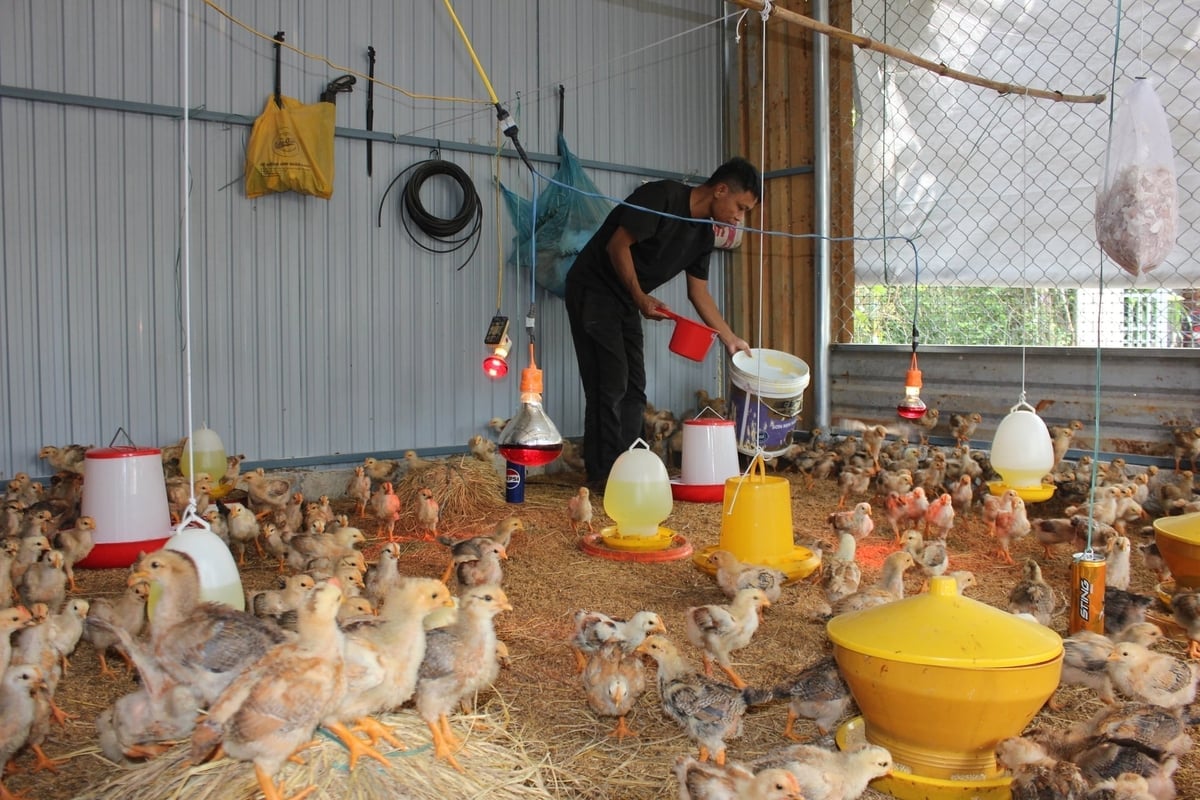
Mr. Hung's flock of more than 500 chickens is growing well with little loss. Photo: Vo Ha.
Mr. Nguyen Van Hung's family in Dong Lam village, Hoa Vang commune, Da Nang city is currently raising 500 chickens on a biological bedding area of nearly 100 square meters. On cold rainy days, he always turns on the entire heating system to keep the coop temperature stable, not letting the chickens get cold.
He also increased the chicken's food rations with corn and ground cassava to help the chickens become firmer and healthier; at the same time, he fully vaccinated them against the flu and added herbs such as ginger and lemongrass to their daily drinking water to increase natural resistance.
He also uses some folk secrets such as hanging garlic bags in the coop because of their antibacterial properties, repelling pathogens in the air. During long wet days, the chickens are gathered in a closed coop to keep warm, limiting exposure to pathogens from the outside environment.
Mr. Hung shared: “This batch of chickens is half a month old, growing well and with little loss. I prioritize organic farming, using biological bedding and herbs instead of antibiotics to create a clean environment, reducing the risk of disease. This method helps the chickens stay healthy naturally, ensuring safer output for the market.” According to Mr. Hung, proactively preventing disease from the beginning, combined with a reasonable care regimen, helps reduce veterinary medicine costs by 30-40% and limits barn pollution.
In Hai Van ward, Mr. Le Ngoc Anh is maintaining a herd of more than 150 goats. According to Mr. Anh, goats are quite sensitive to the weather, especially in the cold months when they are susceptible to many diseases such as pneumonia, respiratory infections, diarrhea, and pink eye. "The herd is large, so I cannot be careless. If I am slow to detect any abnormal signs, treatment will be very difficult," Mr. Anh shared.
The source of green food in winter is already lacking, and the recent floods have made the scarcity even more serious. To overcome this, Mr. Anh takes advantage of available materials such as corn stalks, grass, bran, etc. and makes silage to make reserve food. This method helps the goats' diet more diverse, making it easier to care for and more proactive in all situations. If properly preserved, the silage can last for about 6 months.
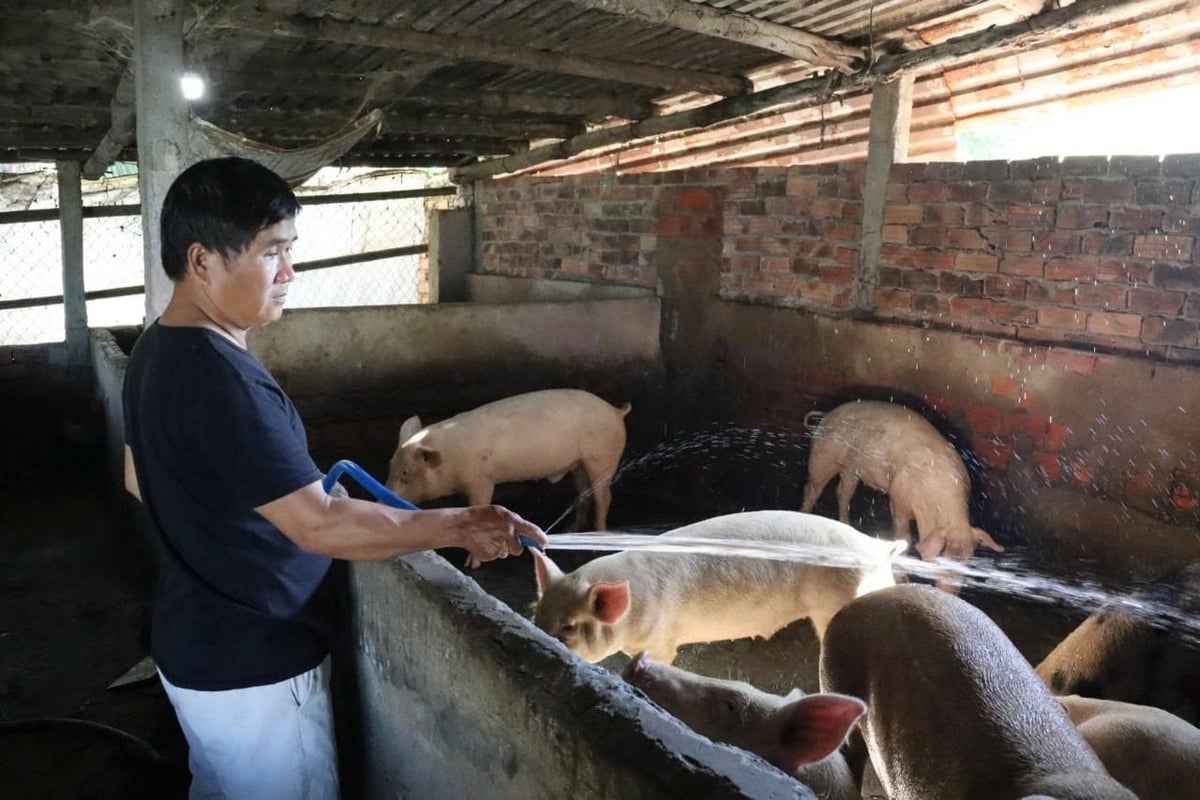
In the context of prolonged cold and humid weather, proactive disease prevention, keeping the livestock environment clean, combining veterinary measures and proper nutritional care are vital factors for the livestock industry. Photo: Vo Ha .
Strengthen disease surveillance
Currently, the risk of disease in livestock is forecast to remain high. The cause comes from prolonged widespread rain and floods, causing a humid environment, accumulated mud, and strong bacterial growth. In addition, the small-scale livestock model still accounts for a large proportion, many households have not thoroughly applied hygiene and disinfection measures, quarantine work is not guaranteed, while the demand for trading - transportation - slaughtering increases at the end of the year and the upcoming Lunar New Year, making the risk of disease spreading even greater.
Faced with this situation, the Department of Animal Husbandry and Veterinary Medicine of Da Nang City has instructed the People's Committees of communes and wards in the area to strengthen propaganda work and guide farmers to apply biosafety measures. Many localities have sent veterinary officers to coordinate with villages and residential groups to directly visit each farm to check the conditions of barns, disseminate disease prevention experiences, and remind people not to be subjective and to fully vaccinate according to the schedule.
Mr. Dang Ngoc Son, Head of the Department of Animal Husbandry and Veterinary Medicine of Da Nang, said that after the floods, the unit has mobilized professional staff to the grassroots to assist livestock farmers, especially in places with large herds or many farms. The goal is to control and completely suppress the epidemic, not allowing it to spread; support people to restore safe production, and have conditions to restore the herd when meeting the standards.
To ensure meat supply for the market at the end of the year and for the Lunar New Year 2026, the veterinary industry is encouraging households to re-herd pigs in a controlled manner, strictly implementing biosecurity measures: cleaning barns before importing breeds, choosing clear breed sources, and fully vaccinating. Disease surveillance is being stepped up, and when there are cases, they must be reported immediately to isolate and handle them thoroughly, avoiding widespread spread.
In addition, the city has strengthened control over the transportation of pigs and meat products. Cases of buying, selling, and slaughtering pigs of unknown origin or pigs suspected of being sick are strictly handled. Small-scale, illegal slaughtering activities are regularly inspected to ensure veterinary hygiene and food safety for consumers.
In the context of prolonged cold and humid weather, proactive disease prevention, keeping the livestock environment clean, combining veterinary measures and proper nutritional care are vital factors for the livestock industry. The participation of local authorities and people's awareness of disease prevention will be an important "shield" to help protect livestock and maintain a stable food supply for the year-end market.
Source: https://nongnghiepmoitruong.vn/chu-dong-cham-soc-suc-khoe-vat-nuoi-trong-mua-mua-lanh-d787414.html












![Varieties Revolution: [Part 1] TBR97 - A New Boost for Tay Ninh Rice](https://vphoto.vietnam.vn/thumb/402x226/vietnam/resource/IMAGE/2025/12/02/1764666416147_dsc06039-110200_534-160503.jpeg)




![Tue Tinh gets rich from the fields: [Article 3] Chili plants take root to reduce poverty](https://vphoto.vietnam.vn/thumb/402x226/vietnam/resource/IMAGE/2025/12/02/1764640627872_img_5015-221526_666-085700.jpeg)
![[Photo] Worshiping the Tuyet Son statue - a nearly 400-year-old treasure at Keo Pagoda](/_next/image?url=https%3A%2F%2Fvphoto.vietnam.vn%2Fthumb%2F1200x675%2Fvietnam%2Fresource%2FIMAGE%2F2025%2F12%2F02%2F1764679323086_ndo_br_tempimageomw0hi-4884-jpg.webp&w=3840&q=75)
![[Photo] Parade to celebrate the 50th anniversary of Laos' National Day](/_next/image?url=https%3A%2F%2Fvphoto.vietnam.vn%2Fthumb%2F1200x675%2Fvietnam%2Fresource%2FIMAGE%2F2025%2F12%2F02%2F1764691918289_ndo_br_0-jpg.webp&w=3840&q=75)

































































Comment (0)