

(CLO) On the evening of January 26, the White House announced that Colombia had agreed to accept immigrants deported from the US by plane, after two US military planes carrying immigrants were intercepted earlier that day.
According to a White House announcement, the United States and Colombia have reached an "unlimited" agreement on Colombia's acceptance of immigrants deported from the US. The agreement allows for the use of military aircraft to transport deportees and also temporarily suspends trade sanctions if Colombia complies with its commitments.
Colombian Foreign Minister Luis Gilberto Murillo confirmed that repatriation flights have resumed, easing some of the pressure in bilateral relations.
However, strict customs checks and visa restrictions for Colombian officials remain in place until the first flight is completed.
The White House said that if Colombia does not comply with the agreement, the previously prepared economic sanctions and tariffs will immediately take effect. Sanctions on visas and increased checks on goods and travelers from Colombia will also remain in place until the first flight is completed.
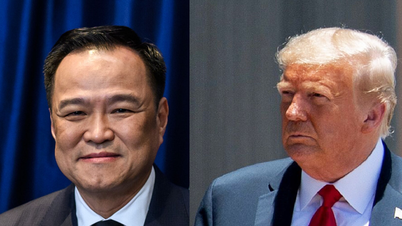
US President Donald Trump asserted that this event was proof that the US was restoring its position and earning the respect of other nations. According to him, his administration would continue to defend national sovereignty and demand cooperation from other countries in accepting citizens deported from the US.
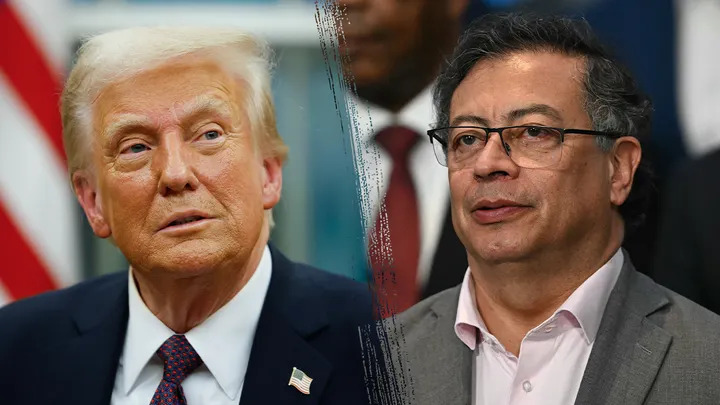
US President Donald Trump issued a strong warning to Colombian President Gustavo Petro over the weekend. (Photo: GI)
Earlier on the morning of January 26, Colombian President Gustavo Petro rejected deportation flights from the United States, arguing that Colombian migrants cannot be treated as criminals.
In response to this move, Trump announced an immediate 25% tariff on imports from Colombia, increasing it to 50% within a week if no agreement was reached. He also threatened to ban entry for Colombian citizens and revoke the visas of Colombian officials.
In a statement, the Colombian government said it had deployed a presidential plane to support the "honorable return" of those deported. This move was explained as an effort to ensure good living conditions for the repatriated.
In response to Petro's initial refusal, the US implemented a series of sanctions. Foreign Secretary Marco Rubio ordered the suspension of visa issuance at the US embassy in Bogota, imposed travel bans on Colombian government officials, and implemented stricter checks by the Customs and Border Protection agency.
Meanwhile, Petro announced he would increase tariffs to 25% on imports from the US, and possibly raise them to 50% as a retaliatory measure. However, pressure from the US forced him to back down, paving the way for continued deportation flights.
Hoai Phuong (according to Fox News, CNN)
Source: https://www.congluan.vn/colombia-dong-y-tiep-nhan-nguoi-nhap-cu-bi-truc-xuat-tu-my-post332191.html




































































Comment (0)