

According to a report by the Department of Animal Health (Ministry of Agriculture and Rural Development), in the first nine months of 2024, Vietnam imported over 460,000 tons of meat and animal by-products for food, an increase of 4.2% compared to the same period in 2023.
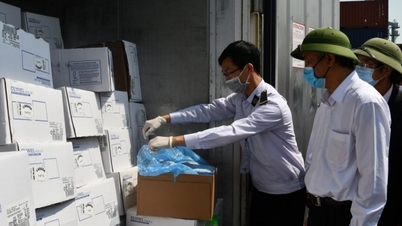
Quarantine of imported meat and meat products in accordance with international practices.
According to a report by the Department of Animal Health, in the first nine months of 2024, Vietnam imported over 460,000 tons of meat and animal by-products for food, an increase of 4.2% compared to the same period in 2023. In accordance with Circular No. 04/2024/TT-BNNPTNT, quarantine agencies have tested imported animal products for Salmonella and E. coli.
Recently, during a meeting with the Ministry of Agriculture and Rural Development, agricultural attachés from various countries raised concerns about Circular 04/2024 of the Ministry of Agriculture and Rural Development (amending and supplementing some articles of the circulars regulating the quarantine of terrestrial animals and animal products). They noted that the circular slows down the registration of businesses from other countries permitted to export meat and meat products to Vietnam, and delays customs clearance of goods entering Vietnam. The attachés expressed concern that the circular will affect market access for new products, or that the export of some products already exported to Vietnam will be disrupted.
This shows that since Circular 04 came into effect (May 16, 2024), 64 batches (with over 1,489 tons) have tested positive for Salmonella, out of a total of 10,534 batches tested for Salmonella, accounting for nearly 0.61% of the total batches.
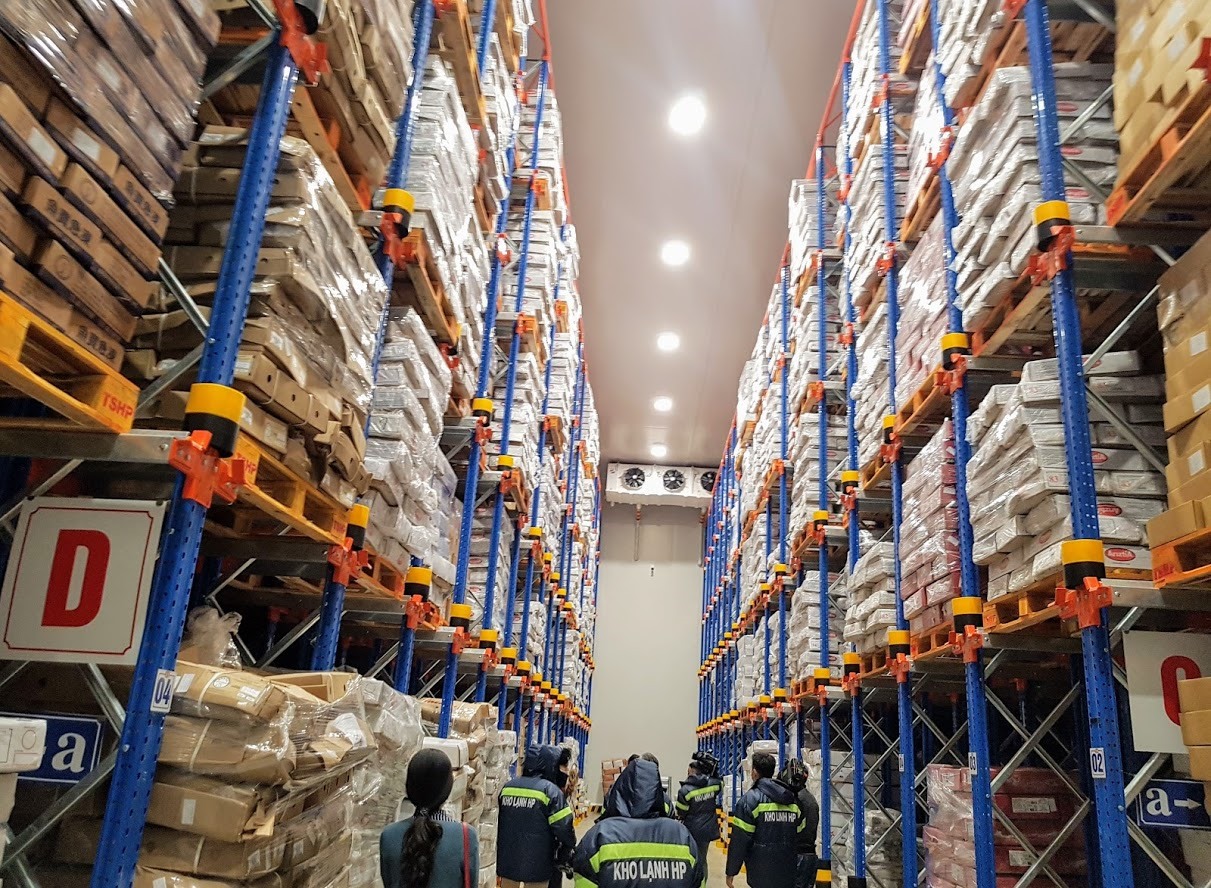
Imported pork stored in a cold storage facility in Hai Phong . Photo: KV
Deputy Minister Phung Duc Tien instructed the Department of Animal Health to continue coordinating with veterinary attachés and agencies of other countries to thoroughly address any obstacles related to the import of meat and meat products, especially those concerning Circular 04. This will foster mutual understanding, cooperation, and further promote trade.
"Therefore, without Salmonella testing, a large amount of animal meat contaminated with Salmonella would have been imported into Vietnam, posing a very high risk of disease outbreaks, food safety issues, and affecting the health of Vietnamese consumers," said Mr. Chu Nguyen Thach, Head of the Animal Quarantine Department, Department of Animal Health.
Regarding the opinion that Circular 04 "makes things difficult" even for products that already meet the conditions for export to Vietnam, Mr. Nguyen Van Long - Director of the Department of Animal Health - affirmed that it has absolutely no impact on products already exported to Vietnam. Any impact would only be the need to provide specific product information. The current difficulties mainly arise from by-products, products not included in veterinary agreements, and the HC (quarantine certificate) forms between Vietnam and other countries.
Mr. Nguyen Van Long also pointed out that many products not yet included in the list have been exported to Vietnam, causing difficulties in completing customs procedures in Vietnam. Recently, the Department of Animal Health has worked with Germany and the Netherlands to specifically resolve obstacles regarding the import procedures for meat products related to Circular 04. In October and November, the Department of Animal Health will continue to work directly with these countries, not just through written documents.
"In principle, if a product is not included in the bilateral veterinary agreement and is not on the approved list, the importing country has the right to refuse quarantine. However, to avoid impacting trade, in many cases the Department of Veterinary Medicine has consulted with the trade attachés of the importing countries," Mr. Nguyen Van Long informed.
Regarding new businesses registering to export to Vietnam, Mr. Nguyen Van Long informed that the Department of Animal Health has received 340 applications from over 20 countries. The Department has processed 285 applications, accounting for 83%. For some applications, Vietnam requested additional information because they did not meet Vietnamese requirements or international practices. The international basis that Vietnam applies is the veterinary regulations of the World Organisation for Animal Health, which requires countries to demonstrate that their areas and facilities are disease-free.
"When processing applications, Vietnam bases its decisions not only on food safety but also on disease safety. This is entirely consistent with the regulations of the World Organisation for Animal Health. Every effort is made to resolve new applications in a spirit of mutual benefit," Mr. Nguyen Van Long informed.
Responding to concerns from trade attachés about quarantine causing delays in customs clearance and increasing costs for businesses, Mr. Nguyen Van Long clarified that over 99% of imported shipments test negative and undergo import quarantine within 1-3 days. Only about 1% of animal product shipments test positive, requiring culture and isolation for confirmation, which takes 7-8 days. This approach also aims to avoid causing losses to businesses if the process relies solely on test results.
Cooperation and promotion of agricultural trade with other countries.
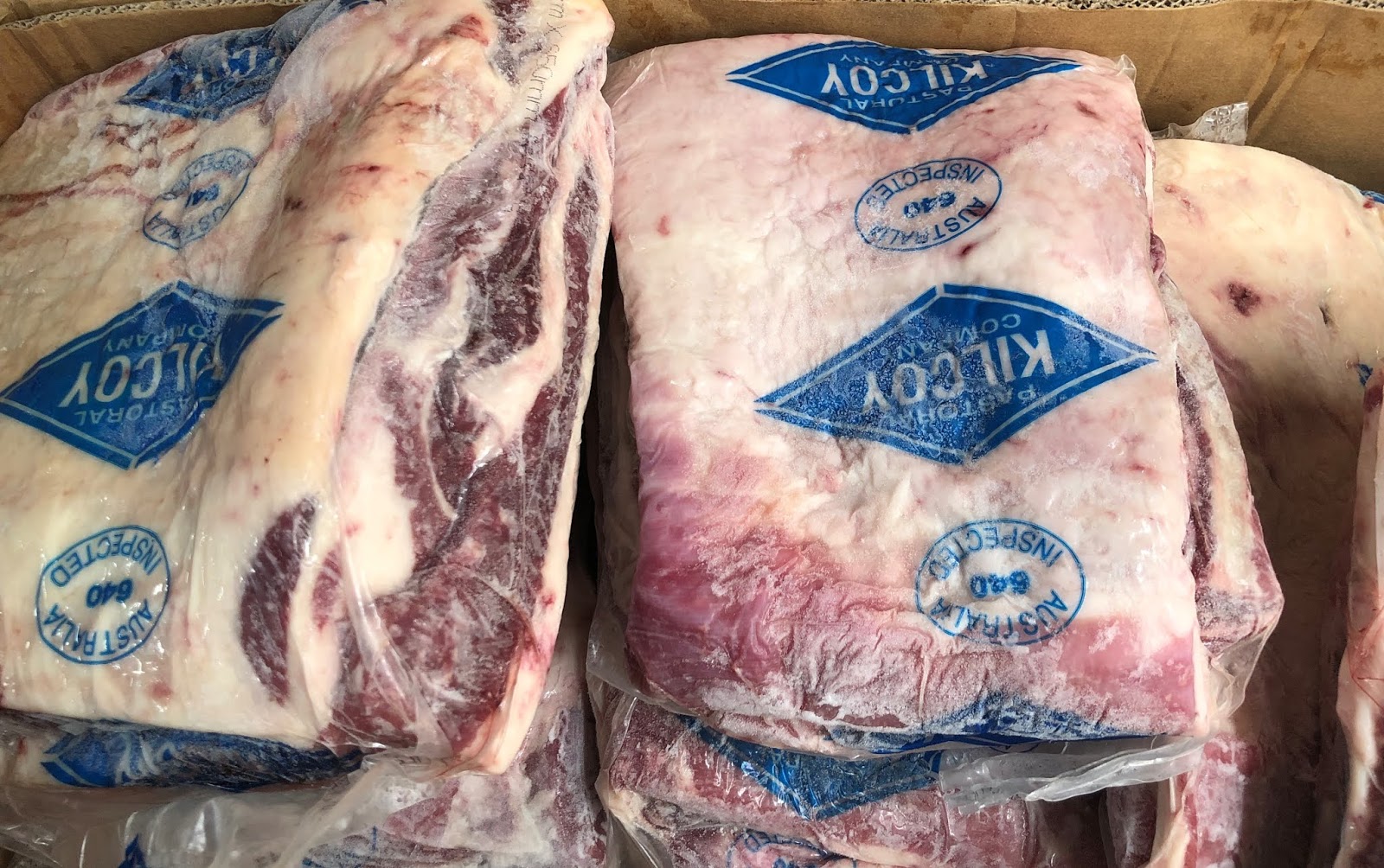
Australian beef products imported into Vietnam. Photo: PV
Recently, the import quarantine of animal products into Vietnam has encountered some difficulties and obstacles due to inconsistent product names. To resolve this issue, Mr. Chu Nguyen Thach stated that the Department of Animal Health has sent a document to the embassies and competent authorities of other countries requesting an update of the list of animal products with specific names to ensure consistency between: the list of exporting countries and enterprises and animal products with specific names for each product type; the quarantine certificate of the exporting country; the application of enterprises registering to import animal products; the import quarantine certificate of Vietnam; and the HS code for each animal product as stipulated in Circular No. 01/2024/TT-BNNPTNT and Circular No. 04/2024/TT-BNNPTNT.
During a meeting with agricultural attachés from the United States, Brazil, the United Kingdom, France, South Korea, Italy, Spain, Argentina, Denmark, and the Netherlands to promote agricultural trade, Deputy Minister of Agriculture and Rural Development Phung Duc Tien also reported that in 2024, the number of food poisoning cases in Vietnam did not increase, but the number of people affected by food poisoning increased significantly. The main cause was Salmonella. Effective control of Salmonella has helped to significantly reduce the number of people and cases of food poisoning.
According to Deputy Minister Phung Duc Tien, Vietnam is currently a major exporter of agricultural products in the world. Vietnam also has to comply with the strict regulations of other countries in exporting. With a proactive spirit for better bilateral trade cooperation, the Deputy Minister hopes for continued coordination between the trade attachés and veterinary agencies of other countries and Vietnamese veterinary services. This will create a more favorable environment for agricultural trade between Vietnam and other countries.
Source: https://danviet.vn/da-co-460000-tan-thit-va-phu-pham-dong-vat-duoc-nhap-ve-viet-nam-trong-9-thang-nam-2024-20241028164510605.htm


















![[Photo] Prime Minister Pham Minh Chinh holds a phone call with the CEO of Russia's Rosatom Corporation.](/_next/image?url=https%3A%2F%2Fvphoto.vietnam.vn%2Fthumb%2F1200x675%2Fvietnam%2Fresource%2FIMAGE%2F2025%2F12%2F11%2F1765464552365_dsc-5295-jpg.webp&w=3840&q=75)













































Comment (0)