

On September 12th, in Dong Gia Nghia Ward (Gia Nghia City, former Dak Nong Province), the Lam Dong Provincial People's Committee held a ceremony to announce the Prime Minister's decision recognizing the Dak Son stone musical instrument as a national treasure.
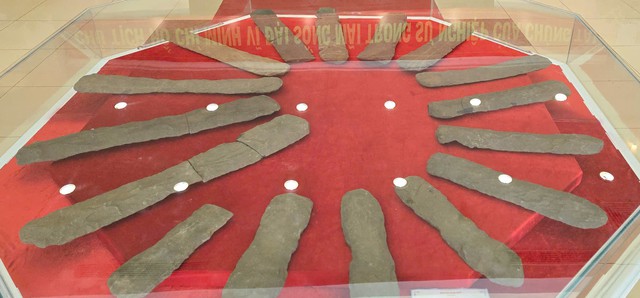
The Dak Son stone xylophone set is crafted from rhyolite stone.
PHOTO: LAM VIEN
According to the Department of Culture, Sports and Tourism of Lam Dong province, the Dak Son stone musical instrument was discovered accidentally underground when people were digging holes to plant pepper for agricultural purposes at a depth of 50 to 90 cm in 2014 in Dak Son village, Nam Xuan commune, Krong No district, former Dak Nong province - now Dak Sak commune, Lam Dong province.
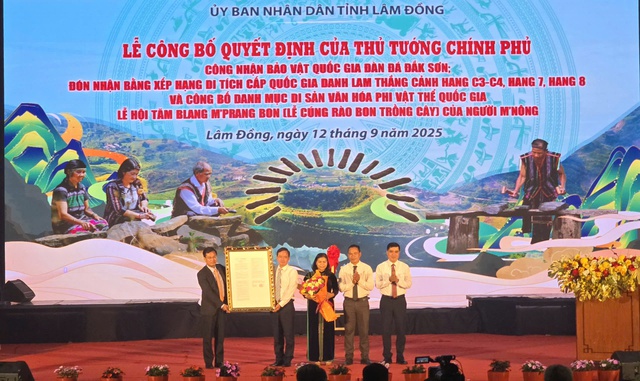
The Department of Culture, Sports and Tourism of Lam Dong province received a decision from the Prime Minister recognizing the Dak Son stone musical instrument as a national treasure.
PHOTO: LAM VIEN
The Dak Son stone xylophone is crafted from rhyolite (metamorphic schist), dating back approximately 3,500–3,000 years, and consists of 16 bars. Of these, 11 bars are intact, while 5 are broken in half or into three pieces but can still be restored to their original form, making them suitable for research into the crafting techniques. The average length of the bars is 57.6 cm, the average width is 12.4 cm, the average thickness is 3 cm, the average weight is 3.94 kg, and the sound frequency varies widely, from a low of 191.9 Hz to a high of 4,500 Hz.
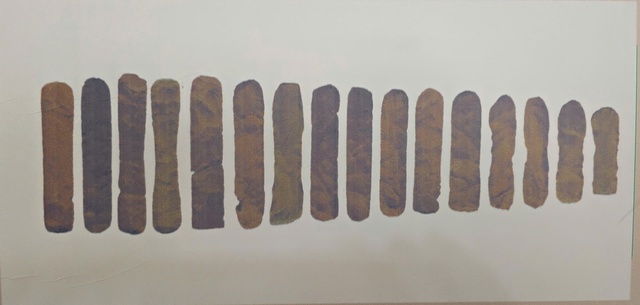
The Dak Son stone musical instrument set is evidence of the diverse and rich cultural and spiritual life of the indigenous people in Dak Son commune.
PHOTO: LV
The Dak Son stone xylophone collection not only serves as evidence of the diverse and rich cultural and spiritual life of the indigenous people in Dak Son commune, but also affirms that this collection is of exceptional historical and cultural value, originating locally and produced on-site in the Central Highlands during prehistoric times.
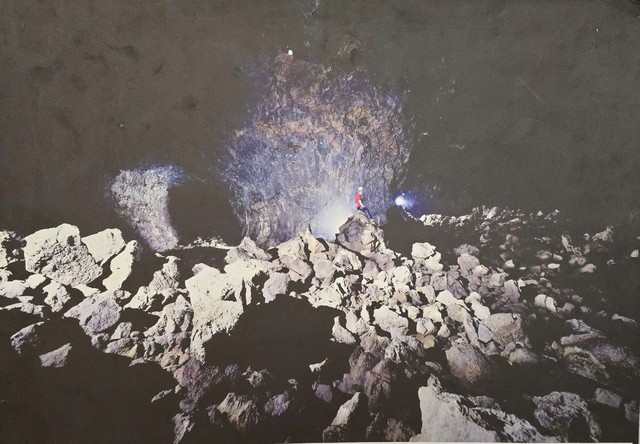
C3 Cave, a national monument and scenic spot, is part of the Krông Nô volcanic cave system.
PHOTO: LV
On this occasion, Lam Dong province announced the decision of the Minister of Culture, Sports and Tourism regarding the ranking of C3, C4, C7, and C8 caves, belonging to the Krong No volcanic cave system (formerly Dak Nong province), as national historical sites and scenic landscapes.
This is part of the longest volcanic cave system in Southeast Asia, with a unique geological structure and high research value, formed from the eruption of the Chu B'luk volcano approximately 600,000 - 200,000 years ago. In addition, the Tam Blang M'prang Bon festival (the bon tree planting ceremony) of the M'nong people has also been listed as a national intangible cultural heritage by the Ministry of Culture, Sports and Tourism.
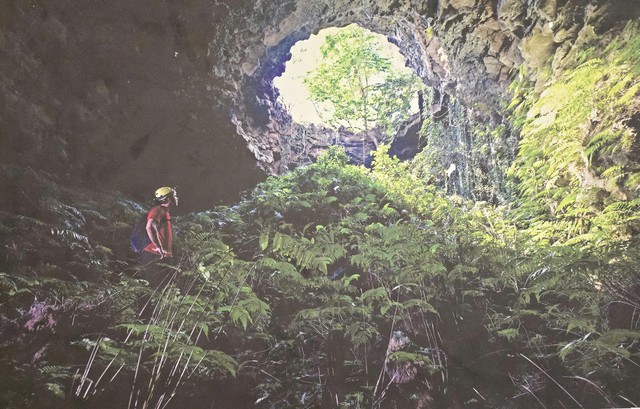
The mouth of volcanic cave C7 belongs to the Krông Nô volcanic cave system.
PHOTO: LV
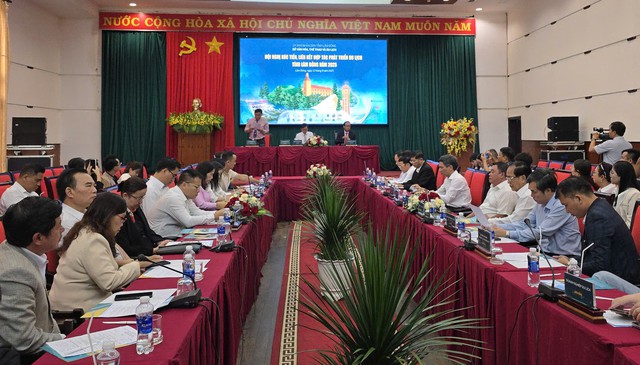
The Lam Dong Provincial Tourism Promotion and Cooperation Development Conference was held on the morning of September 12th at the Dak Nong Conference Center.
PHOTO: LAM VIEN
As Thanh Nien newspaper reported, from September 9-13, Lam Dong province organized a program to survey and develop tourism products and services in three areas: Mui Ne, Da Lat, and Gia Nghia. Over 100 delegates participated, including representatives from various departments, the Lam Dong and Dong Nai Provincial Tourism Associations, tourism businesses, travel agencies from within and outside the province, tourism consultants, and experts in developing tourism products and routes.
Specifically, on September 12th, at the Dak Nong Conference Center, Lam Dong province organized a conference to promote and link tourism development in Lam Dong province. At the conference, Mr. Nguyen Van Loc, Director of the Department of Culture, Sports and Tourism of Lam Dong province, stated that Lam Dong (new) is a land that brings together unique natural and cultural values, from the romantic Da Lat plateau and the sunny and windy Mui Ne beach to the majestic Ta Dung primeval forest. Through the conference, the province hopes to connect tourism products, services, and destinations in various localities into a chain of high-quality, distinctive, and highly competitive products, providing a complete experience for tourists, contributing to affirming product brands, and promoting comprehensive, sustainable, and breakthrough tourism development.
Source: https://thanhnien.vn/dan-da-dak-son-o-lam-dong-duoc-cong-nhan-la-bao-vat-quoc-gia-185250912053240835.htm







































































Comment (0)