

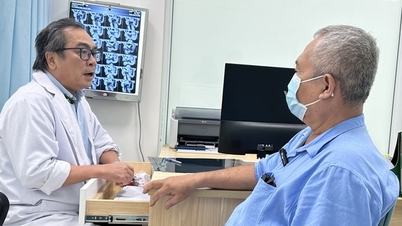
According to MSc. Dr. Dinh Pham Thi Thuy Van, Department of Internal Medicine, Orthopedics and Traumatology, Center for Traumatology and Orthopedics, Tam Anh General Hospital, Ho Chi Minh City, although gout is a benign bone and joint disease, complications such as fractures, kidney stones, and diabetes can cause disability and threaten life. Patients need to pay attention to any abnormalities in their bodies to seek timely examination and treatment.
In the early stages of gout, patients only have elevated uric acid levels in their blood and have not yet formed crystals that cause joint inflammation, so they usually do not notice any symptoms.
In most cases, the disease is detected at an early stage where treatment is usually not necessary and can be controlled through care and changes in diet and lifestyle. Conversely, if not detected early, uric acid levels continue to rise, leading to the accumulation of urate crystals that cause inflammation and symptoms.

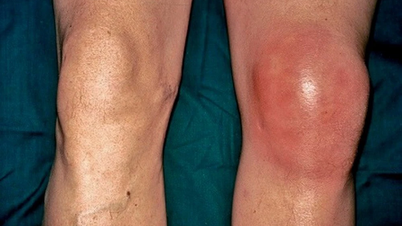
Gout manifests with different symptoms at each stage. (Illustrative image)
In stage 2, symptoms are more pronounced, with uric acid crystals depositing around the joints, commonly the big toe, ankle, knee, wrist, and elbow, causing acute inflammation. At this stage, patients experience intense pain and discomfort, and the affected joints become swollen, tender, hot, and red. These flare-ups usually occur suddenly, lasting only 3 to 10 days, with pain gradually subsiding over time.
In stage 3, the frequency of inflammatory episodes and acute gout symptoms increases significantly, severely affecting the joints.
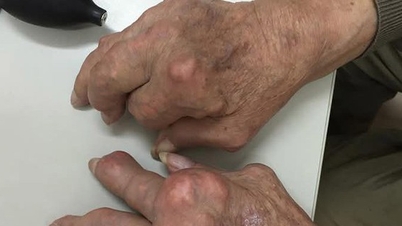
Gout progressing to stage 4 can manifest as tophi. These nodules appear as small, swollen bumps that develop just beneath the skin at the joints. Many joints in the body, and even the kidneys, may have suffered permanent damage. At this stage, delaying treatment can lead to irreversible complications, severely impacting health and mobility.
Experts advise that in the early stages, gout often has no obvious symptoms. Those at risk should pay attention to warning signs from their bodies to seek timely treatment, prevent the disease from progressing, reduce the risk of dangerous complications, and minimize the impact on quality of life.
Some groups at high risk of developing gout include postmenopausal women, overweight and obese individuals, and those with unhealthy lifestyles, including alcohol abuse, tobacco use, stimulant use, and high consumption of animal protein. These groups should be particularly vigilant to detect early signs of the disease and take timely action.
Source: https://vtcnews.vn/dau-hieu-nhan-biet-som-benh-gout-ar909361.html


![[Photo] General Secretary and President To Lam meets with National Assembly delegates from ethnic minorities.](https://vphoto.vietnam.vn/thumb/1200x675/vietnam/resource/IMAGE/2026/04/20/1776696701056_a1-bnd-8331-3342-jpg.webp)


![[Image] National Assembly discusses the implementation of the socio-economic development plan.](https://vphoto.vietnam.vn/thumb/1200x675/vietnam/resource/IMAGE/2026/04/20/1776696707422_ndo_br_img-20260420-185419-jpg.webp)




































































































Comment (0)