

Mr. C. was admitted to a medical facility near his home for treatment with a diagnosis of progressive pulmonary tuberculosis and descending thoracic aortic aneurysm. Afterward, The patient was admitted to the Emergency Department of Gia Dinh People's Hospital with left lower back pain radiating to the chest.
On October 19th, Dr. Tieu Chi Duc, Deputy Head of the Thoracic and Vascular Surgery Department at Gia Dinh People's Hospital, stated that after examination, doctors assessed the patient's condition as extremely critical due to a potentially ruptured aneurysm in the thoracic aorta. Furthermore, Mr. C.'s lungs were in very poor condition due to tuberculosis, posing a risk of death at any moment.
Doctors from the Thoracic and Vascular Surgery - Thyroid Department, the Respiratory Internal Medicine Department, and the Interventional Radiology Department held an urgent consultation to find a suitable treatment solution.
Two aortic aneurysms simultaneously.
"The patient's condition is extremely dangerous right now because the CT scan shows two thoracic aortic aneurysms. The first aneurysm has ruptured. Choosing a treatment method is also very difficult because the patient's lungs are in very poor condition due to advanced tuberculosis, so surgery requiring general anesthesia is almost impossible to succeed," Dr. Duc said.
After consultation and expert advice, the doctors decided that the appropriate treatment option was intervention via stent graft catheter.
The surgeon will make an incision through the femoral artery in the groin up to the aneurysm and fix it within the artery. This minimally invasive technique has a lower mortality rate and fewer complications compared to open surgery.
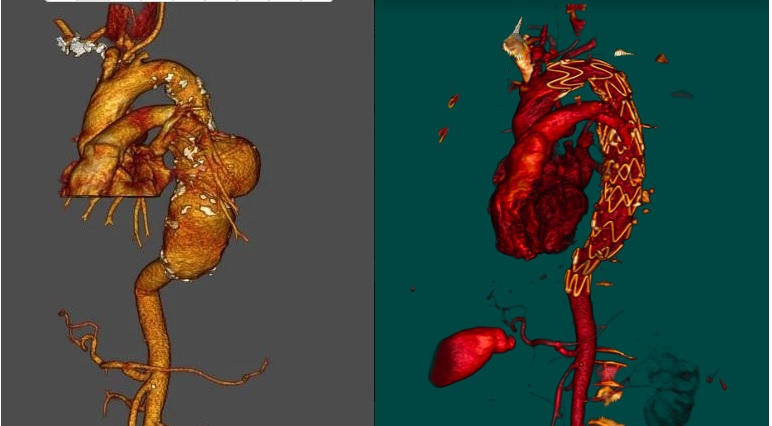
Images of blood vessels before and after (right) intervention.
High blood pressure can also lead to death.
Dr. Duc explained that the patient had a ruptured descending aortic aneurysm, but thanks to surrounding structures such as the spine and lungs, the aneurysm was held in place, albeit fragilely. This allowed the patient to survive. However, even a slight impact, such as increased blood pressure or shock, could have ruptured the hematoma, threatening the patient's life. Furthermore, the patient's lungs were already damaged. These challenges required an experienced team with proficient techniques and a thorough understanding of anatomy to successfully intervene.
"We had to hold our breath from the moment we received the patient until we managed to deploy the graft across both ends of the blood vessel, isolating the ruptured aneurysm. Only then did we breathe a sigh of relief, knowing we had been able to save the patient's life," Dr. Duc shared.
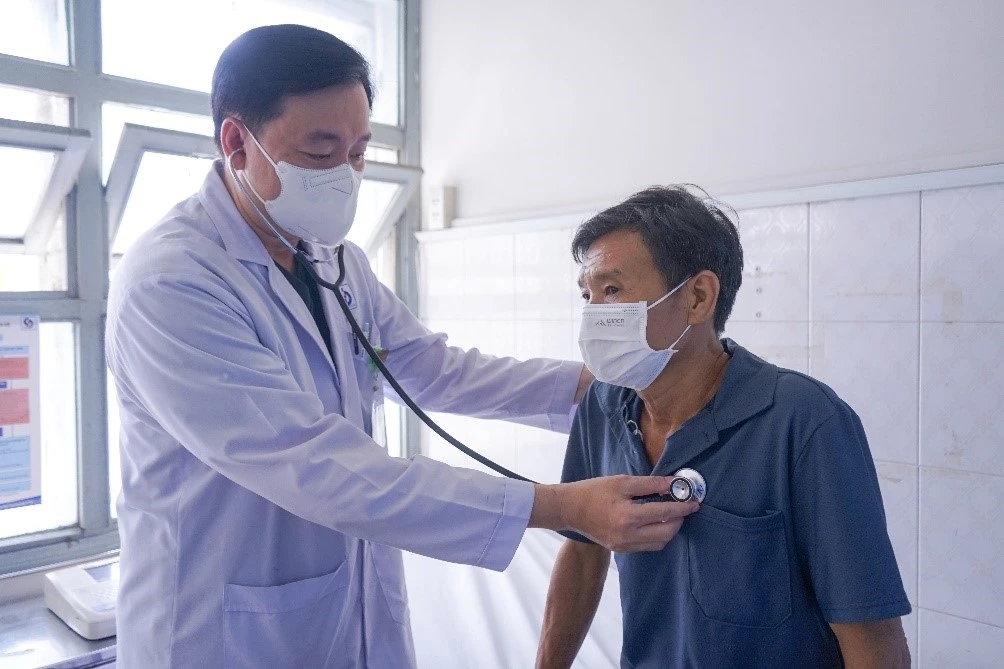
The doctor examines the patient.
The patient was then transferred to the Thoracic and Vascular Surgery department for continued monitoring and treatment. The post-operative period was also closely monitored to prevent potential complications. A follow-up CT scan showed that the thoracic aorta at the site of the previous rupture had stabilized. After two weeks of treatment, the patient has now been discharged.
According to Doctor Duc, aortic aneurysm is a common disease today, often occurring in older adults with co-morbidities such as hypertension, diabetes, dyslipidemia, and smoking habits. When the aneurysm ruptures, the risk of death is very high. Patients with risk factors should visit a medical facility for screening and early detection and treatment.
Source link























































































Comment (0)