

The new framework will be similar to teaching solar panels to 'dance with the wind,' minimizing damage while ensuring energy production even in strong winds.
Researchers at the Materials Science Center at PLS University in Sophia Antipolis (France) have proposed a new approach to protecting solar panels from harsh weather conditions.
A scientific paper titled "Combining machine learning and computational fluid dynamics to optimize the tilt angle of solar panels in windy weather," published in the journal Physics of Fluids, indicates that there is currently no optimal method for safely positioning solar panels under windy conditions.
Traditional methods often require solar panels to be positioned parallel to the ground when wind speeds reach a certain level. While effective in some cases, this approach prevents the panels from generating energy and also leaves them unprotected against maximum wind speeds.
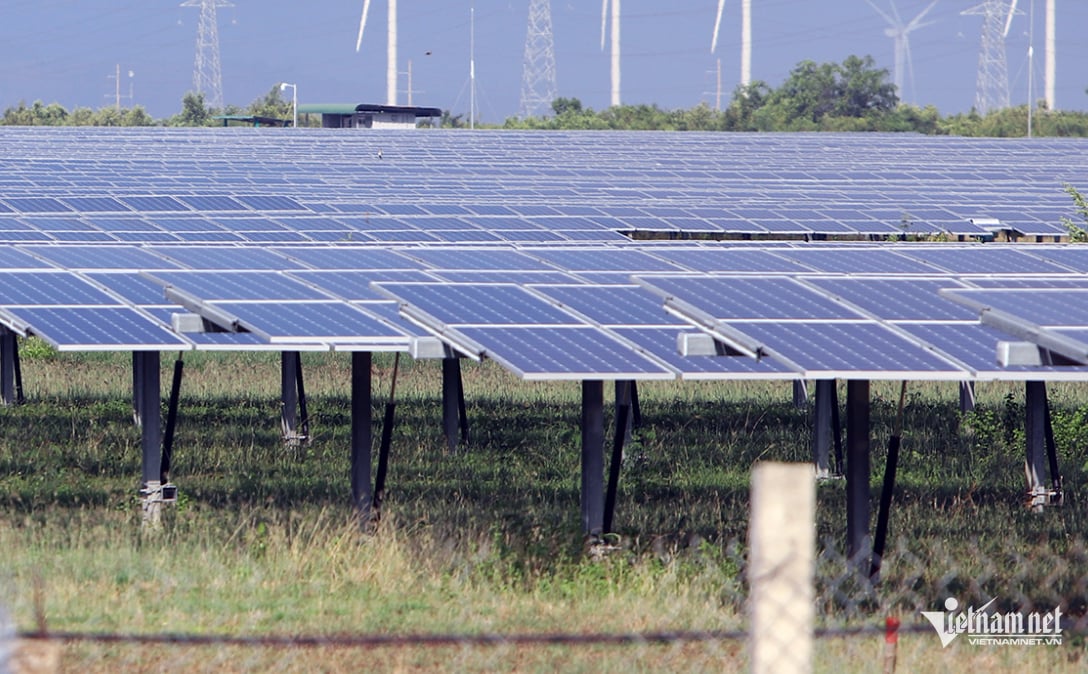
The research team's new framework allows the solar panel to adjust its optimal angle relative to the sun to continue generating electricity, thanks to the use of increasingly common solar tracker actuators.
This method combines advanced wind simulations and machine learning to optimize the angle of each solar panel under strong winds.
“By combining advanced fluid dynamics and artificial intelligence, we have found an innovative way to address wind-related risks and increase the sustainability of renewable energy systems,” said report author Elie Hachem.
Unlike previous approaches, this new framework views solar panels as independent "decision-makers" and provides data-driven solutions to mitigate the impact of wind.
"It's like teaching the solar panels to 'dance with the wind,' minimizing damage and protecting power output in strong winds," added Elie Hachem.
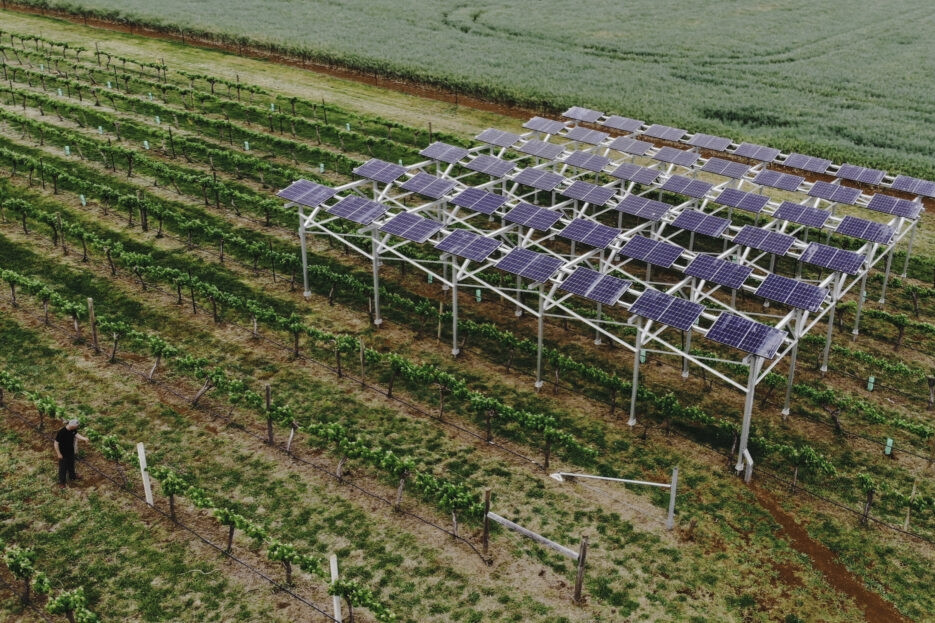
The research team tested this methodological framework against various damage risks, such as tearing, vibration, and material fatigue. The results showed that the new method minimized aerodynamic stress on both two-dimensional and three-dimensional models with six solar panels installed on the ground under winds of 50 km/h. It outperformed traditional protection methods by several tens of percent.
The research team expects that, with the support of artificial intelligence and trial-and-error methods, this system can find innovative solutions for managing large-scale solar panels under strong wind conditions, while effectively complementing existing engineering and practical experience.
This approach not only challenges traditional methods but also offers a flexible, widely applicable solution for increasing resilience in real-world situations.
(According to PV-Magazine)
Source: https://vietnamnet.vn/day-pin-dien-mat-troi-nhay-mua-voi-gio-de-tang-do-ben-2356584.html


![[Photo] Prime Minister Pham Minh Chinh holds a phone call with the CEO of Russia's Rosatom Corporation.](/_next/image?url=https%3A%2F%2Fvphoto.vietnam.vn%2Fthumb%2F1200x675%2Fvietnam%2Fresource%2FIMAGE%2F2025%2F12%2F11%2F1765464552365_dsc-5295-jpg.webp&w=3840&q=75)





























































Comment (0)