

Many breakthrough mechanisms for offshore wind power
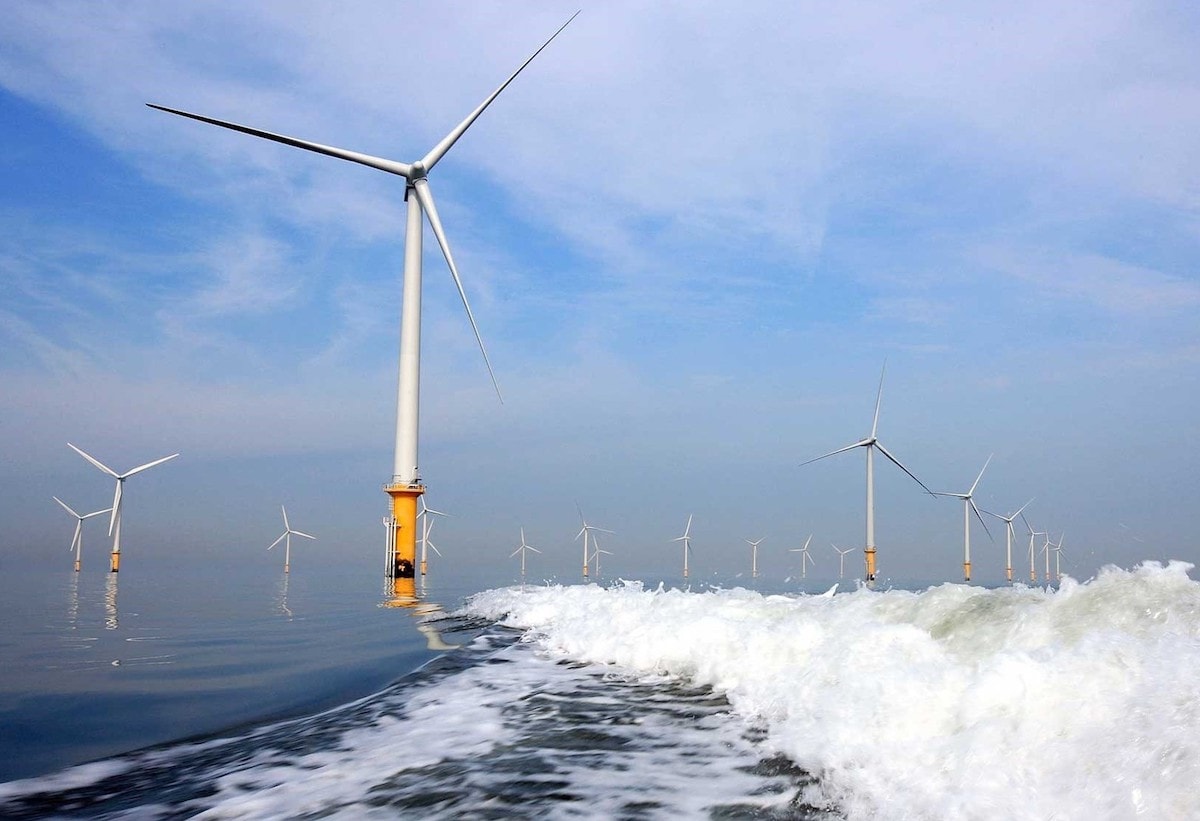
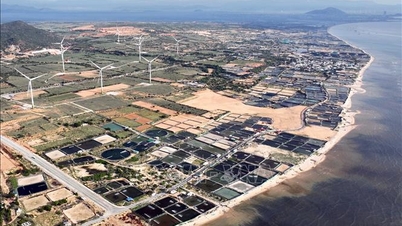
According to Dr. Nguyen Huy Hoach, Scientific Council of Vietnam Energy Magazine, Vietnam is entering a large-scale energy transition period, in which offshore wind power is identified as one of the important pillars to meet the target of net zero emissions by 2050.
The revised Power Plan VIII also sets a target of offshore wind power capacity of about 6,000 MW (equivalent to 6GW) by 2030. However, despite the high target, no project has yet received an investment decision.
Given this reality, the draft Resolution on the mechanism and policy for national energy development in the 2026 - 2030 period, dedicating Chapter IV to regulate the development of offshore wind power, is of utmost importance.
From the perspective of the Global Wind Energy Council (GWEC), Mr. Bui Vinh Thang, Country Director of GWEC in Vietnam, said that "the draft Resolution demonstrates the great determination of the Government and the National Assembly in providing a breakthrough mechanism for businesses to implement power projects as quickly as possible".
Mr. Thang highly appreciated the draft Resolution applying the mechanism of approving investment policies for offshore wind power projects instead of bidding. “This helps shorten the time for selecting investors, while meeting the requirement of “having a breakthrough mechanism for offshore wind power development” set out in Resolution 70-NQ/TW of the Politburo .”
The draft Resolution also proposes preferential policies for offshore wind power development. Accordingly, offshore wind power projects are exempted from or have reduced fees for using sea areas; and are committed to a power purchase contract that guarantees at least 90% of the average power output for many years during the loan repayment period.
Dr. Nguyen Huy Hoach said that these are mechanisms "of key significance, creating a basis for investors to build financial models and arrange international capital in the context of Vietnam limiting the granting of government guarantees for new energy projects".
Collaborate for success and be able to “take shortcuts”
From an investor perspective, Mr. Alessandro Antonioli, General Director of Copenhagen Offshore Partners (COP), senior representative of Copenhagen Infrastructure Partners (CIP) in Vietnam, highly appreciated the fact that the latest draft Resolution has removed the regulation that only Vietnamese enterprises or 100% state-owned enterprises are allowed to propose investment policies for offshore wind power projects. This is an appropriate adjustment because Vietnam needs to mobilize maximum investment resources for this field.
Mr. Alessandro Antonioli said that the investment rate for offshore wind power is currently very high, about 4 billion USD for each GW. This type of energy also requires advanced technology, complex construction and installation techniques and high-standard operating capacity.
“To achieve the goal of developing 6GW of offshore wind power by 2030, maximizing domestic and foreign capital mobilization plays a key role. In Resolution 70-NQ/TW, Vietnam also clearly identified the task of expanding the mobilization of private and foreign capital for energy projects, through the model of independent investors or public-private partnerships.
Equally important, the participation of international investors with experience in projects of similar scale is a key factor to ensure progress and implementation efficiency,” Mr. Alessandro Antonioli emphasized.
Sharing the same view, Mr. Bui Vinh Thang, Country Director of GWEC in Vietnam, said that international investors possess technical capacity, operational experience, financial potential and global supply chain networks; these are the decisive factors for the success of offshore wind power projects, which are large-scale and highly complex.
“GWEC particularly encourages the cooperation model between domestic and foreign enterprises. This is a proven cooperation structure in the world and is the key to ensuring offshore wind power projects in Vietnam are implemented safely, on schedule and meet international standards,” said Mr. Thang.
From the local side, where the project will be directly licensed and implemented, a provincial leader said that the model of Vietnamese enterprises linking with international investors not only brings financial benefits, but also opens up opportunities to access international technology, techniques and experience.
“When working with partners who have implemented large-scale projects, we significantly shorten the learning curve and can take shortcuts in new fields such as offshore wind power,” he said.
Determine criteria for selecting suitable investors
Along with opening up breakthrough mechanisms, the draft Resolution also sets higher requirements for offshore wind power investors. Notably, enterprises proposing surveys and enterprises approved for investment must have a minimum charter capital of VND10,000 billion and equity capital of not less than 15% of the total investment.
According to Mr. Bui Vinh Thang, Country Director in Vietnam of GWEC, this regulation is suitable for large domestic enterprises but becomes a "barrier" for foreign investors.
“It is not that they lack financial capacity, but that immediately pouring VND10,000 billion in charter capital into a new legal entity in Vietnam in the context of offshore wind power being a new field with many potential risks is difficult to do,” he analyzed.
From the perspective of international investors, Mr. Alessandro Antonioli, representative of CIP, proposed that the drafting agency expand the calculation of equity capital to allow calculating the capital of the parent company and associated companies.
“Accepting documents proving the ability to mobilize equity capital of at least 15% of the total investment will be more consistent with the practice of implementing large-scale energy projects. In that context, the requirement for minimum charter capital is no longer necessary when financial capacity has been guaranteed through equity conditions,” Mr. Antonioli commented.
Another point that experts have paid special attention to is the regulation that gives priority to investors who propose lower expected electricity prices when there are two or more valid applications for the same project. According to Mr. Bui Vinh Thang, this approach is not really reasonable.
He analyzed that the electricity price at the investment proposal stage, which is based on desktop studies (desk research without field surveys - PV), is only an initial estimate and often has to be adjusted significantly when implementing. The 2-3 year gap between the approval of the policy and the negotiation of electricity prices with EVN is long enough for the market, supply chain costs or financial conditions to fluctuate strongly. "That means the expected electricity price and the actual electricity price can differ greatly," he said.
International experience shows that this risk is not small. Mr. Thang cited the case in Japan: in 2021, Mitsubishi won the bid for three offshore wind power projects thanks to the lowest electricity price proposal despite having no experience in this field. During implementation, rising costs and fluctuations in the supply chain made it impossible for the company to implement the project at the committed price. By August 2025, Mitsubishi was forced to withdraw from all three projects.
From that lesson, Mr. Thang believes that electricity price should not be the highest priority when choosing an investor, but should apply multiple criteria, including financial capacity, technical capacity, implementation experience, project development strategy, commitment to developing domestic supply chains... "This approach will help choose the right investor with real capacity, ensuring the project is implemented sustainably and effectively," he emphasized.
Sharing the same view, Mr. Alessandro Antonioli said that the draft Resolution should “prioritize investors with experience in implementing or mobilizing capital for offshore wind power projects, marine infrastructure or large-scale power projects, instead of just relying on the criteria of lower proposed electricity prices”.
Offshore wind power is related to national security, maritime traffic, oil and gas fields, marine resources, diplomacy... so it requires the participation of many ministries and branches. The scale of the project is very large, a 500MW project can cost up to 2 billion USD, the investment
complex project management, far beyond the management experience of most localities.Therefore, the authority to approve investors in offshore wind power projects should be given to the Prime Minister, instead of the provincial People's Committee as stipulated in the draft Resolution.
Mr. Bui Vinh Thang, Country Director in Vietnam of the Global Wind Energy Council (GWEC)
Source: https://daibieunhandan.vn/dien-gio-ngoai-khoi-co-che-dot-pha-va-bai-toan-chon-dung-nha-dau-tu-10398002.html


![[Photo] Parade to celebrate the 50th anniversary of Laos' National Day](/_next/image?url=https%3A%2F%2Fvphoto.vietnam.vn%2Fthumb%2F1200x675%2Fvietnam%2Fresource%2FIMAGE%2F2025%2F12%2F02%2F1764691918289_ndo_br_0-jpg.webp&w=3840&q=75)














![[Photo] Worshiping the Tuyet Son statue - a nearly 400-year-old treasure at Keo Pagoda](/_next/image?url=https%3A%2F%2Fvphoto.vietnam.vn%2Fthumb%2F1200x675%2Fvietnam%2Fresource%2FIMAGE%2F2025%2F12%2F02%2F1764679323086_ndo_br_tempimageomw0hi-4884-jpg.webp&w=3840&q=75)




























































Comment (0)