

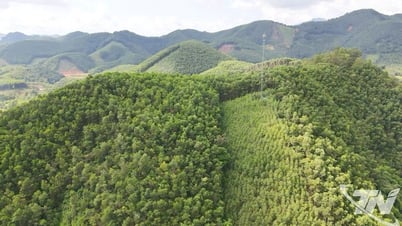
Dak Nong province has great potential for developing its forest economy. The province has over 196,000 hectares of natural forest and 58,300 hectares of planted forest. In recent years, various levels of government, agencies, organizations, and individuals involved in forest management and protection have developed strategies to shape and build forest-based economic models.
Some initial forest economic models have shown suitability and effectiveness. Forms such as concentrated reforestation using acacia, teak, pine, and other species, agroforestry, and planting medicinal plants under the forest canopy... all yield economic value.
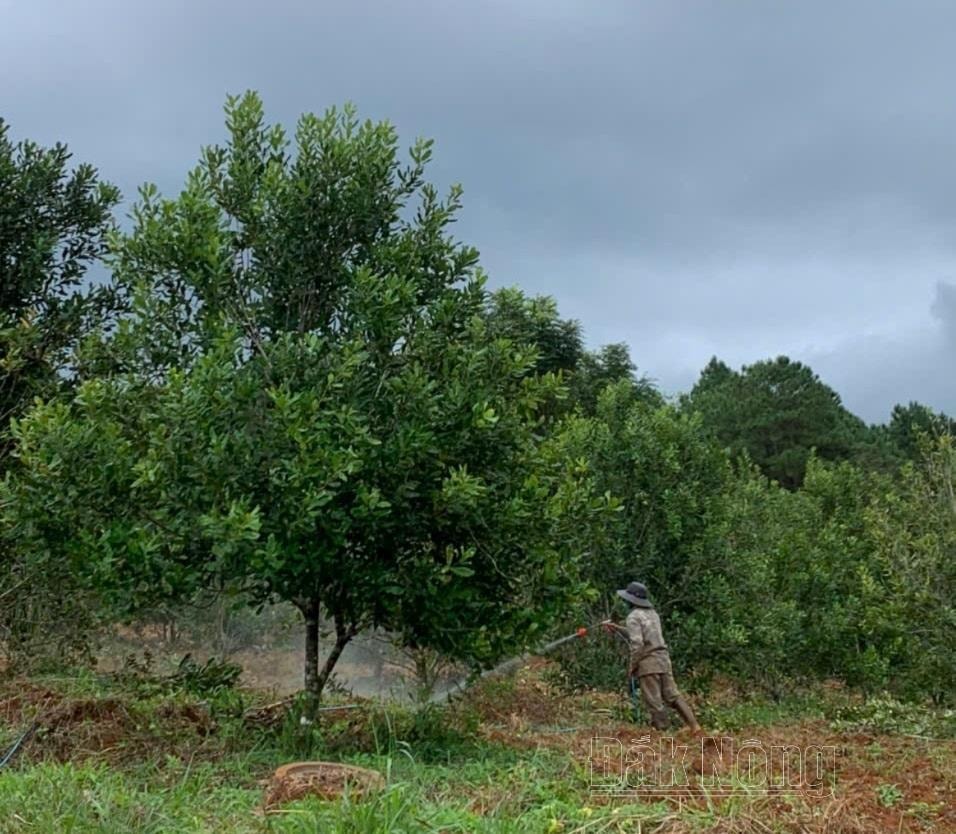
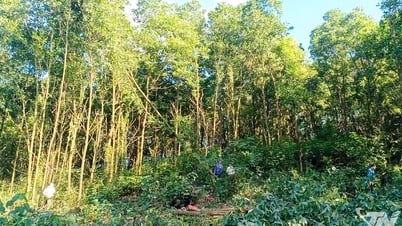
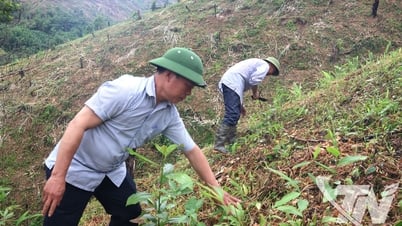
According to Mr. Vo Van Hieu, from Hamlet 7, Dak R'mang Commune, Dak Glong District, his family has been developing their economy for many years by planting 5 hectares of forest with species such as hybrid acacia and longan.
Some trees have already been harvested, while others have been newly planted. He asserts that the economic benefits from forestry are enormous in protecting the environment, ecosystems, water resources, and combating climate change.
Each hectare of acacia forest, after 5 years of planting, yields approximately 80-100 million VND. If the acacia trees are left to mature for 10 years before harvesting, the yield can reach around 200 million VND per hectare. This income level isn't exceptionally high, but it's enough to keep forest lovers like him committed to the work.
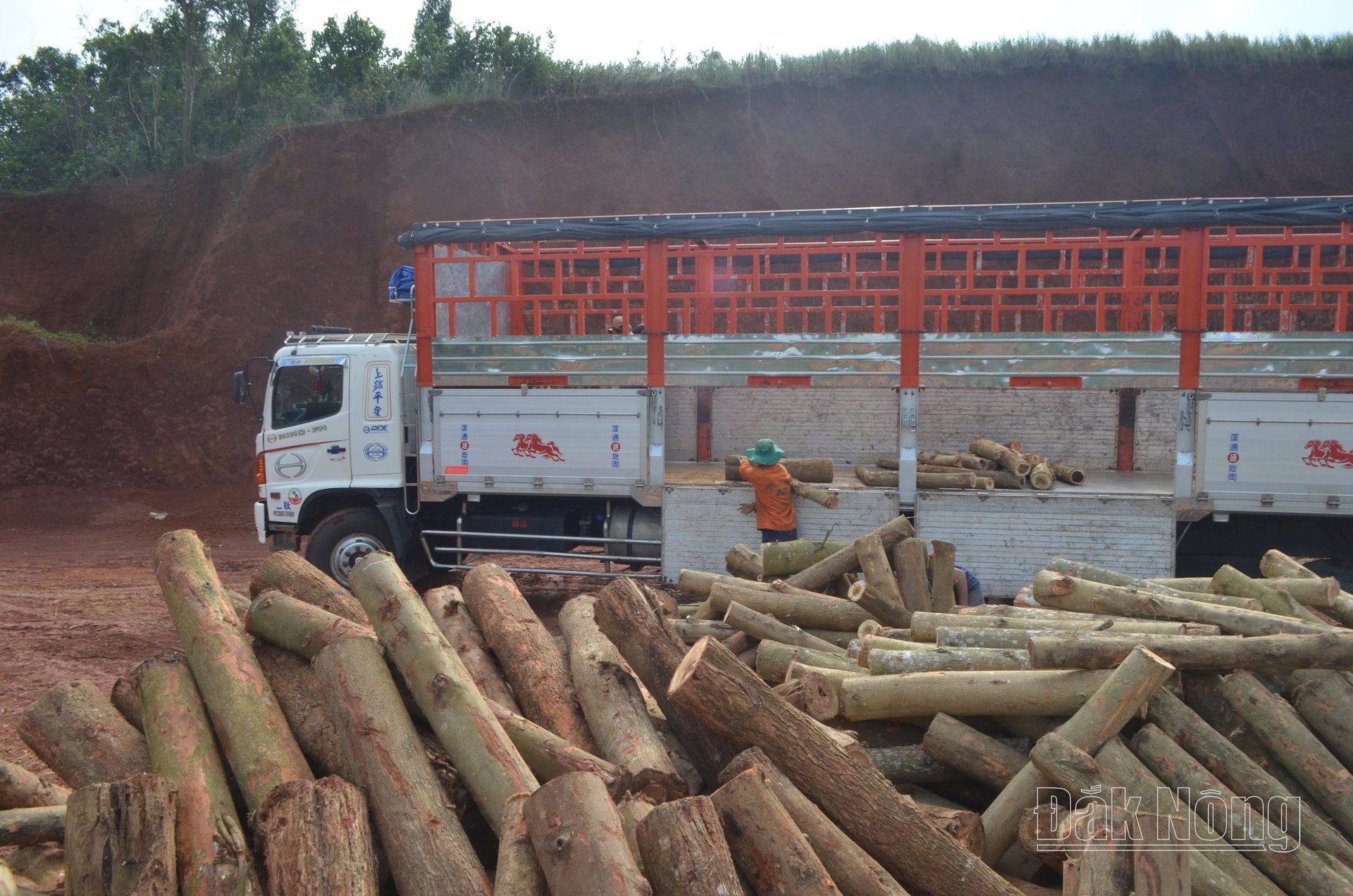
Dak Glong district is one of the leading localities in Dak Nong province in the work of allocating forest land to local people so that they can benefit from the forest.
For example, Ta Dung National Park is currently leasing over 6,000 hectares of forest to more than 200 households of ethnic minorities living near the forest.
The households are mainly concentrated in the two communes of Dak Som and Dak R'mang; and the communes of Phi Lieng and Da K'Nang (Dam Rong district, Lam Dong province).
Mr. Le Quang Dan, Deputy Director of the Department of Agriculture and Rural Development, said: Forestry is one of the key areas of the agriculture and rural development sector in Dak Nong province today. The province is developing forestry, planting and processing medicinal herbs in a sustainable and harmonious manner.
The province has attracted a number of businesses and individuals to invest in areas such as developing plantations for paper production and developing multi-purpose crops. The province encourages the expansion of integrated agricultural and forestry farming through contract farming and investment cooperation.
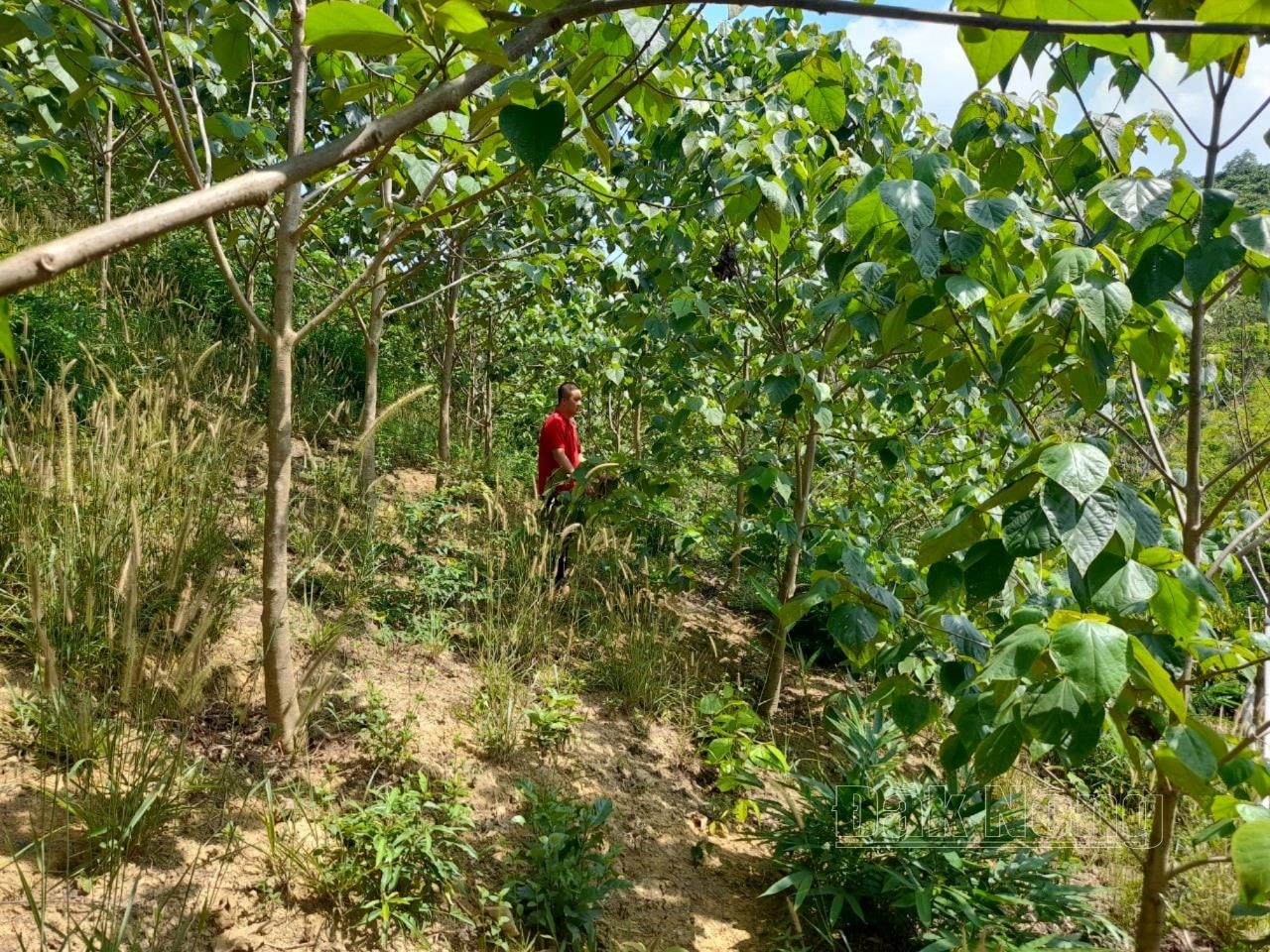
Dak Nong has developed several effective models for forest-based economic development. Specifically, these include planting forests for raw materials and medicinal plants under or near forest canopies in Dak Glong and Krong No districts, and agroforestry models such as intercropping macadamia trees in Tuy Duc district.
Forms of forest economic development are an important basis for the Department of Agriculture and Rural Development to advise competent authorities on directing and organizing the implementation of tasks related to forest management, protection, and development in the province.
Developing the forest economy is how Dak Nong is gradually mobilizing resources from businesses, communities, organizations, individuals, and households to participate.
This activity directly contributes to greening barren hills and mountains, improving the ecological environment, and creating more jobs and income for the people.
Dak Nong continues to effectively implement support policies regarding forest allocation; payment for forest environmental services; and investment capital from businesses and non-governmental organizations. This creates very favorable conditions for the province to improve the effectiveness of forest protection as well as develop the forest economy.
Source: https://baodaknong.vn/dinh-hinh-kinh-te-rung-o-dak-nong-232144.html



















![[Photo] Prime Minister Pham Minh Chinh holds a phone call with the CEO of Russia's Rosatom Corporation.](/_next/image?url=https%3A%2F%2Fvphoto.vietnam.vn%2Fthumb%2F1200x675%2Fvietnam%2Fresource%2FIMAGE%2F2025%2F12%2F11%2F1765464552365_dsc-5295-jpg.webp&w=3840&q=75)












































Comment (0)