

According to the General Statistics Office, in 2023, Vietnam's footwear exports brought in over US$20.2 billion, a decrease of 15.3% compared to 2022. Vietnam ranks second in the world for footwear exports, with estimated exports accounting for 10% of the global total. Vietnamese footwear has been exported to more than 150 markets worldwide, focusing on major markets such as the US, EU, China, Japan, and the UK.
It is projected that footwear exports for the whole year of 2024 will reach approximately 26-27 billion USD. However, according to Mr. Ngo Chung Khanh, Deputy Director of the Multilateral Trade Policy Department, Ministry of Industry and Trade , the advantages and potential offered by Free Trade Agreements (FTAs) are enormous and have not been fully utilized.
- As the unit directly involved in negotiating and monitoring the implementation of FTAs, how do you assess the utilization of FTAs by Vietnamese businesses in general and footwear businesses in particular?
Mr. Ngo Chung Khanh: Besides the positive aspects of export turnover, the footwear industry also has a "bright spot" when exporting to FTA markets, which is the excellent utilization rate of the EURO certificate of origin, reaching nearly 100%.
This shows that Vietnamese businesses are effectively utilizing the FTA. However, that doesn't mean we're perfect; we also need to acknowledge the shortcomings.
There are currently five groups of issues related to the footwear industry:
Firstly, there's the issue of raw materials. Vietnam hasn't fully mastered its raw material sources and still has to import a significant amount. Ensuring that raw materials meet the required quality, rules of origin, and current standards in FTA markets is a major challenge.
I think that's a significant "bottleneck" for the leather and footwear industry, which is why the Vietnam Leather, Footwear and Handbag Association recently proposed establishing a raw material trading center for the entire industry.
Secondly, the footwear industry lacks market information and has unstable orders. In 2023, when the market was difficult, orders for some footwear and textile businesses were very uncertain. Orders have returned this year, but they are still not truly stable.
Thirdly, capital and technology. For some FDI businesses, capital is not an issue, but for Vietnamese businesses, it is a crucial one. Regarding technology, I think this is also an area where Vietnamese businesses are lacking.
Fourth, update the policy.
Finally, there's the issue of branding. Objectively speaking, in the development strategy of the footwear industry, we have high expectations for building regionally significant brands, but doing so is not simple, because currently, we are still mostly engaged in contract manufacturing.
|
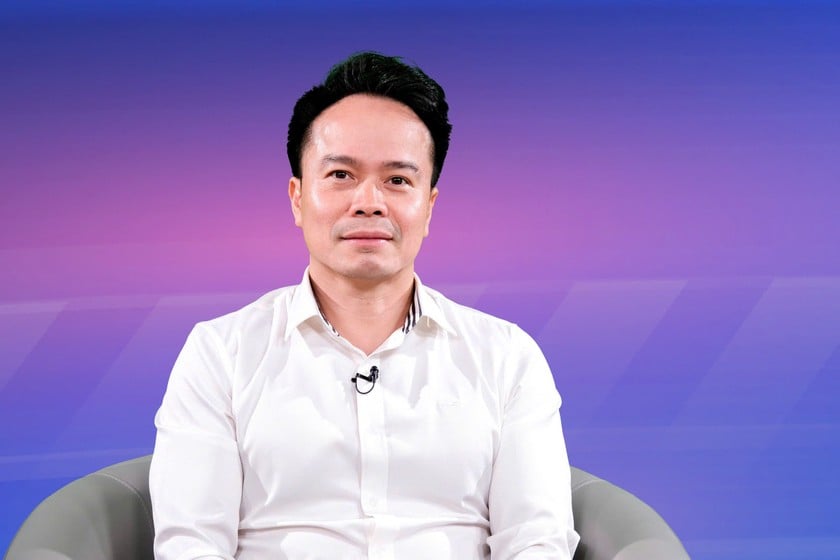 Mr. Ngo Chung Khanh, Deputy Director of the Multilateral Trade Policy Department, Ministry of Industry and Trade.
- The government has assigned the Ministry of Industry and Trade to coordinate with other ministries, sectors, localities, and associations to develop an ecosystem for leveraging FTAs. Could you elaborate on this ecosystem and the benefits of participating in its development and operation for footwear businesses?
Mr. Ngo Chung Khanh : The five groups of problems in the footwear industry that I just mentioned are realities that exist, compiled from the opinions of businesses and participating entities. With these five groups of problems, we realize that it's impossible for one or two entities to solve them alone. For example, the issue related to capital cannot be completely resolved by businesses; support from credit institutions is necessary.
Regarding policy-related issues, even businesses in the value chain cannot handle them because they involve regulatory agencies; implementation is at the local level, while regulations are issued by the central government. Therefore, addressing all five groups of issues requires the joint efforts of all relevant stakeholders, from the input stage to the raw material suppliers, ensuring standards are met and that raw materials are traceable.
Then there's the issue of raw material handling, processing, and related parties, including importers, distributors in foreign markets, logistics, credit institutions, and regulatory agencies... Our thinking is to bring everything into one ecosystem. And to make that ecosystem effective, we need to research and build a model that combines central and local regulatory agencies and businesses, which currently doesn't exist.
Developing a model that complies with legal regulations and is practical is also something we are currently considering. We have proposed this model and are gathering feedback.
Regarding the benefits of this model for the footwear industry, I think the first is that it will address existing problems. For example, businesses are lacking raw materials but don't know where to buy them or who the suppliers are. If they want to buy, they have to go to market A or market B to negotiate, and often they don't know the price or quality... However, if businesses know that there is a company within the ecosystem that provides a complete supply of raw materials, they can import with peace of mind. That's the benefit of solving the raw material supply problem, resolving a crucial "bottleneck."
- The model of an ecosystem leveraging FTAs for the footwear industry, if successfully implemented, could clearly help improve the efficiency of FTA utilization for Vietnamese businesses. However, building such a successful ecosystem is not easy. Could you please tell us what the main challenges are in building this ecosystem?
Mr. Ngo Chung Khanh: In reality, we assessed that it was a very difficult task, not simple at all, and there were three main challenges.
Firstly, for this ecosystem to function, the organizational structure must include an executive board operating like an independent company, with a board of directors and various departments. This executive board will be the "soul" of the operation, helping to bring initiatives and connections among stakeholders to life.
To have an executive board, we need personnel, an office, a headquarters, and financial resources to operate. We expect to generate revenue from membership fees in the future, but in the initial phase, it will be free so that everyone can see the benefits.
During that free period, where will we find the funding to operate? Government budgets are very difficult to obtain, as there's no established mechanism. Therefore, we need to mobilize social resources or international funding; we hope to succeed.
Secondly, for the ecosystem to function, the stakeholders must work together and comply with regulations and laws. There must be principles, "rules of the game," and anyone who violates these rules will be eliminated. But ensuring that all stakeholders comply with the regulations is also a challenge.
Thirdly, how can we encourage and mobilize businesses and other entities to participate voluntarily and effectively? To encourage participation, we must first show them the benefits of joining the model.
- Could you please outline the Ministry of Industry and Trade's specific implementation plan to address these challenges and ensure the effective deployment of this ecosystem in the near future?
Mr. Ngo Chung Khanh: We have developed a model and are currently gathering feedback from provinces, cities, associations, businesses, and farmers. This process will continue until the end of 2024, after which we will compile all feedback into a draft to be sent to relevant ministries, departments, provinces/cities, and associations.
After compiling the information, we will submit it to the Government around February 2024, and we will continue to hold meetings with experts to gather further feedback. We expect this ecosystem to be operational by September 2025.
When we shared this goal, some associations and localities considered it an ambitious target, but we are putting pressure on ourselves.
Regarding the challenges, we envision them as I just described. First, we need to identify the challenges, and after identifying them, we need to find ways to address them. For example, regarding financial issues, we are discussing with funding organizations and embassies, and the results are quite positive, because they also recognize that this ecosystem is not only meaningful for Vietnam but also for them, helping them to have effective two-way connections.
In addition, we need to gradually draft operating rules and regulations that are easy to understand and practical so that everyone can understand and comply with them.
Furthermore, we have clearly defined the benefits for each participating entity. From central and local government agencies to financial institutions, logistics companies, associations, and businesses, everyone benefits from participating in this ecosystem. The benefit is that everyday problems will be solved quickly and efficiently.
Thank you, sir!
Source: https://baophapluat.vn/doanh-nghiep-da-giay-chua-tan-dung-het-loi-the-va-du-dia-cac-hiep-dinh-fta-mang-lai-post528220.html



























































Comment (0)