

Europe's circular economy plan, with its high demands on environmental and social responsibility, is considered a major challenge for the textile and garment industry.
New challenges arise from green standards.
Europe is an important export market for Vietnam's textile and garment industry. Since the Vietnam-EU Free Trade Agreement came into effect, Vietnam's textile and garment exports to this market have grown well. Specifically for Hung Yen Garment Corporation, garment export turnover increased from 5% to 10%. Although the absolute value increase from $20 million to $40 million is not large, this figure shows the potential for Hung Yen Garment Corporation to increase its export turnover to Europe.
Data from the Vietnam Textile and Garment Association also shows that, after a very difficult 2023, this year, Vietnam's textile and garment exports to Europe recovered, reaching a turnover of approximately 4.3 billion USD, an increase of 7.66% compared to 2023.
Exports are thriving, partly due to domestic businesses gradually meeting rules of origin and being proactive and flexible in sourcing raw materials. However, domestic textile and garment businesses are now facing new challenges from the European Green Deal in general, or the European Circular Economy Plan (CEAP) in particular.
CEAP is part of the European Green Deal aimed at addressing pressing global challenges such as climate change, biodiversity loss, waste, and pollution. With CEAP, Europe aims to end the technology and fashion business model with its short-lifecycle products and the 'waste-generating' economy in Europe.
This plan clearly outlines the need to approach the circular economy through four stages of the product lifecycle: production, with particular attention to design; consumption; waste management; and transforming waste back into resources.
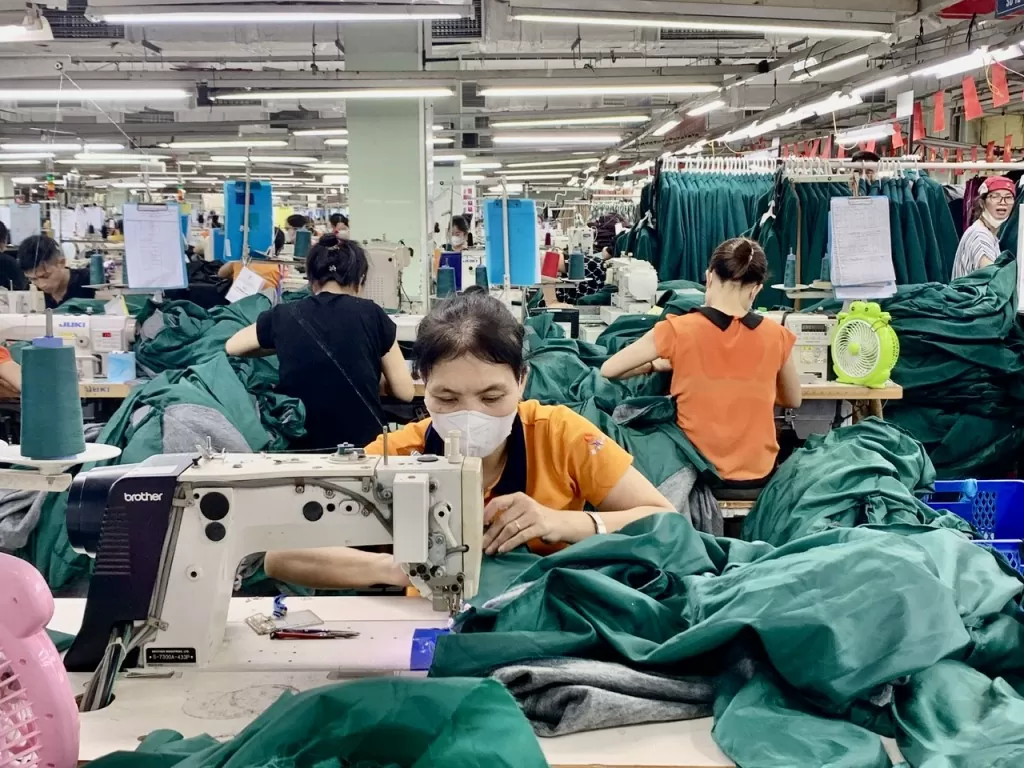 |
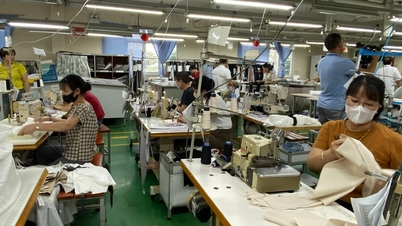
| Hung Yen Garment Corporation is actively pursuing green transformation in production. Photo: Hung Yen Newspaper. |
According to experts, to meet these regulations, businesses will have to invest in modern technology, change production processes and management procedures; increased investment costs may also lead to higher product prices, affecting competitiveness.
Proactive response is needed, but support is still required.
While acknowledging that CEAP presents challenges, Mr. Nguyen Xuan Duong, Chairman of the Board of Directors of Hung Yen Garment Corporation, also recognizes it as an opportunity for Hung Yen Garment in particular and textile and garment businesses in general.
First, in terms of the market, Europe is actively implementing regulations and standards related to green factors and environmental protection. Failure to meet these requirements will prevent goods from entering the market, forcing businesses to adapt.
At May Hung Yen, to meet regulations, the company is converting all coal-fired boilers to electric boilers. " Although electricity costs increase, labor costs decrease ," Mr. Duong said.
In addition, the company is also installing a rooftop solar power system. Besides being able to proactively secure a power source for production, especially during peak summer periods when rolling power outages may occur, the company also generates revenue from renting out the rooftop space.
Similar to May Hung Yen, May 10 is also undergoing a rapid and strong energy transition by switching from coal-fired boilers to pellet burning to reduce carbon emissions; and collaborating with a French investor to install rooftop solar power systems to ensure electricity supply, promote green production, and reduce greenhouse gas emissions.
In addition, May 10 is investing heavily in green building and factory assessment standards – the US LEED standard. The consulting and certification costs for this are quite substantial.
It is evident that textile and garment businesses have been quite proactive in meeting CEAP and other European green regulations. However, only large enterprises with strong financial capabilities have made investments, while small and medium-sized enterprises (SMEs) still face challenges. Furthermore, CEAP in particular, and the European Green Agreement in general, have a very broad scope and are highly technical; understanding them correctly is difficult, let alone implementing them.
It is understood that, in order to support textile and garment businesses in particular, and businesses exporting goods to the EU market in general, first and foremost to correctly understand and comply with CEAP as well as other green regulations, the Ministry of Industry and Trade has conducted dialogues with European authorities to obtain specific analyses of green standards; and reviewed standards within the scope of commitments in the Vietnam-EU Free Trade Agreement to convey to businesses.
In terms of policy, the Ministry of Industry and Trade has also reported to and submitted to the Government for approval the National Action Program on Sustainable Production and Consumption for the period 2021-2030, which includes very specific goals and directions on sustainable production and consumption; and issued a circular stipulating technical regulations for measuring, reporting, assessing greenhouse gas emission reduction and greenhouse gas inventory in the industry and trade sector…
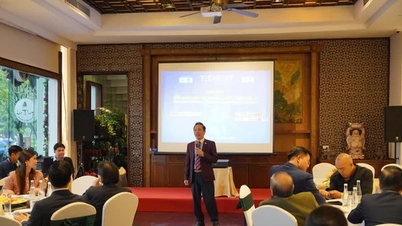
In terms of communication, the Ministry of Industry and Trade also regularly organizes international workshops and forums to guide and answer questions from businesses related to CEAP or the European Green Deal…
While acknowledging the positive support from the Ministry of Industry and Trade in meeting CEAP criteria, Mr. Duong still believes that the cost of investing in green criteria remains a significant burden for businesses. Therefore, he suggested that the Government establish a fund or green financing source to support businesses in their green transformation.
Mr. Duong also proposed reducing the social insurance contribution rate and union fees for workers, because with the current continuous increase in basic wages, the costs for these expenses are very high for businesses, while in reality, the wages received by workers in many textile and garment businesses are higher than the basic wage.
Source: https://congthuong.vn/doanh-nghiep-det-may-chu-dong-dap-ung-ke-hoach-kinh-te-tuan-hoan-362264.html











































































Comment (0)