

Defense diplomacy is an important and inseparable part of the Party's overall foreign affairs, State diplomacy , and people's diplomacy.
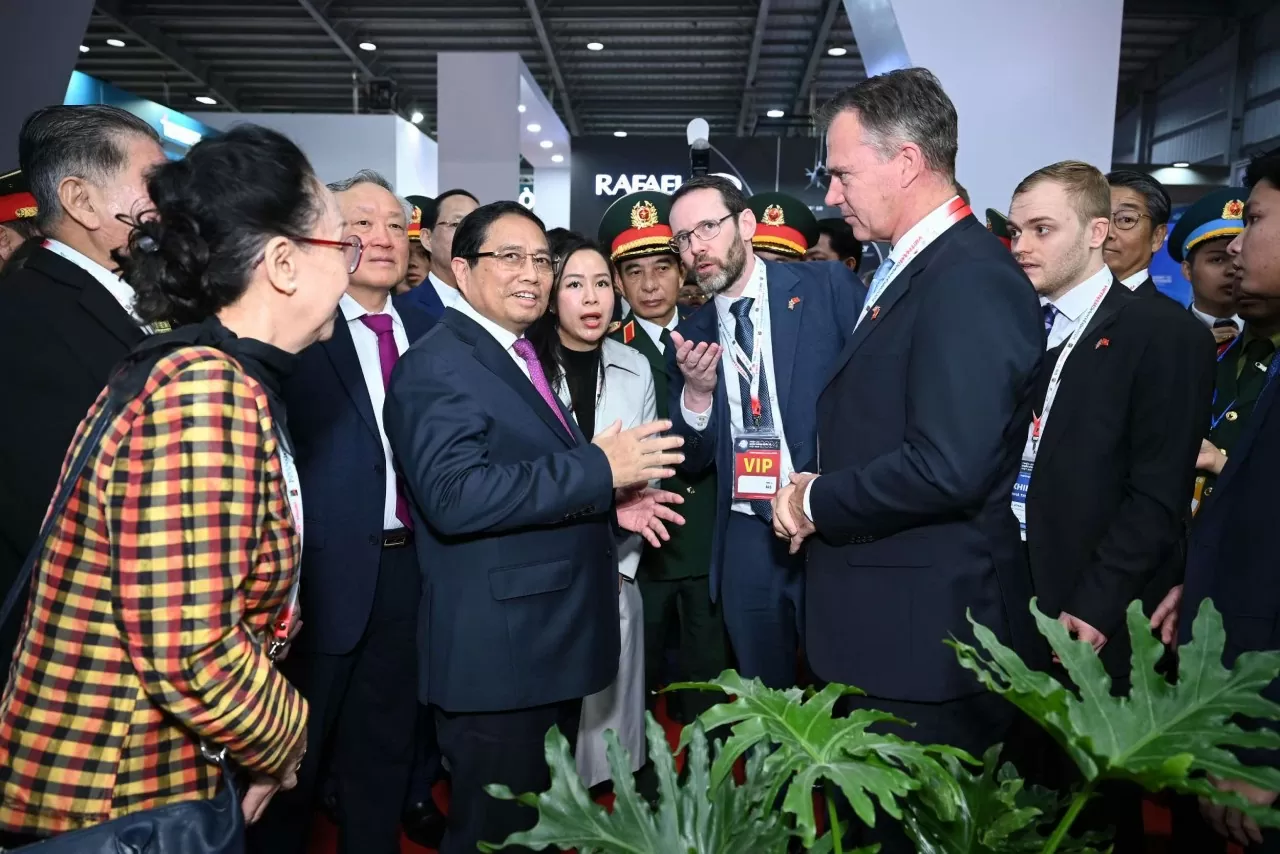 |
| Prime Minister Pham Minh Chinh visits the UK defense industry exhibition space at the International Defence Exhibition 2024. (Source: British Embassy in Vietnam) |
Overcoming difficulties to pave the way.
International integration and defense diplomacy are important parts of the Party's foreign policy; sensitive areas, directly related to independence, sovereignty, territorial integrity, and national defense, with characteristics of both defense and diplomacy. Defense diplomacy is conducted cautiously and firmly, with a lag compared to other areas and depends on political relations.
At the same time, integration and defense diplomacy play a crucial role in strengthening political trust, intertwining interests, balancing relations with other countries, promoting cooperation in other fields, and leveraging external resources. In difficult times, defense diplomacy has proactively and actively played a pioneering role.
On July 4, 1954, the General Staff of the Vietnam People's Army proactively organized the Trung Gia Military Conference – the first diplomatic conference with the French General Staff in Indochina – to discuss and agree on specific measures to implement the Geneva Conference's provisions on ceasefire, troop regrouping and transfer, and prisoner exchange. In July 1991, General Le Duc Anh, Minister of National Defense, was appointed as an envoy of the Politburo to meet with Chinese leaders and discuss the normalization of relations between the two countries.
Despite US opposition to the normalization of relations, Vietnam, in keeping with its humanitarian tradition, searched for and returned 302 sets of remains in the 1980s. Our efforts and goodwill were the starting point, creating the conditions for the two countries to normalize diplomatic relations (July 12, 1995). Cooperation in addressing the consequences of war has become a highlight in Vietnam-US relations.
Defense diplomacy is not solely conducted by the military. Under the leadership of the Party and the management of the State, the Ministry of National Defense serves as the core, specialized force, coordinating closely with other ministries, branches, and localities, and mobilizing the broad participation of the people. Friendly border exchanges with China, Laos, and Cambodia are enthusiastically supported by local Party committees, governments, and people, symbolizing the all-encompassing nature of defense diplomacy.
In practice, there are many similar events. These confirm that defense diplomacy is an important and inseparable part of the overall foreign policy of the Party, the State's diplomacy, and people-to-people diplomacy. Vietnam has defense relations with all countries, international and regional organizations, in many fields, with diverse forms of cooperation at the government, ministerial, sectoral, and local levels.
Practical experience demonstrates that international integration and defense diplomacy are crucial tasks and strategies for safeguarding the nation from early on and from afar through peaceful means; establishing and strengthening trust, maintaining independence and sovereignty, protecting national interests; preserving a peaceful and stable environment for national development; combining national strength with the strength of the times, creating a comprehensive strength, and enhancing the country's international standing and independence.
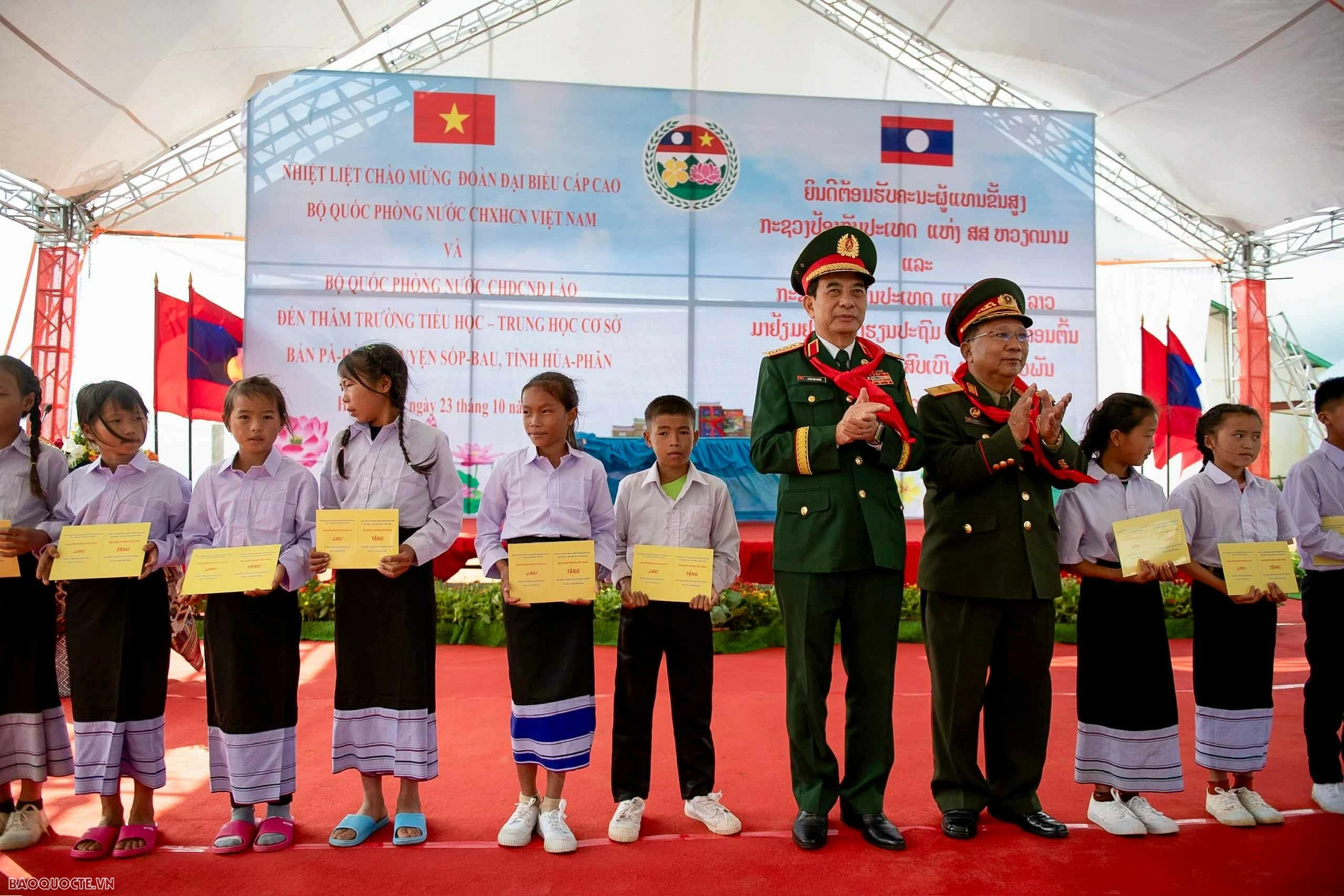 |
| General Phan Van Giang, Minister of National Defense, visited and presented gifts to Pahang Primary and Secondary School within the framework of the second Vietnam-Laos Border Defense Friendship Exchange on October 23. (Photo: Nguyen Hong) |
Inheritance and development
The year 2024 witnessed many significant events, including the 80th anniversary of the founding of the Vietnam People's Army, the 70th anniversary of the Dien Bien Phu victory, and the 35th anniversary of the National Defense Day. Deeply adhering to the Party's guidelines, the viewpoints of the Central Military Commission and the Ministry of National Defense, and building upon traditions, international integration and defense diplomacy were implemented actively, proactively, surely, comprehensively, extensively, innovatively, flexibly, and effectively, both bilaterally and multilaterally.
We have comprehensively carried out activities including: exchange of delegations, cooperation in training, exercises, disaster relief, military trade, defense industry, information sharing, policy dialogue, and defense strategy... We have signed and effectively implemented joint vision statements on defense relations, memoranda of understanding on defense cooperation, protocols, programs, and cooperation plans; proactively proposed new cooperation mechanisms, deepening and making relations more substantive and practical.
Expanding and strengthening defense relations with more than 100 countries and international organizations, especially neighboring countries, comprehensive strategic partners, ASEAN countries, and traditional friends, contributes to balancing relations with major powers and creating an interwoven strategic interest landscape.
Vietnam's defense diplomacy has actively participated in regional and international multilateral defense cooperation mechanisms and forums, with a proactive approach to building common rules of the game; proposing viewpoints and initiatives, and successfully undertaking and chairing many activities within the framework of ASEAN defense and military cooperation mechanisms. Through this, Vietnam affirms its role as a responsible member, making positive contributions to complex regional and international issues, building trust, and helping to protect national interests.
The journey over the years has left many outstanding marks. These include friendly exchanges in border defense, strengthening relations between functional forces and local people, contributing to building a peaceful and friendly border; and maintaining cooperation, control, and handling complex issues at sea.
Over the past 10 years, Vietnam has sent more than 1,000 officers and soldiers, 6 level 2 field hospitals, and 3 engineering teams to participate in the United Nations Peacekeeping Force. Many units and individuals have excellently completed their tasks, becoming role models in the force and in relations with local people. The Vietnam International Defense Exhibitions in 2022 and 2024 are highlights of international significance and stature, affirming the strength, mettle, position, and prestige of the country and army.
Actively research, forecast, and provide strategic advice to the Party and State on appropriate policies, solutions, and effective countermeasures to address complex issues related to national defense and security; on maintaining a balanced stance in response to hotspots, gaining international consensus, and avoiding passivity and surprises. Innovate and diversify forms, and improve the effectiveness of external information and propaganda work, acting as a bridge to help other countries understand Vietnam's national defense policy and military.
International integration and defense diplomacy have inherited and promoted traditions, achieving many results and accomplishments. They truly represent a strategy for defending the country early and from afar through peaceful means, preventing the risk of conflict and war; enhancing the country's and the military's position and prestige; contributing to the goal of building and defending the Fatherland; and making a positive contribution to maintaining peace in the region and the world.
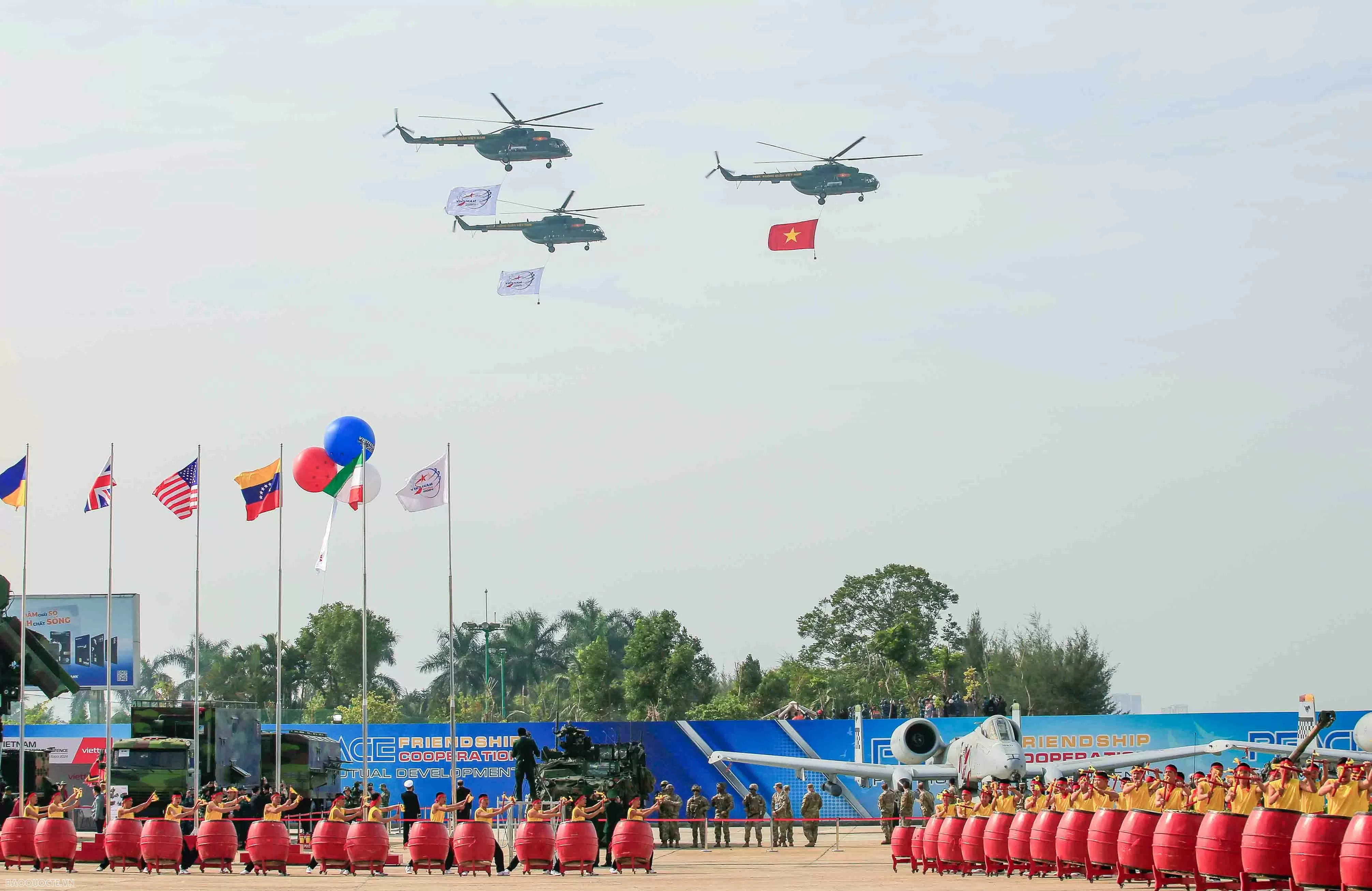 |
| A performance at the opening ceremony of the Vietnam International Defence Exhibition at Gia Lam Airport on the morning of December 19. (Photo: Nguyen Hong) |
Sing the marching song
2025 is the final year of implementing the Resolution of the 13th National Party Congress, a pivotal year for preparing in all aspects for the 14th National Party Congress, paving the way for the nation to enter a new era. Many important tasks must be carried out simultaneously: digital transformation, implementing a revolution in organization, holding party congresses at all levels, and achieving the goals of the Resolution of the 13th National Party Congress. The international situation continues to be complex, with many sudden changes, confrontations, and increasingly intense fragmentation.
The new context places high demands on the pioneering role of foreign affairs, including defense diplomacy. Challenges are numerous, but we possess traditional strengths and the guiding light of the Resolution of the 13th National Party Congress, the Resolution of the Politburo (13th term) on the strategy for national defense in the new situation, and Conclusion No. 53-KL/TW of the Politburo on international integration and defense diplomacy until 2030 and beyond.
Defense diplomacy needs to thoroughly understand the Party's viewpoints and the directives of the Central Military Commission and the Ministry of National Defense, clearly recognizing both opportunities and challenges. Based on this foundation, diplomatic activities should be implemented with strategic thinking and vision, new methods, and by leveraging the power of digital technology; promoting the core, specialized role of officers and professional soldiers who are politically sound, enthusiastic, and highly skilled in their profession, and coordinating closely with other forces.
As the Year of the Snake beckons, and with a pioneering spirit driving it forward, Vietnam's defense diplomacy sings a marching song, joining the journey of the nation and the military towards a bright future.
Source


![[Photo] Closing Ceremony of the 10th Session of the 15th National Assembly](/_next/image?url=https%3A%2F%2Fvphoto.vietnam.vn%2Fthumb%2F1200x675%2Fvietnam%2Fresource%2FIMAGE%2F2025%2F12%2F11%2F1765448959967_image-1437-jpg.webp&w=3840&q=75)







































![[OFFICIAL] MISA GROUP ANNOUNCES ITS PIONEERING BRAND POSITIONING IN BUILDING AGENTIC AI FOR BUSINESSES, HOUSEHOLDS, AND THE GOVERNMENT](https://vphoto.vietnam.vn/thumb/402x226/vietnam/resource/IMAGE/2025/12/11/1765444754256_agentic-ai_postfb-scaled.png)








































Comment (0)