

 |
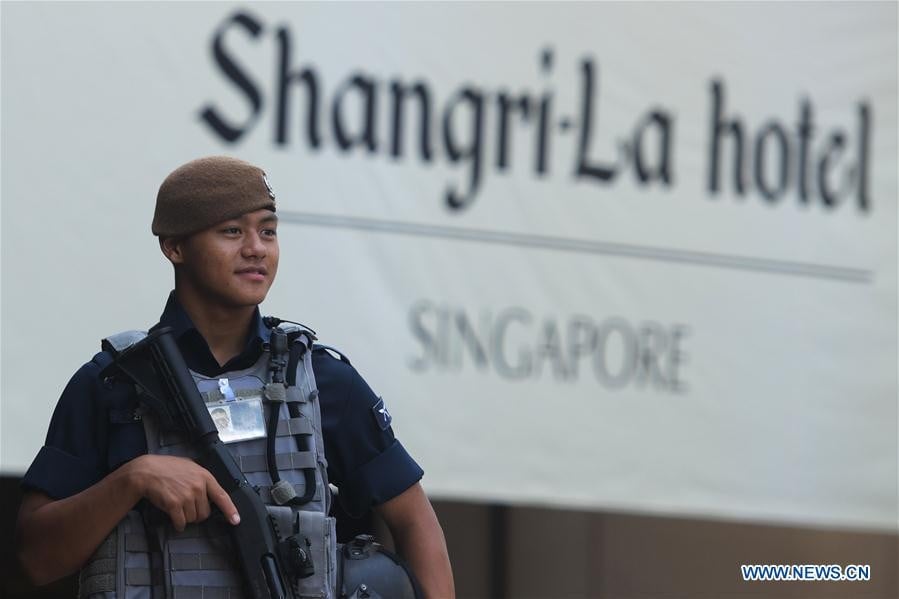
| The Shangri-La Dialogue concluded with many important insights and declarations, but some issues remain for which new approaches have yet to be found. |
The Shangri-La Dialogue is the leading security forum in the Asia- Pacific region; a place for exchange and debate on pressing security challenges, differences, and hopes of finding new approaches. The Ukraine crisis, the US-China conflict, the potential threat in the Taiwan Strait, the South China Sea, the Korean Peninsula, the trend of increasing military capabilities, and global non-traditional security challenges overshadowed the 20th conference in 2023, heavily emphasized in the seven general discussion topics and individual meetings.
The absence of Russia, the failure of the US and Chinese defense leaders to meet, and the presence of the European Union (EU) delegation were notable events. These were the reasons that attracted more than 550 delegates from nearly 50 countries in and outside the region to attend the conference.
What did government leaders, defense ministers, and experts say in the seven plenary sessions, six parallel discussion sessions, and numerous bilateral meetings? What did they expect from the conference? How will the region shift?... These are questions that countries, politicians, and experts are interested in and will continue to ponder after the conference. These issues can be partly found in the messages of the 2023 Shangri-La Dialogue.
Firstly , it is crucial to promote cooperation in the Indo-Pacific region and build a stable and balanced Asia-Pacific. The 2023 Shangri-La Dialogue affirmed the region's geostrategic role and position while also highlighting numerous potential security tensions and challenges. These include maritime security order, the presence of major powers, the development of various security structures, and trilateral, quadrilateral, and multilateral security cooperation agreements such as the US-Japan-India, Japan-India-Australia, the Quad, the US-UK-Australia Security Partnership (AUKUS), and the coast guard cooperation mechanism among the five ASEAN countries (Indonesia, Malaysia, Philippines, Brunei, and Vietnam)...
Tensions and fatigue stemming from the crisis in Ukraine; the confrontation between Russia and the West; the risk of nuclear conflict; the arms race; the Covid-19 pandemic; climate change; and economic recession... the region does not want another geopolitical conflict in its space for cooperation and development. This was evident in the speeches of Australian Prime Minister Anthony Albanese, the keynote speaker; US Secretary of Defense Lloyd J. Austin; Chinese Minister of Defense Li Shangfu; and many other delegates.
Shared aspirations are the driving force behind regional cooperation and dialogue, but they are also divided and hampered by differences in strategic goals, core interests, and the perceptions and actions of some countries, especially major powers.
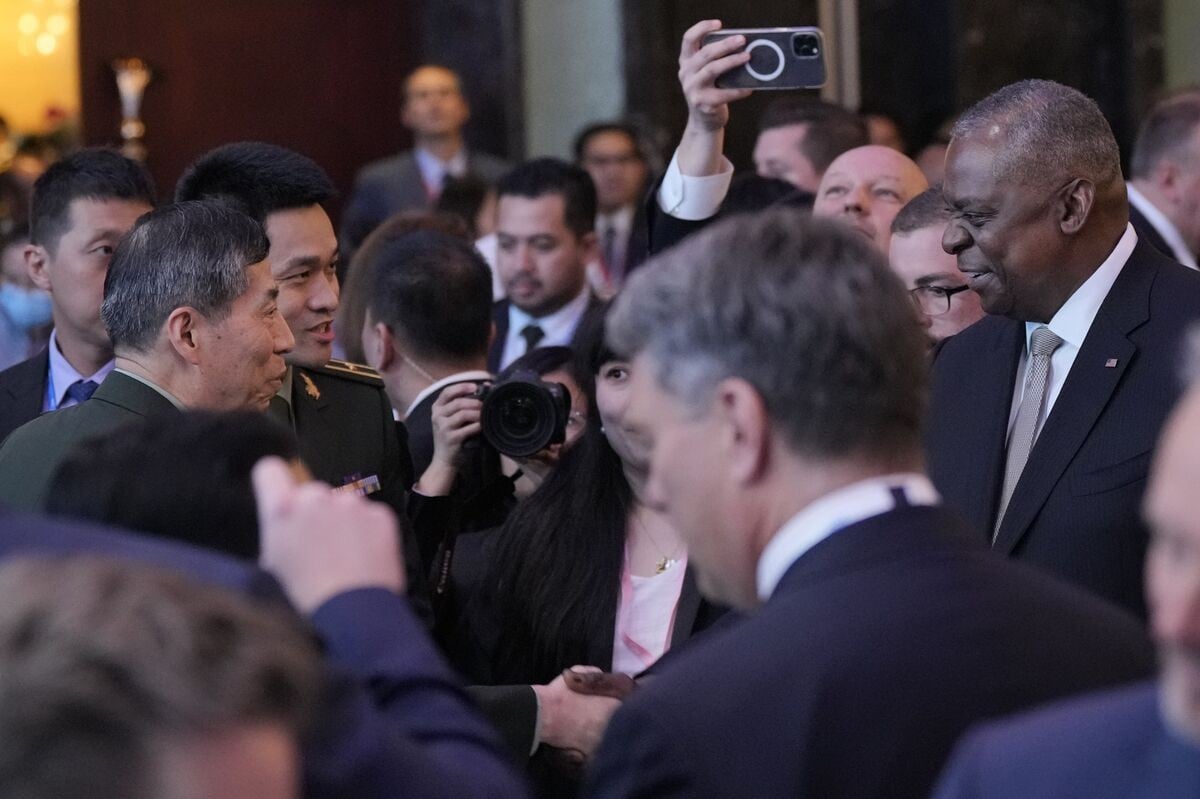 |
| US Defense Secretary Lloyd Austin and Chinese Defense Minister Li Shangfu at the 20th Shangri-La Dialogue in Singapore. (Source: Bloomberg) |
Secondly , the US and China are both in conflict and need each other, but have yet to find a way to de-escalate tensions. The strained US-China relationship was a major theme dominating the conference. Expressing viewpoints, asserting roles, criticizing rivals, and seeking support from other nations were the main contents of the speeches by the US and Chinese representatives.
Defense Secretary Lloyd J. Austin emphasized America's leadership role in the Indo-Pacific; expressed deep concern over China's unwillingness to seriously engage in better crisis management mechanisms between the two militaries; and its unnecessary aggressive actions...
In his speech on China's new security initiative, Defense Minister Li Shangfu did not name names, but it was clear enough to accuse the United States of intensifying the arms race, establishing "NATO-style" military alliances in the Asia-Pacific, deliberately interfering in the internal affairs of other countries, and pushing the region into a "cycle of conflict." He emphasized that the US has not properly recognized China's concerns and bears full responsibility for the deterioration of bilateral relations.
The Taiwan issue is a key indicator of current US-China relations. Just before the Shangri-La Dialogue, the US and Taiwan (China) signed the “US-Taiwan Initiative on 21st Century Trade.” According to Taiwan, this is not only a historic economic and trade initiative but also has multifaceted symbolic significance, marking a new beginning. China strongly opposes this, viewing US support for Taiwan to strengthen its self-defense capabilities as “acts of terrorism.”
Nevertheless, countries also saw a glimmer of hope in the speeches. Minister Li Shangfu stated that China and the United States have different systems and many different aspects. However, this should not prevent the two sides from finding common ground and shared interests to develop bilateral relations and deepen cooperation.
Lloyd J. Austin also stated that competition should never escalate into conflict and that the US is not aiming for a new Cold War. They understand that a serious conflict or confrontation between the US and China would be an unbearable catastrophe for the world. The US is also weary of its confrontation with Russia, and is at a disadvantage fighting two major adversaries simultaneously.
Singapore, the host country, intentionally arranged for the US and Chinese representatives to sit opposite each other at the same table; they also delivered opening remarks at key sessions on June 3rd and 4th. Other delegates paid close attention to the views of the two superpowers. However, the clear differences in perspective and the lack of trust in the statements and actions of both the US and China did not demonstrate the ability or means to de-escalate tensions.
Many countries hope that the US and China will engage in dialogue to resolve conflicts and tensions. Some countries are also concerned if the two superpowers compromise in a way that divides spheres of influence, without giving due consideration to the common interests and aspirations of the community. However, according to many experts and politicians, this is unlikely to happen.
Thirdly, the question is how to promote cooperation and maintain lasting peace and stability in the region. Peace, stability, cooperation, and development are the common goals and aspirations of all nations. A highlight of the 2023 Shangri-La Dialogue was the high level of consensus among delegates on the "key" to unlocking and achieving the aforementioned goals.
These principles include upholding international law; efforts to strengthen communication and dialogue, and consolidate strategic trust; a balance between cooperation and competition; building risk management mechanisms; and maintaining stable and balanced relationships based on international rules and norms. They also emphasize the responsibility of countries within and outside the region, especially the United States and China. British Defence Minister Ben Wallace stressed that the rules apply to all, and all nations are equal, whether the smallest or the largest. His views were echoed by the delegates.
The primary and greatest responsibility lies with the United States and China. However, nations, especially developing and emerging countries, have an increasingly important role to play in our "common home," particularly in the context of escalating US-China tensions.
In reality, sub-regional cooperation mechanisms among developing and emerging countries in terms of economics, politics, culture, security, and diplomacy, for the benefit of both the region and its common interests, are increasingly playing a significant role and demonstrating their effectiveness. The ASEAN community is a prime example of this trend. New Zealand Defence Minister Andrew Little assessed the long-standing relationship between smaller nations as "what helps balance things." This was also the view of many other delegates.
Fourth , the main obstacle and the unanswered question remain. Countries have forums to express their views, make proposals, contribute, raise concerns, and debate and critique the positions of other countries. China and the US both acknowledge that the more exchanges there are, the more misunderstandings and miscalculations that could lead to crises or conflicts can be avoided.
However, differences remain in the perception of core interests, common interests, and individual interests. Some major countries claim to support peace, cooperation, and development, but want that environment and trends to fall under their influence, be controlled by them, and ultimately benefit them.
Countries claim to uphold international law and the UN Charter, yet they interpret and justify their strategies and policies, applying them to serve national goals without considering the legitimate interests of other nations.
The biggest obstacle is the inconsistency between declarations and actions, especially among major powers. Other countries are aware of this problem and do not want to be forced to choose sides. But how to overcome this greatest obstacle is difficult and remains an open question.
***
Within the framework of the Shangri-La Dialogue, the Vietnamese delegation, led by Lieutenant General Hoang Xuan Chien, Vice Minister of National Defence, fully participated in all plenary sessions and numerous bilateral meetings. Through this, Vietnam continued to affirm its active, proactive, and highly responsible role in international and regional issues; demonstrating its goodwill and desire to promote friendly relations, cooperation, and the sharing of experiences with partners in addressing common challenges.
The 2023 Shangri-La Dialogue concluded with many important insights and declarations, but some issues still lack new approaches. The world and the region continue to evolve. Many other forums, conferences, and activities will continue to take place, aiming to find solutions to unresolved and emerging problems. Each event is a milestone on humanity's journey of development.
Source






































































Comment (0)