

The Mekong Delta is innovating and improving the quality of agricultural cooperative economic development.
On the morning of August 1, 2024, in Can Tho, the Department of Cooperative Economics ( Ministry of Planning and Investment ), in collaboration with the Sustainable Food Systems Ireland Agency in Vietnam (SFSI) and the Irish Embassy, organized an international workshop on “Developing Cooperative Economics in Agriculture through Innovation and Quality Improvement”.
 |
| Mr. Vu Manh Hung - Deputy Director of the Department of Cooperative Economics, Ministry of Planning and Investment, delivered a speech at the Workshop. |
In his opening remarks, Mr. Vu Manh Hung, Deputy Director of the Department of Cooperative Economics (Ministry of Planning and Investment), emphasized that the workshop is part of the Ireland-Vietnam Food and Agriculture Partnership, sponsored by the Irish Embassy in Vietnam, aiming to realize the Memorandum of Understanding signed in June 2024 between the Irish Department of Agriculture, Food and Maritime Affairs (DAFM) and the Ministry of Planning and Investment on strengthening cooperation in the areas of enterprise development, cooperatives, and innovation in agricultural and food products between the two countries.
The workshop aims to develop capacity within agricultural cooperatives to enhance their governance, marketing, innovation, and quality management capabilities. The workshop provides an opportunity for knowledge exchange on the development of agricultural and food cooperatives and the sharing of experiences between Ireland and Vietnam to develop green, safe, climate-resilient, carbon-reducing, and high-value-added agriculture.
Ms. Ha Lan Anh, Global Director of the Irish Sustainable Food Systems Agency (SFSI) in Vietnam, stated that the cooperative movement in Ireland has a proud history, beginning in the 1880s, before Ireland gained independence. Over the decades, cooperatives have played an invaluable role in Ireland's socio-economic development and prosperity.
Like Vietnam, Ireland recognizes this important heritage and also sees the need to provide a legal framework and innovation ecosystem to help the agricultural cooperative sector develop further. The experience and achievements of cooperative economics developed over the past hundreds of years, along with the insightful sharing from SFSI experts in this workshop, will make a significant contribution to guiding the development of cooperative economics in agriculture in Vietnam, especially in the Mekong Delta provinces, a key agricultural region where nearly 70% of cooperatives operate in the agricultural sector.
 |
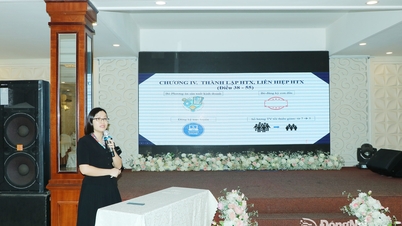
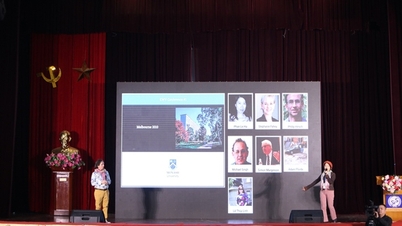
| Experts from SFSI shared their experience in developing cooperative economic activities with leaders, relevant agencies, and cooperative managers in the Mekong Delta region. |
According to the Department of Cooperative Economics, 2024 continues to be a landmark year in the development of cooperative relations between the Ministry of Planning and Investment and the Irish Ministry of Agriculture, Food and Maritime Affairs through the signing of a Memorandum of Cooperation on the development of agricultural cooperatives and enterprises in June 2024; and several workshops on sustainable development of the agricultural cooperative economic sector associated with green, safe production and adaptation to climate change.
Resolution 20-NQ/TW of the 13th Central Committee of the Communist Party of Vietnam, dated June 16, 2022, continues to affirm that the collective economy is an important economic component, and together with the state economy, is increasingly becoming a solid foundation of the national economy; developing the collective economy is an inevitable objective trend and a task for the entire political system.
At its 5th session, the 15th National Assembly passed the 2023 Cooperative Law with many outstanding new points, creating a favorable legal framework to promote the development of the collective economic sector and cooperatives in Vietnam; the Law has concretized 8 groups of support policies for cooperatives, including support policies specifically for agricultural cooperatives in the coming time…
Currently, Vietnam has approximately 22,000 agricultural cooperatives out of a total of 34,000 active cooperatives, accounting for 65% of the total number of cooperatives, with about 3.8 million members and households participating, playing an important role in agriculture and rural areas. However, the quality of operations is still not high; most agricultural cooperatives only provide a few services to members; there is a lack of close links with members and businesses; the application of science, technology, and engineering is limited; production scale is small and fragmented; and supply chains have not yet been established.
Furthermore, agricultural cooperatives face numerous challenges such as the impact of climate change, increasingly stringent market demands for product quality, and a tense and complex global situation. This requires cooperatives to take strong steps, focusing on two core elements: innovation and quality improvement. Innovation in agriculture is not limited to the application of advanced technologies, but also includes innovation in management thinking, production methods, and business practices. State agencies, domestic and international organizations, and cooperatives need to prioritize research, innovation, creativity, and the application of science and technology in practice. In particular, emphasis should be placed on building sustainable value chains, from production to consumption, ensuring harmonious benefits for all stakeholders.
"In particular, improving the quality of agricultural products is also a key and urgent factor. Cooperatives need to promote the application of international quality standards, improve production processes and strictly control quality, enhance food safety and traceability, and build brands for Vietnamese agricultural products that are competitive in the market and can be exported to the world," emphasized Vu Manh Hung, Deputy Director of the Department of Cooperative Economics.
Source: https://baodautu.vn/dong-bang-song-cuu-long-doi-moi-nang-chat-luong-phat-trien-kinh-te-hop-tac-nong-nghiep-d221367.html



















![[Photo] Prime Minister Pham Minh Chinh holds a phone call with the CEO of Russia's Rosatom Corporation.](/_next/image?url=https%3A%2F%2Fvphoto.vietnam.vn%2Fthumb%2F1200x675%2Fvietnam%2Fresource%2FIMAGE%2F2025%2F12%2F11%2F1765464552365_dsc-5295-jpg.webp&w=3840&q=75)












































Comment (0)