

 |
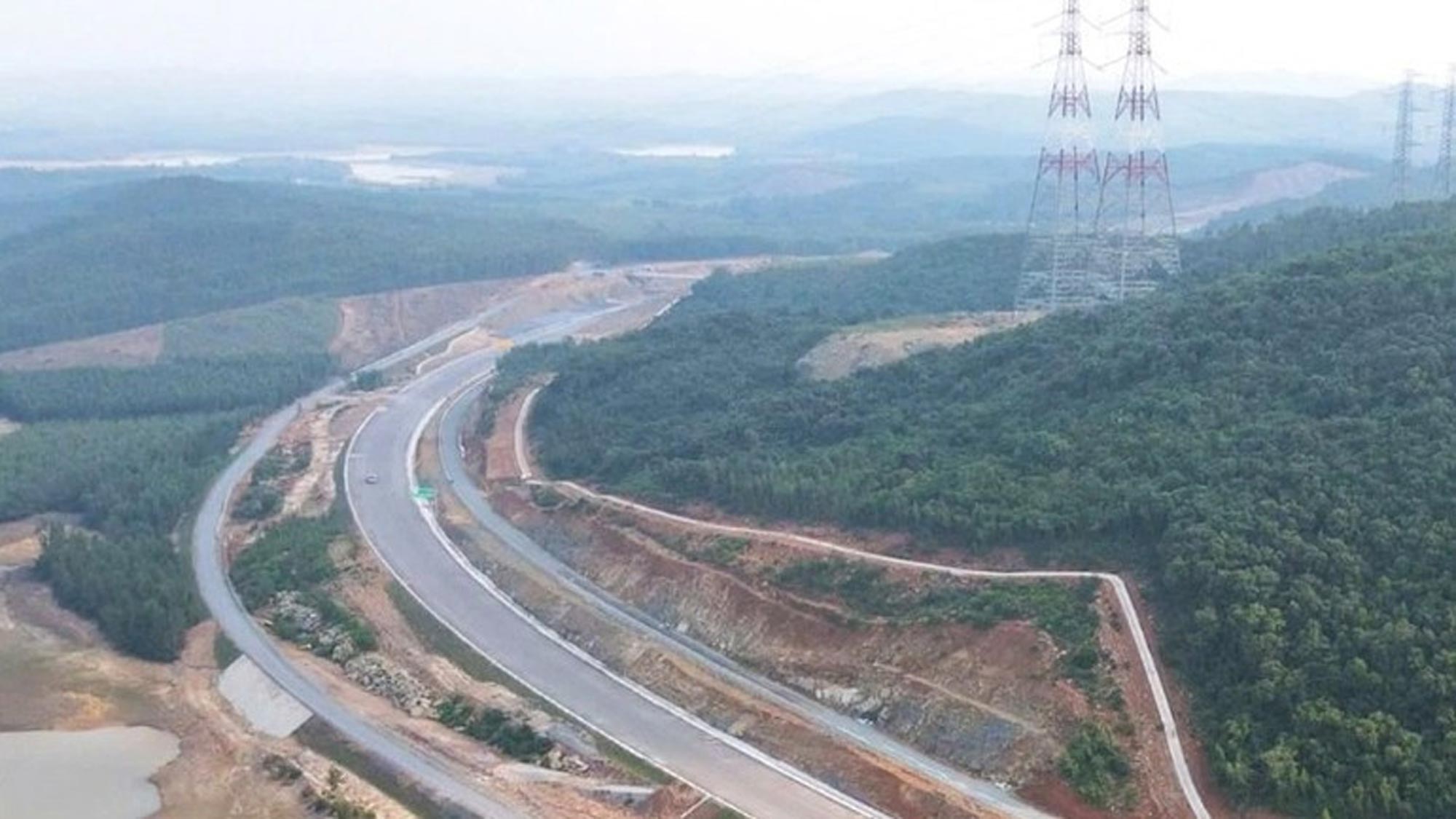
| A section of the north-south expressway passing through Quang Binh province has just been completed. |
The draft documents submitted to the 14th National Congress of the Party identify one of the three strategic breakthroughs as continuing to comprehensively improve and make strong breakthroughs in the construction of socio -economic infrastructure, including multimodal transport infrastructure. This is an urgent requirement of practice, aiming to remove bottlenecks and create conditions for rapid breakthroughs in socio-economic development.
Pillars of sustainable growth
Throughout the country's development process, the task of developing infrastructure, especially transportation infrastructure, has always been identified by the Party, the State, and the people as the "lifeblood" of the economy, a bridge opening up new development opportunities. This overarching idea has been consistently affirmed in Party Congress documents, resolutions, and conclusions of the Politburo , and has been elevated to one of the three strategic breakthroughs in the 10-year socio-economic development strategy (2011-2020) and the 2021-2030 strategy.
The Party Committee and the Standing Committee of the Party Committee of the Ministry of Construction have focused on comprehensive leadership and direction with a decisive, creative, and innovative mindset, concretizing this in the strategy, specialized transportation planning, and the medium-term public investment plan for the periods 2021-2025 and 2026-2030, with the determination to successfully implement the Party and State's policies and strategies in developing transportation infrastructure, and to promptly complete strategic, modern, and safe transportation projects.
Looking back at the past development journey, amidst many favorable conditions but also numerous intertwined difficulties and challenges, under the decisive leadership and guidance of the Central Committee, the National Assembly, the Government, and the Party Committee of the Government, headed by General Secretary To Lam, the construction industry has upheld its fine traditions, demonstrated a spirit of unity, determination to innovate, and dynamism in fulfilling its political tasks, and continued to affirm its pivotal role in the socio-economic development of the country.
The scale, speed, and efficiency of investment have all been significantly improved, reflecting a strong shift in thinking about developing transportation infrastructure towards a strategic, synchronized, and sustainable direction. Many large-scale transportation infrastructure projects, strategically significant for regional development and inter-regional connectivity, have been completed 6 to 9 months ahead of schedule, demonstrating high determination and responsibility to the Party and Government in the development of infrastructure.
Notable achievements include: completing the target of 3,000km of expressways by the end of 2025; establishing two international gateway ports capable of receiving the world's largest container ships, namely Lach Huyen and Cai Mep; commencing and completing phase 1 of Long Thanh International Airport; promptly supplementing and adjusting airport planning to attract investment, especially Gia Binh International Airport, which is scheduled for investment in 2025; and approving investment in nationally important railway projects, etc.
Furthermore, the development of transportation infrastructure still faces limitations that need to be addressed promptly, such as the risk of delays in some key projects and institutional obstacles in the transition to green transportation. The main reasons stem from inadequate investment preparation and coordination among ministries, sectors, and localities, as well as numerous procedural hurdles. The mobilized resources have not met the needs, making it difficult to attract non-budgetary capital, relying primarily on the state budget, and lacking sufficient synchronization across different modes of transport. This is a significant obstacle to achieving the goals and tasks of developing a modern and integrated transportation infrastructure by 2030.
"Leading the way" in the new era
As the country enters a new era with the aspiration for double-digit growth and the process of international economic integration, Vietnam participates in a series of bilateral and multilateral trade agreements, opening up new development opportunities while simultaneously creating an urgent need for a strategic orientation for the development of appropriate, modern, and synchronized transportation infrastructure.
Based on the policies and directions of the Party, the National Assembly, and the Government, and on the basis of the projected medium-term public investment capital allocation, the Party Committee of the Ministry of Construction has identified the key tasks for the 2026-2030 period as: Developing a synchronous, modern, and smart infrastructure system; concentrating central resources on strategic infrastructure and key projects; researching the formation of an Infrastructure Development Fund; and establishing a basic national infrastructure framework.
In addition, investment will be made in the eastern North-South expressway, several sections of the western North-South expressway, and important East-West highways. Priority will be given to developing gateway seaports combined with international transshipment; major airports; high-speed rail lines along the North-South axis, and international connecting railway lines, etc.
International practice and experience show that the development of transportation infrastructure truly creates breakthroughs when it is meticulously prepared, decisively implemented, and with the synchronized coordination of the political system. Therefore, to ensure the completion of the set tasks, contributing to the implementation of the three strategic breakthroughs affirmed in the draft documents submitted to the 14th Party Congress, promoting socio-economic development and restructuring the economy, requires the synchronized and decisive involvement of the Ministry of Construction along with other ministries, sectors, and localities in implementing a number of key tasks and solutions in the coming period.
Firstly, continue to innovate in the work of drafting and implementing laws, meeting the requirements of national development in the new era in accordance with the spirit of Resolution No. 66-NQ/TW of the Politburo. Lead and direct the full, correct, and timely institutionalization of the Party's guidelines and policies; review and build a system of legal documents ensuring progress and quality, aiming to create breakthrough mechanisms and policies to mobilize and effectively utilize domestic and foreign resources, including resources from the private sector; minimize and simplify unreasonable administrative procedures and investment and business conditions, creating favorable conditions for people and businesses; proactively advise and propose further strong decentralization and delegation of power to localities in the management and exploitation of infrastructure.
Secondly, continue to refine national sectoral plans and specialized technical plans as a basis for managing and directing investment and development, ensuring overall efficiency and harmony among sectors. Prioritize resource allocation for key infrastructure projects, focusing on projects with spillover effects such as expressways, transit airports, high-speed railways, smart city infrastructure, and urban underground space development; flexibly combine public investment, loans, and resources from land development.
Prioritize resources for green building projects, low-emission transportation, recycled materials, and energy efficiency; leverage opportunities from international initiatives and free trade agreements to attract investment in high technology and green technology to serve infrastructure development and urbanization according to the green economy model and sustainable development.
Thirdly, propose mechanisms and policies to attract social investment, remove bottlenecks to improve the efficiency of public resource utilization and mobilize private capital in accordance with the spirit of Resolution No. 68-NQ/TW of the Politburo. Propose mechanisms and policies to attract social investment, remove bottlenecks to improve the efficiency of public resource utilization and mobilize private capital,...
Fourth, breakthroughs in science and technology development, innovation, and national digital transformation in accordance with Resolution No. 57-NQ/TW of the Politburo. Developing high-skilled human resources, focusing on human resources in the fields of high-speed rail and urban rail; human resources applying digital technology, green technology, etc. Promoting the development of smart cities and smart transportation. Developing transportation vehicles based on low-emission models and using green energy.
Fifth, promote international integration in the new context in accordance with the spirit of Resolution No. 59-NQ/TW of the Politburo. Research and propose participation in regional transportation infrastructure projects, contributing to building a synchronous and efficient transportation network.
With the strong attention and guidance of the Party and State, the close coordination of ministries, sectors, and localities, and the strong consensus and support of the people, the construction industry is determined to uphold the tradition of "pioneering and leading the way," successfully fulfilling the important responsibility of developing a synchronous, modern, and smart transportation infrastructure system, contributing to restructuring the economy, enhancing national competitiveness, successfully implementing the three strategic breakthroughs, and making Vietnam a developing country with modern industry and high middle income by 2030.
TRAN HONG MINH
Member of the Central Committee of the Party, Minister of Construction
Source: nhandan.vn
Source: https://baodongnai.com.vn/kinh-te/202510/dot-pha-phat-trien-ha-tang-giao-thong-dong-bo-hien-dai-1d2045d/































































Comment (0)