

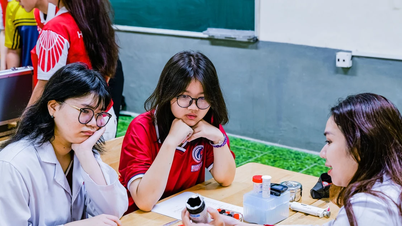
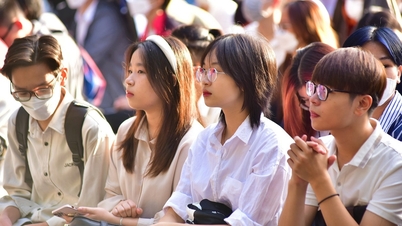
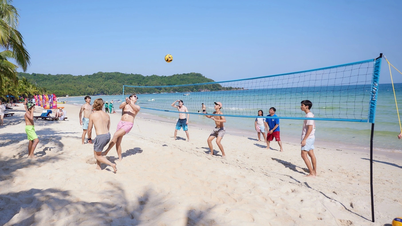
According to Associate Professor Tran Thanh Nam (Faculty of Education , Vietnam National University, Hanoi), field trips offer completely new experiences, helping to enhance students' understanding and life skills. These include teamwork, communication, problem-solving, improved thinking abilities, and becoming more active learners.
Children are exposed to different environments. From there, they are stimulated to be creative and understand the world through topics ranging from animals to plants, from historical knowledge to natural science .
"Living in a world with a lot of stressful study pressure, field trips are an opportunity for students to relieve stress, balance their mental health and create many memorable memories to make the connection between students and teachers stronger. It is the relationship established from a young age that can help students grow up more firmly," said Mr. Nam.

Associate Professor, Dr. Tran Thanh Nam.
Picnics in new lands always make children step out of their comfort zone to face risks, overcome fears such as having to sit on a cable car because of a fear of heights. This is also a great opportunity for teachers to help children bravely face and train their will, determination, and resilience.
For example, instead of taking a cable car, encourage children to walk. When encountering a stream, we must guide them on how to observe the water flow, find shallow water, a safe current, and a non-slippery foothold to cross. Such practical experiences will foster courage and calmness in the face of challenging situations in life.
However, Associate Professor Dr. Tran Thanh Nam also warned that organizing field trips always poses safety risks, especially for young students without parents accompanying them to supervise.
Not only are there problems with accidents and injuries at tourist attractions, but there are also many other risks such as: traffic accidents on the road, property theft, arguments and fights due to misunderstandings or other health emergencies.
Here are some safety principles to remember for every camping trip.
Firstly, choose educational locations and activities that are appropriate for the age group of the students. Not only should schools select safe and suitable locations for field trips, but they also need to research the terrain, climate, infrastructure, transportation, and weather beforehand to prepare appropriate equipment and resources.
Secondly, create a detailed plan for the field trip, including the itinerary, locations, potential scenarios and levels of danger, and risk management procedures. Next, assess and select an experienced field trip organizer with the skills to control and resolve emergencies, and assign experienced teachers to supervise the trip.
Thirdly, ensure that each student carries safety equipment such as clothing, safety harnesses, goggles, flashlights, etc.
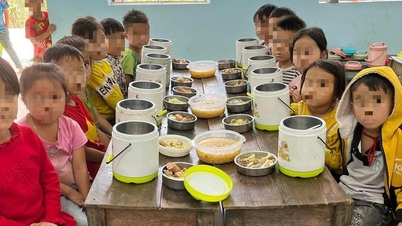
Fourth, ensure safe food and water sources. Prepare enough and ensure the origin of food to help students have enough energy and health to complete the trip.
Fifth, identifying signs and contact information need to be instilled in every student. They must be regularly reminded of discipline, procedures for handling situations when encountering or witnessing friends in risky situations, remembering contact phone numbers and methods, and skills for seeking appropriate help.
" For older students, we must agree on the principle of regular communication to ensure each student is safe and is immediately updated on emergency situations so that the person in charge and organizing the field trip can act promptly. Teachers should also maintain information updates to parents throughout the student's trip," said Mr. Nam.
Master Nguyen Diep Ha (school psychology consultant at Hoan Kiem Secondary School, Hanoi) said that prohibiting children from going on picnics will take away their opportunity to be exposed to the natural environment and bond with friends and teachers.
Children can become withdrawn, isolated from the group and have low self-esteem. What parents should do is create conditions to help their children equip themselves with life skills, survival skills (swimming, fire fighting, what to do when lost, etc.) before starting the picnic.
THI THI
Useful
Emotion
Creative
Unique
Source


![[Photo] Explore the US Navy's USS Robert Smalls warship](/_next/image?url=https%3A%2F%2Fvphoto.vietnam.vn%2Fthumb%2F1200x675%2Fvietnam%2Fresource%2FIMAGE%2F2025%2F12%2F10%2F1765341533272_11212121-8303-jpg.webp&w=3840&q=75)













































































Comment (0)