

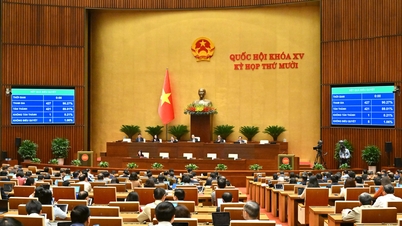
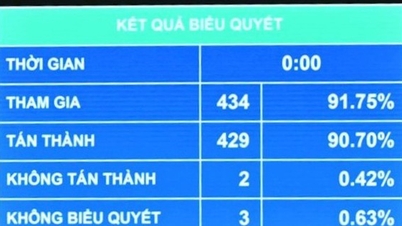
Continuing the 10th Session, on the morning of December 10, with 433/440 delegates participating in the vote, the National Assembly passed the Law on Thrift and Anti-Waste.

10th Session, 15th National Assembly.
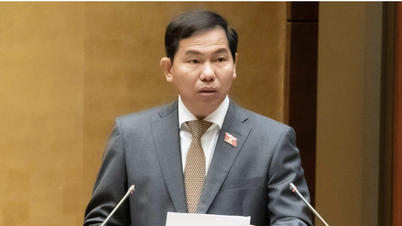
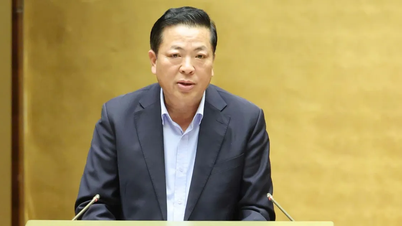
Presenting a report on receiving, explaining, revising and perfecting the draft Law before the "pressing the button", Minister of Finance Nguyen Van Thang said that the Government will study and absorb maximum opinions and revise and perfect the draft Law.
To encourage nationwide savings and combat wastefulness, the law designates May 31st each year as "National Savings and Waste-Combating Day". The government states that this day is based on the date of the article "What is Saving?" published in the newspaper Cuu Quoc (May 31, 1949), aiming to spread President Ho Chi Minh 's ideas on saving and combating wastefulness, contributing to building a culture of saving throughout society.
" The overarching viewpoint of the draft Law is that practicing thrift and combating waste is a regular, continuous task and must become 'conscious,' 'voluntary,' 'as essential as daily food, water, and clothing.' The annual launch of the 'National Day for Thrift and Combating Waste' aims to promote and spread the nationwide movement to raise awareness of thrift and combat waste ," Mr. Nguyen Van Thang stated.
Regarding the scope and subjects, during the review of the draft Law, the Economic and Financial Committee noted that regulating the production, business, and consumption activities of individuals and households within the scope of the Law may not be consistent with the Constitution's right to freedom of business and property ownership. Therefore, it is proposed that further review be conducted to ensure constitutionality and that its mandatory application be limited to agencies, organizations, and individuals using public resources.
Regarding this matter, the Government stated that the regulation of production, business, and consumption activities of individuals and families within the scope of the Law is a continuation of the provisions in the current Law on Practicing Thrift and Combating Waste. Furthermore, the above regulation as drafted in the law reflects an encouraging nature (there are no mandatory provisions), and does not affect the people's freedom of business and consumption.
" The overarching viewpoint of the draft Law is to only stipulate mandatory regulations for organizations and individuals in the state and private sectors directly managing and using public resources (including public assets, public finances, natural resources, etc.), while regulations on saving and preventing waste in production, business activities, and people's consumption are of an encouraging and persuasive nature, not interfering with or managing the production, business, and consumption activities of the people, " the Government's explanatory report affirms.
Regarding the protection mechanism for anti-waste fighters, the Economic and Financial Committee proposed to review and ensure consistency and non-duplication, and at the same time suggested considering and supplementing regulations on the rights and obligations of anti-waste fighters similar to those stipulated in the Law on Denunciation.
In response to this opinion from the examining agency, the Government reviewed and revised the content of the draft Law to ensure consistency and uniformity with the Law on Denunciation, the Law on Citizen Reception, the Criminal Procedure Code and relevant laws.
The draft law submitted to the National Assembly for approval this morning was also revised to provide more specific regulations on protecting those fighting against waste.
This includes: Rights and responsibilities of those fighting against waste; Scope of protection, competent authorities to apply protective measures, procedures and measures to protect those fighting against waste; Cases in which those fighting against waste are not protected or where protection is terminated; Prohibited acts in protecting those fighting against waste.
According to the Government, currently, the Criminal Procedure Code and the Law on Denunciation have specific provisions on protecting those who fight against waste in the forms of denunciation and accusation.
Accordingly, Clause 3, Article 8 of the draft Law stipulates that the protection of people fighting against waste (scope of protection, competent authorities applying protection measures, order, procedures and protection measures) is implemented according to the corresponding legal provisions for each type of subject.
Specifically: For those reporting wasteful behavior, the procedures are governed by the law on reporting; for those reporting crimes involving wasteful behavior, the procedures are governed by the law on criminal procedure; and for those reporting wasteful behavior, the same protections as those for whistleblowers are applied.
Source: https://vtcnews.vn/quoc-hoi-chon-ngay-31-5-la-ngay-toan-dan-tiet-kiem-chong-lang-phi-ar992086.html
![[Photo] The captivating scenery of the fragrant maple forest in Quang Tri](/_next/image?url=https%3A%2F%2Fvphoto.vietnam.vn%2Fthumb%2F1200x675%2Fvietnam%2Fresource%2FIMAGE%2F2025%2F12%2F10%2F1765353233198_lan09046-jpg.webp&w=3840&q=75)


![[Photo] Explore the US Navy's USS Robert Smalls warship](/_next/image?url=https%3A%2F%2Fvphoto.vietnam.vn%2Fthumb%2F1200x675%2Fvietnam%2Fresource%2FIMAGE%2F2025%2F12%2F10%2F1765341533272_11212121-8303-jpg.webp&w=3840&q=75)





























![[Video] The craft of making Dong Ho folk paintings has been inscribed by UNESCO on the List of Crafts in Need of Urgent Safeguarding.](https://vphoto.vietnam.vn/thumb/402x226/vietnam/resource/IMAGE/2025/12/10/1765350246533_tranh-dong-ho-734-jpg.webp)





























































Comment (0)