

Many rock sugar factories in Quang Ngai are ablaze with fire, bustling with activity to serve the traditional Lunar New Year. This is a centuries-old craft in Nghia Dong commune, once a tribute to the imperial court.
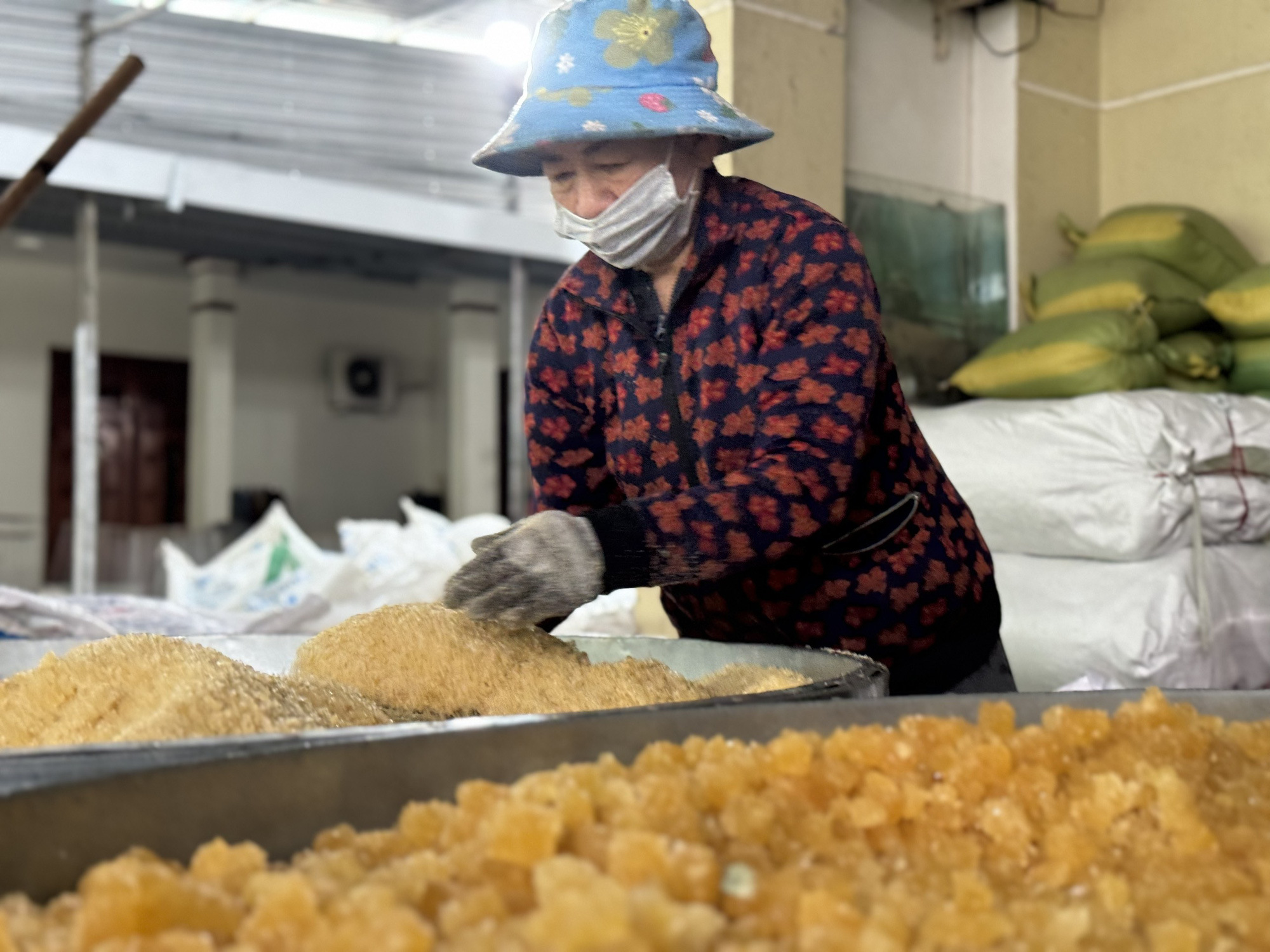
Finished rock sugar - Photo: TM
In the last days of the year, Quang Ngai experienced a lot of rain.
Nevertheless, the rock sugar kilns continue to burn brightly. With Tet (Lunar New Year) approaching, the demand for rock sugar is high, and the artisans and workers are busy tending to the bubbling pots of sugar syrup.
As Tet approaches, I remember the days of rock sugar from the past.
Quang Ngai has always been a sugarcane-producing region. Long ago, along both banks of the Tra Khuc River, there were vast fields of sugarcane. The craft of making rock sugar originated from that time.
Historical records show that rock sugar from Quang Ngai was a tribute to the imperial court. The finest batches of sugar were transported to the capital city of Hue by both land and sea routes.
As Tet approaches, age-old stories evoke nostalgic memories. In the old days, the area where rock sugar was made in Nghia Dong was called Ba La Van Tuong. The rock sugar produced was transported by horse-drawn carts to the Thu Xa trading port (Nghia Hoa commune, Tu Nghia district).
From here, rock sugar was transported to many places. Thu Xa Port is also associated with the name "sugar and cinnamon trading port".
This proves the quality and the enormous quantity of rock sugar shipped from this trading port.
Dr. Nguyen Dang Vu (former director of the Department of Culture, Sports and Tourism of Quang Ngai province) has conducted research for many years and found that the rock sugar village is located about 9km from Thu Xa trading port (Nghia Hoa commune, Tu Nghia district).
The port was once bustling with boats and ships carrying specialties from Quang Nam province such as cinnamon, agarwood, and rock sugar to the imperial capital of Hue as tribute.
Commercial products were loaded onto ships, and the Minh Huong people set sail for the world . "Historical records clearly state that Thu Xa was the largest sugarcane trading port in Vietnam. It is closely associated with Nghia Dong, the capital of rock sugar production today," Mr. Vu said.
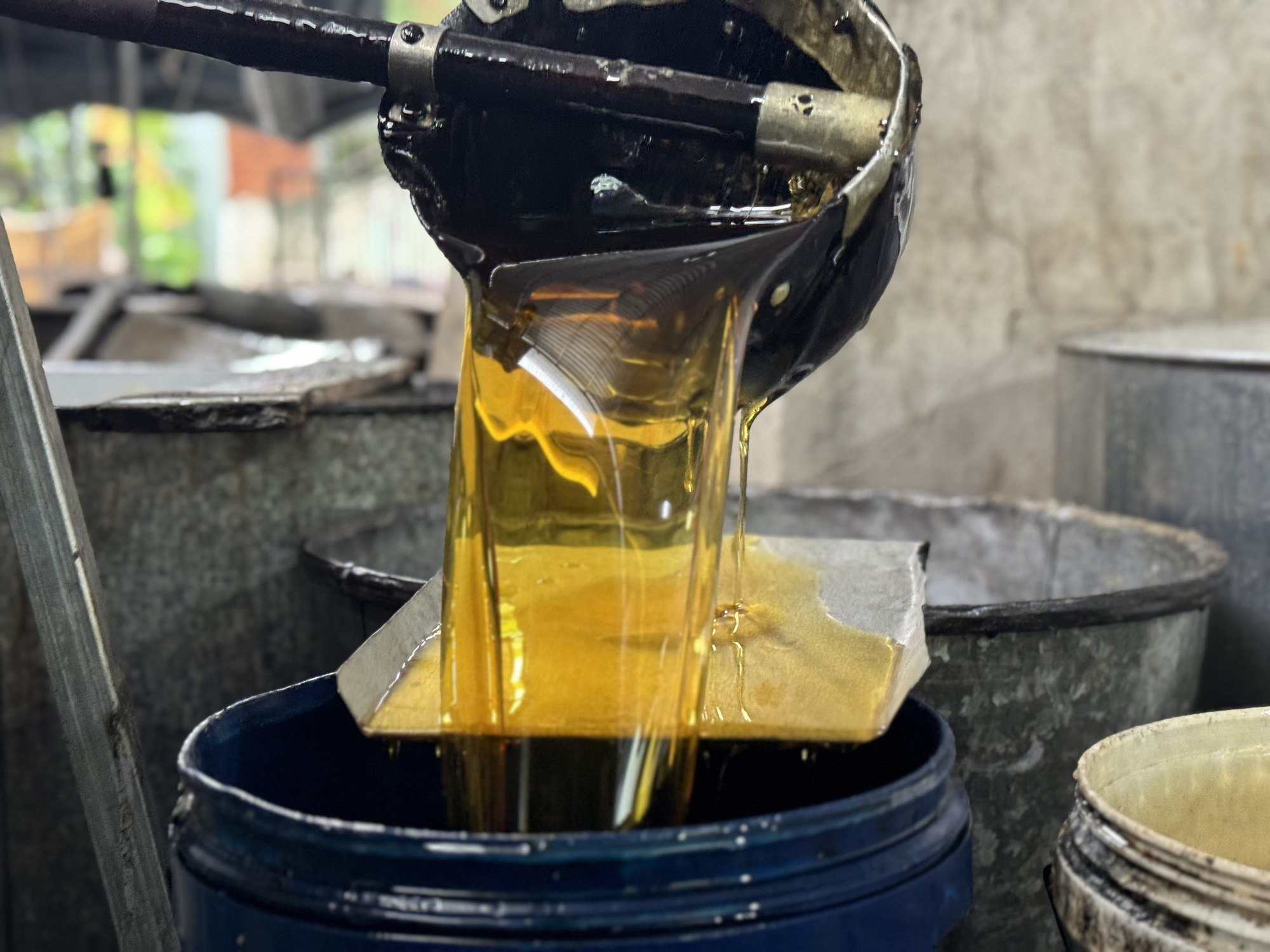
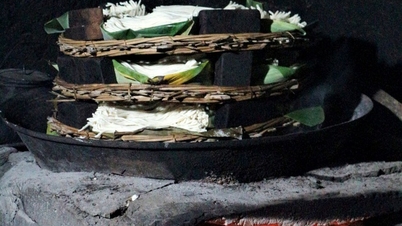
The sugar syrup is cooked until tender, a step in the process of making rock sugar - Photo: TM
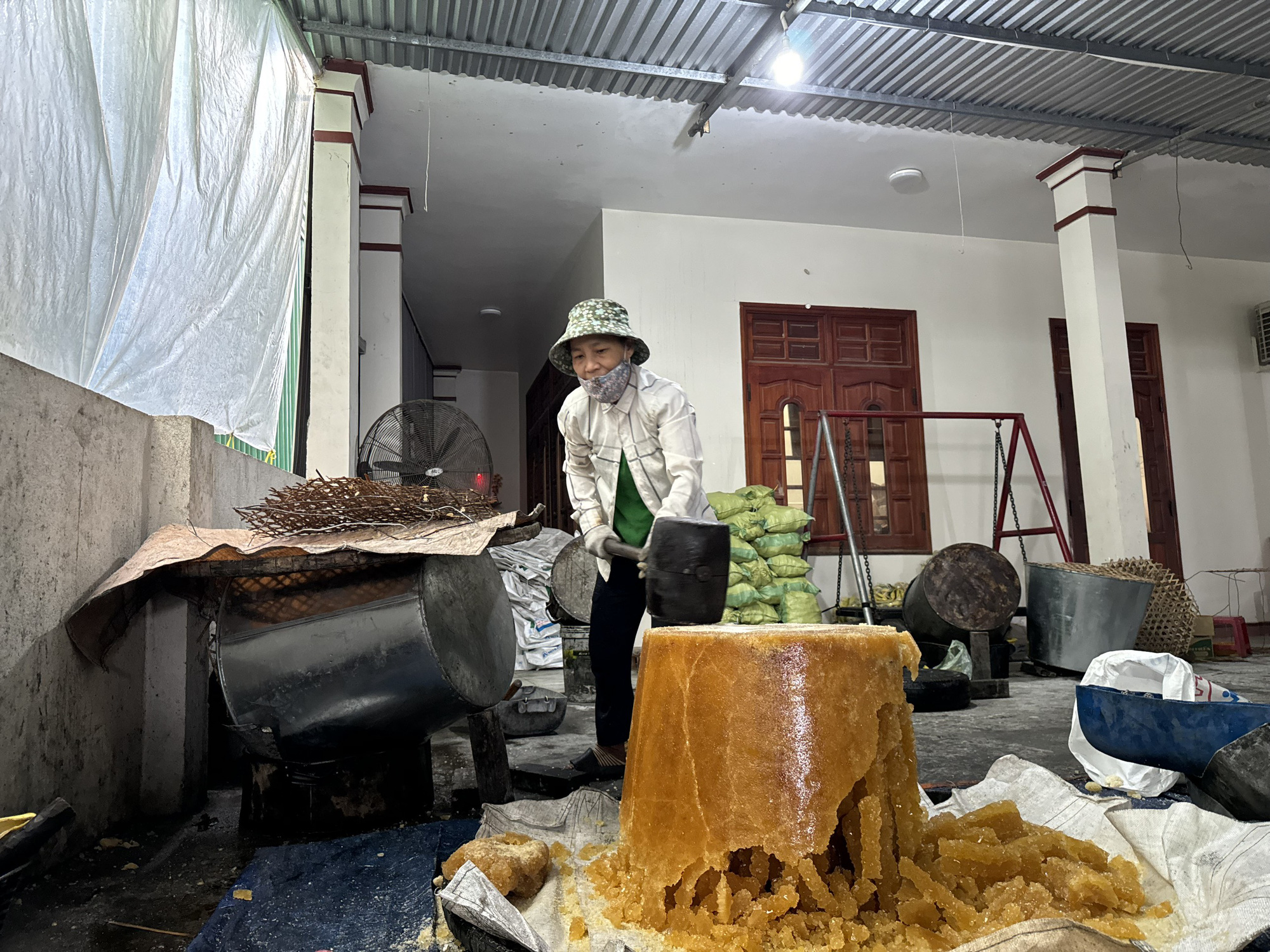
Crystallized rock sugar is crushed, dried, and bagged for sale - Photo: TM
Fires blazing to serve the Lunar New Year
One of the famous rock sugar factories in Nghia Dong commune that still exists today is the Bang Lam rock sugar factory. Generation after generation has passed down the tradition, ensuring its continued existence.
Mrs. Lam married into the family, was taught the craft, and became a true artisan. Even Mr. Dong Van Chinh (72 years old, Mrs. Lam's husband) admires his wife's skillful technique, even though he is the "apprentice" who received direct training from his father.
Mr. Chinh said: "I'm old now, so I've stepped back to let my children take over. But my wife is still the main maker; she can tell at a glance whether the sugar is ripe enough. That's how we create the best batch of rock sugar."
In the days leading up to Tet (Lunar New Year), the atmosphere at the rock sugar factory becomes even more bustling. Everyone has a different task, and everyone is busy with each batch of sugar.
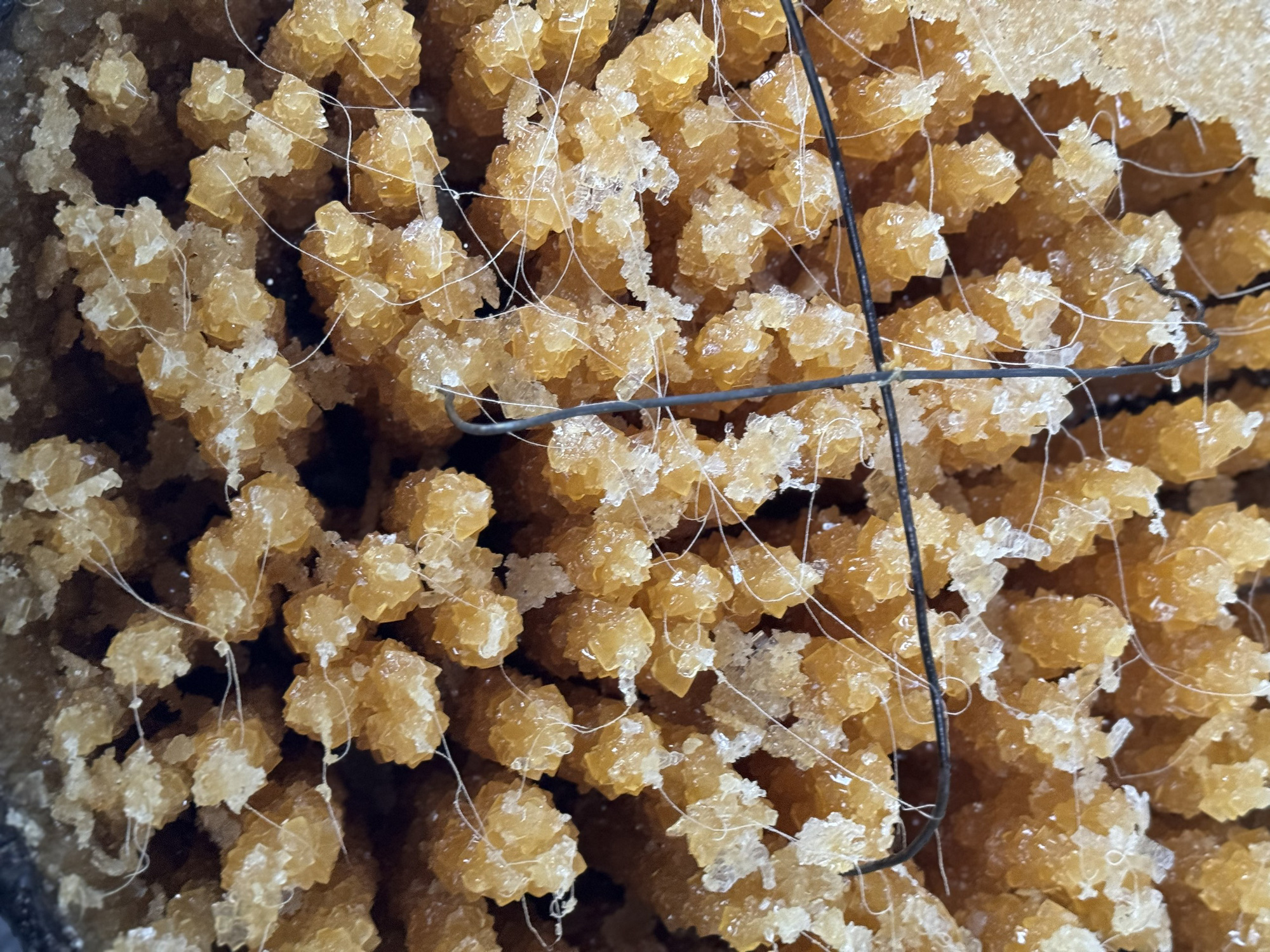
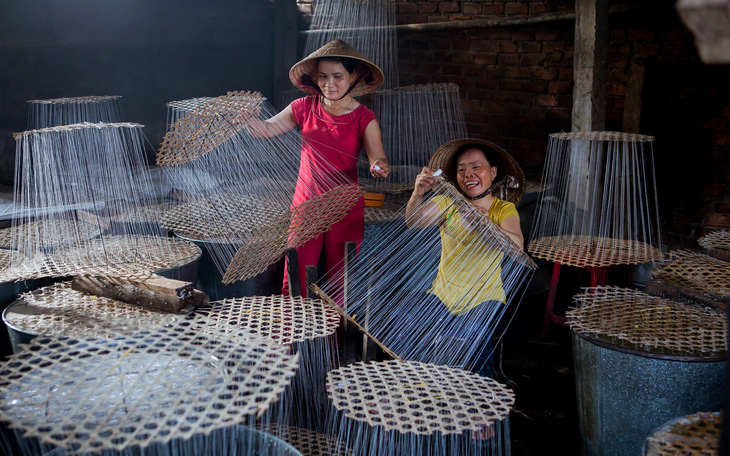
Crystallized rock sugar clings to the threads - Photo: TM
Although the traditional craft village is no longer as famous as it once was, in recent years the market has rediscovered this type of sweet sugar and considers it an essential food item, leading to stronger development of the craft.
Making rock sugar is a laborious and meticulous process, involving simple yet delicate steps: lighting a fire, boiling water, adding white granulated sugar and stirring well, then adding a chicken egg and a can of lime water and stirring thoroughly.
The most crucial step is carefully monitoring the sugar's ripeness before pouring it into barrels lined with threads. They wait seven days for the sugar to crystallize. Then, the crystallized sugar (rock sugar) is separated, crushed, dried, and packed into bags for sale.
As Tet approaches, the craft villages become bustling again...
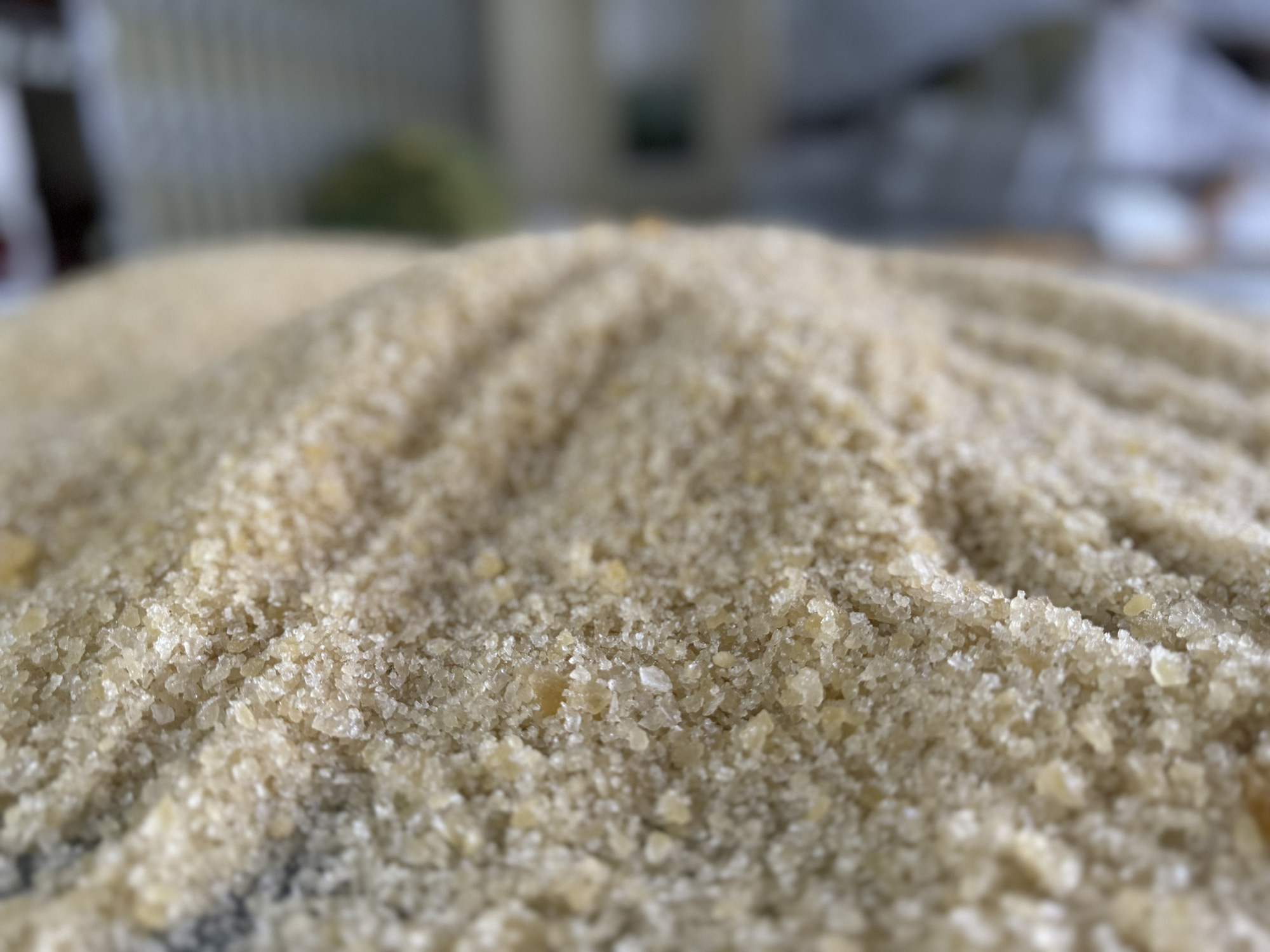
Rock sugar has large granules - Photo: TM
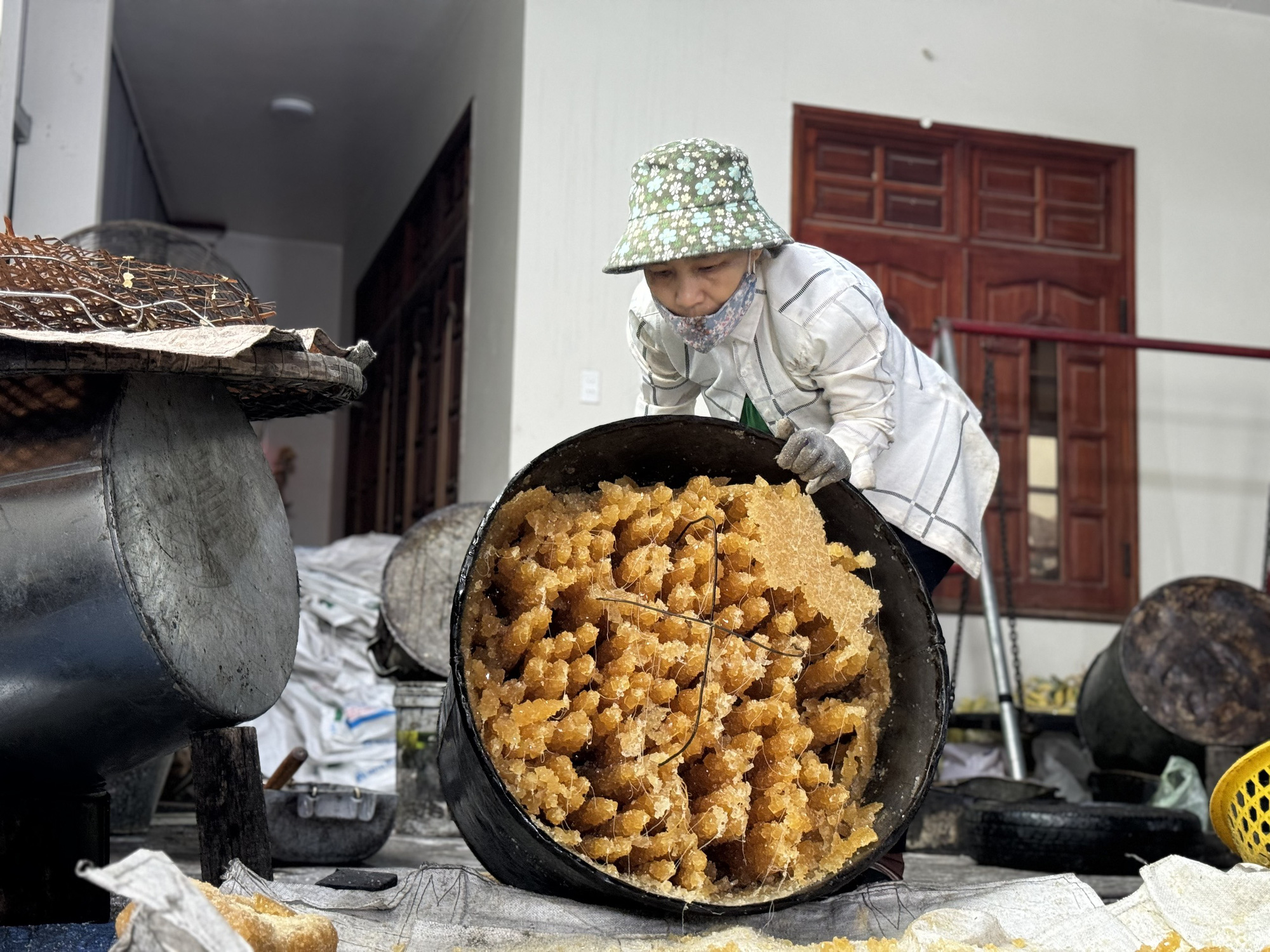
The beautiful jars of rock sugar are poured out after crystallization - Photo: TM
What is rock sugar, and is it good for your health?
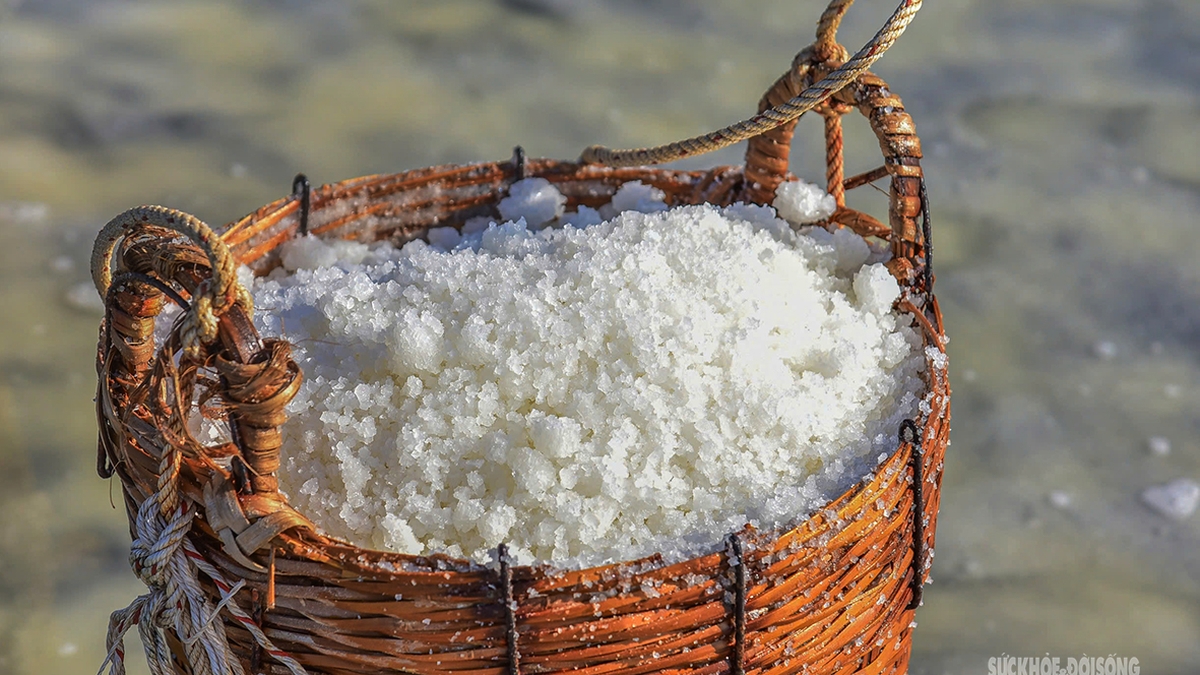
Rock sugar is a type of crystallized sugar, usually made from cane sugar or palm sugar, in the form of large lumps and is white or light yellow in color.
Rock sugar is produced by dissolving sugar in water, then allowing it to cool slowly so that the crystals clump together. Compared to granulated sugar, rock sugar has a milder, less intense sweetness.
Rock sugar has beneficial effects on health when processed together with other foods, such as:
Soothe the throat and reduce coughs when prepared in combination with lemon, ginger, or kumquat;
Drinking warm water with rock sugar before bed can help relax the nerves and improve sleep quality.
As a source of glucose, it helps replenish the body's energy quickly, especially when feeling tired;
It stimulates digestion and reduces symptoms such as bloating and indigestion when used in moderation;
Good for respiratory health, helps reduce fever…
Rock sugar has a mild sweetness and cooling properties, so it is often used in many dishes and drinks, such as: making teas and desserts; steamed and stewed dishes; syrups or jams; cakes and as a cooking seasoning.
 The unusual crystallized rock sugar that few people know about.
Source: https://tuoitre.vn/duong-phen-cong-pham-hoang-trieu-tram-nam-thuo-xua-do-lua-cho-tet-2024122814141915.htm

![[Photo] General Secretary and President To Lam presides over a meeting on preparations for the review of one year of operation of the three-tiered government system.](https://vphoto.vietnam.vn/thumb/1200x675/vietnam/resource/IMAGE/2026/06/02/1780391821195_a1-bnd-4595-9717-jpg.webp)




























































Comment (0)