

India's 100% broken rice variety is different from Vietnam's. Therefore, India lifting the ban on exporting 100% broken rice will not affect Vietnamese rice.
A reporter from the Industry and Trade Newspaper had a discussion with Mr. Nguyen Van Thanh - Director of Phuoc Thanh IV Production and Trading Company Limited ( Vinh Long ) regarding this issue.
- Late on March 7th (local time), the Indian government officially lifted the ban on exporting 100% broken rice. Will this decision affect the price of exported rice as well as Vietnam's rice exports, sir?
Mr. Nguyen Van Thanh: I believe that the Indian government's official lifting of the ban on exporting 100% broken rice will not only not affect Vietnamese rice, but we will even benefit from it.
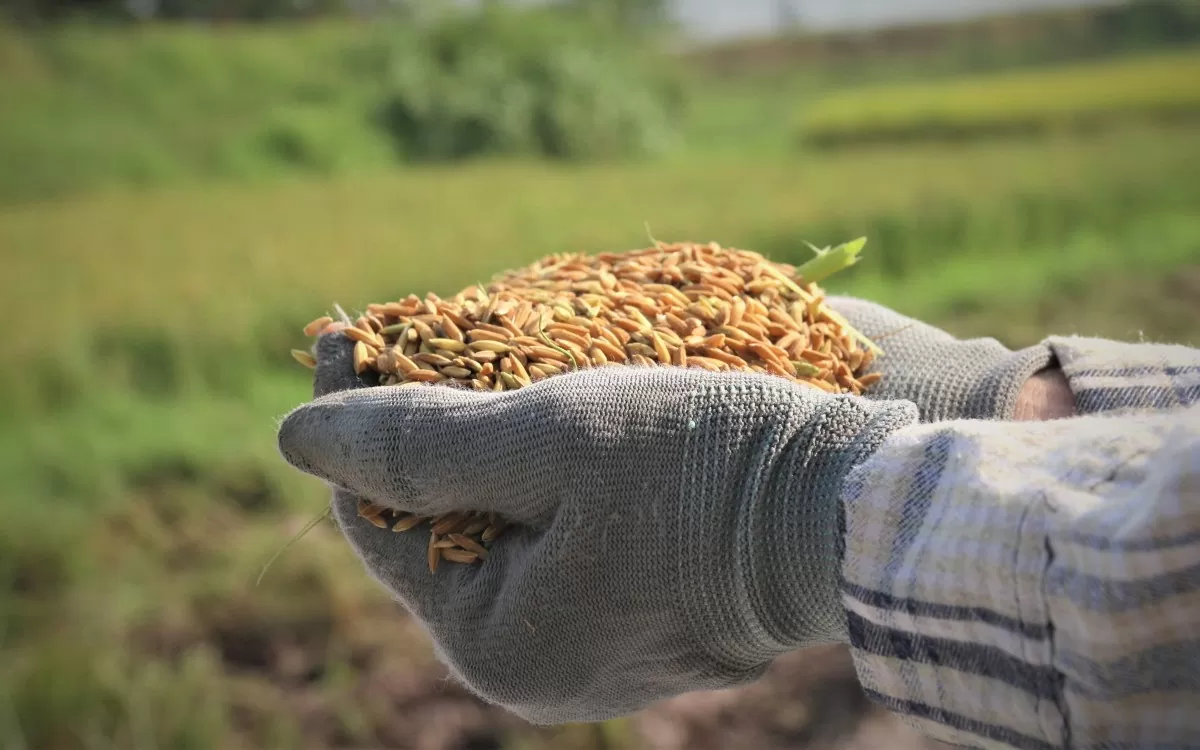 |
| India lifting its ban on the export of 100% broken rice will not affect Vietnamese rice farmers. |
Currently, alongside exports, since 2018, Vietnam has also imported rice from India, Myanmar, Pakistan, and Cambodia. This is not a paradox but a logical development.
The reason is that Vietnamese farmers are gradually shifting to growing fragrant, high-value rice varieties. Meanwhile, rice used for making vermicelli, cakes, and animal feed requires cheaper, lower-priced rice. Vietnam has to import broken rice from India or other countries to compensate for the supply shortage, maintaining production capacity while preventing Vietnamese rice prices from rising sharply due to supply and demand factors.
With India lifting the ban on exporting 100% broken rice, and businesses processing vermicelli, cakes, and animal feed purchasing at lower prices, filling the gap in the lower-priced rice segment, I believe this will not affect the production activities of farmers, rice growers, or the export price of Vietnamese rice.
Currently, Vietnam's exported rice varieties include 5% broken rice, 25% broken rice, and 100% broken rice. So, will Vietnam's 100% broken rice exports be affected by this policy?
Mr. Nguyen Van Thanh: Currently, Vietnam mainly grows fragrant rice varieties and high-quality rice. Vietnamese 100% broken rice is also exported, but Vietnamese 100% broken rice is different from Indian 100% broken rice. Vietnamese 100% broken rice is a fragrant, sticky rice variety, and is used for consumption.
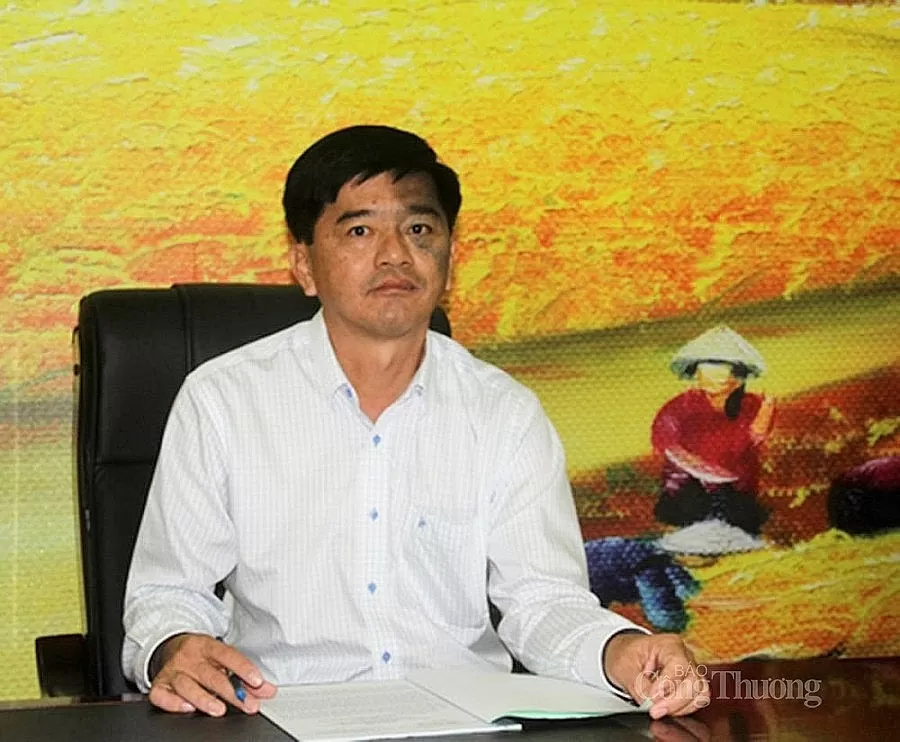 |
| Mr. Nguyen Van Thanh - Director of Phuoc Thanh IV Production and Trading Company Limited (Vinh Long) |
Recently, we have also exported quite a lot of this type of rice. In our company's current export contract, we are exporting over 100,000 tons, and all of these orders are for fragrant broken rice.
Vietnam's export market segment for 100% broken rice is also different from India's. In fact, the amount of 100% broken rice exported from Vietnam in recent times has not been enough to meet market demand.
Currently, 100% broken rice accounts for about 15% of Vietnam's total rice production. Of this, about 5% is consumed domestically, while the remaining 5-10% is exported. Vietnam's exports of 25% broken rice are also gradually decreasing, with the majority being 5% broken rice.
Currently, there are three main segments for 5% broken rice. Of these, 10-15% is IR504 rice (low-grade rice) exported to markets such as Indonesia and Malaysia. We export approximately 1 million tons annually.
The second segment is high-quality fragrant rice. Currently, this segment accounts for about 70-80% with varieties such as OM 5451, OM 18, and Dai Thom 8. The main export market for Vietnamese rice is the Philippines, which also mainly imports high-quality rice varieties. Besides that, other markets such as China and the Middle East also favor this type of rice. However, the Middle Eastern market segment is not large.
The third segment consists of Japonica rice and other specialty rice varieties (4%), mainly consumed in Japan, South Korea, and other high-end markets such as the US and EU. Japonica rice currently has its own niche market, high demand, and very high selling prices. Meanwhile, ST25 rice is currently mainly exported to China and the EU.
In these markets, Vietnamese rice faces little competition, thanks to our superior rice varieties. Therefore, with Japonica and specialty rice varieties, we have markets in Vietnam, China, the US, and the EU. The selling price for these rice types is very good and does not depreciate compared to other rice varieties.
- As you mentioned, India lifting its ban on exporting 100% broken rice will not affect Vietnam's export rice prices. Since the beginning of the year, export rice prices have fallen, and an upward trend remains uncertain. So, has Vietnam's export rice price hit rock bottom yet, sir?
Mr. Nguyen Van Thanh: Has the price of rice hit rock bottom yet? In my opinion, it has already hit rock bottom. Because during the 2020-2022 period, we also recorded the lowest export rice prices at this level. However, when we entered 2023, when India imposed an export ban, it caused significant fluctuations in export rice prices on the world market, ranging from 38-45%, including Vietnamese rice.
Amidst falling domestic and export rice prices, export businesses are also facing certain difficulties. Their resources are limited, and their warehousing capacity is only sufficient for 7-8 million tons.
Meanwhile, export businesses have virtually no contracts. Only those export businesses that have contracts borrow money from banks and disburse funds within the limits specified in the contracts to purchase rice in larger quantities. Businesses with weak finances also have to wait until they have contracts before making purchases.
Recently, the issue of rice prices and export rice prices has received attention from the Government and relevant ministries and agencies. They have been working to resolve difficulties and obstacles related to loan terms, limits, loan conditions, and disbursement to ensure that businesses can purchase rice from farmers.
However, businesses in the Mekong Delta region are still facing certain difficulties and limitations, including the issue of capital. Some businesses want to purchase reserves but lack the funds, have limited credit limits, and lack collateral, making disbursement very difficult. Commercial banks also want to disburse funds, but absorbing this capital is not easy due to the challenge of ensuring compliance with the law.
Thank you, sir!
| According to a report by the Ministry of Agriculture and Environment, in 2025, the projected rice production is 43.1 million tons, equivalent to approximately 27.4 million tons of milled rice (after processing and accounting for losses). Of this, domestic consumption is expected to reach about 21 million tons; processing and production will account for about 4 million tons; exports will be about 6-6.5 million tons; and reserves and domestic trade will account for about 2.5 million tons. |
Source: https://congthuong.vn/gao-100-tam-cua-viet-nam-khong-du-de-xuat-khau-377538.html
































































Comment (0)