

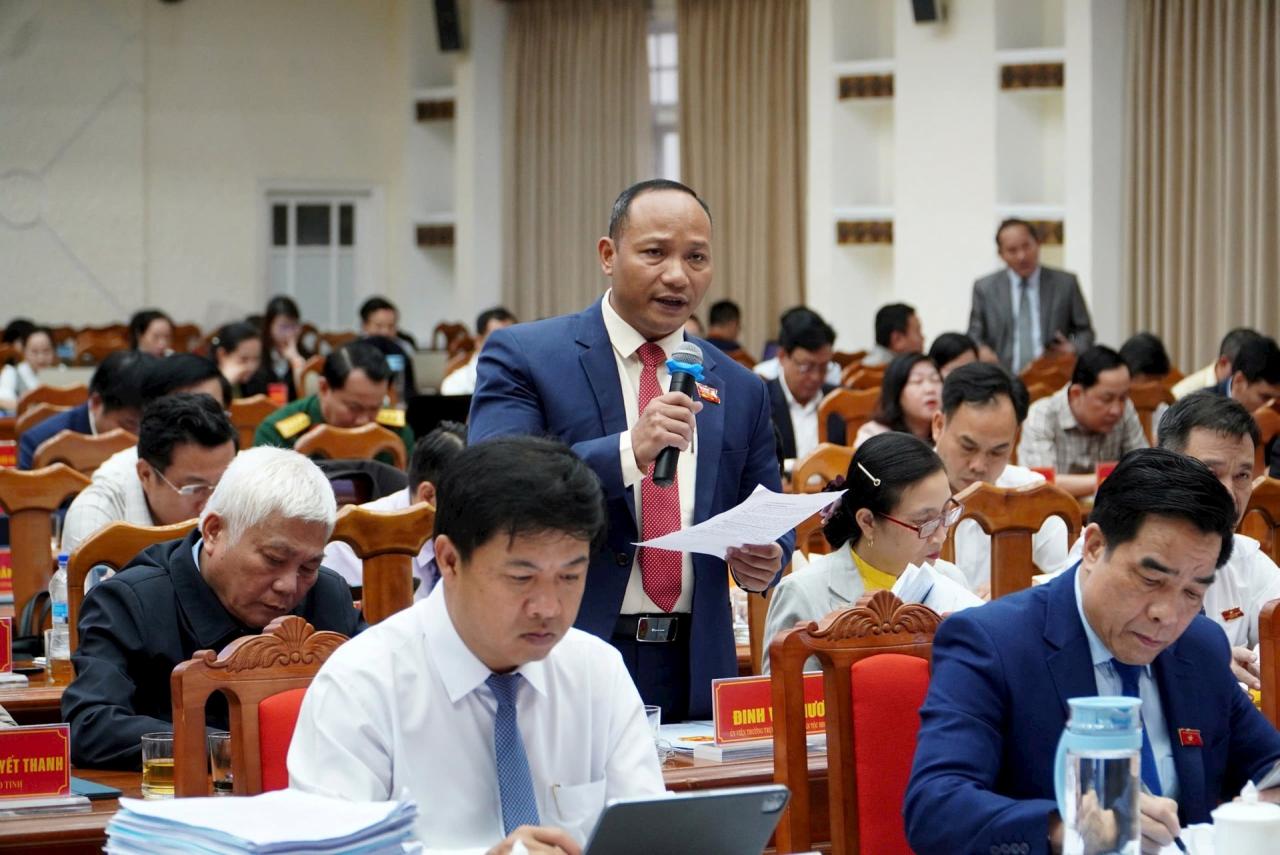
The issue of school milk programs is heating up again.
Director of the Department of Finance, Dang Phong, was the first to respond to requests for clarification of responsibility for the delays in allocating funds for the implementation of policies in the socio-cultural field.
Mr. Phong acknowledged that the department bears primary responsibility for the delay in advising on the allocation of funds for the implementation of resolutions in general, including those in the socio-cultural field.
For resolutions that specify the level of financial support for each locality or unit, or that have stipulated specific regulations and norms, the department has proactively calculated and balanced resources to advise the Provincial People's Committee to submit to the Provincial People's Council for allocation of budget estimates according to the province's budget balance capacity.
For some resolutions that only specify the total budget for implementation, without detailing it for each locality or unit, the agency responsible for drafting the resolution must coordinate and propose the allocation of budget estimates to each unit or locality so that the department has sufficient basis to advise on budget allocation.
Regarding specific policies, Mr. Phong mentioned that the procurement of milk is implemented in accordance with Resolution No. 17, dated September 22, 2023, of the Provincial People's Council on supporting milk in school meals for kindergarten and primary school children in ethnic minority and mountainous areas in regions I, II, and III of Quang Nam province, from the 2023-2024 school year to the end of the 2025-2026 school year.
"According to feedback from the Department of Education and Training and at the working session with the Culture and Social Affairs Committee of the Provincial People's Council on November 21, 2024, due to the budget allocated according to the fiscal year, while the policy is implemented according to the school year (September-December of the current year and January-May of the following year), there are difficulties in organizing the implementation of the policy," Mr. Phong said.
To address the aforementioned difficulties in budget allocation, Mr. Phong proposed that the Provincial People's Committee direct the relevant departments and agencies to take the lead in drafting resolutions, and periodically, at the same time as preparing the budget estimate for the following year, based on their assigned functions and tasks, to take the lead and coordinate with other agencies, units, and localities.
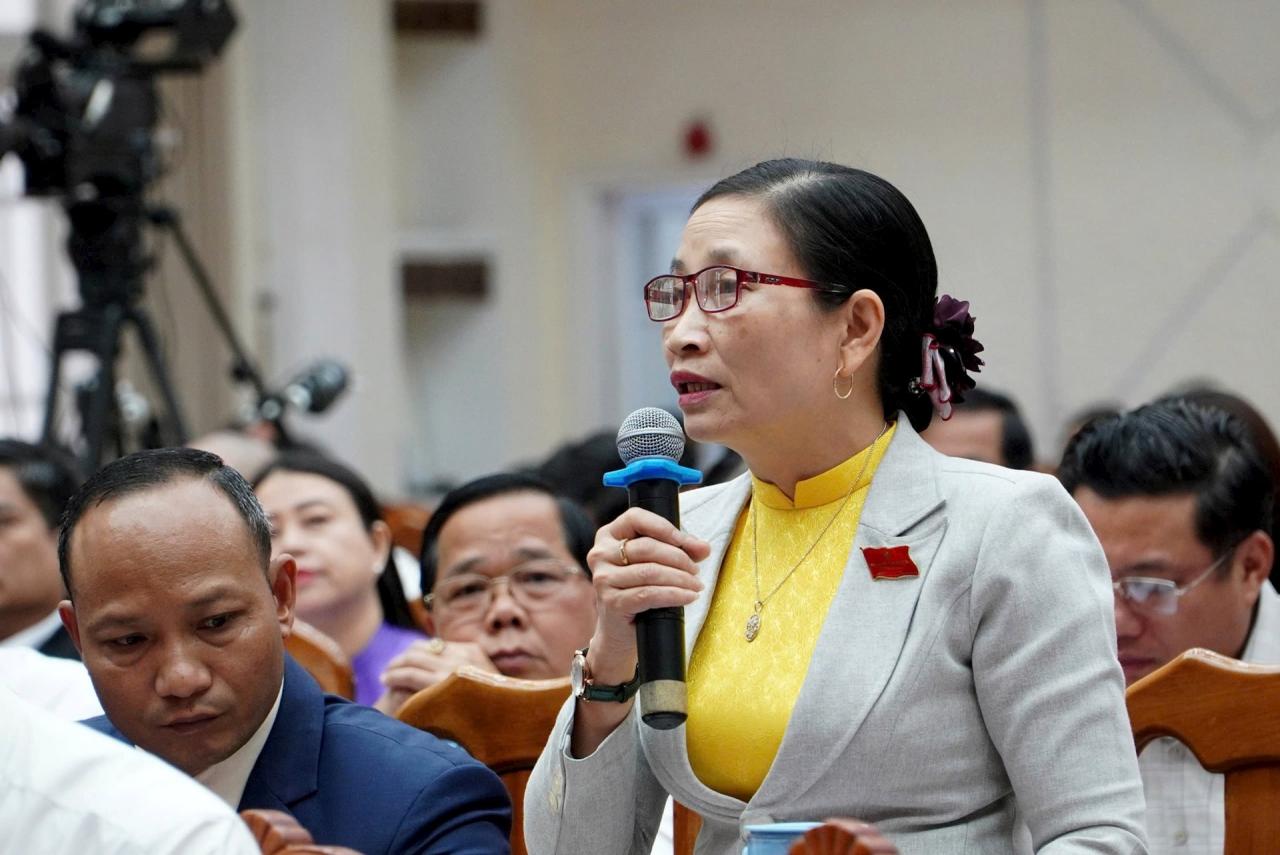
Regarding the provision of support for school milk programs, Mr. Lam Quang Thanh, Deputy Head of the Economic and Budget Committee of the Provincial People's Council, stated that the guidance from relevant departments is unclear and lacks uniformity, leading to confusion among localities in implementing Resolution No. 17. "The policy exists, but children are not benefiting from it. What solutions does the relevant department have?" Mr. Thanh asked.
Responding to this issue, Mr. Thai Viet Tuong, Director of the Department of Education and Training, stated that in a previous resolution, the department was assigned to lead the school milk program for preschool children and students in six mountainous districts of the province, but this could not be implemented due to the significant challenges involved.
In response to this situation, the Provincial People's Council issued Resolution No. 17 and sent it to localities for implementation, but some places succeeded while others did not. Specifically, localities that decided to allow schools to purchase without bidding were able to do so; however, those that assigned the task to the Department of Education and Training or the Finance Department, requiring bidding, encountered difficulties.
Vice Chairman of the Provincial People's Council Tran Xuan Vinh raised the question: Why, despite the Provincial People's Council resolving difficulties with a new resolution and transferring the school milk support program to local areas, has it still not been implemented?
In further discussion, Mr. Bhling Mia, Secretary of the Tay Giang District Party Committee, stated that there are no longer any obstacles in the implementation. Tay Giang has already purchased all the necessary equipment. Previously, the Department of Education and Training was tasked with conducting the bidding process, but it lacked transparency and was subsequently penalized.
"The milk has been purchased and distributed to the schools. The issue is the budget settlement, so the two departments need to agree on guidelines to make it easier for localities to implement," Mr. Mia stated.
Fear of losing capital
Regarding public investment, according to delegate Dang Tan Phuong - Deputy Head of the Ethnic Affairs Committee of the Provincial People's Council, the disbursement rate of ODA-funded programs is currently very low.
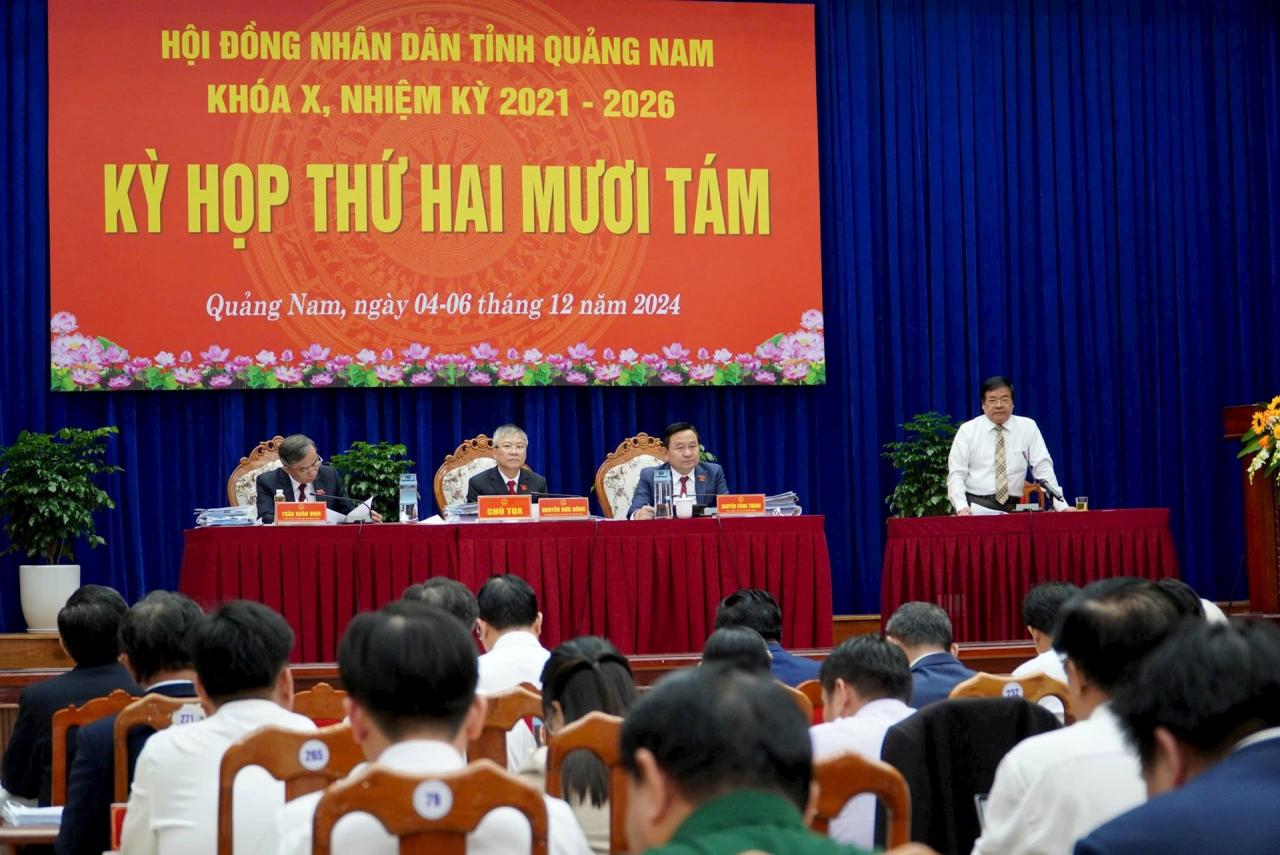
Specifically, the project for investing in and developing the healthcare network in particularly disadvantaged areas of the province includes 37 health stations, with the Provincial Investment and Construction Project Management Board acting as the investor for the period from 2019 to 2025.
However, the Provincial People's Committee only approved the project on June 26, 2024. To date, more than 136 billion VND allocated in 2023 and 2024 has not been disbursed. Currently, only 2.1 billion VND of the provincial budget's counterpart funds for consulting services have been disbursed.
"The Department of Planning and Investment and the Provincial Investment and Construction Project Management Board need to clarify their responsibilities in coordinating the implementation of surveys, compiling project lists, investment preparation procedures, and project appraisal and approval processes."
"Is there any bottleneck in this implementation process that it took 5 years to approve the project? Notably, the program's implementation period ends at the end of 2025. If the funds are not disbursed, it will lead to a stagnation of budget capital, causing waste in the budget allocation for the years 2023-2024," Mr. Phuong stated.
Representative Dinh Van Huom - Head of the Ethnic Affairs Committee of the Provincial People's Council - questioned: "What solutions does the Provincial Investment and Construction Project Management Board have to accelerate the disbursement of all funds by 2025 and ensure that the health stations are completed and serve the people?"
Meanwhile, delegate Tran Thi Bich Thu - Head of the Culture and Social Affairs Committee of the Provincial People's Council - raised the issue: "Regarding the items under the Economic Recovery and Development Program, the Provincial Investment and Construction Project Management Board reported that they will be completed by December 2024."
In fact, there are still projects underway. If, after February 2025, the projects are not completed and the funds are returned to the central government, what solutions will the Department of Planning and Investment and the Provincial Investment and Construction Project Management Board implement to complete these projects?”
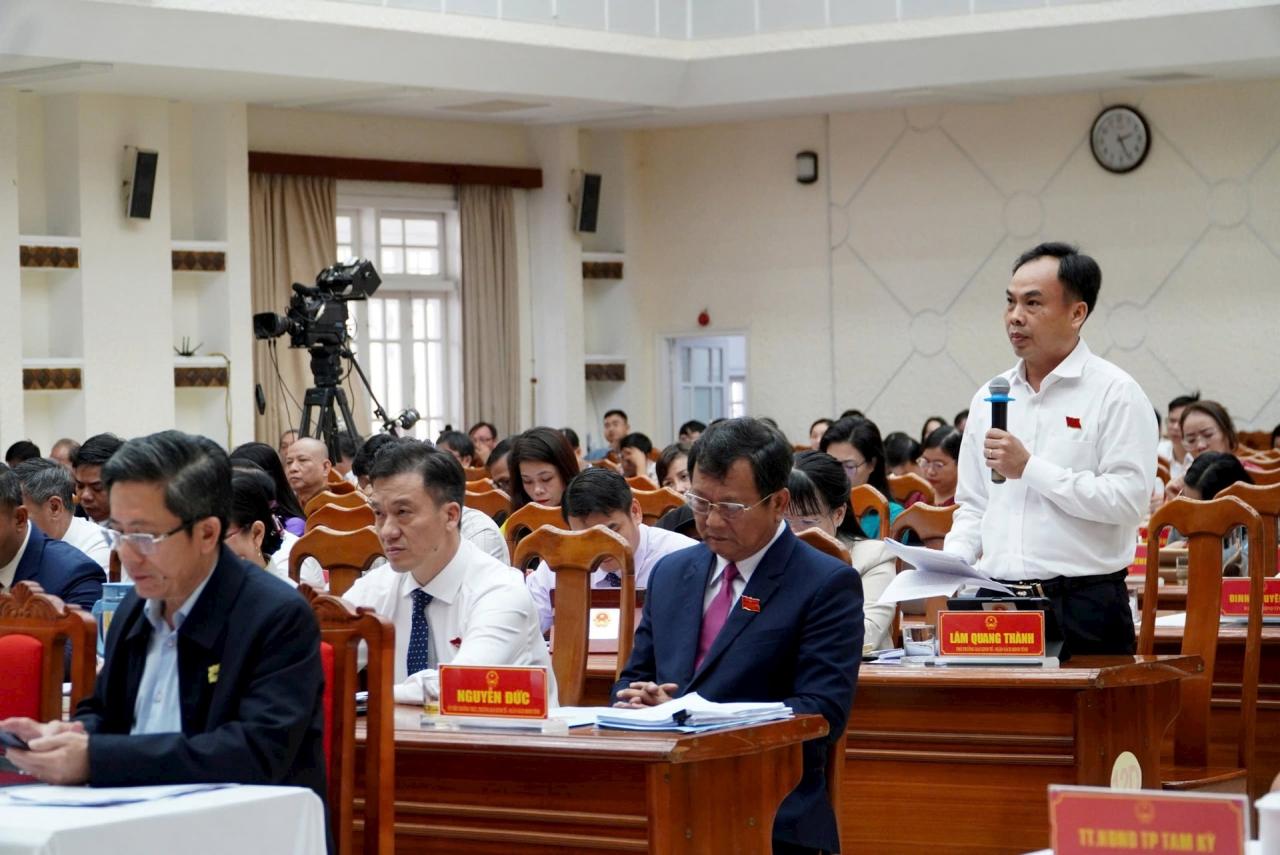
In response to questions from delegates, Mr. Huynh Xuan Son, Director of the Provincial Investment and Construction Management Board, stated that the project for the investment and development of the healthcare network in particularly difficult areas of the province is assigned to the Department of Health for implementation.
The project was only handed over to the Provincial Investment and Construction Management Board for implementation in 2023. The unit had to handle the work from the beginning, which took a lot of time, especially for health stations in remote areas; the bidding process, project planning, design and construction, land documents, asset liquidation on the land, project appraisal… all involved numerous procedures and formalities.
“With 37 health stations under the Provincial Program for Investment and Development of the Primary Healthcare Network in Difficult Areas and 76 health stations under the Program for Economic and Social Recovery and Development, it can be seen that the projects are numerous but small and scattered. Each health station is a separate construction project, requiring a large amount of documentation. The Department of Construction had to assign many staff members to complete the appraisal. Notably, the list of 37 health stations took a long time to wait for bidding due to changes in the Bidding Law,” Mr. Son said.
According to Mr. Son, currently 76 health stations under the Socio-Economic Recovery and Development Program are being implemented. The National Assembly has allowed the project to be extended until the end of 2025. The Provincial Investment and Construction Management Board will strive to complete the projects.
Source: https://baoquangnam.vn/chat-van-va-tra-loi-chat-van-tai-ky-hop-thu-28-hdnd-tinh-quang-nam-khoa-x-giai-trinh-nhung-van-de-nong-3145373.html




![[Image] National Assembly discusses the implementation of the socio-economic development plan.](https://vphoto.vietnam.vn/thumb/1200x675/vietnam/resource/IMAGE/2026/04/20/1776696707422_ndo_br_img-20260420-185419-jpg.webp)
![[Photo] General Secretary and President To Lam meets with National Assembly delegates from ethnic minorities.](https://vphoto.vietnam.vn/thumb/1200x675/vietnam/resource/IMAGE/2026/04/20/1776696701056_a1-bnd-8331-3342-jpg.webp)






































































Comment (0)