


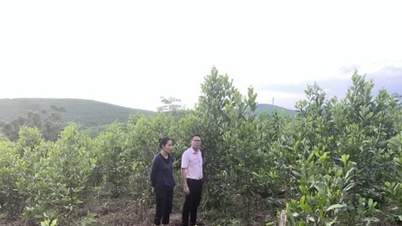
In Bai Son commune, Do Luong district, local people are planting trees for the autumn season; however, some households are still lacking seedlings. Mr. Phan Binh's family in Bai Son commune has just finished harvesting over 1 hectare of acacia trees and is now focusing manpower on clearing the undergrowth and digging holes for planting. Over the past two weeks, Mr. Binh has only planted half of the area, as he has yet to purchase seedlings for the remaining area.
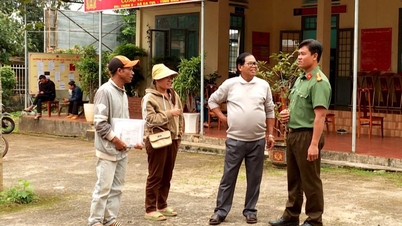
Mr. Phan Binh shared: "Currently, the weather is favorable, and many households, after harvesting acacia trees, are simultaneously planting new forests, leading to a localized shortage of seedlings. The price of hybrid acacia seedlings, which was only 500-600 VND/tree in previous seasons, has now increased to 1,000 VND/tree and is still difficult to buy."
A representative from the People's Committee of Bai Son commune stated: The commune has nearly 300 hectares of acacia trees, which are harvested and replanted every 4-5 years. Compared to previous years, this year the harvesting cycle is more extensive, with approximately 40-50 hectares replanted, leading to a shortage of seedlings.

Mr. Tran Ngoc Thuan, Head of the Agriculture and Rural Development Department of Do Luong district, shared: In 2023, Do Luong district implemented the planting of over 600 hectares of acacia trees. Currently, the communes have planted over 350 hectares. The remaining villagers are clearing the undergrowth and digging holes to plant trees. However, some communes are experiencing a shortage of high-quality acacia seedlings. The acacia seedlings in the area are mainly produced by Do Luong Forestry Company Limited.
Mr. Phan Hong Tien, Director of Do Luong Forestry One-Member Limited Company, said: The company currently has two nurseries, producing over 2.5 million acacia seedlings annually, serving people in Do Luong district and the communes of Quang Thanh, Thinh Thanh, Tay Thanh, and Dai Thanh (Yen Thanh). This year alone, the company produced over 1.5 million seedlings, but due to demand from customers everywhere, it couldn't meet the supply. Currently, the company is actively caring for the next batch of seedlings, approximately 300,000 trees (about a month from now), before they can be sold.
Similarly, Quy Chau district, the capital of hybrid acacia cultivation, is also facing a shortage of hybrid acacia seedlings. Mr. Nguyen Sy Luan - Chairman of the People's Committee of Chau commune, stated this. The association shared: Chau Hoi commune has over 3,000 hectares of acacia forest, with over 200 hectares replanted annually. Currently, only over 70% of the area has been planted. Lacking high-quality acacia seedlings, the commune is having to buy them from various sources, including Binh Dinh and Dong Nai provinces , for planting. These seedlings have not been inspected, raising serious concerns about their quality.

Quỳ Châu District has the largest area of acacia trees in the province, with over 21,000 hectares of acacia plantations, and over 4,000 hectares are harvested and replanted annually. The district has three seedling production units: Cô Ba Forestry Farm, Quỳ Châu Forestry Farm, and Đại Lâm Forest Investment and Development Cooperative. However, these only meet the seedling needs for about 40% of the reforestation area; the remaining area is mainly supplied by local people who purchase seedlings from various sources.
According to a report from the Forest Protection Department, the province currently has 25 licensed seed production and trading units, producing 30-35 million forestry seedlings of various types annually. However, the issue of forestry seed production in Nghe An province still faces limitations such as: Over 100 small-scale production and trading establishments and households in the province are involved in forestry seed production; many establishments are not registered with the state management agency; and seed sources are not properly invested in, cared for, managed, or protected.

Many establishments are not registered with the state management agency for seed production, making it difficult to control seed quality. Every year, localities in Nghe An have to buy over 10 million seedlings from various places such as Binh Dinh and Dong Nai, without being able to control the quality of the seedlings.
To ensure the quality of seedlings, the Forest Protection Department recommends that localities further strengthen the management of seedling production and trading, strictly managing all stages of the production chain; and intensify propaganda to the people about using good quality seeds with clear origins...
Source













































































Comment (0)