

The guidelines are nothing new compared to what schools are already doing.
A leader from Thai Thinh Secondary School (Dong Da District, Hanoi ) stated that the Ministry's guidelines are basically nothing new compared to what schools are already doing, but they are more detailed, clearly mentioning the number of lessons and tasks for each stage.
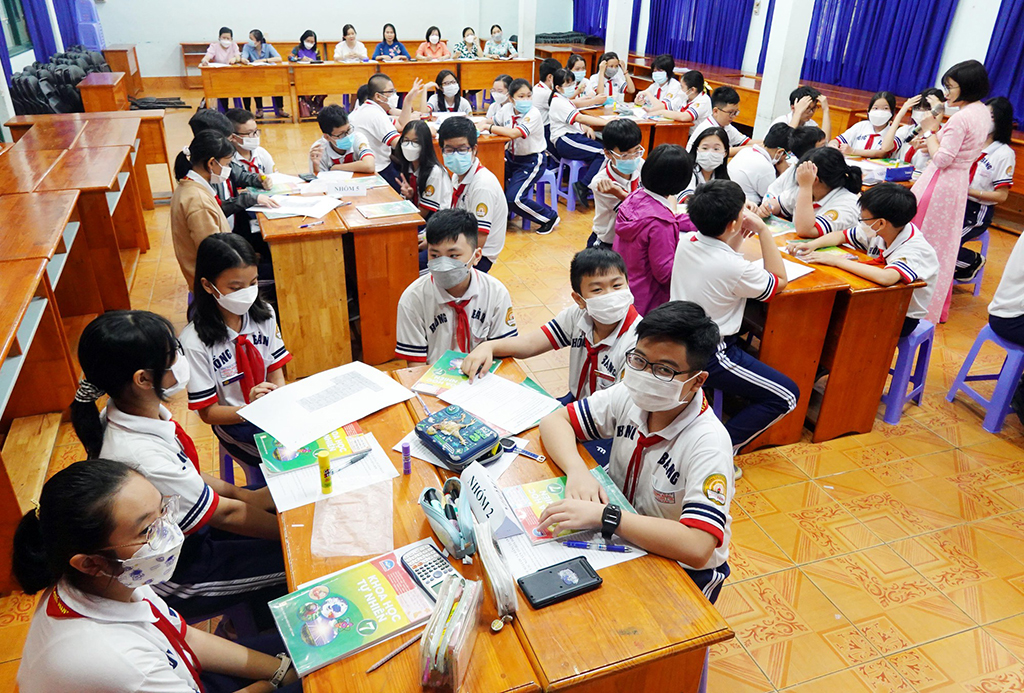
A science integrated lesson for 7th grade students in Ho Chi Minh City.
Ms. Nguyen Thi Huong Ly, a geography teacher at Minh Khai Secondary School (Bac Tu Liem District, Hanoi), shared that the new guidance document from the Ministry of Education and Training clearly specifies the number of lessons per chapter, unlike before when teachers could teach as many lessons as they liked. However, some content has already been implemented, but the document is only now being issued.
Therefore, some teachers believe that this guideline is too detailed, like "hand-holding," and seems to contradict the policy of "freeing up" teachers.
A history teacher at a junior high school in Bac Giang City (Bac Giang province) commented: "The Ministry's guidelines seem very long and detailed, but in short, for history and geography, teachers only need to understand that they should teach and test on the subjects they teach. Therefore, there's nothing new compared to what schools have been doing for over two years. That is, although it's integrated, it's essentially just combining history and geography into one subject with a single textbook, each with two separate parts."
According to many teachers, that guidance only serves as a temporary "quick fix" and does not address the root cause of the most difficult problem facing integrated subjects: a shortage of teachers and a curriculum and textbooks that are not truly integrated.
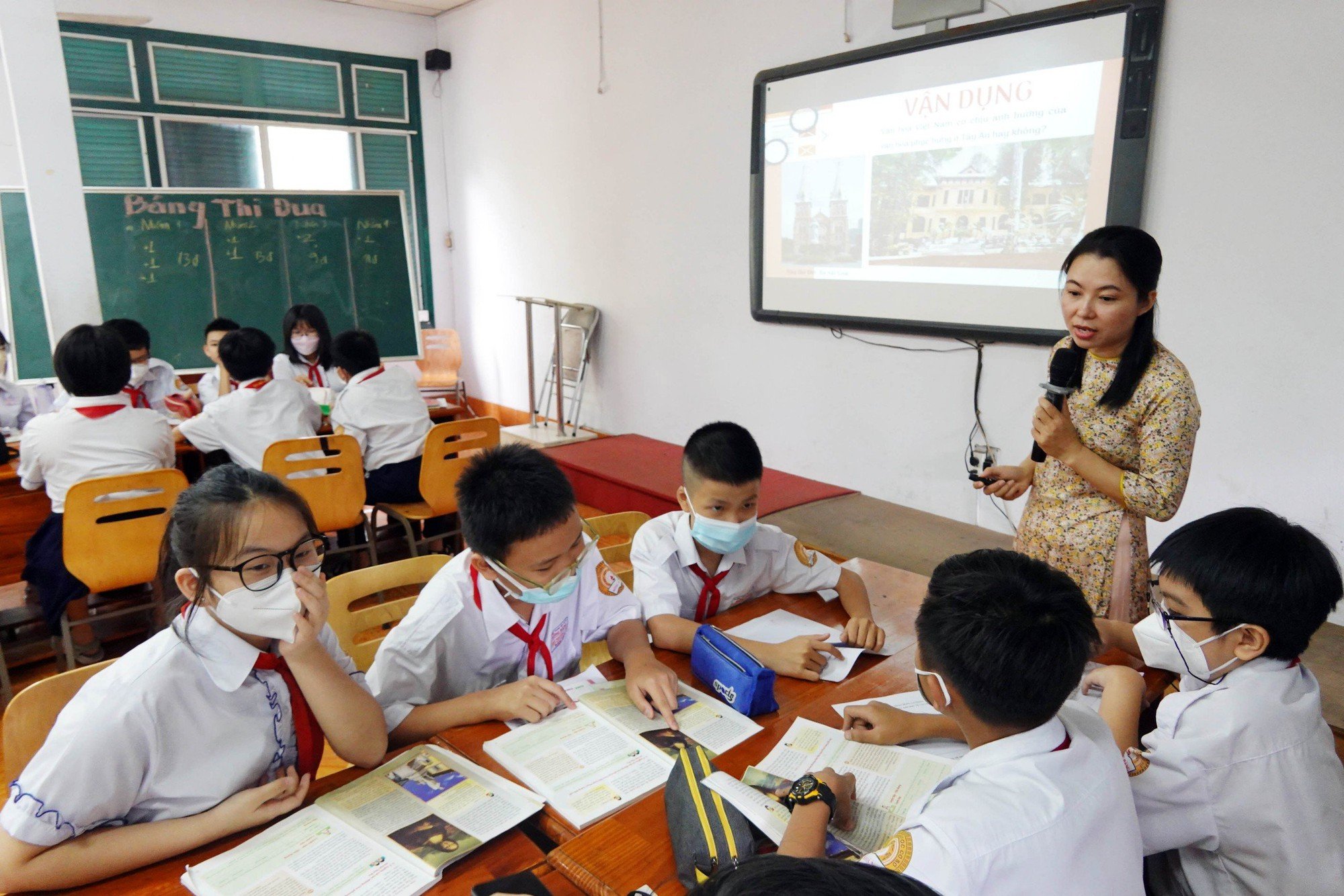
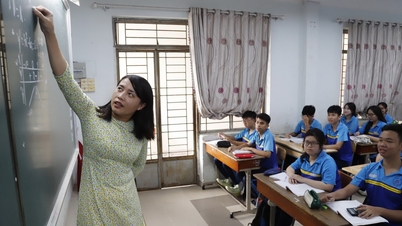
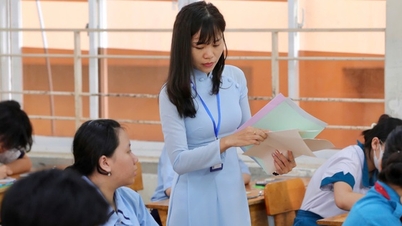
The teacher guides students in group work during an integrated history-geography lesson.
When will we ever have teachers who teach integrated subjects?
The leader of a junior high school in Tay Ho District (Hanoi) said that looking back at the three years of implementing integrated science education at the junior high school level in Hanoi, the first year allowed schools to teach the subjects as three separate subjects, meaning that when it came to chemistry, the chemistry teacher taught, when it came to biology, the biology teacher taught... the timetable remained unchanged. However, in the second year, Hanoi required teaching according to the knowledge sequence, teaching in a continuous flow. This led to the reality that 6th-grade students would finish the knowledge sequence of physics before moving on to chemistry, biology, etc. Thus, by the time students returned to physics in 7th grade, the foundational knowledge of physics from 6th grade had almost completely faded away.
Furthermore, due to the intensive teaching schedule, even if all the chemistry teachers in the school were assigned to the new curriculum classes (grades 6, 7, and 8), there wouldn't be enough teachers for a single science subject. Moreover, in the third year of implementing the 2018 curriculum, there could be up to 40 classes across the three grades simultaneously covering chemistry, physics, or biology, while the teachers for the other subjects only have 1-2 homeroom periods or flag-raising ceremonies per week.
Therefore, schools have to find ways to cope; even with a maximum teaching load of 19 lessons per week, they can only increase it to 25 lessons per week. The remaining vacancies will have to be filled by hiring temporary teachers on contract. For example, for over a month teaching physics, they will contract an external physics teacher; after physics is finished, they will contract similar teachers for the other subjects.
The question of when there will be enough well-trained teachers to teach integrated subjects remains open. This school year, many localities, including Hanoi, are still recruiting teachers for single subjects (physics, chemistry, biology, history, geography) for lower secondary schools, and have yet to recruit teachers for natural sciences or for history and geography.
This means that there is no source of properly trained teachers for integrated subject teaching, and if teachers of single subjects continue to be hired into the civil service, the problem of not having teachers for integrated subject teaching or having single-subject teachers have to undergo training to teach integrated subjects will never end.
Minister of Education and Training Nguyen Kim Son, when discussing the "two paths" for integrated subjects, stated: one is to revert to the old system of single subjects; the second is to continue with the reform and plan a roadmap until, by a certain year, existing teachers have received full training to ensure the necessary conditions are met and the process is complete. However, according to the Minister, "this is a matter that requires a process of implementation, not a timeframe or a specific month for completion."
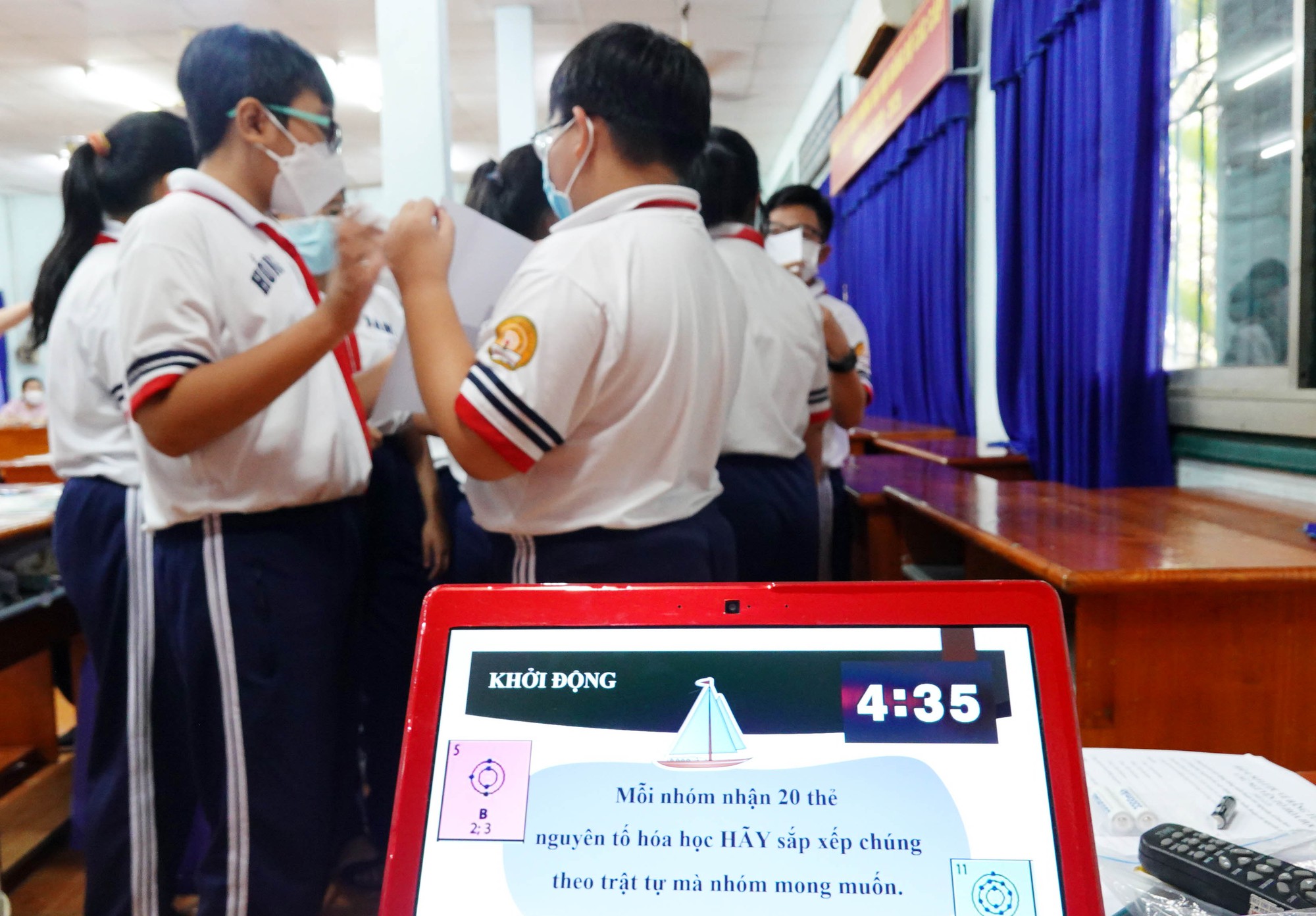
The teacher guides the students through the steps in an integrated lesson.
The curriculum and textbooks are not truly integrated.
The head of a junior high school in Tay Ho District also argued that the Ministry's approach to teaching natural science, which focuses on teaching according to the knowledge structure of each sub-discipline, shows that the curriculum and textbook designers themselves did not integrate the subjects. This is why, after completing one sub-discipline, the teaching can be interrupted to move on to another. True integration requires the knowledge of different subjects to be truly integrated and combined, not separated into distinct sub-disciplines.
As for history and geography, although they are considered one subject, the teaching methods are still organized as if they were two independent subjects, taught simultaneously by two different teachers. One teacher questioned: "I don't understand why they have to be combined, because when teachers attend training, even the authors of the textbooks don't have any authors who can train teachers in all the sub-disciplines."
According to many opinions, while integration does create difficulties for schools in terms of scheduling and teacher allocation, they should see the effectiveness of what they are doing, however arduous, compared to teaching individual subjects as before. Instead, despite the increased difficulty and complexity, the ultimate goal remains to excel in each subject. So, what is the point of integrating them, or is it simply to complicate matters further?
Regarding the content of the history and geography textbooks for grades 6, 7, and 8, the authors also divide them into two separate parts, without any connection or integration of knowledge. The Ministry also instructs that regular and periodic tests "must be appropriate to the content and time allocated for teaching each subject," which means that regular tests are conducted for each subject. For periodic tests, the exam combines the two subjects into a single test. However, the principal must "assign a teacher to be in charge of the subject in each class to coordinate with other teachers teaching the subject in that class to compile scores, record grades, and provide comments in the student assessment log and report card."
Previously, many educators and history experts called the integration of history and geography into a single subject a "forced marriage" and hoped the Ministry of Education and Training would soon "divorce" these two subjects to avoid unnecessary problems like the present. However, after reading the Ministry's guidelines on integrated teaching, educators believe that the shortcomings of integration remain.
How are the exams for gifted students and entrance exams for specialized 10th-grade classes conducted?
Assessment during integrated subject learning is already challenging, but many argue that even more questions will arise when students reach high school. Students in grade 10 are taught in a differentiated manner, with the option to choose subjects. Specifically, except for history, all sub-disciplines within integrated subjects in junior high school are single-subject electives in high school. Furthermore, the provincial-level junior high school student excellence competition has traditionally been a single-subject exam. How will this exam be conducted when students are still studying the new general education curriculum up to grade 9? What about students with aptitude and talent in certain sub-disciplines who want to be trained for specialized exams in grade 10? In reality, requiring students to excel in 2-3 sub-disciplines is too demanding, while single-subject exams contradict the principle of integrated teaching.
Source link


![[Photo] Prime Minister Pham Minh Chinh attends the Conference summarizing and implementing tasks of the judicial sector.](/_next/image?url=https%3A%2F%2Fvphoto.vietnam.vn%2Fthumb%2F1200x675%2Fvietnam%2Fresource%2FIMAGE%2F2025%2F12%2F13%2F1765616082148_dsc-5565-jpg.webp&w=3840&q=75)




























































Comment (0)