

About 10-15 vehicles are arranged at the 19/8 station for people to experience, marking the first time Hanoi has deployed a public two-wheel electric vehicle model and expanded the environmentally friendly transportation ecosystem.
According to the representative of Tri Nam Company, the pilot program is a concrete step to diversify public transport , in line with the capital's transport planning and national commitments to reduce greenhouse gas emissions at COP26. In the first phase, the company deployed 500 vehicles at 130 station locations in the Ring Road 1 area; at the same time, it built a roadmap to expand to Ring Road 2 and Ring Road 3 to increase accessibility and meet the flexible travel needs of inner-city residents.
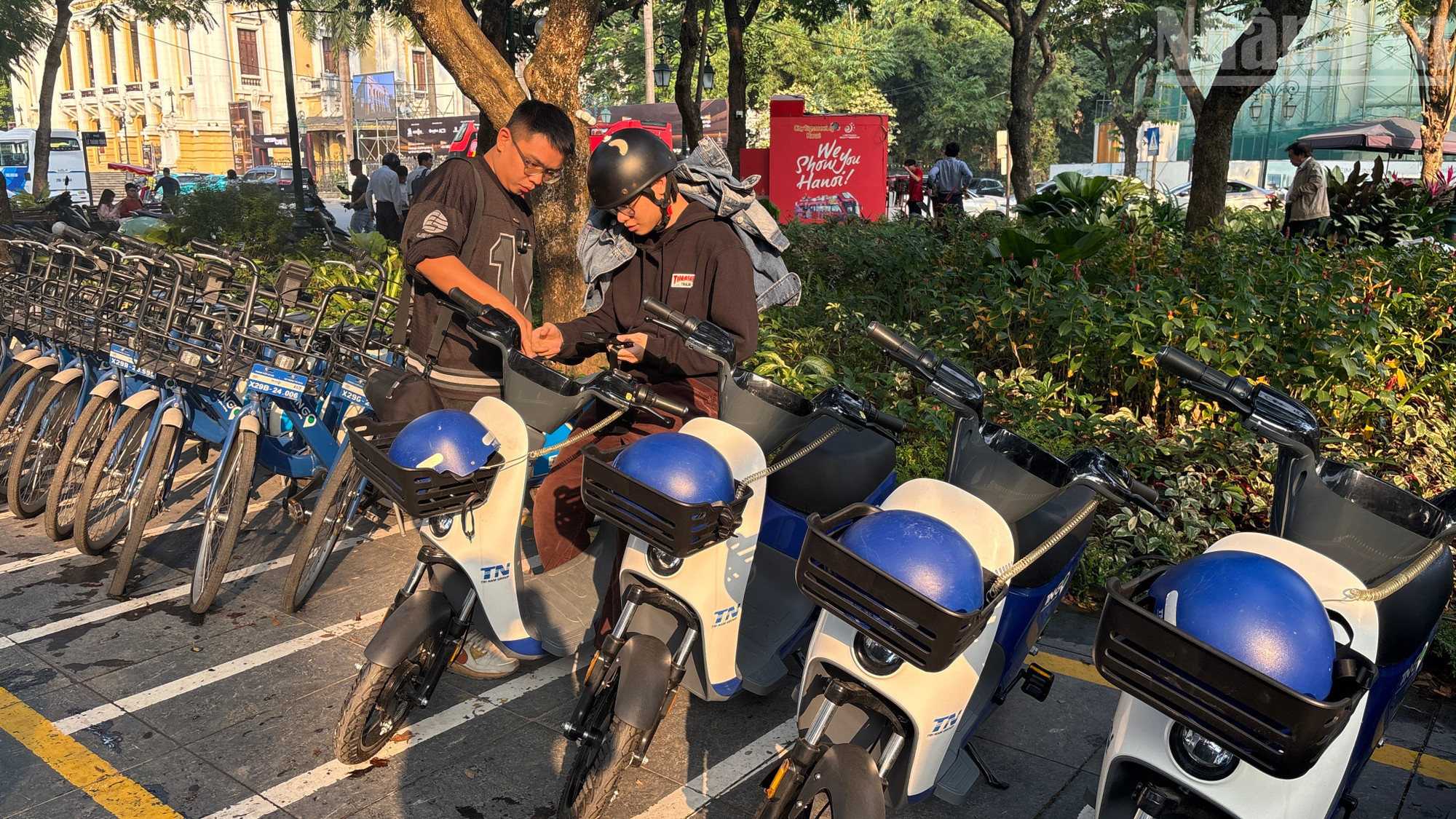
About 10-15 vehicles were arranged at the 19/8 station for people to experience, marking the first time Hanoi deployed a public two-wheeled electric vehicle model.
Practical experience shows that the vehicle operates stably, is compact and easy to operate. Mr. Hung Binh (32 years old, Dai Mo ward) shared that the new model has opened up a convenient transportation option, contributing to reducing pressure on the existing traffic system. "The vehicle runs smoothly and is compact; operations on the application are quick and easy to understand, even the elderly can use it," he said.
In terms of specifications, the two-wheeled electric vehicle developed by TNG is equipped with pedals, an electric motor and a removable battery pack. The difference compared to traditional electric vehicles is that the vehicle's battery can be changed directly at public charging stations operated by TNG, helping users not have to bring the vehicle home to charge.
After each battery change, the bike can travel about 90km, reach a maximum speed of 25km/h, have a load capacity of up to 130kg and is equipped with a front basket. When the battery runs out, the bike can still be used as a regular bicycle. According to the operator, for inner-city travel, users only need to change the battery about once a week.
According to the plan approved by the Hanoi People's Committee, from December 2024 to the first quarter of 2026, Tri Nam Company plans to put into operation more than 5,000 electric two-wheelers in the inner city area; departments and branches are assigned the task of ensuring station infrastructure, technical safety and synchronous connection with the public transport network.
Many transport experts believe that the introduction of public electric bicycles into operation not only expands a type of service, but is also an important solution to increase connectivity in the public transport system. Mr. Dinh Van Hung, Director of the Center for Geo-environment and Territorial Organization (Vietnam Association for Conservation of Nature and Environment), analyzed: public bicycle - electric vehicle service "contributes to diversifying the transport network, promoting green travel habits, supporting the reduction of congestion and urban air pollution". According to him, this type of service plays the role of "the last link" between people and bus routes and urban railways , thereby practically contributing to the goal of increasing the rate of public passenger transport to 30-35% in the coming years.
In terms of specifications, the two-wheeled electric vehicle developed by TNG is equipped with pedals, an electric motor and a removable battery pack. The difference compared to traditional electric vehicles is that the vehicle's battery can be changed directly at public charging stations operated by TNG, helping users not have to bring the vehicle home to charge.
After each battery change, the bike can travel about 90km, reach a maximum speed of 25km/h, have a load capacity of up to 130kg and is equipped with a front basket. When the battery runs out, the bike can still be used as a regular bicycle. According to the operator, for inner-city travel, users only need to change the battery about once a week.
Hanoi’s pioneering pilot of public electric bicycles is considered a suitable step in the roadmap to build a civilized, modern, green and sustainable capital in the spirit of Resolution No. 06-NQ/TW of the Politburo on planning, construction and urban development in Vietnam. This is also an important premise to gradually restore “urban bicycle culture”, contributing to shaping a low-emission transportation model, improving the quality of life and creating a friendly urban space for the community.
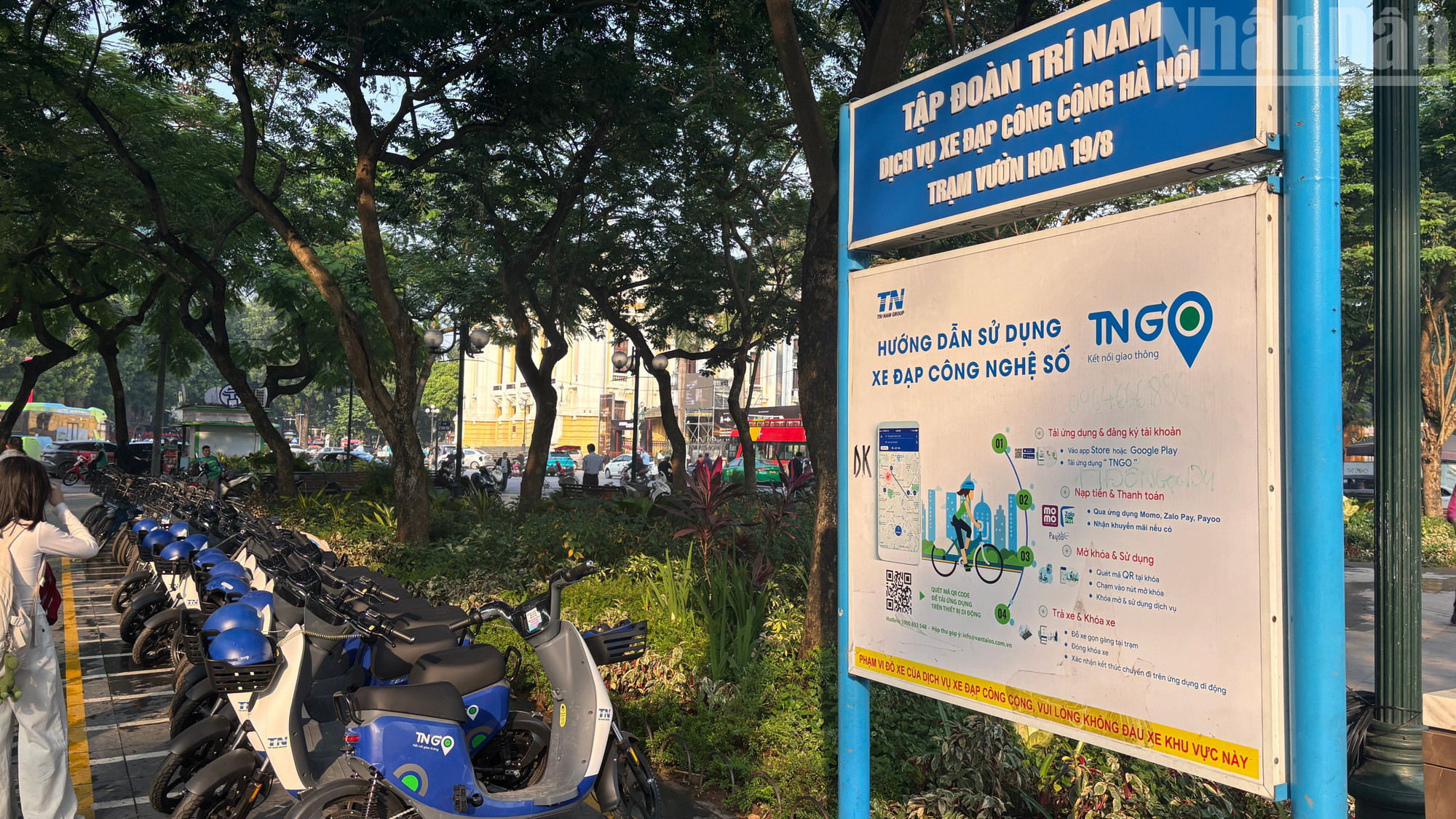
Tri Nam Company plans to put into operation more than 5,000 electric two-wheelers in the inner city area; in the first phase, the enterprise will deploy 500 vehicles at 130 station locations in the Ring Road 1 area.
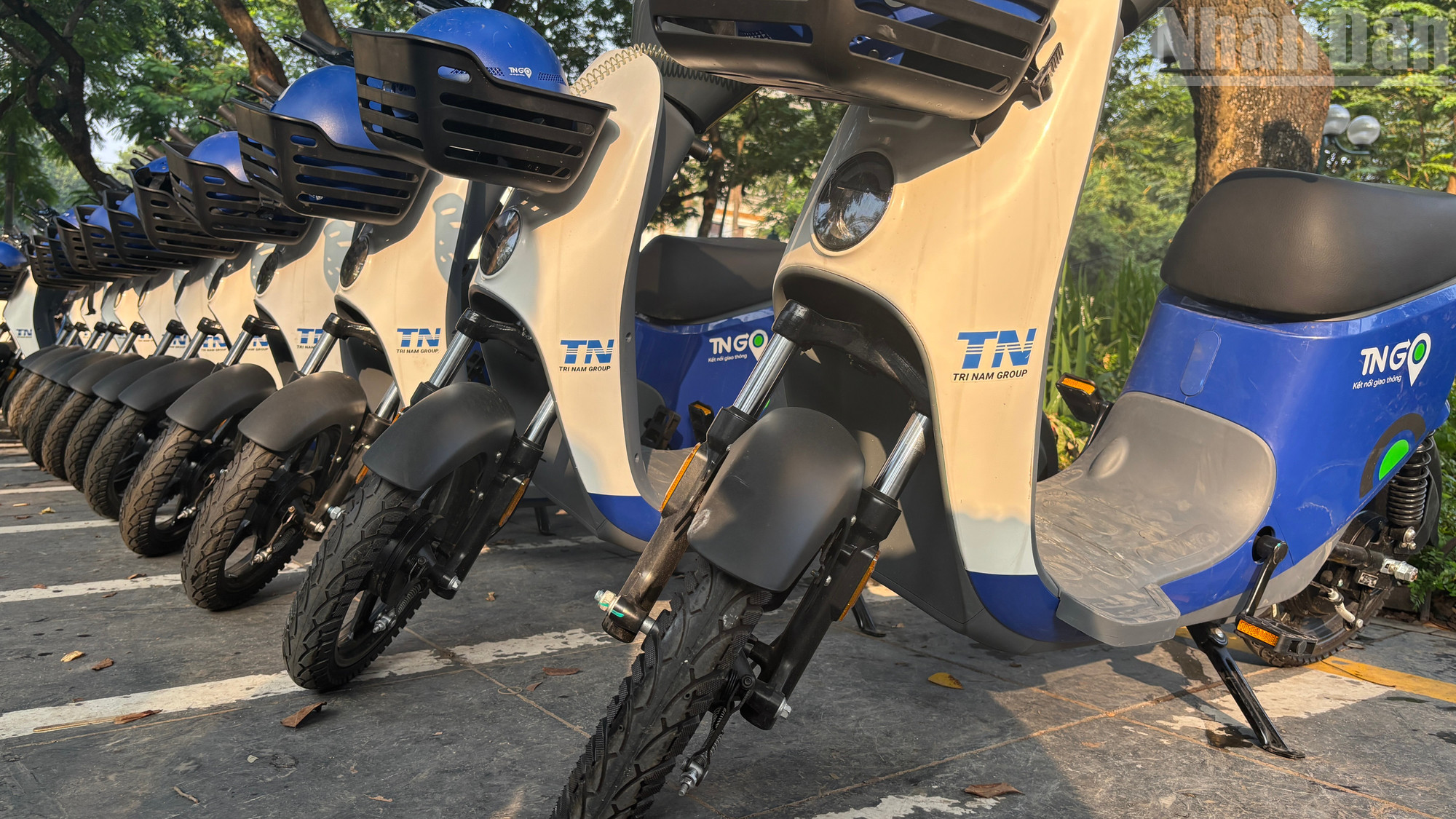
New electric bike model at public bike station area.
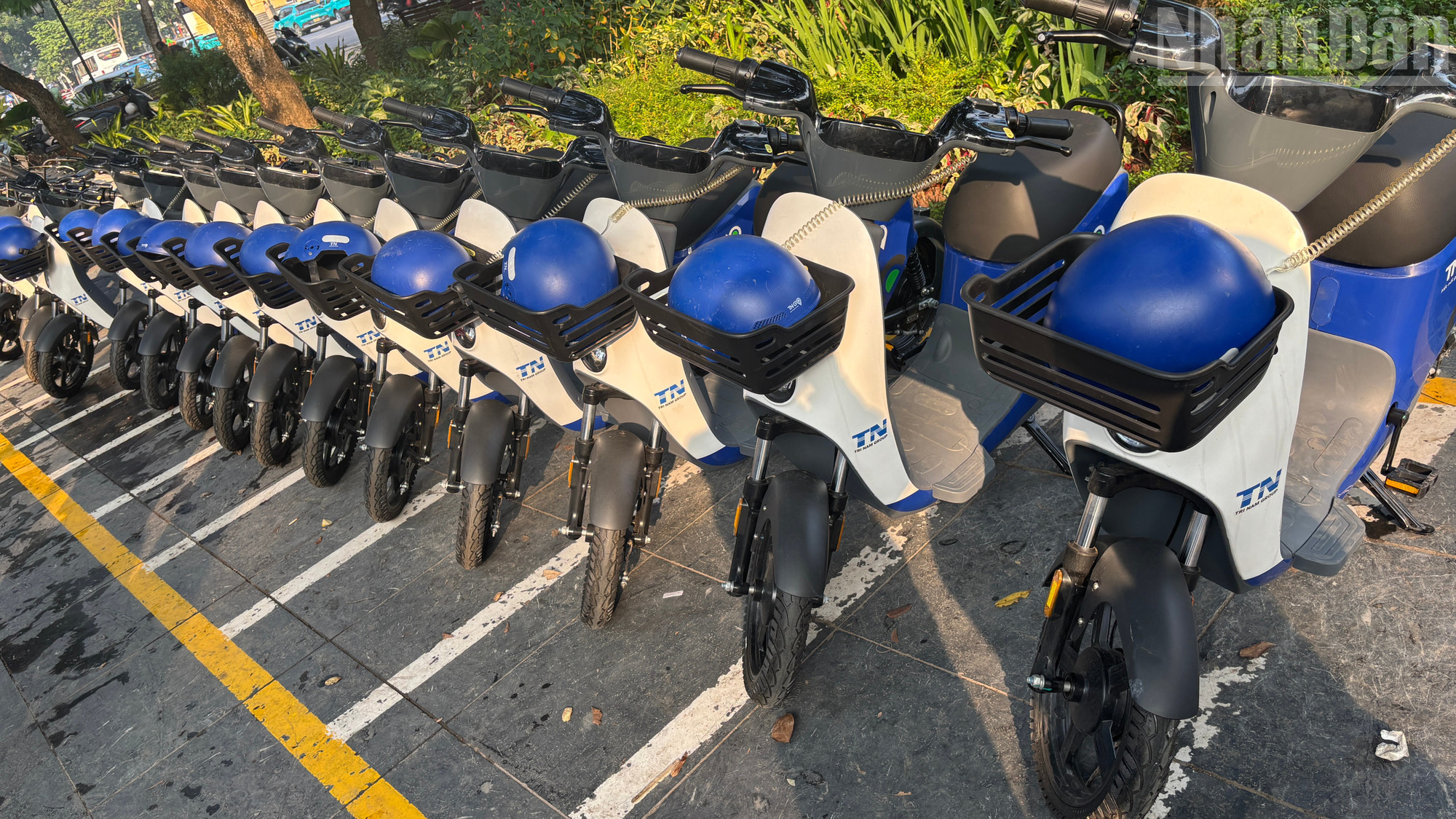
The service is aimed at the convenience of people, especially suitable for the trend of economical and environmentally friendly transportation.
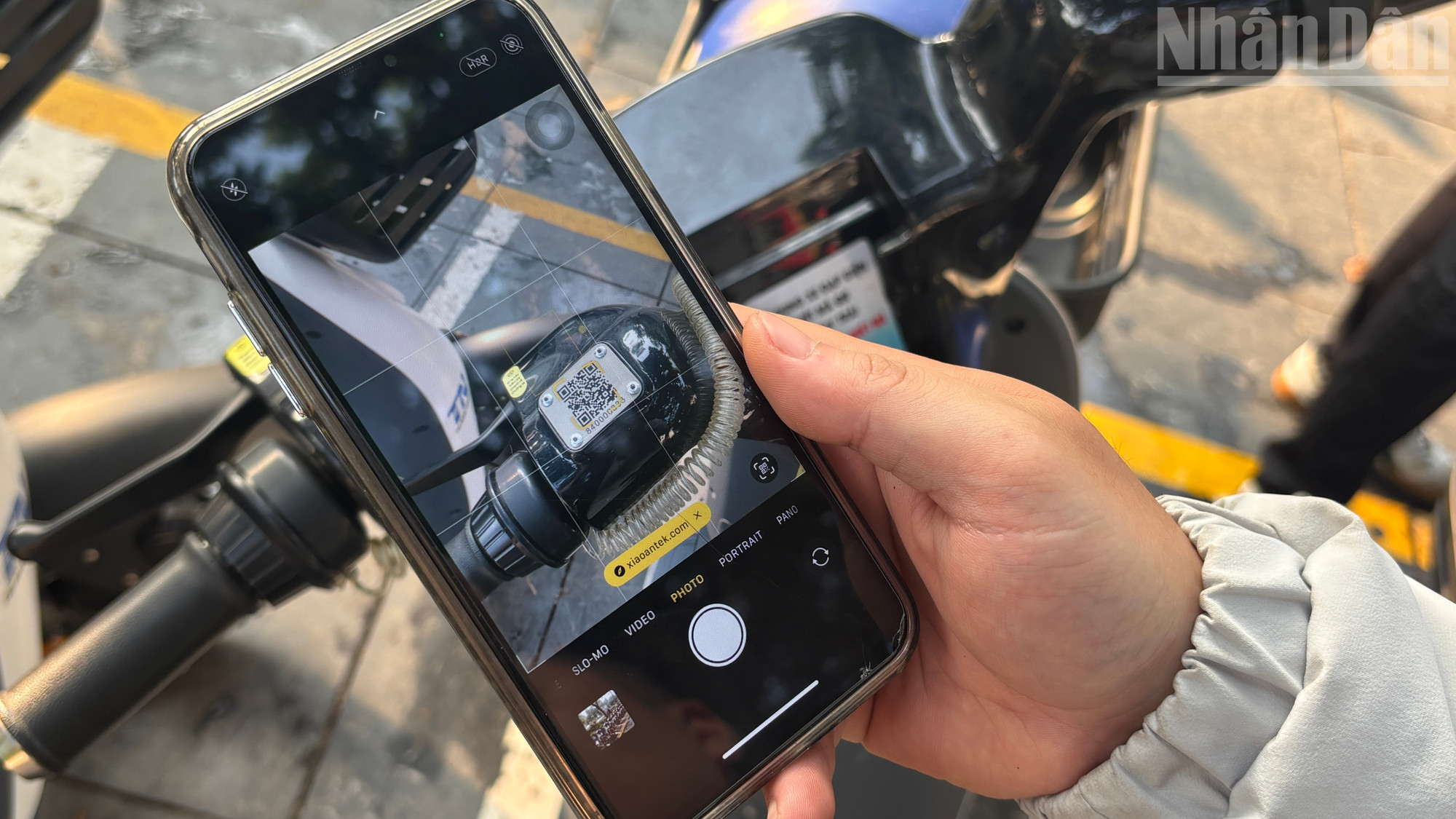
Currently, users only need to download the app, register an account, top up and scan the QR code to unlock the vehicle.
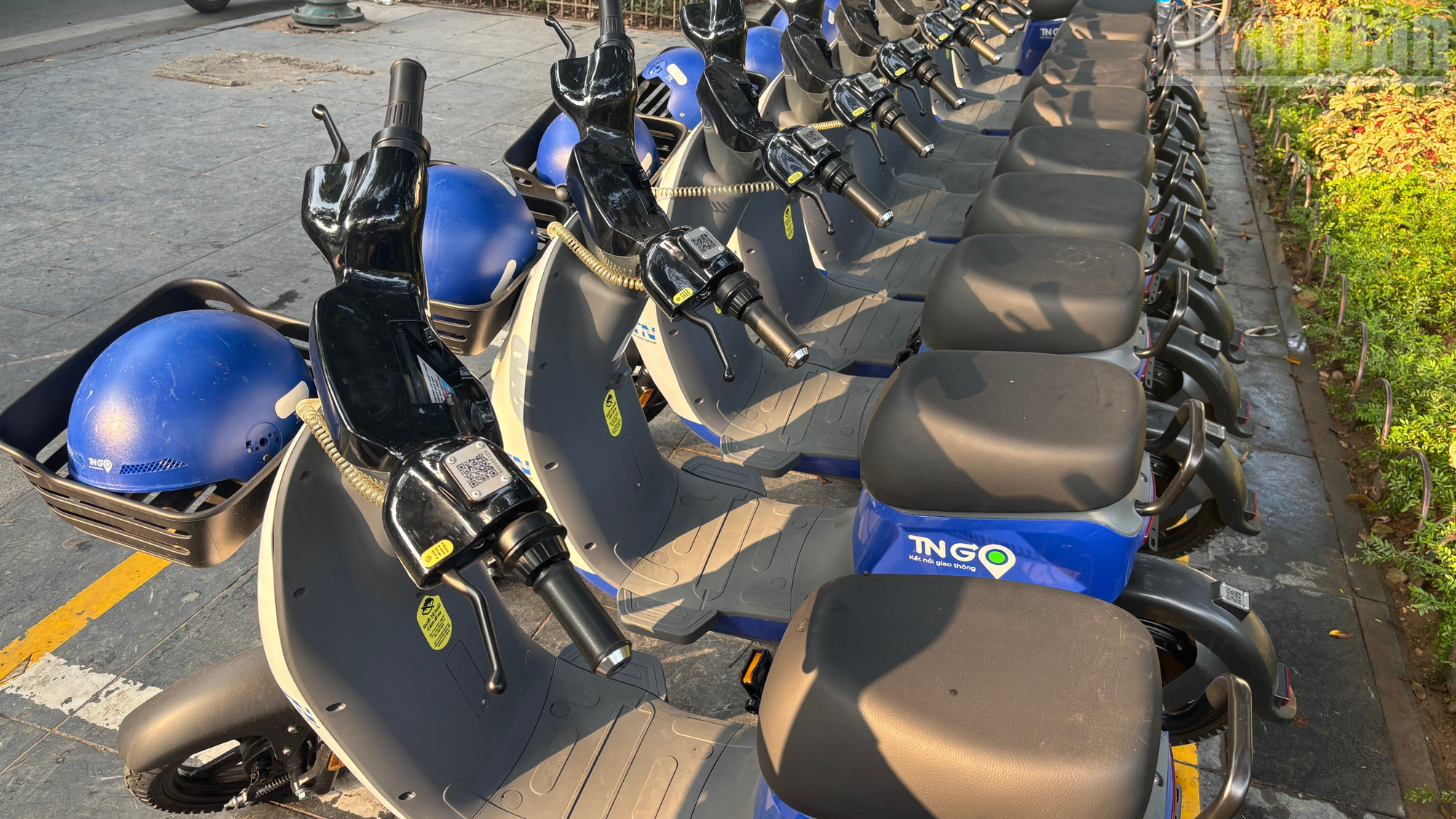
Each vehicle can only carry 1 person and is provided with 1 helmet.
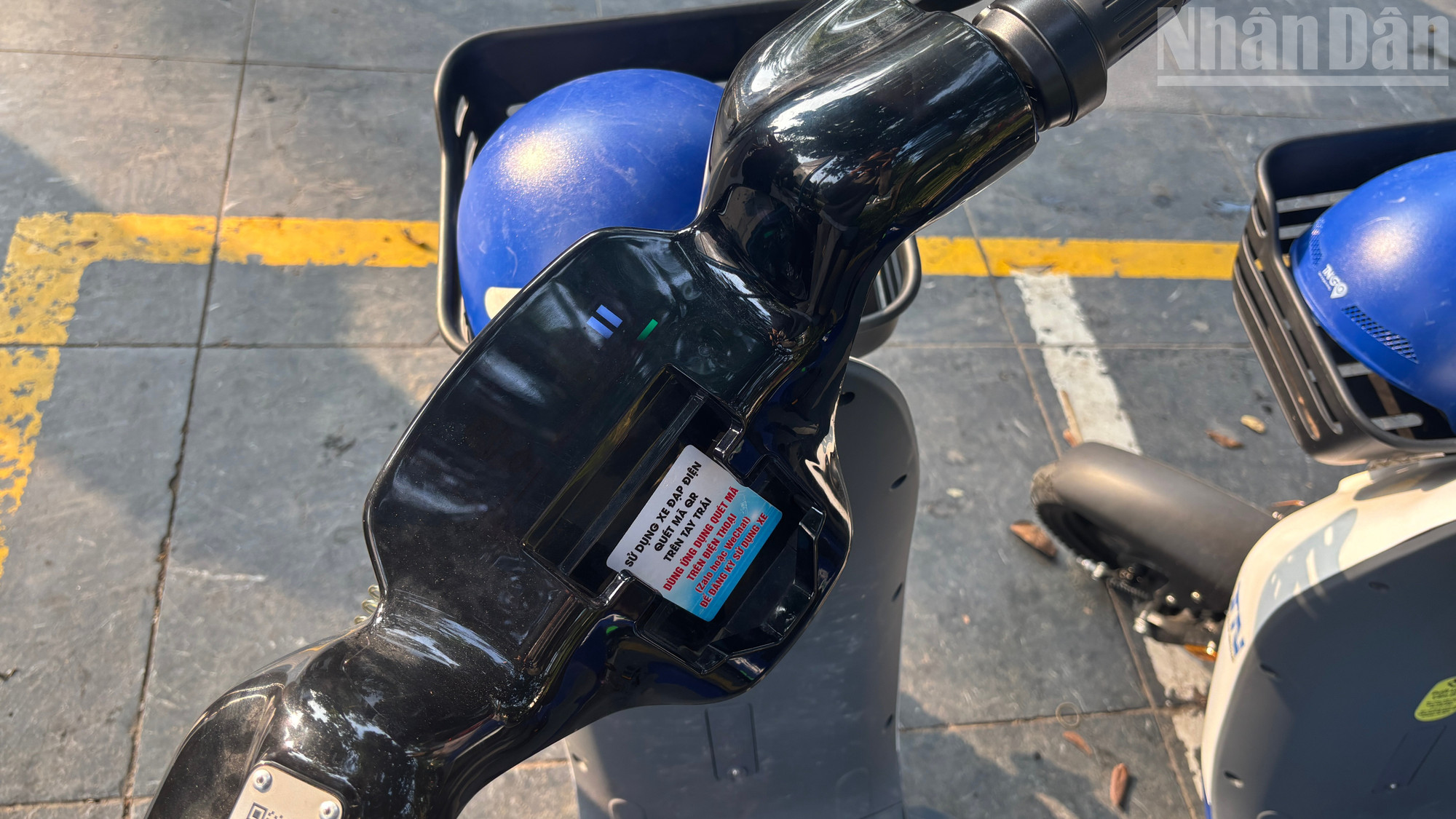
There are detailed instructions when using public bicycles.
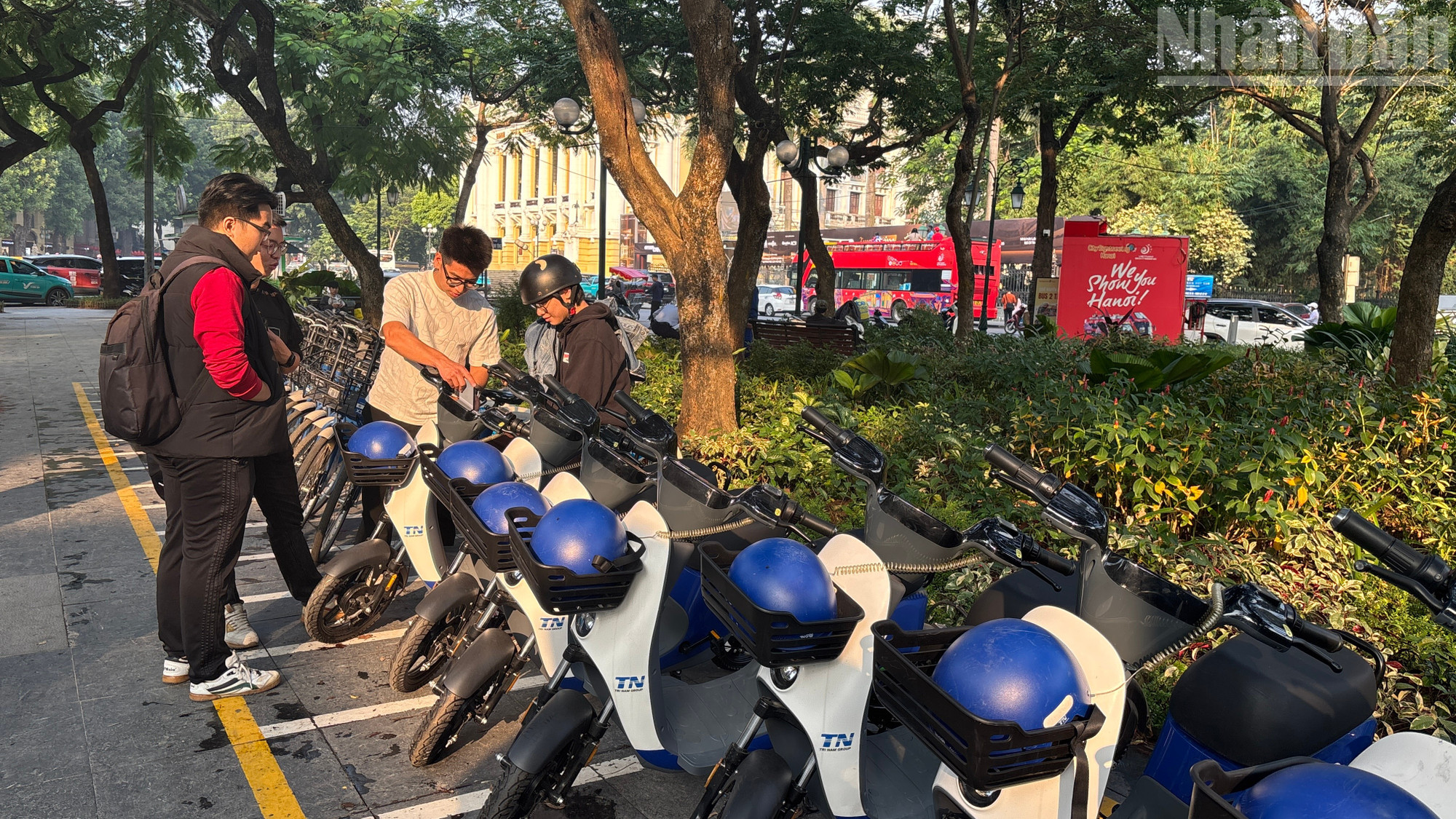
Young people are eager to experience new forms of public transport.
THUY LINH-KHÁNH HUONG


![[Photo] Parade to celebrate the 50th anniversary of Laos' National Day](/_next/image?url=https%3A%2F%2Fvphoto.vietnam.vn%2Fthumb%2F1200x675%2Fvietnam%2Fresource%2FIMAGE%2F2025%2F12%2F02%2F1764691918289_ndo_br_0-jpg.webp&w=3840&q=75)




















![[Video] Many bright spots in implementing 16 Resolutions of the National Assembly on thematic supervision and questioning](https://vphoto.vietnam.vn/thumb/402x226/vietnam/resource/IMAGE/2025/12/03/1764774130071_3-896-png.webp)



![[Photo] Worshiping the Tuyet Son statue - a nearly 400-year-old treasure at Keo Pagoda](/_next/image?url=https%3A%2F%2Fvphoto.vietnam.vn%2Fthumb%2F1200x675%2Fvietnam%2Fresource%2FIMAGE%2F2025%2F12%2F02%2F1764679323086_ndo_br_tempimageomw0hi-4884-jpg.webp&w=3840&q=75)





































































Comment (0)