

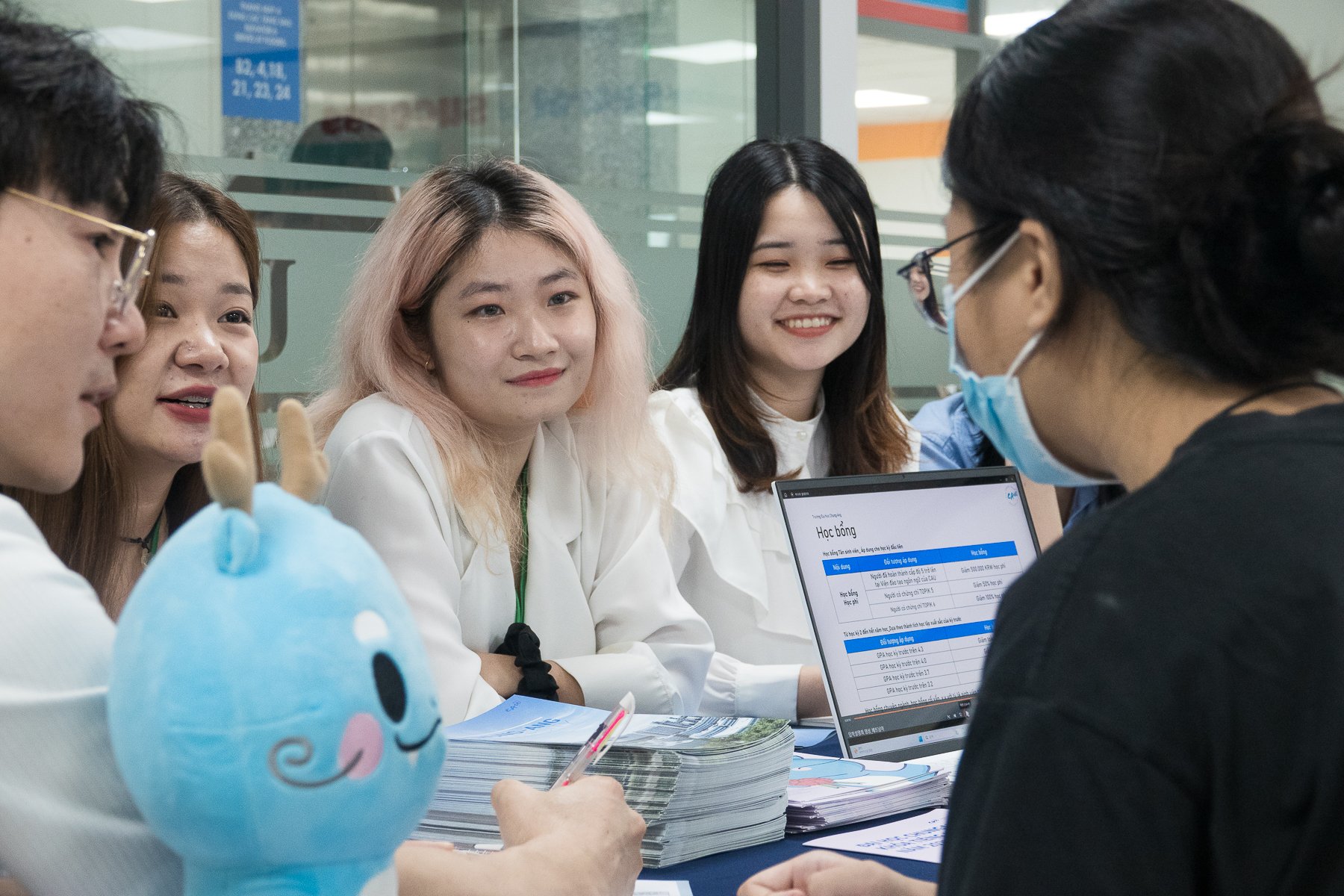
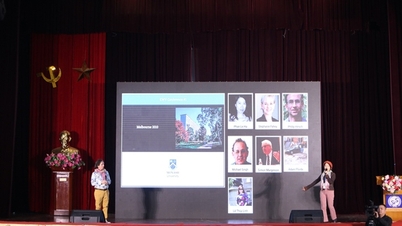
Chung-Ang University, one of the top 1% schools, came to Vietnam to recruit students at the Korean study abroad seminar held in September 2023 in Ho Chi Minh City.
How to choose the right school
On February 7th, the South Korean Ministry of Justice announced the list and rankings of universities certified for internationalization of education, totaling 134 institutions, an increase of 14 from the previous year. These are universities recognized for visa issuance, categorized into two groups: top 1% (excellent certification) and top 2% (certified). Additionally, the list includes top 3 universities, which are not certified and face visa restrictions.
The list of accredited universities is published on the Korea Study Abroad Information System at https://www.studyinkorea.go.kr so that international students can find and search for information. According to a statement from the Korean Ministry of Justice, the number of international students coming to Korea in 2023 was 182,000, an increase of approximately 15,000. Of these, the rate of illegal entry decreased slightly compared to the previous year.
Mr. Tran Thien Van, CEO of Zila Education (Ho Chi Minh City), assessed this list as one that is of great interest to many Vietnamese students. This is because the increasing number of certified schools means that opportunities to study in South Korea are expanding, and having a specific list and ranking of schools also helps Vietnamese students choose a suitable "destination" to have a higher chance of obtaining a student visa.
"The ranking of Korean universities is based on the quality of international student management in aspects such as the rate of illegal immigration, the rate of students continuing their studies in their chosen major after completing language courses, and facilities... Top 1% universities will have an advantage in admissions, as well as being exempt from paperwork when applying for and renewing visas," Mr. Van explained.
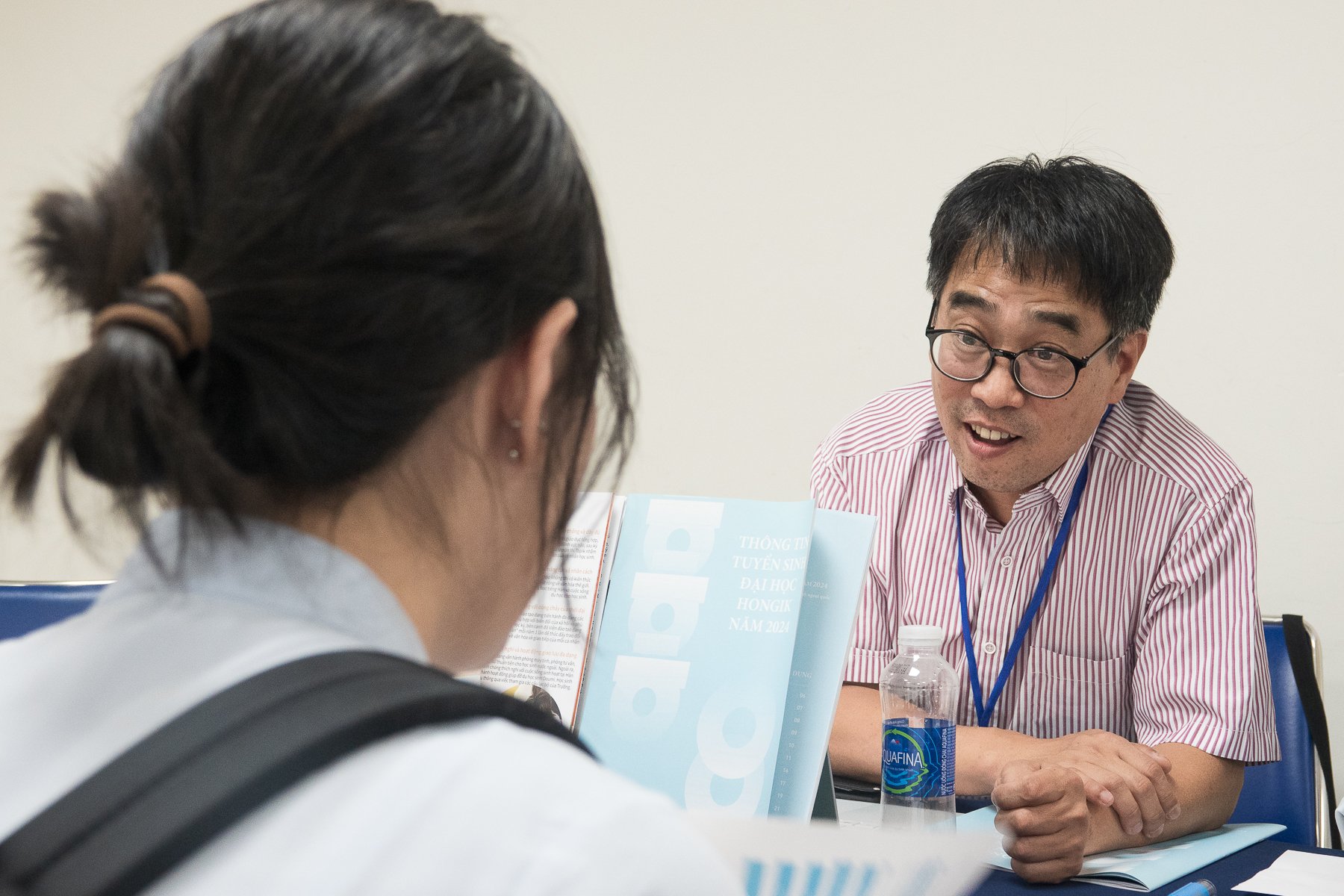
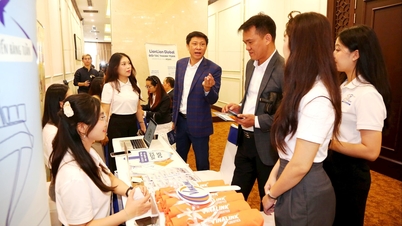
Representatives from Hongik University, one of the top 1% universities, answered questions from Vietnamese students.
Mr. Van's advice for those who are in the school selection stage is to prioritize top 1% and top 2 educational institutions. Accordingly, top 1% schools always attract a lot of applications so the competition rate is very high, suitable for those with good academic performance and Korean language ability. Meanwhile, top 2 schools will be an easier and more popular choice for Vietnamese international students.
"You can also consider applying to top 3 universities, but you have to apply for a visa code at the Korean Immigration Office, and the approval rate is around 60-80%, meaning the chance of rejection is very high," the director noted, adding that recently, Korean universities have tended to raise their admission standards for international students, such as GPA, family finances, and academic motivation, in order to "move up the rankings."
Things you need to know
In September 2023, Korean media reported that from 2024, universities will no longer require international students to submit essays, self-introductions or study plans to comply with the country's Higher Education Law. However, confirming with Thanh Nien Newspaper reporter, Mr. Tran Thien Van noted that so far, the schools have not provided official information about not requiring essays.
"On the other hand, in the application form to the school, Vietnamese international students still have to have a study plan. You should prepare this document carefully so that the school can better understand your strengths, orientation and plans when studying in Korea. In addition, when participating in interviews with some schools, if you have prepared a study plan in advance, it will be easier for you to communicate, helping to increase your chances of being accepted," Mr. Van shared.
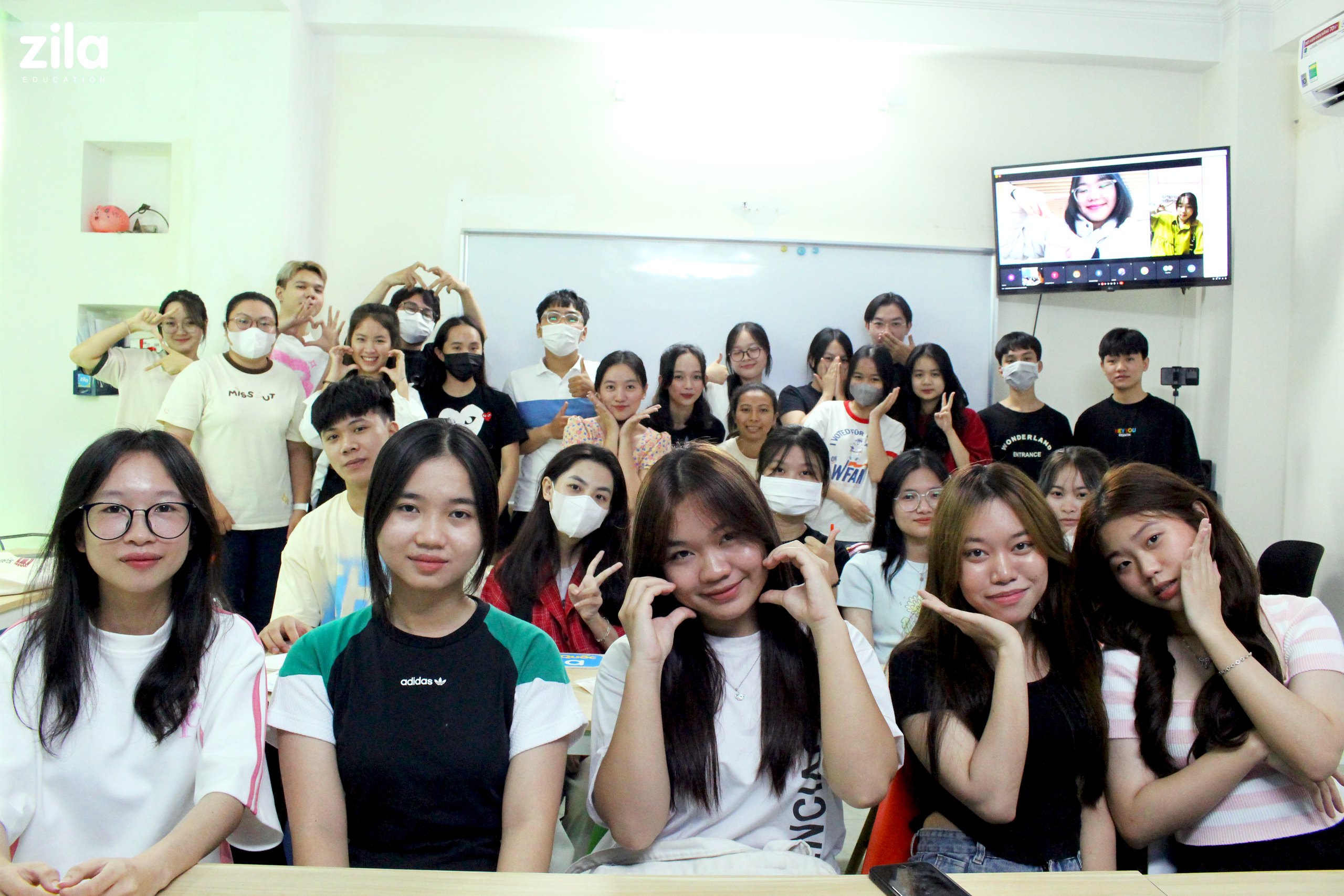
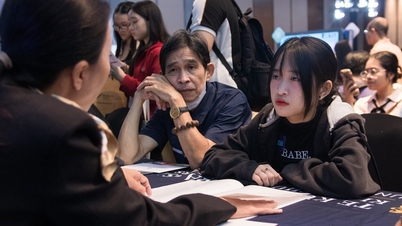
Vietnamese students attend an orientation session on studying abroad in Korea in Ho Chi Minh City.
The director also stated that South Korea constantly updates its policies. Minor changes in the application review process or the difficulty of visa interview questions are also made frequently. "Therefore, it is necessary to prepare all documents thoroughly before applying for a visa," Mr. Van said, adding that Vietnamese students should aim for the highest possible score on the TOPIK Korean language proficiency test to increase their chances of receiving valuable scholarships.
Each year, South Korea has four intake periods for Korean language courses, in March, June, September, and December. To enroll in their desired period, Vietnamese students need to prepare their applications and submit them to the school three months in advance. For regular undergraduate and graduate programs, there are only two intake periods, in March and September each year, and students need to register four to six months in advance, depending on the institution.
According to the Korea Institute for Educational Development, as of April 2022, Vietnam ranked second in the number of international students with 37,940 people, accounting for 22.7% of the total number of international students in South Korea. Of these, the largest number of Vietnamese students were studying at the undergraduate level (17,534) and Korean language courses (10,675).
List of 18 top 1% schools
At the undergraduate level, these include Konkuk University, Kyungpook National University, Keimyung University, Duksung Women's University, Dongguk University, Pusan National University, Seoul Sirip University, Seoul Theological University, Seokyeong University, Sungshin Women's University, Ewha Women's University, Chung-Ang University, Pohang University of Science and Technology, Hanyang University, and Hongik University. At the graduate level, these include the University of Science and Technology, the National Cancer Institute's International Graduate School for Cancer Research, and the Korea Development Institute's Graduate School for International Policy Research.
Source link
















![[Photo] Prime Minister Pham Minh Chinh holds a phone call with the CEO of Russia's Rosatom Corporation.](/_next/image?url=https%3A%2F%2Fvphoto.vietnam.vn%2Fthumb%2F1200x675%2Fvietnam%2Fresource%2FIMAGE%2F2025%2F12%2F11%2F1765464552365_dsc-5295-jpg.webp&w=3840&q=75)












































Comment (0)