

This is the most professional competition organized by the World Dancesport Federation (WDSF). The 12th edition took place in Sarajevo, Bosnia Herzegovina from November 28th to December 1st, attracting 48 athletes from 22 countries and territories. Ly Van Dung was the only representative from Vietnam. She became the highest-ranking Vietnamese athlete to win a medal at the World Championships in the strongest category (adult category) of global dancesport to date.
Passion is expensive.
The world runner-up from Da Nang shared that when she was little, her mother noticed she had a good sense of music but was also overweight, so she wanted her to dance mainly to lose weight. At that time, Dung hadn't even finished first grade. Unexpectedly, she fell in love with it.
Teacher Luan and Teacher Oanh in Da Nang guided Dung through her first dance steps. Afterward, they introduced Dung to her two "mentors," Master Phan Hong Viet (grandson of General Vo Nguyen Giap) and his wife, Master Hoang Thu Trang.
Dung started professional training with Coach Viet and Coach Trang around 2018. She travels to Hanoi once or twice a month on weekends, then returns to Da Nang to train on her own for about six hours a day. Initially, her parents or teachers took turns accompanying her, but after COVID-19, she started going by herself.
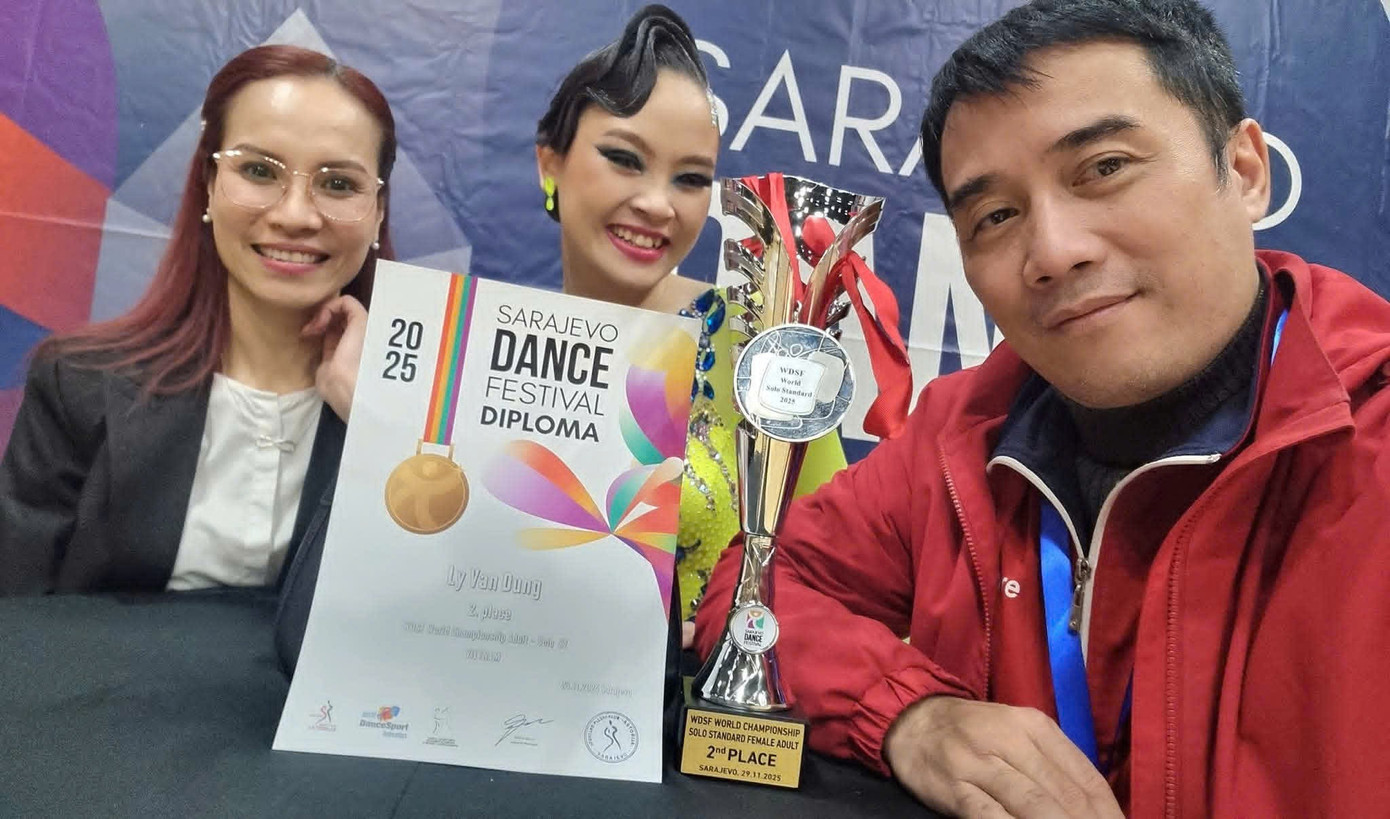
Despite dedicating a significant amount of time to ballroom dancing, Dung still achieved excellent academic results. After missing classes to focus on competitions, Dung diligently studied on her own to catch up with her classmates.
She asserted, "The pressure of studying is nothing compared to the pressure of practicing dancesport." Having just passed the entrance exam for the Faculty of Economic Law at Da Nang University, Dung has decided to dedicate her life to ballroom dancing, eventually becoming a coach or judge.
Before competing in the world's largest competitive ballroom dance competition, Dung had participated in numerous open tournaments in Asian and European countries. This sport is extremely expensive. Even the largest prizes never come with cash. Athletes must cover their own travel, accommodation, and competition fees.

Dung's parents run a small business. Dung recounts, "Sometimes my mother asks about finances. But I tell her I want to pursue my passion to the end. So she says that as long as I like it, she will support me." To this day, Dung's family hasn't tallied up how much they've invested in their daughter.
One example of the high cost of ballroom dancing is the costumes – unique, one-of-a-kind designs made for only one person. "Even the image on the dance floor requires a lot of investment," revealed champion Hong Viet.
"Expensive doesn't always mean beautiful, but you can't wear a cheap dress either. When you step onto the runway, professionals can tell if you're skilled just by looking at your outfit. If you're skilled, you'll feel that the dress you're wearing has to be something like this to be worthy of the sweat, effort, and money you've invested in training," he said.
Viet said that his student who won the SEA Games championship had worn dresses by local designers, which were also of very high quality. For competitions like the one in Sarajevo recently, the athletes' dresses cost between 80 and over 100 million VND. Van Dung competed in an outfit by a Russian designer, priced at 85 million VND.
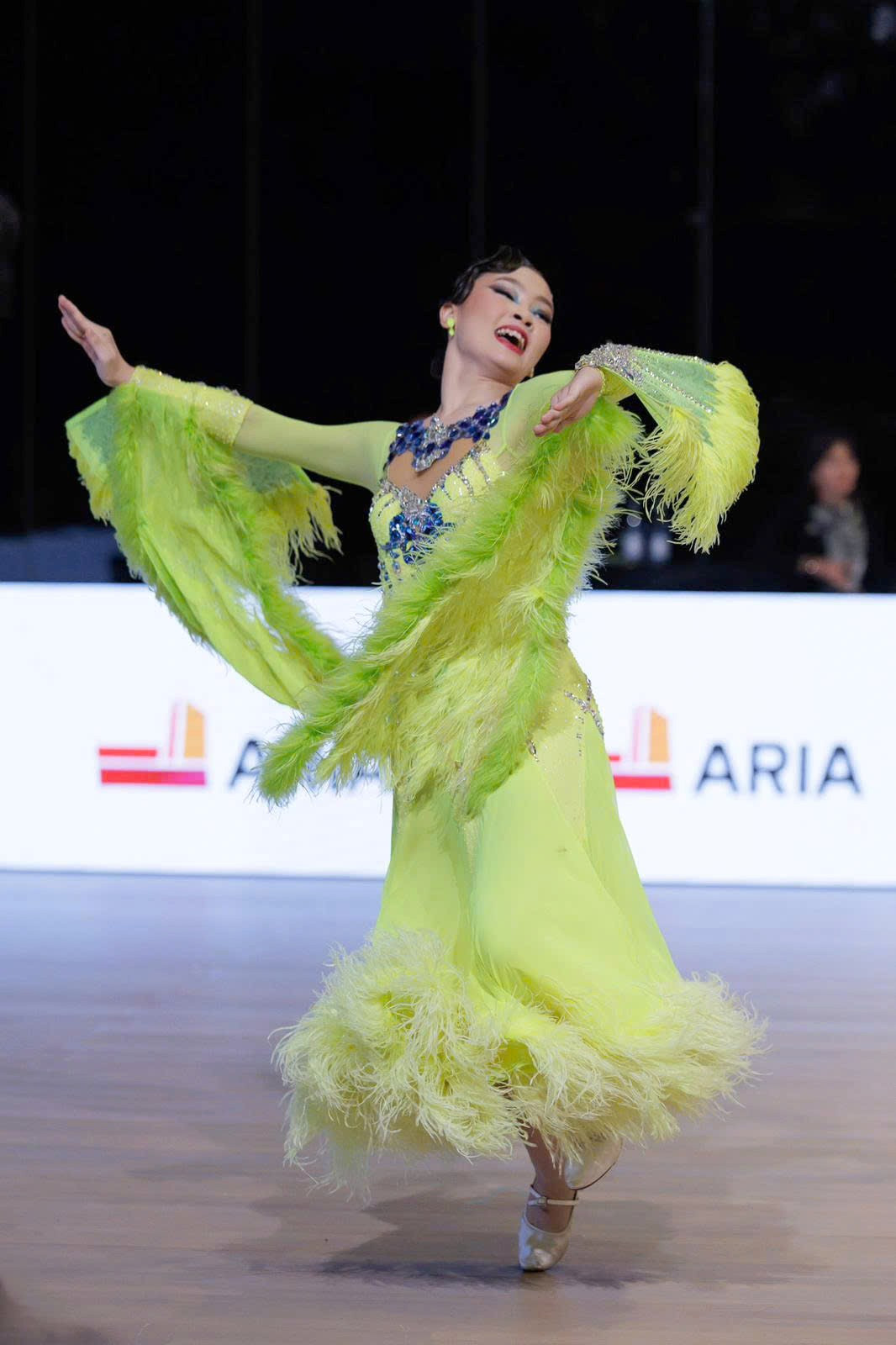
Viet said that at the recent tournament, Dung had to compete against opponents who had received 20 to 30 times more investment. He considers providing Dung with "scholarships" over the years as a form of "socializing" competitive ballroom dancing.
"I've taught her for a long time, I understand her struggles and the efforts of her family, so I generally feel sorry for her. Seeing her potential, I cherish her and hope that her talent can contribute to the achievements of ballroom dancing in our country," he said.
What's special is that Dung is a product of 100% domestic training, with private guidance from coaches Viet and Trang. While the vast majority of international athletes seek training from coaches around the world, especially renowned coaches in Europe, the cost of a 45-minute lesson with a European coach is around 120 euros (equivalent to 3.7 million VND). Yet, many athletes spent months training in Europe before this competition.

Hong Viet also has foreign students, but his tuition fees are more affordable. Interestingly, this year's champion studied with Mr. Viet two years ago. Thanks to this, he understands Van Dung's toughest opponent well, and can therefore devise appropriate strategies for Dung.
"If Dung can showcase her full potential, I think she's strong enough to compete and could absolutely win. In the recent competition, if Dung had won the championship, I wouldn't have been surprised," Hong Viet said.
"I have trained athletes, both in doubles and singles, who are fully capable of competing on par with top athletes worldwide, with a quality level that is in no way inferior. All of them are 100% Made in Vietnam. That's what makes me proud. My athletes and I have the necessary preparation and confidence to compete fairly on the world stage ." - Phan Hong Viet, Dancesport Champion
Vietnamese spirit
Dung said that when the results were announced, she cried, primarily out of regret. “Because I had surpassed so many people, and then lost to one. Before the final, I was always determined to win the top prize, not just the Top 3.”
Dung may not be inferior to the champion in terms of both skill and composure. But this year's champion has one distinct advantage over Dung: high recognition thanks to years of competing in international tournaments and having trained under some of the most renowned coaches in Europe.
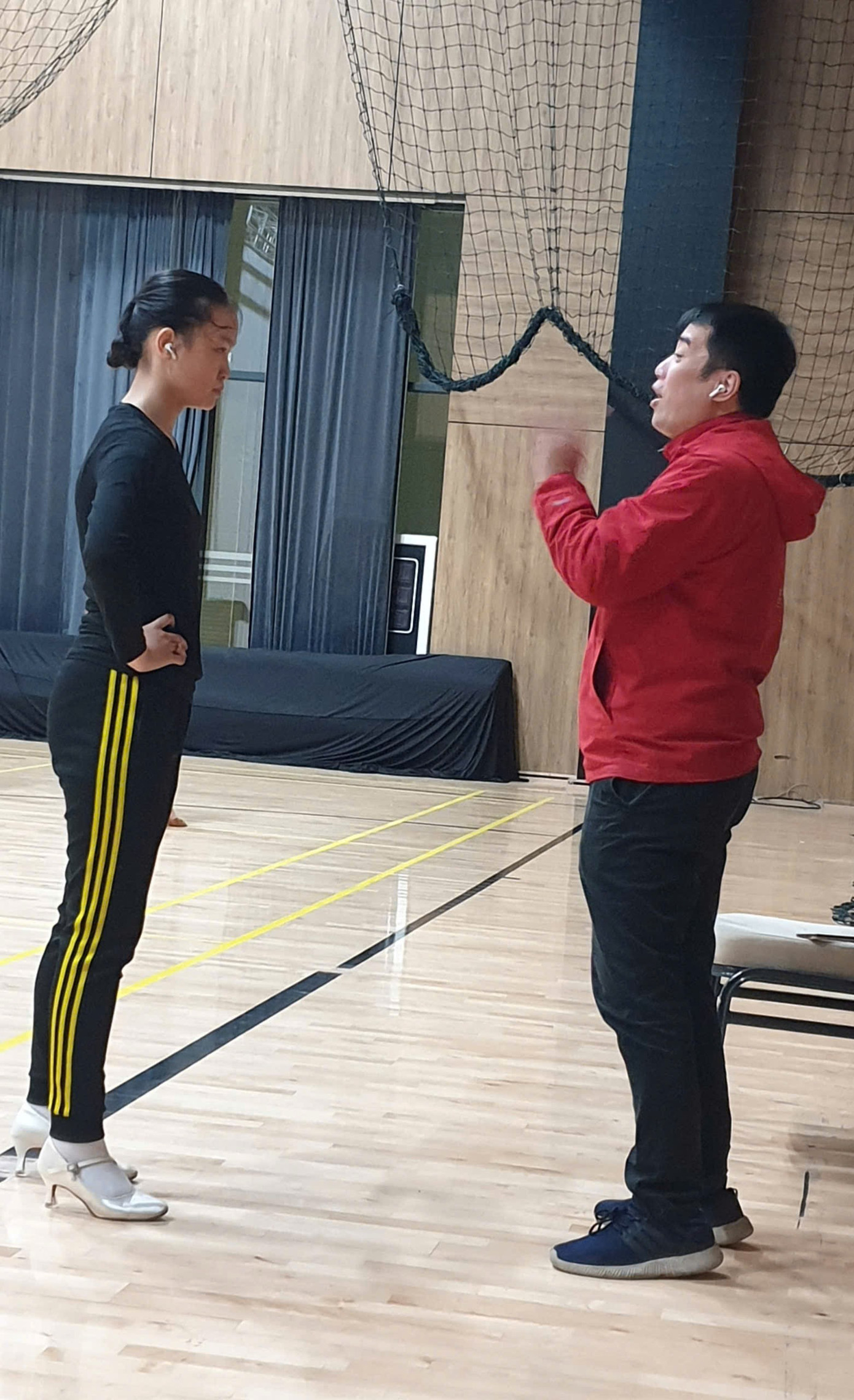
When asked about the difficulties she had faced, Dung replied, "For the past ten years, I've never stopped being passionate about dancesport, so I haven't encountered any significant difficulties." During the peak of summer, Dung used to practice with her teachers from 10 am to 1 am the next day.
Before this important tournament, Dung took three weeks off from school to focus solely on training. During a layover at the airport before arriving in Sarajevo, Dung experienced for the first time being woken up by her coach to train for three hours. After training, she ate and then went back to sleep. Upon arriving at the competition venue, she still trained for another session.
Dung's upcoming plan is to rest and have a relaxing Lunar New Year holiday. After that, she and her coach will schedule training sessions for tournaments in 2026.
Source: https://tienphong.vn/hoc-tro-kien-tuong-dancesport-hong-viet-thu-trang-tao-dau-moc-chua-tung-co-post1802539.tpo


























































































Comment (0)