

On June 1st, after concluding its operation in the Jabalia area of northern Gaza, the Israeli army advanced further into Rafah in southern Gaza. Analysts believe that these moves by Israel could "pour cold water" on hopes for a peace prospect under the new ceasefire plan recently announced by US President Joe Biden and supported by international public opinion.
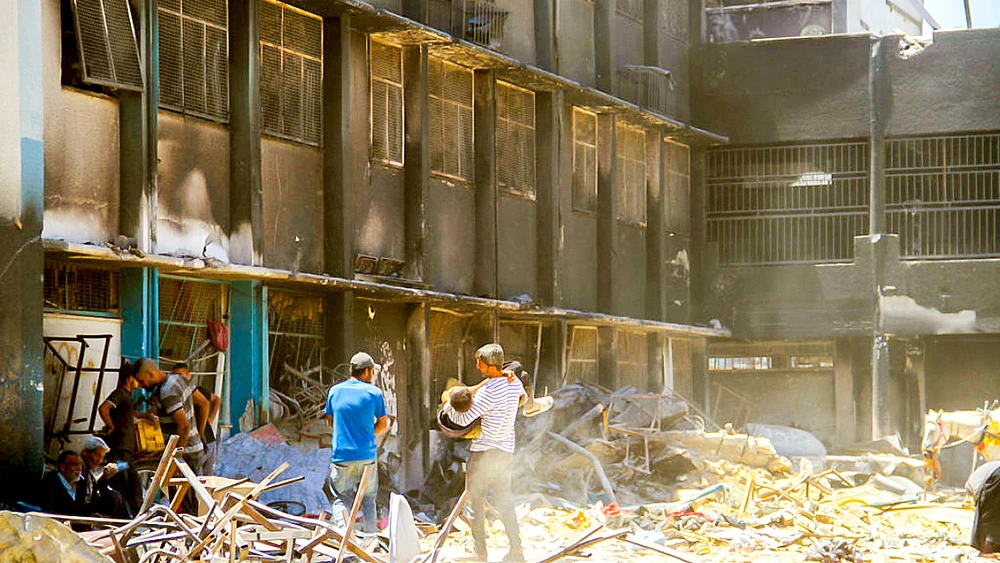
Israel emphasizes conditions for ending the conflict.
Earlier, on May 31, US President Joe Biden announced that Israel had presented a roadmap toward a comprehensive ceasefire in the Gaza Strip in exchange for the freedom of hostages. The proposal consists of three phases, beginning with a “full and comprehensive” ceasefire lasting six weeks. During this period, Israeli forces would withdraw from Gaza, and hostages – including the elderly, women, and the injured – would be exchanged for hundreds of Palestinian prisoners. Palestinian civilians would return to Gaza, including northern Gaza, and 600 trucks carrying humanitarian aid would enter the Palestinian territory daily.
In the second phase, Hamas and Israel will negotiate terms to permanently end hostilities. President Joe Biden affirmed that the ceasefire “will remain in place as long as negotiations continue.” The third phase will include a major reconstruction plan for Gaza.
Immediately after Washington announced a proposal that was seen as beneficial to both Israel and Palestine, as well as the long-term security of the region, on June 1st, European Commission President Ursula von der Leyen, German Foreign Minister Annalena Baerbock, and British Foreign Secretary David Cameron welcomed Israel's proposal, calling it a "crucial opportunity" to end the conflict. According to Reuters, speaking at the Shangri-La Dialogue, Indonesian President-elect Prabowo Subianto said Indonesia was ready to send peacekeeping troops to enforce a ceasefire in Gaza if requested.
The Hamas Islamic movement also issued a statement affirming its readiness to participate “actively and constructively” in any proposal based on a lasting ceasefire in Gaza.
However, the office of Israeli Prime Minister Benjamin Netanyahu emphasized that the conflict would only end when Israel achieved all its objectives, including the release of all hostages and the destruction of Hamas's military capabilities and apparatus.
According to Euronews, while Israeli forces continue their attacks on the city of Rafah in southern Gaza, officials from Egypt, the US, and Israel are expected to meet in Cairo next week to discuss plans to reopen the Rafah border crossing.
Empowering Palestine within the WHO
In another development, at the 77th session of the World Health Assembly (WHA), countries unanimously voted to adopt a draft resolution granting Palestine more autonomy within the World Health Organization (WHO), similar to a previous move by the United Nations General Assembly.
A draft resolution, introduced by a group primarily composed of Arab and Muslim countries along with China, Nicaragua, and Venezuela, calls for Palestine – which holds observer status at the WHO – to be granted almost all the rights of full members. On the same day, the 77th session of the WHA also adopted a resolution urging the WHO to act to address the growing health needs in the Gaza Strip. According to several sources, WHO member states voted overwhelmingly in favor of the draft resolution calling for a funding conference on health needs in the Palestinian territories, and recommending more reporting on the “catastrophic” situation in Gaza and Israel’s “unprovoked destruction” of “health facilities.”
Compiled by Hanh Chi
Source: https://www.sggp.org.vn/ke-hoach-ngung-ban-moi-o-gaza-post742602.html


































































































Comment (0)